Arizona: Alcohol and drugs
Alcohol limits, implied consent, DUI, extreme and aggravated DUI penalties and ignition interlock. Split into 3 shorter tests so you're not stuck in one long quiz.
Independent educational site · not affiliated with any government agency or DMV
Choose a part
Alcohol and drugs — Part 1
Questions in this part include: “What does the manual say about riding a bicycle under the influence of drugs or alcohol?”
StartAlcohol and drugs — Part 2
Questions in this part include: “Can you be found guilty of driving while intoxicated if your BAC was less than 0.08 percent?”
StartAlcohol and drugs — Part 3
Questions in this part include: “What is the minimum fine for a first-offense Extreme DUI?”
StartAll 52 Alcohol and drugs questions with answers
Choose a part above to take a practice test, or study every question and answer here.
Show the questions and answersHide the questions
-
What does the manual say about riding a bicycle under the influence of drugs or alcohol?
- It is legal if the bicyclist rides slowly
- It is legal on roads with no traffic
- It is illegal
- It is legal on a bike path only
Show answer
Correct answer: It is illegal
The manual says bicycling under the influence of drugs or alcohol is illegal.
Source: Arizona Driver License Manual and Customer Service Guide (Revised March 2026), page 50
-
According to the manual, what causes most wrong-way crashes?
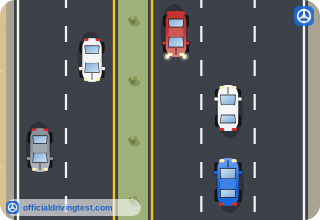
- Faded lane markings
- Poor highway lighting
- Drivers who are unfamiliar with the area
- Impaired drivers
Show answer
Correct answer: Impaired drivers
The manual states that most wrong-way crashes are caused by impaired drivers.
Source: Arizona Driver License Manual and Customer Service Guide (Revised March 2026), page 58
-
Which of these can impair your driving skills, according to the manual?
- Only illegal drugs and alcohol
- Only prescription drugs taken in large doses
- Over-the-counter medications for allergies and colds
- Medication labels with warnings about effects
Show answer
Correct answer: Over-the-counter medications for allergies and colds
The manual says prescription drugs and over-the-counter medications for allergies and colds can impair driving skills.
Source: Arizona Driver License Manual and Customer Service Guide (Revised March 2026), page 59
-
What does the manual advise you to do before driving after taking a medication?
- Wait at least one hour after taking it before you drive
- Check the medication label for warnings about its effects
- Drive only on roads you know well and avoid the freeway
- Take it with food so that its effects are lessened
Show answer
Correct answer: Check the medication label for warnings about its effects
The manual says to always check medication labels for warnings about the medications' effects prior to driving.
Source: Arizona Driver License Manual and Customer Service Guide (Revised March 2026), page 59
-
Even when you do not appear or feel impaired, alcohol or drug use produces what effect on a driver?
- A temporary boost in your reaction time and alertness
- A better ability to judge distances and speeds
- A stronger sense of caution on the road at night
- A false sense of confidence in your driving ability
Show answer
Correct answer: A false sense of confidence in your driving ability
The manual says alcohol or drug use produces a false sense of confidence in your driving ability, even when you do not appear or feel impaired.
Source: Arizona Driver License Manual and Customer Service Guide (Revised March 2026), page 59
-
Alcohol or drug use seriously reduces which of the following, according to the manual?
- Your reflexes, physical control over the vehicle and ability to recognize dangerous situations
- Your hearing, reading ability and sense of balance while the vehicle is not moving
- Your reflexes and eyesight, but not your physical control over the vehicle
- Your need for sleep and the effects of fatigue on you while driving at night
Show answer
Correct answer: Your reflexes, physical control over the vehicle and ability to recognize dangerous situations
The manual says alcohol or drugs seriously reduce your reflexes, physical control over the vehicle and ability to recognize dangerous situations.
Source: Arizona Driver License Manual and Customer Service Guide (Revised March 2026), page 59
-
Who is exempt from the open container law, according to the manual?
- Passengers riding in the back seat of a passenger car on a public road
- Drivers who are parked on a public roadway with the engine turned off
- Passengers riding in a bus, limousine, taxi or the living area of a motor home
- Passengers who are 21 or older in any motor vehicle on a public road
Show answer
Correct answer: Passengers riding in a bus, limousine, taxi or the living area of a motor home
The manual says passengers riding in a bus, limousine, taxi or the living area of a motor home are exempt.
Source: Arizona Driver License Manual and Customer Service Guide (Revised March 2026), page 59
-
Under Arizona's open container law, what is illegal for a driver or passenger while on any public roadway?
- To possess any container of spirituous liquor anywhere in the passenger compartment
- To consume or possess an open container of spirituous liquor in the passenger compartment
- To consume spirituous liquor in the passenger compartment, but not to possess an open container
- To possess an open container in the trunk or behind the last upright seat of the vehicle
Show answer
Correct answer: To consume or possess an open container of spirituous liquor in the passenger compartment
The manual says it is illegal for a driver or passenger to consume or possess an open container of spirituous liquor in the passenger compartment on any public roadway.
Source: Arizona Driver License Manual and Customer Service Guide (Revised March 2026), page 59
-
What does the manual say the passenger compartment includes for open container purposes?
- Only the seats, the floor areas and the dashboard of the vehicle interior
- Only compartments that are within reach of the driver, not the passengers
- Any compartment in the vehicle, including locked compartments and the trunk
- Any unlocked compartments or portable devices within reach of the driver or passenger
Show answer
Correct answer: Any unlocked compartments or portable devices within reach of the driver or passenger
The manual says the passenger compartment includes any unlocked compartments or portable devices within reach of the driver or passenger.
Source: Arizona Driver License Manual and Customer Service Guide (Revised March 2026), page 59
-
What does the open container law's definition of passenger compartment NOT include?
- The trunk or the area behind the last upright seat of a vehicle not equipped with a trunk
- Any unlocked compartments located within reach of the driver or of a passenger
- Portable devices that are within reach of the driver or of a passenger in the car
- The seats and the floor area of the vehicle where the driver and passengers sit
Show answer
Correct answer: The trunk or the area behind the last upright seat of a vehicle not equipped with a trunk
The manual says the passenger compartment does not include the trunk or the area behind the last upright seat of a vehicle not equipped with a trunk.
Source: Arizona Driver License Manual and Customer Service Guide (Revised March 2026), page 59
-
A court may direct MVD to suspend the license of a person for a first conviction of knowingly providing spirituous liquor to a minor. For how long at most?
- Not more than 60 days
- Not more than 90 days
- Not more than 30 days
- Not more than six months
Show answer
Correct answer: Not more than 30 days
The manual says a first conviction can lead to a suspension of not more than 30 days.
Source: Arizona Driver License Manual and Customer Service Guide (Revised March 2026), page 59
-
A court may direct MVD to suspend the license of a person with a second or later conviction of knowingly providing spirituous liquor to a minor. For how long at most?
- Not more than 30 days
- Not more than six months
- Not more than 12 months
- Not more than two years
Show answer
Correct answer: Not more than six months
The manual says a second or subsequent conviction can lead to a suspension of not more than six months.
Source: Arizona Driver License Manual and Customer Service Guide (Revised March 2026), page 59
-
According to the manual, what does being under the legal limit of 0.08 BAC mean?
- It does not mean driving is legal or safe, and you can still be arrested
- It means it is legal to drive as long as you are 21 or older
- It means you cannot be arrested if you have not caused a crash
- It means it is safe to drive as long as you do so carefully
Show answer
Correct answer: It does not mean driving is legal or safe, and you can still be arrested
The manual says being under 0.08 BAC does not mean driving is legal or safe, and you can still be arrested.
Source: Arizona Driver License Manual and Customer Service Guide (Revised March 2026), page 60
-
If you are under 18, which action involving nitrous oxide is unlawful and results in your driving privilege being suspended?
- Carrying a nitrous oxide container inside a vehicle on a public highway
- Buying a nitrous oxide container from a licensed dentist or doctor
- Letting a passenger inhale nitrous oxide from your parked vehicle
- Using false identification to cause a person to furnish a nitrous oxide container
Show answer
Correct answer: Using false identification to cause a person to furnish a nitrous oxide container
The manual says a driver under 18 who uses false identification to obtain a nitrous oxide container will have the driving privilege suspended.
Source: Arizona Driver License Manual and Customer Service Guide (Revised March 2026), page 64
-
How long is the driving privilege suspended for a first nitrous oxide offense involving false identification by a person under 18?
- 6 months
- 3 months
- 12 months
- 2 years
Show answer
Correct answer: 6 months
The suspension penalty for a first offense is 6 months.
Source: Arizona Driver License Manual and Customer Service Guide (Revised March 2026), page 65
-
How long is the driving privilege suspended for a second or subsequent nitrous oxide offense involving false identification by a person under 18?
- 6 months
- 18 months
- 12 months
- 2 years
Show answer
Correct answer: 12 months
The suspension penalty for second and subsequent offenses is 12 months.
Source: Arizona Driver License Manual and Customer Service Guide (Revised March 2026), page 65
-
By what common name is nitrous oxide known, according to the manual?
- Rocket fuel
- Laughing gas
- Smoke gas
- Sleeping vapor
Show answer
Correct answer: Laughing gas
The manual says nitrous oxide is commonly known as laughing gas.
Source: Arizona Driver License Manual and Customer Service Guide (Revised March 2026), page 65
-
Which substances does the manual say make it unlawful to drive or be in actual physical control of any vehicle if you are under their influence?
- Alcohol, marijuana, medications or illegal drugs
- Only alcohol and illegal drugs, but not marijuana
- Only alcohol and illegal drugs, but not medications
- Only illegal drugs, never marijuana
Show answer
Correct answer: Alcohol, marijuana, medications or illegal drugs
Alcohol, marijuana, medications and illegal drugs are all named in the Driving Under the Influence rule.
Source: Arizona Driver License Manual and Customer Service Guide (Revised March 2026), page 65
-
What is the law called under which you consent to be tested for alcohol, marijuana, medications and illegal drugs if you are arrested for DUI?
- The Administrative Per Se Law
- The Extreme DUI Law
- The Implied Consent Law
- The Financial Responsibility Law
Show answer
Correct answer: The Implied Consent Law
By applying for and accepting the privilege to drive in Arizona you give consent to testing, known as the Implied Consent Law.
Source: Arizona Driver License Manual and Customer Service Guide (Revised March 2026), page 65
-
Which of these may a law enforcement officer request that you submit to when the officer has reason to believe you have been driving under the influence?
- Only a roadside walking and balance test given by the officer
- A test of your blood, breath, urine or other bodily substance
- Only a breath test and nothing else
- A written questionnaire about your drinking habits
Show answer
Correct answer: A test of your blood, breath, urine or other bodily substance
The manual says the officer may request a test of blood, breath, urine or other bodily substance.
Source: Arizona Driver License Manual and Customer Service Guide (Revised March 2026), page 65
-
If you are stopped for driving under the influence and a test shows an alcohol concentration of 0.08 percent or more, what happens to your driving privilege?
- You keep it until your court date
- You lose it only after a second offense
- You keep it if you agree to attend a class
- You lose it on the spot
Show answer
Correct answer: You lose it on the spot
The manual says a test result of 0.08 percent or more means you lose your driving privilege on the spot.
Source: Arizona Driver License Manual and Customer Service Guide (Revised March 2026), page 65
-
In a commercial vehicle requiring a commercial driver license, what test result makes you lose your driving privilege on the spot?
- An alcohol concentration of 0.04 percent or more
- An alcohol concentration of 0.02 percent or more
- An alcohol concentration of 0.06 percent or more
- An alcohol concentration of 0.10 percent or more
Show answer
Correct answer: An alcohol concentration of 0.04 percent or more
In a commercial vehicle requiring a commercial driver license, a test showing 0.04 percent or more (instead of 0.08) means you lose your driving privilege on the spot.
Source: Arizona Driver License Manual and Customer Service Guide (Revised March 2026), page 65
-
Can you be found guilty of driving while intoxicated if your BAC was less than 0.08 percent?
- No, a BAC below 0.08 percent is never grounds for a conviction
- No, unless you are driving a commercial vehicle
- Yes, you may be found guilty even if the BAC was less than 0.08 percent
- Yes, but only if you are under 18 years of age
Show answer
Correct answer: Yes, you may be found guilty even if the BAC was less than 0.08 percent
The manual states that a driver may be found guilty of driving while intoxicated even with a BAC below 0.08 percent.
Source: Arizona Driver License Manual and Customer Service Guide (Revised March 2026), page 65
-
If you are under 21, when may your license be suspended in connection with alcohol?
- Only if your BAC is 0.08 percent or more
- If there is any alcohol concentration
- Only if your BAC is 0.04 percent or more
- Only if you have a prior DUI conviction
Show answer
Correct answer: If there is any alcohol concentration
The manual says a driver under 21 may have the license suspended for any alcohol concentration.
Source: Arizona Driver License Manual and Customer Service Guide (Revised March 2026), page 65
-
If you refuse to submit to or do not successfully complete tests when arrested for driving under the influence, for a first refusal, for how long do you automatically lose your driving privilege?
- 90 days
- 6 months
- 24 months
- 12 months
Show answer
Correct answer: 12 months
The manual says refusal or unsuccessful completion costs you your driving privilege for 12 months.
Source: Arizona Driver License Manual and Customer Service Guide (Revised March 2026), page 65
-
For how long do you lose your driving privilege for a second refusal to take or complete DUI tests within 84 months?
- 24 months
- 12 months
- 18 months
- 36 months
Show answer
Correct answer: 24 months
The manual gives 24 months for a second refusal within 84 months.
Source: Arizona Driver License Manual and Customer Service Guide (Revised March 2026), page 65
-
In addition to any criminal penalties imposed by the court, what happens to your driving privilege for a second or third offense DUI violation?
- It is suspended for 30 days only
- It is restricted to work and school travel only
- It is automatically revoked
- It is reduced to a Class G license
Show answer
Correct answer: It is automatically revoked
The manual says a second or third offense DUI violation automatically revokes the driving privilege.
Source: Arizona Driver License Manual and Customer Service Guide (Revised March 2026), page 65
-
What is the minimum jail time for a first-offense DUI?
- 5 consecutive days
- 10 consecutive days
- 15 consecutive days
- 20 consecutive days
Show answer
Correct answer: 10 consecutive days
A first-offense DUI carries jail of not less than 10 consecutive days.
Source: Arizona Driver License Manual and Customer Service Guide (Revised March 2026), page 66
-
For a first-offense DUI, what is the minimum length of the driver license suspension?
- 30 days
- 60 days
- 180 days
- 90 days
Show answer
Correct answer: 90 days
The first-offense DUI penalty includes a license suspension of not less than 90 days.
Source: Arizona Driver License Manual and Customer Service Guide (Revised March 2026), page 66
-
What is the minimum fine for a first-offense DUI?
- $1,250
- $500
- $750
- $2,000
Show answer
Correct answer: $1,250
The manual states a fine of not less than $1,250 for a first-offense DUI.
Source: Arizona Driver License Manual and Customer Service Guide (Revised March 2026), page 66
-
For a second or subsequent DUI offense, what is the minimum jail time?
- 10 days
- 30 days
- 90 days
- 180 days
Show answer
Correct answer: 90 days
Second and subsequent DUI offenses carry jail of not less than 90 days.
Source: Arizona Driver License Manual and Customer Service Guide (Revised March 2026), page 66
-
What is the minimum fine for a second or subsequent DUI offense?
- $1,250
- $3,000
- $2,000
- $5,000
Show answer
Correct answer: $3,000
The manual states a fine of not less than $3,000 for second and subsequent DUI offenses.
Source: Arizona Driver License Manual and Customer Service Guide (Revised March 2026), page 66
-
For a second or subsequent DUI offense, for how long is your license revoked?
- 90 days
- 6 months
- 2 years
- 12 months
Show answer
Correct answer: 12 months
Second and subsequent DUI offenses carry a 12-month revocation.
Source: Arizona Driver License Manual and Customer Service Guide (Revised March 2026), page 66
-
The Extreme DUI category applies to a person with an alcohol concentration of at least what level?
- 0.15
- 0.08
- 0.12
- 0.20
Show answer
Correct answer: 0.15
Extreme DUI applies at an alcohol concentration of 0.15 or higher.
Source: Arizona Driver License Manual and Customer Service Guide (Revised March 2026), page 66
-
What is the minimum jail time for a first-offense Extreme DUI?
- 10 consecutive days
- 45 consecutive days
- 30 consecutive days
- 90 consecutive days
Show answer
Correct answer: 30 consecutive days
A first-offense Extreme DUI carries jail of not less than 30 consecutive days.
Source: Arizona Driver License Manual and Customer Service Guide (Revised March 2026), page 66
-
What is the minimum fine for a first-offense Extreme DUI?
- $1,250
- $2,500
- $3,000
- $3,250
Show answer
Correct answer: $2,500
The manual states a fine of not less than $2,500 for a first-offense Extreme DUI.
Source: Arizona Driver License Manual and Customer Service Guide (Revised March 2026), page 66
-
If the alcohol concentration is 0.20 or higher on a first-offense Extreme DUI, what is the minimum jail time?
- 30 days
- 60 days
- 180 days
- 45 days
Show answer
Correct answer: 45 days
At 0.20 or higher, a first-offense Extreme DUI carries not less than 45 days in jail with no suspended sentence.
Source: Arizona Driver License Manual and Customer Service Guide (Revised March 2026), page 66
-
For a second or subsequent Extreme DUI offense, what is the minimum fine?
- $3,250
- $2,500
- $3,000
- $5,000
Show answer
Correct answer: $3,250
Second and subsequent Extreme DUI offenses carry a fine of not less than $3,250.
Source: Arizona Driver License Manual and Customer Service Guide (Revised March 2026), page 66
-
For a second or subsequent Extreme DUI offense with an alcohol concentration of 0.20 or higher, what is the minimum jail time?
- 45 days
- 90 days
- 180 days
- 365 days
Show answer
Correct answer: 180 days
At 0.20 or higher, a second or subsequent Extreme DUI carries not less than 180 days in jail with no suspended sentence.
Source: Arizona Driver License Manual and Customer Service Guide (Revised March 2026), page 66
-
For a first-offense Extreme DUI, what are you ordered to equip any vehicle you operate with?
- A GPS tracking unit that reports to the court
- A Certified Ignition Interlock Device
- An electronic speed limiting device
- A dashboard camera approved by MVD
Show answer
Correct answer: A Certified Ignition Interlock Device
A first-offense Extreme DUI requires the driver to equip any vehicle operated with a Certified Ignition Interlock Device.
Source: Arizona Driver License Manual and Customer Service Guide (Revised March 2026), page 66
-
Which of these situations falls under the Aggravated DUI category?
- Committing a DUI while an adult passenger is in the front seat
- Committing a second DUI within 7 years
- Committing a DUI with an alcohol concentration of 0.15
- Committing a DUI while a person under 15 is in the vehicle
Show answer
Correct answer: Committing a DUI while a person under 15 is in the vehicle
Aggravated DUI applies to a DUI committed while a person under 15 is in the vehicle.
Source: Arizona Driver License Manual and Customer Service Guide (Revised March 2026), page 66
-
Committing a third DUI within what period of time makes it an Aggravated DUI?
- 7 years
- 3 years
- 5 years
- 10 years
Show answer
Correct answer: 7 years
Aggravated DUI applies to a person who commits a third DUI in 7 years.
Source: Arizona Driver License Manual and Customer Service Guide (Revised March 2026), page 66
-
Which of these situations falls under the Aggravated DUI category?
- Committing a DUI while your vehicle registration has expired
- Committing a DUI while driving on a restricted instruction permit
- Committing a DUI while your driving privilege is suspended or revoked
- Committing a DUI while a passenger holds a suspended license
Show answer
Correct answer: Committing a DUI while your driving privilege is suspended or revoked
Aggravated DUI applies to a DUI committed while the driving privilege is suspended or revoked.
Source: Arizona Driver License Manual and Customer Service Guide (Revised March 2026), page 66
-
The Aggravated DUI law also includes a violation by which kind of person?
- A person who has had a restricted license for more than one year
- A person subject to an interlock device requirement who commits a DUI or extreme DUI
- A person who has completed alcohol screening, education or treatment
- A person who drives a vehicle with an expired Certified Ignition Interlock Device
Show answer
Correct answer: A person subject to an interlock device requirement who commits a DUI or extreme DUI
A person subject to an ignition interlock requirement who commits a DUI or extreme DUI falls under the aggravated DUI law.
Source: Arizona Driver License Manual and Customer Service Guide (Revised March 2026), page 66
-
What is the maximum prison sentence for an Aggravated DUI?
- Not more than 6 months
- Not more than 1 year
- Not more than 5 years
- Not more than 2 years
Show answer
Correct answer: Not more than 2 years
The manual says an Aggravated DUI brings prison for not more than 2 years.
Source: Arizona Driver License Manual and Customer Service Guide (Revised March 2026), page 66
-
For how long is your license revoked for an Aggravated DUI, in addition to any other penalty required by law?
- 1 year
- 90 days
- 6 months
- 2 years
Show answer
Correct answer: 1 year
The manual says an Aggravated DUI brings revocation for 1 year.
Source: Arizona Driver License Manual and Customer Service Guide (Revised March 2026), page 66
-
What is a Certified Ignition Interlock Device?
- A key lock that prevents a vehicle from being driven after midnight
- A device that records the speed of the vehicle and reports it to the police
- A breath alcohol testing instrument connected to the vehicle's ignition and power system
- A blood testing kit installed in the glove box of the vehicle
Show answer
Correct answer: A breath alcohol testing instrument connected to the vehicle's ignition and power system
The manual defines it as a breath alcohol testing instrument connected to the vehicle's ignition and power system.
Source: Arizona Driver License Manual and Customer Service Guide (Revised March 2026), page 67
-
How does a Certified Ignition Interlock Device keep a vehicle from starting after drinking?
- It locks the doors until the driver finishes a written test
- The vehicle will not start if the alcohol level is above a certain level
- It turns off the headlights until the driver breathes into it
- It sounds the horn until the driver leaves the driver's seat
Show answer
Correct answer: The vehicle will not start if the alcohol level is above a certain level
The driver blows into the device before turning the ignition, and the vehicle will not start if the alcohol level is above the limit.
Source: Arizona Driver License Manual and Customer Service Guide (Revised March 2026), page 67
-
While a vehicle with a Certified Ignition Interlock Device is in operation, when must the driver blow into the device?
- Only once, before turning the ignition
- Every 5 minutes without exception
- Only when the driver stops at a red light
- At random intervals
Show answer
Correct answer: At random intervals
The manual says that while the vehicle is in operation the driver must blow into the device at random intervals.
Source: Arizona Driver License Manual and Customer Service Guide (Revised March 2026), page 67
-
For a first offense for an Implied Consent violation after 12/31/2022, when may a person apply for a Special Ignition Interlock Restricted Driver License?
- On day one of the suspension or revocation
- After a minimum of 180 days has been served
- After the suspension period has fully ended
- After one full year of driving without a violation
Show answer
Correct answer: On day one of the suspension or revocation
The manual says a person may apply on day one of the suspension or revocation for a first Implied Consent violation after 12/31/2022.
Source: Arizona Driver License Manual and Customer Service Guide (Revised March 2026), page 67
-
During a revocation for two DUIs within an 84 month period, after how many days served may a person apply for a Special Ignition Interlock Restricted Driver License, if one of the violations is on or after January 1, 2012?
- Day one
- 90 days
- 45 days
- 180 days
Show answer
Correct answer: 45 days
After a minimum of 45 days served during the revocation, such a person may apply.
Source: Arizona Driver License Manual and Customer Service Guide (Revised March 2026), page 67
-
Which of these must a person comply with to hold a Special Ignition Interlock Restricted Driver License?
- Weekly drug testing, a nightly driving curfew for six months and monthly MVD visits
- Interlock device rules, alcohol treatment classes when required, and proof of future insurance
- A court-ordered ride-sharing program, a monthly MVD visit and a yearly written test
- Daily reports to a probation officer, a vehicle impound hold and a yearly road test
Show answer
Correct answer: Interlock device rules, alcohol treatment classes when required, and proof of future insurance
The manual lists interlock compliance, alcohol treatment classes when required, and proof of future financial responsibility insurance.
Source: Arizona Driver License Manual and Customer Service Guide (Revised March 2026), page 67