Pavement markings in Alaska
The Alaska Driver Manual shows or names everything on this page: 19 in all, on pages 34, 54–56, 58, 62.
Independent educational site · not affiliated with any government agency or DMV
Left Turn Lane Intersection Diagram
Pavement markings are used like roadway signs to warn, regulate, and inform traffic. Read the traffic markings, know what they mean, and obey them. Pavement markings have the same force of law as signs or signals.
Manual page 54 · Open this page in the manual (Manual page 54)
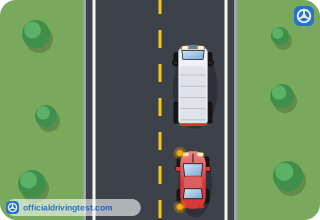
Two-Lane Road, Passing Permitted
Yellow lines separate traffic going in opposite directions. Dashed yellow line markings indicate where passing is permitted on two-lane, two-way roadways.
Manual page 56 · Open this page in the manual (Manual page 56)
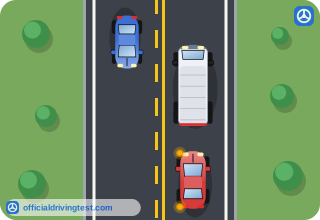
Two-Lane Road, No Passing One Direction
Solid yellow center lines indicate where passing is not permitted; although, turning into a driveway across them is allowed.
Manual page 56 · Open this page in the manual (Manual page 56)
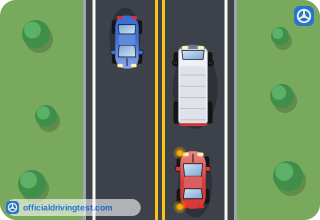
Two-Lane Road, No Passing Either Direction
Two-lane, two-way roadway passing prohibited both directions, crossing centerline permitted only as part of left turn maneuver.
Manual page 55 · Open this page in the manual (Manual page 55)
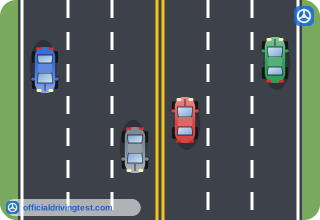
RESTRICTED LANE (Six-Lane Road)
Multi-lane, two-way roadways with preferential lanes assigned to buses, carpools, etc. Diamond markings and special signs are required.
Manual page 55 · Open this page in the manual (Manual page 55)
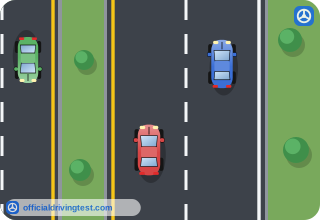
DIVIDED ROADWAYS
Divided roadways, multi-lane with divider. Yellow left edge lines are on all divided or one-way roadways.
Manual page 55 · Open this page in the manual (Manual page 55)
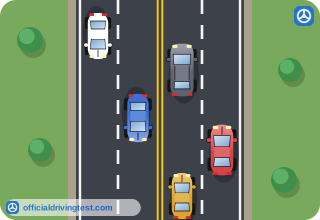
UNDIVIDED ROADWAY
Multi-lane, two-way roadway, crossing centerline permitted only as part of left turn maneuver.
Manual page 55 · Open this page in the manual (Manual page 55)
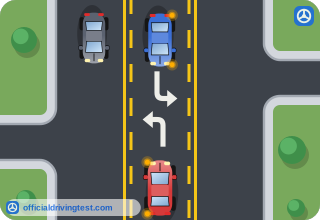
SHARED CENTER LANE
Multi-lane, two-way roadway, with two-way left turn lane reserved exclusively for left turning vehicles in either direction. Special signs and pavement marking arrows are utilized. It is not permissible to use the center left turn lane as a driving, accelerating, or passing lane.
Manual page 55 · Open this page in the manual (Manual page 55)
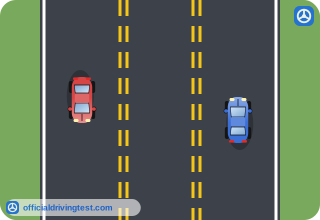
REVERSIBLE CENTER LANE
Multi-lane, two-way roadway, with center lane direction reversible during specified periods. Signs or signals are required.
Manual page 55 · Open this page in the manual (Manual page 55)
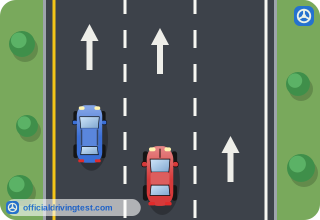
Broken White Lane Line
White lines separate traffic going in the same direction on multi-lane or one-way roadways. Dashed white lines separate lanes of travel where changing lanes is not restricted and where the lane use is not specified.
Manual page 56 · Open this page in the manual (Manual page 56)
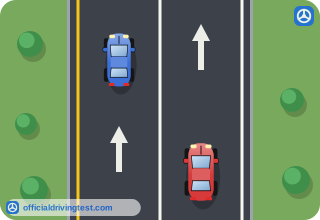
Solid White Lane Line
Solid white lines indicate the edges of lanes specified for certain uses where changing lanes is to be discouraged.
Manual page 56 · Open this page in the manual (Manual page 56)
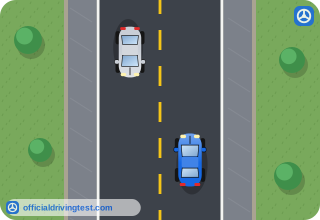
Solid White Edge Line
Solid white lines are also used to mark the outside edge of the pavement or to indicate the edge of the shoulder. Drive within a lane and do not move from it until it is safe to do so.
Manual page 56 · Open this page in the manual (Manual page 56)
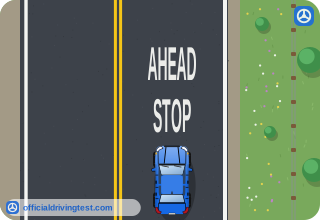
STOP AHEAD (pavement)
“STOP AHEAD,” “SCHOOL,” and “R X R” indicate special conditions to the driver. Although they are not regulatory, they are used only where the condition such as a “STOP” sign, school buildings, or railroad crossing requires extreme caution on the part of the motorist. Pay special heed to these legends and be prepared to stop.
Manual page 56 · Open this page in the manual (Manual page 56)
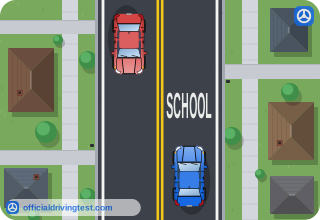
SCHOOL (pavement)
“STOP AHEAD,” “SCHOOL,” and “R X R” indicate special conditions to the driver. Although they are not regulatory, they are used only where the condition such as a “STOP” sign, school buildings, or railroad crossing requires extreme caution on the part of the motorist. Pay special heed to these legends and be prepared to stop.
Manual page 56 · Open this page in the manual (Manual page 56)
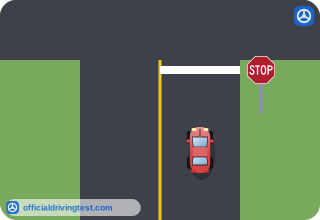
Stop Line
Transverse markings such as stop lines, crosswalks, and parking space markings are white lines intended to guide the driver. Stop lines indicate the farthest point into the intersection an automobile may extend to allow the driver a clear view of approaching traffic. Stop lines are not used with crosswalks where the line farthest from the crossroad indicates the limits of the intersection.
Manual page 56 · Open this page in the manual (Manual page 56)
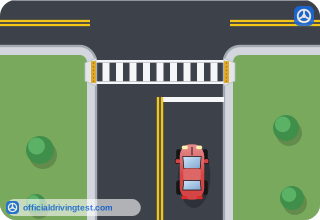
Crosswalk (Ladder)
Crosswalk lines need not be painted at all intersections, nor do they need be in place to indicate where pedestrians have the right-of-way. Pedestrians have the right-of-way at marked crosswalks or at intersections. Do not drive to make a pedestrian yield to you; the motorist should always yield to the pedestrian. Also, do not pass to the right or left of an automobile which is stopped at a crosswalk to allow a pedestrian to cross the street in either direction.
Manual page 34 · Open this page in the manual (Manual page 34)
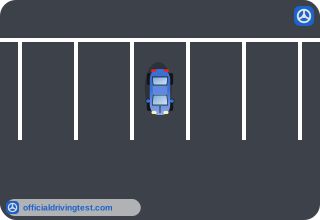
Parking Stall Lines
Transverse markings such as stop lines, crosswalks, and parking space markings are white lines intended to guide the driver. ... Likewise, park within marked parking stalls.
Manual page 56 · Open this page in the manual (Manual page 56)
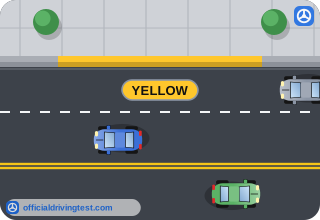
Curb Painted Yellow or Red
“No parking zones” in cities and towns are usually marked by a sign or yellow or red painted curb.
Manual page 62 · Open this page in the manual (Manual page 62)
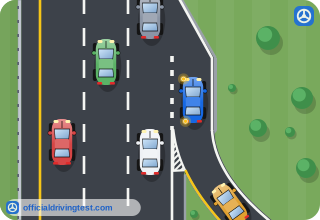
ACCELERATION LANE / DECELERATION LANE
Use the acceleration lane to get up to cruising speed before attempting to merge into the traffic stream. Keep moving on the expressway. A stop can result in a serious rear end crash. Move to the deceleration lane and then slow down.
Manual page 58 · Open this page in the manual (Manual page 58 · PDF 70)