Wyoming: Cheat Sheet
Key facts and numbers from the driver's manual, on two printable pages — free to print or save.
Independent educational site · not affiliated with any government agency or DMV
Driving Test Practiceofficialdrivingtest.com
Road signs
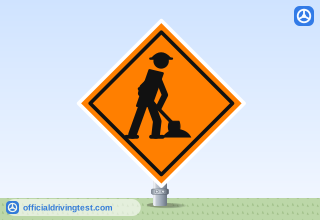 Construction signs warn of temporarily dangerous or unusual conditions on construction or maintenance projects.
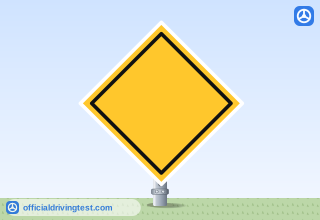 Warning signs alert you to conditions ahead, such as road hazards, construction sites or schools.
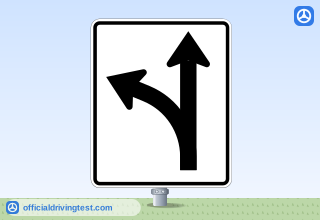 A lane sign with a straight arrow and a branching left arrow lets the driver either turn left or go straight ahead; a right turn is prohibited from that lane.
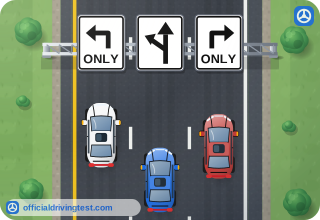 When "ONLY" is on an overhead lane sign, the driver must go the way the arrow points. There is no other option.
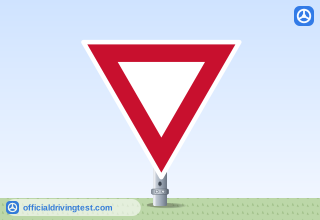 A downward-pointing triangle is a yield sign: yield the right of way to cross traffic or to merging traffic.
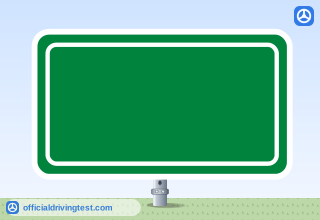 Guide signs tell you where you are, what road you are on and how to get to your destination.
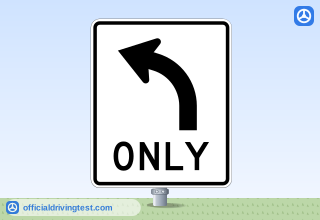 A lane sign with a left-turn arrow and the word ONLY means the driver must turn left; there is no other option.
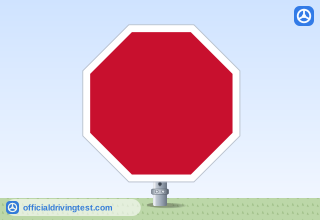 The stop sign shape is reserved for stop signs, and you must come to a complete stop.
Sign shapes and colors
- Warning signs are usually diamond shaped.
- Most guide signs are rectangular.
Traffic signals
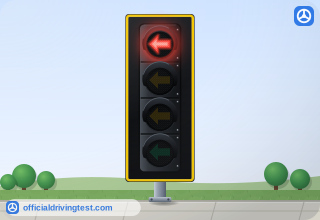 A red arrow prohibits turning in the direction the arrow points.
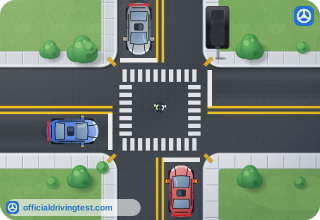 A police officer's directions outweigh traffic lights or signs.
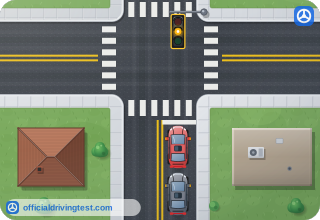 If you cannot stop safely at an amber light, you should carefully go through the intersection.
- After stopping and yielding, you may turn left on red only from a one-way street onto a one-way street.
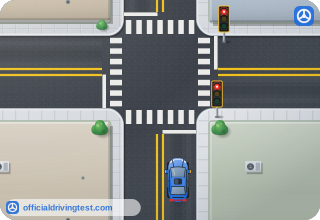 At a red light you must stop behind the crosswalk or stop line.
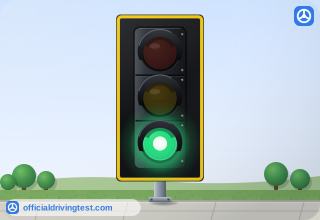 At a green light you must yield to other vehicles and persons already in the intersection.
Right-of-way, turning and passing
- Slower drivers and drivers turning right use the right lane.
- The manual says to never insist on the right of way at the risk of a crash.
- You move back into the right lane once the front of the passed vehicle shows in your rear view mirror.
- Lane changes are not made before an intersection or while in one.
- The operator must yield the right of way to all traffic in the main traveled roadway when crossing.
- Traffic in a roundabout moves at slow speeds in a counterclockwise direction.
- A lane is a section of roadway made for a single line of vehicles.
Alcohol and drugs
- Alcohol seriously reduces the abilities to identify, predict, decide and execute, which are needed to drive safely.
- A 3rd or subsequent offense within 10 years brings a three-year revocation.
- A BAC of 0.08 percent is considered high, and people at this level are impaired mentally and physically whether or not they show it.
- A driver must hold the ignition interlock restricted driver license for the full required period before any other license type.
- Ignition interlock devices are installed at the applicant's own expense.
- A first offense within 10 years brings a 90-day suspension.
Speed and space
- Tractor-trailer drivers should stay at least six seconds back.
- The manual lists reducing your speed to encourage the tailgater to pass, along with other steps such as giving yourself more room ahead.
- Fog hides hazards, so the manual says to create as big a space cushion as possible.
- Packed snow gives much less grip than dry pavement, so the manual says to cut your speed by at least half.
- Thawing leaves a thin film of water over melting ice, which makes the surface even more slick.
- By speeding up or slowing down, you can pass the joggers and the truck one at a time.
- In the Identify step, defensive drivers identify anything that could make them slow, speed up or turn as a critical object.
Licensing basics
- The Wyoming Highway Patrol approves applications for restricted licenses.
- Code B is the restriction for corrective lenses.
- People whose driving privileges are suspended, canceled, denied or revoked in this or any other state may not be eligible.
- Ten of the hours must be nighttime driving.
Lights, signals and your vehicle
- Drivers must signal at least 100 feet from an intersection.
- One of the ways to communicate is to use hand motions to give pedestrians and other drivers the right of way.
- To slow down or stop, the hand and arm are extended down from the elbow.
- The manual says worn tread greatly reduces the ability to grip the road in adverse conditions.
Pavement markings
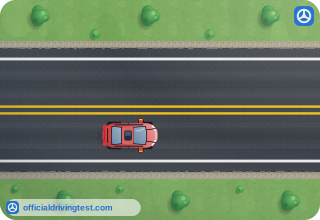 A double yellow line separating traffic means a car cannot pass.
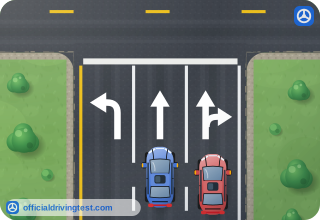 Arrows painted on the road and arrows on overhead lane signs tell the driver the same thing.
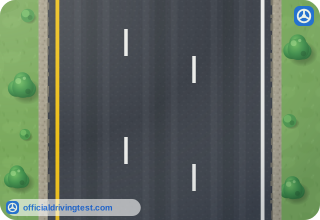 White lines separate traffic going the same direction.
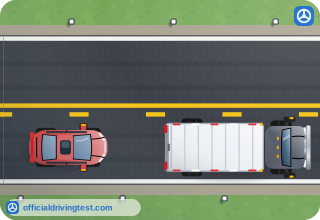 When the solid yellow line is in the oncoming lane and the broken line is in yours, you may pass if the way is clear.
Interstate driving
- Even with a flat tire the vehicle can be driven slowly to avoid the hazard of stopping on a bridge or underpass.
- The definition states plainly that it is not legal to ride over, across or on the median.
- If it is safe, move left to let entering vehicles come onto the Interstate smoothly.
Parking rules
- When parked facing uphill with a curb, you turn the wheels away from the curb and set the parking brake.
- Do not dart out into traffic when leaving a parking space; check, signal and yield first.
- A person may receive one placard with one or more sets of plates, or two placards and no plates.
- Parking on a sidewalk, within an intersection or in a crosswalk is not legal.
Railroad crossings
- The R-X-R pavement marking is followed by a stop line that is closer to the tracks.
- The manual says to always expect a train at every highway-rail intersection.
Pedestrians
- Children can run in front of a vehicle quickly, so the manual suggests slowing down and making a larger space cushion.
- Pedestrians include walkers, joggers, skaters and people using wheelchairs.
- A pedestrian vehicle is a self-propelled conveyance made for the exclusive use of persons with a physical disability.
Sharing the road
- The manual warns it is difficult for some drivers to judge a motorcycle's distance and speed.
- A helmet is not legally required for bicyclists, but a properly fitted, certified helmet is highly recommended to protect against serious head injury.
- Slow-moving vehicles have the legal right to be on the road, so drivers should not be impatient.
- Bicyclists must ride as close to the right side of the pavement as is practical and safe.
Seat belts and child safety
- A rear-facing infant seat must not be placed in front of an active airbag.
- The manual says the shoulder strap should not be worn alone.
- Intermediate license holders must make sure every occupant wears a seat belt.
Distractions and emotions
- Deep emotions take away the ability to identify critical objects and decide soundly.
- WYDOT recommends pulling well off the highway and stopping before a call or text.
- Look back at the highway and your mirrors between dialing the first and last numbers to check for developing safety problems.
Hazards and emergencies
- The manual says do not apply the brakes in a skid with conventional brakes; stop doing what started the skid instead.
- Concentrate on keeping control of your vehicle before, during and after the collision.
- Holding the release lets you ease up on the parking brake if the rear wheels lock and you begin to skid.
- The manual says not to walk for help if you are on the Interstate.
Emergency vehicles and work zones
- If there is not enough braking distance, the truck will rear end your vehicle, causing a serious or fatal crash.
- On a two-lane road, Wyoming law requires you to reduce your speed by at least 20 mph when passing a working emergency or maintenance vehicle.
Insurance and financial responsibility
- An SR-22 is an insurance certificate that the driver's insurance company files with the department.
Suspensions and your driving record
- The written request and the fee must be postmarked within 20 days of the date of the notice.
- A parent or guardian may get the record of a child who is a minor under 18 years of age.
Health and driving
- Good vision lets drivers identify critical objects sooner and so have time to predict, decide and execute.