Utah: Distractions, fatigue and aggressive driving
Utah’s handheld wireless device law, drowsy driving, emotions behind the wheel, and road rage. Split into 2 shorter tests so you're not stuck in one long quiz.
Independent educational site · not affiliated with any government agency or DMV
Choose a part
Distractions, fatigue and aggressive driving — Part 1
Questions in this part include: “Which situation fits the handbook’s definition of careless driving?”
StartDistractions, fatigue and aggressive driving — Part 2
Questions in this part include: “On long trips, how often does the handbook say to plan a break from driving?”
StartAll 34 Distractions, fatigue and aggressive driving questions with answers
Choose a part above to take a practice test, or study every question and answer here.
Show the questions and answersHide the questions
-
Which situation fits the handbook’s definition of careless driving?
- Using a turn signal for longer than the required two seconds
- Driving with the headlights switched on during the daytime
- Wearing a safety belt while the vehicle is in motion on a road
- A moving violation committed while attending to personal grooming
Show answer
Correct answer: A moving violation committed while attending to personal grooming
Careless driving includes a moving violation committed while distracted by an in-vehicle activity such as grooming or searching for an item.
Source: Utah Driver Handbook (2026 edition (new 2026 laws effective May 6, 2026)), page 1 · Open this page in the manual (Manual page 1)
-
If you are upset and need to cool off before driving, what does the handbook advise?
- Stay off the road until you have cooled down
- Drive slowly on quiet streets until you feel calmer
- Drive on the freeway, where there are fewer stops
- Drive in the right lane only until you feel calmer
Show answer
Correct answer: Stay off the road until you have cooled down
The handbook says to do anything to cool off, such as taking a walk or talking to a friend, but to stay off the road until calm.
Source: Utah Driver Handbook (2026 edition (new 2026 laws effective May 6, 2026)), page 21 · Open this page in the manual (Manual page 21)
-
What does the handbook suggest doing to help you concentrate on driving when your mind is elsewhere?
- Listen to the radio or sing to yourself
- Invite a passenger to keep you talking
- Drive faster so the trip is over sooner
- Pull over every mile to rest your eyes
Show answer
Correct answer: Listen to the radio or sing to yourself
The handbook suggests listening to the radio or singing to yourself as a way to concentrate on driving.
Source: Utah Driver Handbook (2026 edition (new 2026 laws effective May 6, 2026)), page 21 · Open this page in the manual (Manual page 21)
-
Why does the handbook advise leaving a few minutes early?
- So you can find a parking space close to your destination
- So you can drive below the minimum speed limit on the freeway
- So you will not feel the need to speed or beat traffic signals
- So you can avoid all other traffic on the road you take
Show answer
Correct answer: So you will not feel the need to speed or beat traffic signals
Leaving early means you will not feel the need to speed or beat traffic signals, which could lead to a citation or crash.
Source: Utah Driver Handbook (2026 edition (new 2026 laws effective May 6, 2026)), page 21 · Open this page in the manual (Manual page 21)
-
According to the handbook, how can emotions increase your driving risk?
- By making your vehicle harder to steer and slowing its response to the brakes
- By interfering with thinking and attention and slowing information processing
- By weakening your sense of balance and your ability to sit upright on long trips
- By making other drivers react more slowly to the mistakes you make
Show answer
Correct answer: By interfering with thinking and attention and slowing information processing
Emotions interfere with your thinking ability, create a lack of attention, and interrupt your ability to process information.
Source: Utah Driver Handbook (2026 edition (new 2026 laws effective May 6, 2026)), page 51 · Open this page in the manual (Manual page 51)
-
If you are angry or worried before driving, what does the handbook suggest?
- Take a short drive around the block to calm down before you head out
- Take a short walk or nap and stay off the road until the symptoms have passed
- Drive on a quiet road until you feel better and the symptoms have passed
- Listen to loud music on the way to stay alert and calm
Show answer
Correct answer: Take a short walk or nap and stay off the road until the symptoms have passed
Give yourself time to cool off, and keep off the road until the feelings have passed.
Source: Utah Driver Handbook (2026 edition (new 2026 laws effective May 6, 2026)), page 51 · Open this page in the manual (Manual page 51)
-
Which way of dealing with your emotions before a driving trip involves your schedule?
- Drive faster than usual to make up for lost time
- Skip rest stops during the trip to arrive more quickly
- Start the trip later in the day
- Leave a few minutes early to give yourself extra time
Show answer
Correct answer: Leave a few minutes early to give yourself extra time
The handbook suggests giving yourself extra time for the trip by leaving a few minutes early.
Source: Utah Driver Handbook (2026 edition (new 2026 laws effective May 6, 2026)), page 51 · Open this page in the manual (Manual page 51)
-
If you are too upset to drive well, which option is listed for dealing with your emotions?
- Have someone else drive
- Drive only on familiar streets
- Open the windows and turn up the radio
- Drive in the slow lane with the hazard lights on
Show answer
Correct answer: Have someone else drive
The handbook lists having someone else drive as a way of dealing with strong emotions.
Source: Utah Driver Handbook (2026 edition (new 2026 laws effective May 6, 2026)), page 51 · Open this page in the manual (Manual page 51)
-
According to the Utah handbook, what is a distraction?
- Anything that takes your mind or body away from driving
- Only an object that blocks your view of the road
- Any loud noise that comes from outside the vehicle
- Anything that makes you drive below the speed limit
Show answer
Correct answer: Anything that takes your mind or body away from driving
The handbook defines a distraction as anything that takes your mind or body away from driving, and says distractions can cause crashes, injuries and deaths.
Source: Utah Driver Handbook (2026 edition (new 2026 laws effective May 6, 2026)), page 56 · Open this page in the manual (Manual page 56)
-
Which of these should you do before you start driving to avoid distractions?
- Set your navigation system after you are on the road
- Keep mobile devices turned on and within reach
- Eat and groom before you leave
- Leave loose items where you can grab them quickly
Show answer
Correct answer: Eat and groom before you leave
The handbook says to turn off mobile devices, set navigation systems, eat and groom before you leave, and secure all loose items.
Source: Utah Driver Handbook (2026 edition (new 2026 laws effective May 6, 2026)), page 56 · Open this page in the manual (Manual page 56)
-
While you are driving, what does the handbook say about eating?
- Eat only snacks you can hold in one hand
- Do not eat while driving
- Eat only when the road ahead is empty
- Eat only while stopped at a red light
Show answer
Correct answer: Do not eat while driving
Eating is listed among the things you should not do while driving because it takes your mind and hands away from the task.
Source: Utah Driver Handbook (2026 edition (new 2026 laws effective May 6, 2026)), page 56 · Open this page in the manual (Manual page 56)
-
How does the handbook say you should handle a disagreement with a passenger while you are driving?
- Settle the disagreement before the next turn
- Explain your side of it calmly while driving
- Ask the passenger to call out hazards for you
- Do not argue with passengers
Show answer
Correct answer: Do not argue with passengers
Arguing with passengers is listed as a distraction to avoid while driving.
Source: Utah Driver Handbook (2026 edition (new 2026 laws effective May 6, 2026)), page 56 · Open this page in the manual (Manual page 56)
-
How should pets travel in a vehicle, according to the handbook?
- In a pet carrier, not loose in the vehicle
- On the driver's lap with a short leash
- Loose on the back seat if they are calm
- On the front passenger seat without restraint
Show answer
Correct answer: In a pet carrier, not loose in the vehicle
The handbook lists keeping pets in a pet carrier, not loose in the vehicle, as a way to avoid distraction.
Source: Utah Driver Handbook (2026 edition (new 2026 laws effective May 6, 2026)), page 56 · Open this page in the manual (Manual page 56)
-
What should you do if you drop something, lose a contact lens or are stung by a bee while driving?
- Slow down and deal with the problem while you keep driving
- Reach for the item quickly while you stay in your lane
- Stop in your lane of travel and deal with the problem there
- Immediately pull over to the side of the roadway and deal with it
Show answer
Correct answer: Immediately pull over to the side of the roadway and deal with it
The handbook warns that people who panic often run off the road or into the car ahead, so you should pull over to the side right away.
Source: Utah Driver Handbook (2026 edition (new 2026 laws effective May 6, 2026)), page 56 · Open this page in the manual (Manual page 56)
-
How does the handbook define fatigue?
- Feeling nervous about driving in traffic
- A sharp pain caused by driving too long
- Anger caused by the mistakes of other drivers
- Being physically or mentally tired
Show answer
Correct answer: Being physically or mentally tired
When you are physically or mentally tired, that is called fatigue; it can come from strain, illness or lack of sleep.
Source: Utah Driver Handbook (2026 edition (new 2026 laws effective May 6, 2026)), page 57 · Open this page in the manual (Manual page 57)
-
How can fatigue affect your driving?
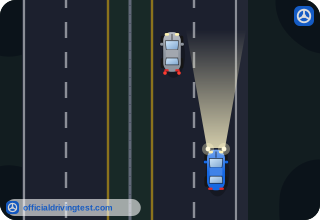
- It sharpens your focus on the road ahead of you
- It can make you see less clearly and slow you down
- It makes your reactions faster but less accurate
- It affects only your hearing, not your vision
Show answer
Correct answer: It can make you see less clearly and slow you down
The handbook says fatigue can make you see less clearly and make your mind and body slow down, so you may not stop as fast as you need to.
Source: Utah Driver Handbook (2026 edition (new 2026 laws effective May 6, 2026)), page 57 · Open this page in the manual (Manual page 57)
-
Before a trip, how many hours of sleep does the handbook say most people need to stay awake during the day?
- 7 to 9 hours
- 4 to 5 hours
- 5 to 6 hours
- 10 to 12 hours
Show answer
Correct answer: 7 to 9 hours
The road trip advice says most people need 7 to 9 hours of sleep to stay awake during the day.
Source: Utah Driver Handbook (2026 edition (new 2026 laws effective May 6, 2026)), page 57 · Open this page in the manual (Manual page 57)
-
On long trips, how often does the handbook say to plan a break from driving?
- Every hour
- Every three hours
- Every two hours
- Every four hours
Show answer
Correct answer: Every two hours
The handbook says to plan to stop every two hours during long trips to take a break from driving.
Source: Utah Driver Handbook (2026 edition (new 2026 laws effective May 6, 2026)), page 57 · Open this page in the manual (Manual page 57)
-
Which of these does the handbook list as something to do before a road trip?
- Plan to drive straight through without stops to save time
- Have another person go along to watch your driving
- Choose a route with no rest areas on it
- Eat a large meal right before you leave
Show answer
Correct answer: Have another person go along to watch your driving
Before a trip, the handbook advises having another person along to watch your driving.
Source: Utah Driver Handbook (2026 edition (new 2026 laws effective May 6, 2026)), page 57 · Open this page in the manual (Manual page 57)
-
If you start to feel tired while driving, what does the handbook suggest?
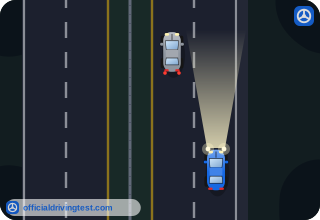
- Open the windows and turn up the radio to stay awake
- Keep driving at a steady speed until the feeling passes
- Pull off at an exit or rest area and take a 20-minute power nap
- Speed up to reach your destination before you fall asleep
Show answer
Correct answer: Pull off at an exit or rest area and take a 20-minute power nap
The handbook says to stop driving, pull off at an exit or rest area and take a 20-minute power nap, or find a place to sleep for the night.
Source: Utah Driver Handbook (2026 edition (new 2026 laws effective May 6, 2026)), page 58 · Open this page in the manual (Manual page 58)
-
According to the ways to avoid fatigue, when should you not drive?
- Late at night
- At dawn
- In mid-afternoon
- Right after lunch
Show answer
Correct answer: Late at night
Among the ways to avoid fatigue, the handbook says not to drive late at night.
Source: Utah Driver Handbook (2026 edition (new 2026 laws effective May 6, 2026)), page 58 · Open this page in the manual (Manual page 58)
-
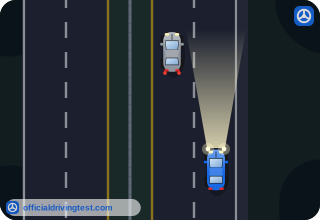
Which is a warning sign of drowsiness listed in the handbook?
- Feeling unusually alert and talkative
- Noticing every road sign well before you reach it
- Steering smoothly in the center of your lane
- Hitting a rumble strip or drifting from your lane
Show answer
Correct answer: Hitting a rumble strip or drifting from your lane
Hitting a rumble strip or drifting from your lane is listed as a warning sign of drowsiness.
Source: Utah Driver Handbook (2026 edition (new 2026 laws effective May 6, 2026)), page 58 · Open this page in the manual (Manual page 58)
-
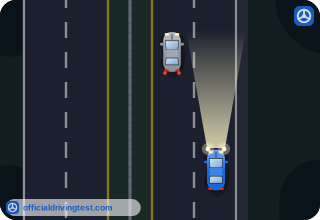
Which of these is a warning sign of drowsiness?
- You feel hungry soon after a large meal
- You can't remember the last few miles you drove
- You feel too warm and want a drink of water
- You are talking with a passenger about the trip
Show answer
Correct answer: You can't remember the last few miles you drove
Being unable to remember the last few miles driven is a warning sign of drowsiness.
Source: Utah Driver Handbook (2026 edition (new 2026 laws effective May 6, 2026)), page 58 · Open this page in the manual (Manual page 58)
-
Which of these is a warning sign of drowsiness?
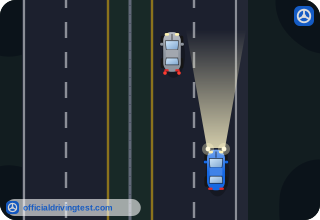
- Tailgating or missing traffic signs
- Slowing down well before every stop sign
- Checking your mirrors every few seconds
- Passing other vehicles only when it is safe
Show answer
Correct answer: Tailgating or missing traffic signs
Tailgating or missing traffic signs is listed among the warning signs of drowsiness.
Source: Utah Driver Handbook (2026 edition (new 2026 laws effective May 6, 2026)), page 58 · Open this page in the manual (Manual page 58)
-
Under Utah's handheld wireless communication device (HWC) rule, which action is prohibited while operating a moving motor vehicle on a highway?
- Using voice commands to connect to a call, if over 18
- Manually accessing the internet on the device
- Using hands-free GPS functions
- Reporting a medical emergency with hands-free technology
Show answer
Correct answer: Manually accessing the internet on the device
The rule bars manually writing, sending or reading written communication, which includes dialing a number, accessing the internet and viewing or recording video.
Source: Utah Driver Handbook (2026 edition (new 2026 laws effective May 6, 2026)), page 58 · Open this page in the manual (Manual page 58)
-
What does Utah law allow drivers over 18 to do with an HWC device while driving?
- Talk, as long as voice commands are used to connect to the call
- Talk, as long as the device is held against the ear
- Talk, but only while stopped in traffic
- Talk, as long as the call lasts less than five minutes
Show answer
Correct answer: Talk, as long as voice commands are used to connect to the call
Utah law allows drivers over 18 to talk on an HWC device while driving as long as voice commands are used to connect to the call.
Source: Utah Driver Handbook (2026 edition (new 2026 laws effective May 6, 2026)), page 59 · Open this page in the manual (Manual page 59)
-
When using hands-free and voice-activated technology, which of these does the law allow?
- Playing games on the device
- Streaming video for passengers
- Using GPS functions
- Taking photographs of the road
Show answer
Correct answer: Using GPS functions
With hands-free and voice-activated technology, the law allows using GPS functions and reporting safety hazards, criminal activity and medical emergencies.
Source: Utah Driver Handbook (2026 edition (new 2026 laws effective May 6, 2026)), page 59 · Open this page in the manual (Manual page 59)
-
For which purpose may a driver under 18 use an HWC device while operating a motor vehicle?
- Calling a friend about weekend plans
- Communicating with a parent or legal guardian
- Looking up a restaurant on the internet
- Sending a text message to a classmate
Show answer
Correct answer: Communicating with a parent or legal guardian
Drivers under 18 may use an HWC device only for a medical emergency, reporting a safety hazard, reporting criminal activity, or communicating with a parent or legal guardian.
Source: Utah Driver Handbook (2026 edition (new 2026 laws effective May 6, 2026)), page 59 · Open this page in the manual (Manual page 59)
-
A person convicted of a texting violation is guilty of what, and what is the maximum fine?
- A Class A misdemeanor with a maximum fine of $100
- A Class C misdemeanor with a maximum fine of $500
- An infraction with a maximum fine of $50
- A Class C misdemeanor with a maximum fine of $100
Show answer
Correct answer: A Class C misdemeanor with a maximum fine of $100
A texting conviction is a Class C misdemeanor with a maximum fine of $100.
Source: Utah Driver Handbook (2026 edition (new 2026 laws effective May 6, 2026)), page 59 · Open this page in the manual (Manual page 59)
-
A texting violation becomes a Class B misdemeanor in which situation?
- If the texting happens in a school zone or work zone
- If the driver texts for longer than one minute
- If there is bodily injury or a previous violation
- If the driver was also driving above the speed limit
Show answer
Correct answer: If there is bodily injury or a previous violation
The offense is raised to a Class B misdemeanor if the driver inflicts bodily injury or has a previous violation for this offense.
Source: Utah Driver Handbook (2026 edition (new 2026 laws effective May 6, 2026)), page 59 · Open this page in the manual (Manual page 59)
-
What can an officer do if they observe a driver texting?
- Pull the driver over
- Only send a warning by mail later
- Cite the driver only if another violation is seen
- Only note the plate and wait for a complaint
Show answer
Correct answer: Pull the driver over
The handbook says officers may pull a driver over if they observe the driver texting.
Source: Utah Driver Handbook (2026 edition (new 2026 laws effective May 6, 2026)), page 59 · Open this page in the manual (Manual page 59)
-
When may a conviction for a texting violation lead to suspension of your license?
- When the judge has ordered the suspension
- Automatically, on every texting conviction
- Only when the violation also caused a crash
- Only when you are under 21 years of age
Show answer
Correct answer: When the judge has ordered the suspension
A texting conviction leads to suspension when the judge orders it.
Source: Utah Driver Handbook (2026 edition (new 2026 laws effective May 6, 2026)), page 71 · Open this page in the manual (Manual page 71)
-
How many points does texting while driving add to your record?
- 30 points
- 40 points
- 60 points
- 50 points
Show answer
Correct answer: 50 points
Texting while driving carries 50 points.
Source: Utah Driver Handbook (2026 edition (new 2026 laws effective May 6, 2026)), page 72 · Open this page in the manual (Manual page 72)
-
What are driver-assist safety features meant to do?
- Assist you in driving, not drive the vehicle for you
- Allow you to skip head checks and mirror use
- Replace the need to look at the road
- Take over driving so you can relax and look away
Show answer
Correct answer: Assist you in driving, not drive the vehicle for you
Safety features only assist; you must stay engaged and focused on driving.
Source: Utah Driver Handbook (2026 edition (new 2026 laws effective May 6, 2026)), page 90 · Open this page in the manual (Manual page 90)