Ohio: Sharing the road — Part 1 Practice Test
Questions in this part include: “How many amber (yellow) warning lights does a school bus driver activate when preparing to stop the bus?” · “What do school bus drivers do if they believe a motorist has unlawfully passed the stopped bus?”
Independent educational site · not affiliated with any government agency or DMV
Ready? Test yourself
- Instant feedback with an explanation
- Every answer cites its source in the manual
- Your best score is saved on this device
Questions are original and based on the official manual "Ohio Driver Manual" (HSY 7607 10/25 (October 2025)), Ohio Bureau of Motor Vehicles.
All 18 questions in this practice test
Take the test above first, then use this list to study. Tap “Show answer” to see the correct answer and explanation.
Show the questions and answersHide the questions
-
When must a driver stop for a school bus?
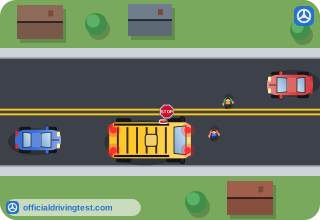
- When the bus is dropping off or picking up students
- Only when the bus has its stop arm extended
- Only when the bus is on the same side of the road as you
- Only when children are crossing the street in front of it
Show answer
Correct answer: When the bus is dropping off or picking up students
The manual says a driver must stop for a school bus when it is dropping off or picking up students.
Source: Ohio Driver Manual (HSY 7607 10/25 (October 2025)), page 22
-
How many amber (yellow) warning lights does a school bus driver activate when preparing to stop the bus?
- Two
- Six
- Four
- Eight
Show answer
Correct answer: Four
The manual says the driver activates four amber warning lights, two on the front and two on the rear of the bus.
Source: Ohio Driver Manual (HSY 7607 10/25 (October 2025)), page 22
-
How long do a school bus's amber warning lights continue to flash?
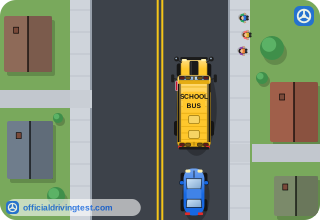
- Until the children have boarded
- Until the bus is fully stopped
- Until the stop arm extends
- Until the bus driver signals motorists to proceed
Show answer
Correct answer: Until the bus is fully stopped
The manual says the warning lights continue to flash until the bus is fully stopped.
Source: Ohio Driver Manual (HSY 7607 10/25 (October 2025)), page 22
-
What should you do when a school bus's amber lights are flashing?
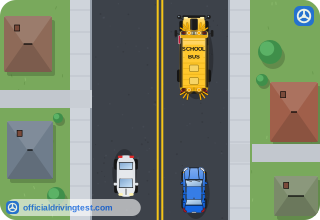
- Stop immediately and remain stopped until the lights go out
- Speed up to pass before the red lights start flashing
- Ignore the lights, since they do not apply to other vehicles
- Prepare to stop as soon as the bus comes to a full stop
Show answer
Correct answer: Prepare to stop as soon as the bus comes to a full stop
The manual says other vehicles are not required to stop during the amber flashing lights but should prepare to stop once the bus is fully stopped.
Source: Ohio Driver Manual (HSY 7607 10/25 (October 2025)), page 22
-
When do the four red lights on a school bus flash?
- While the bus is slowing down to make its stop
- While the bus is traveling between stops
- When the bus is stopped and children enter or leave
- Only when the bus is empty
Show answer
Correct answer: When the bus is stopped and children enter or leave
The manual says that when the bus is completely stopped, the amber lights stop and four red lights flash while the children enter or leave.
Source: Ohio Driver Manual (HSY 7607 10/25 (October 2025)), page 22
-
Where does a school bus's stop arm with flashing red lights extend?
- Beneath the window on the left side of the bus
- From the rear bumper of the bus
- Above the windshield of the bus
- From the right side of the bus, near the door
Show answer
Correct answer: Beneath the window on the left side of the bus
The manual says the stop arm extends automatically beneath the window on the left side of the bus.
Source: Ohio Driver Manual (HSY 7607 10/25 (October 2025)), page 22
-
A school bus has stopped to let children off but has no stop arm. What must you do?
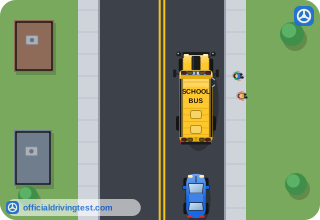
- Proceed with caution because the bus has no stop arm
- Stop only if you can see children near the road
- Pass slowly on the side away from the bus door
- Stop, because you are still required to
Show answer
Correct answer: Stop, because you are still required to
The manual says that if there is no stop arm, you are still required to stop.
Source: Ohio Driver Manual (HSY 7607 10/25 (October 2025)), page 22
-
How far must you stop from the front or rear of a stopped school bus on a road with fewer than four lanes?
- At least 5 feet
- At least 10 feet
- At least 20 feet
- At least 50 feet
Show answer
Correct answer: At least 10 feet
The manual says traffic must stop at least 10 feet from the front or rear of the bus.
Source: Ohio Driver Manual (HSY 7607 10/25 (October 2025)), page 22
-
If a school bus is stopped on a road with fewer than four lanes, which traffic must stop?
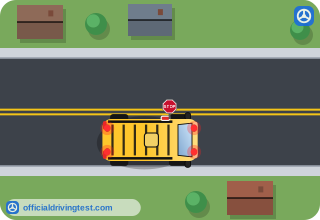
- All traffic approaching the bus from either direction
- Only traffic behind the bus
- Only traffic approaching from the front of the bus
- Only traffic traveling in the same direction as the bus
Show answer
Correct answer: All traffic approaching the bus from either direction
The manual says that with fewer than four lanes, all traffic approaching the bus from either direction must stop.
Source: Ohio Driver Manual (HSY 7607 10/25 (October 2025)), page 22
-
If a school bus is stopped on a road with four or more lanes, which traffic must stop?
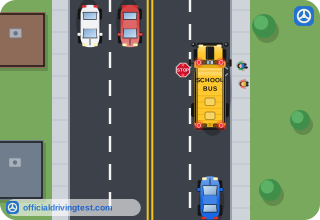
- All traffic approaching from either direction
- Only traffic approaching from the front of the bus
- Only traffic proceeding in the same direction as the bus
- No traffic, because the road is wide enough to pass
Show answer
Correct answer: Only traffic proceeding in the same direction as the bus
The manual says that with four or more lanes, only traffic proceeding in the same direction as the bus must stop at the rear of the bus.
Source: Ohio Driver Manual (HSY 7607 10/25 (October 2025)), page 22
-
On a road with fewer than four lanes, how long must you remain stopped for a stopped school bus?
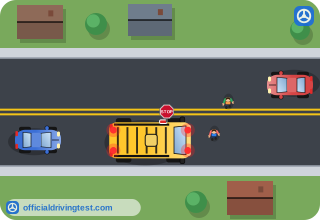
- Until the amber lights start flashing again after the children are off
- Until the bus begins to move or the bus driver signals motorists to proceed
- Until the last child has walked out of sight of the bus
- Until the bus driver turns off the engine and opens the door
Show answer
Correct answer: Until the bus begins to move or the bus driver signals motorists to proceed
The manual says to remain stopped until the bus begins to move or the bus driver signals motorists to proceed.
Source: Ohio Driver Manual (HSY 7607 10/25 (October 2025)), page 22
-
What do school bus drivers do if they believe a motorist has unlawfully passed the stopped bus?
- They follow the vehicle and stop the driver to get his or her name and address
- They flash the bus headlights at the driver
- They take no action, because only police can identify a driver
- If possible, they report the license plate number and location to law enforcement
Show answer
Correct answer: If possible, they report the license plate number and location to law enforcement
The manual says school bus drivers will, if possible, report the plate number and location to the law enforcement agency.
Source: Ohio Driver Manual (HSY 7607 10/25 (October 2025)), page 22
-
What rights and responsibilities do motorcyclists have compared with other drivers?
- The same rights and responsibilities
- Fewer rights and more responsibilities
- More rights and fewer responsibilities
- Rights only when riding in a group
Show answer
Correct answer: The same rights and responsibilities
Motorcyclists have the same rights and responsibilities as other drivers.
Source: Ohio Driver Manual (HSY 7607 10/25 (October 2025)), page 34
-
How much of a lane should you allow a motorcyclist?
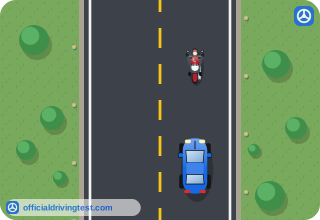
- Half of the lane width
- One third of the lane width
- A full lane width
- Only the center line edge
Show answer
Correct answer: A full lane width
The manual says to allow a motorcyclist a full lane width because space is needed to react to other traffic.
Source: Ohio Driver Manual (HSY 7607 10/25 (October 2025)), page 34
-
How does the stopping distance of a motorcycle compare with that of a car?
- Motorcycles require a shorter stopping distance
- Motorcycles require a greater stopping distance
- Motorcycles stop in the same distance as cars
- It depends only on the color of the motorcycle
Show answer
Correct answer: Motorcycles require a greater stopping distance
Motorcycles require a greater stopping distance than cars and other passenger vehicles.
Source: Ohio Driver Manual (HSY 7607 10/25 (October 2025)), page 34
-
A motorcycle's turn signal is flashing. What should you do?
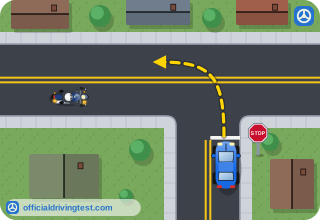
- Assume it will turn at the next driveway that you pass
- Assume it will turn within the next block or intersection
- Pass it immediately on the same side that it is signaling
- Not assume it is turning, since its signal may not self-cancel
Show answer
Correct answer: Not assume it is turning, since its signal may not self-cancel
Motorcycle turn signals may not self-cancel and the rider may have forgotten to turn them off, so do not assume a motorcycle is turning.
Source: Ohio Driver Manual (HSY 7607 10/25 (October 2025)), page 34
-
What following distance should you allow when following a motorcyclist on a wet road?
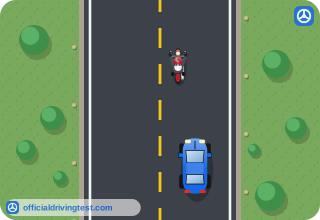
- A minimum of 1 second
- A minimum of 2 seconds
- A minimum of 4 seconds, or more
- A minimum of 8 seconds, in all conditions
Show answer
Correct answer: A minimum of 4 seconds, or more
On a wet road, allow a minimum 4-second following distance or more when following a motorcyclist.
Source: Ohio Driver Manual (HSY 7607 10/25 (October 2025)), page 34
-
Why might a motorcycle rider suddenly change speed or lane position?
- To avoid hazards such as potholes, gravel, or railroad crossings
- To avoid the rider's own turn signal flashing on the dash
- Because motorcycle riders are unable to hold their lane
- To show you that you are following too far behind them
Show answer
Correct answer: To avoid hazards such as potholes, gravel, or railroad crossings
Riders may suddenly change speed or lane position to avoid hazards such as potholes, gravel, wet surfaces, pavement seams, railroad crossings, and grooved pavement.
Source: Ohio Driver Manual (HSY 7607 10/25 (October 2025)), page 34