New Mexico: Parking rules Practice Test
Where New Mexico law forbids parking, the distances from hydrants, crosswalks, stop signs and railroad crossings, and parking on hills and next to a curb.
Independent educational site · not affiliated with any government agency or DMV
Ready? Test yourself
- Instant feedback with an explanation
- Every answer cites its source in the manual
- Your best score is saved on this device
- Keyboard: press 1 to 4 to answer and Enter for the next question
Questions are original and based on the official manual "New Mexico Driver Manual" (Version 11.19.19), New Mexico Motor Vehicle Division (MVD).
All 22 questions in this practice test
Take the test above first, then use this list to study. Tap “Show answer” to see the correct answer and explanation.
Show the questions and answersHide the questions
-
Whenever you park, your vehicle should be visible to vehicles approaching from which direction?
- Only from behind
- Only from the front
- Only from the left
- Either direction
Show answer
Correct answer: Either direction
A parked vehicle must be visible to vehicles approaching from either direction.
Source: New Mexico Driver Manual (Version 11.19.19), page 13
-
Whenever you park, how should the place you choose relate to travel lanes?
- Close enough to the travel lane that you can pull out quickly
- Far enough from any travel lane to avoid interfering with traffic
- Directly beside the lane so that other cars cannot park there
- Partly inside the lane so other drivers can see the vehicle
Show answer
Correct answer: Far enough from any travel lane to avoid interfering with traffic
A parked vehicle should be far enough from any travel lane to avoid interfering with traffic.
Source: New Mexico Driver Manual (Version 11.19.19), page 13
-
When you park a vehicle that has a manual transmission, what should you do?
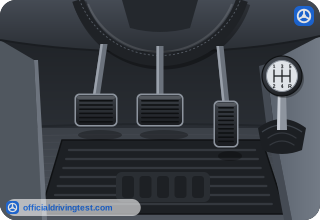
- Set the parking brake and leave it in neutral
- Leave it in neutral without using the parking brake
- Set the parking brake and keep the clutch pressed
- Set the parking brake and leave the vehicle in gear
Show answer
Correct answer: Set the parking brake and leave the vehicle in gear
Always set your parking brake when you park, and leave a manual-transmission vehicle in gear.
Source: New Mexico Driver Manual (Version 11.19.19), page 13
-
When you park a vehicle that has an automatic transmission, what position should you leave it in?
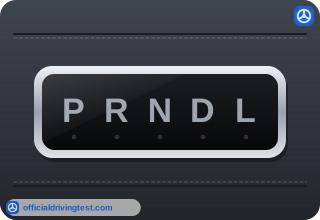
- Park
- Neutral
- Drive
- Reverse
Show answer
Correct answer: Park
An automatic-transmission vehicle should be left in “park” when parked.
Source: New Mexico Driver Manual (Version 11.19.19), page 13
-
Which side of a parked vehicle should you get out on if you can?
- The street side
- The driver's side
- The curb side
- Whichever side is closer to the door handle
Show answer
Correct answer: The curb side
Get out of the vehicle on the curb side if you can; if you must use the street side, check traffic first.
Source: New Mexico Driver Manual (Version 11.19.19), page 13
-
What should you never do when you park?
- Set the parking brake
- Lock the doors
- Check traffic before opening the door
- Leave the ignition keys in the vehicle
Show answer
Correct answer: Leave the ignition keys in the vehicle
You should never leave the ignition keys in a parked vehicle.
Source: New Mexico Driver Manual (Version 11.19.19), page 13
-
If you must park on a roadway, how should you park?
- Partly in the travel lane, with your flashers on, so others see you
- As far from traffic as possible, close to the curb if there is one
- Near the center of the road with your hazard lights on
- Far from the curb so that the doors can open fully
Show answer
Correct answer: As far from traffic as possible, close to the curb if there is one
If you must park on a roadway, park as far away from traffic as possible, and as close to the curb as you can if there is one.
Source: New Mexico Driver Manual (Version 11.19.19), page 13
-
When you park on a hill, which way should you turn your wheels?
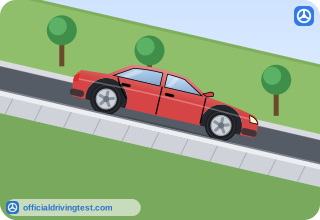
- Sharply toward the side of the road or curb
- Straight ahead
- Away from the curb, toward traffic
- Slightly toward the center of the road
Show answer
Correct answer: Sharply toward the side of the road or curb
On a hill, turn your wheels sharply toward the side of the road or curb so a rolling vehicle moves away from traffic.
Source: New Mexico Driver Manual (Version 11.19.19), page 13
-
Where should you always park if possible?
- On the side of the road nearest your destination
- Close to the nearest intersection
- In a designated area
- On the shoulder
Show answer
Correct answer: In a designated area
You should always park in a designated area if possible.
Source: New Mexico Driver Manual (Version 11.19.19), page 13
-
How close to a traffic signal, stop sign or yield sign are you not allowed to park?
- Within 10 ft.
- Within 30 ft.
- Within 35 ft.
- Within 40 ft.
Show answer
Correct answer: Within 30 ft.
You may not park within 30 ft. of a traffic signal, stop sign or yield sign.
Source: New Mexico Driver Manual (Version 11.19.19), page 13
-
How close to a crosswalk at an intersection are you not allowed to park?
- Within 25 ft.
- Within 5 ft.
- Within 10 ft.
- Within 35 ft.
Show answer
Correct answer: Within 25 ft.
You may not park within 25 ft. of a crosswalk at an intersection.
Source: New Mexico Driver Manual (Version 11.19.19), page 13
-
How close to a fire hydrant are you not allowed to park?
- Within 5 ft.
- Within 10 ft.
- Within 40 ft.
- Within 15 ft.
Show answer
Correct answer: Within 15 ft.
You may not park within 15 ft. of a fire hydrant.
Source: New Mexico Driver Manual (Version 11.19.19), page 13
-
How close to a railroad crossing are you not allowed to park?
- Within 10 ft.
- Within 35 ft.
- Within 50 ft.
- Within 100 ft.
Show answer
Correct answer: Within 50 ft.
You may not park within 50 ft. of a railroad crossing.
Source: New Mexico Driver Manual (Version 11.19.19), page 13
-
How far from the curb are you not allowed to park?
- More than 18 inches
- More than 6 inches
- More than 12 inches
- More than 24 inches
Show answer
Correct answer: More than 18 inches
You may not park more than 18 in. from the curb.
Source: New Mexico Driver Manual (Version 11.19.19), page 13
-
How close to a fire station driveway are you not allowed to park?
- Within 75 ft. on the same side of the street and within 20 ft. on the other side
- Within 50 ft. on the same side of the street and within 25 ft. on the other side
- Within 10 ft. on the same side of the street and within 30 ft. on the other side
- Within 20 ft. on the same side of the street and within 75 ft. on the other side
Show answer
Correct answer: Within 20 ft. on the same side of the street and within 75 ft. on the other side
You may not park within 20 ft. of a fire station driveway on the same side of the street, or within 75 ft. of a driveway on the other side.
Source: New Mexico Driver Manual (Version 11.19.19), page 13
-
Which of these is a place where you may not park?
- In a designated parking area
- Beside a curb 20 ft. from a fire hydrant
- On a bridge or overpass
- Within 1 ft. of the curb, 40 ft. from a stop sign
Show answer
Correct answer: On a bridge or overpass
Parking is not allowed on a bridge or overpass, or in a tunnel or underpass.
Source: New Mexico Driver Manual (Version 11.19.19), page 13
-
When may you park in a space marked for the handicapped?
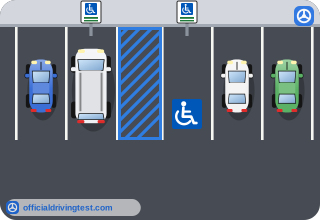
- For a short time if you stay with your vehicle
- Only with a handicap license plate, tag or sticker
- Whenever no other spaces are available nearby
- At night when the lot is mostly empty
Show answer
Correct answer: Only with a handicap license plate, tag or sticker
You may not park in a space marked for the handicapped unless you have a handicap license plate, tag or sticker.
Source: New Mexico Driver Manual (Version 11.19.19), page 13
-
What is parking on the road side of a parked vehicle called?
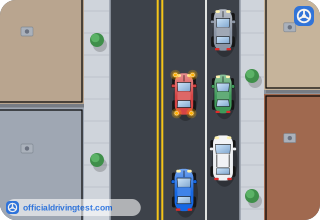
- Angle parking
- Double parking
- Parallel parking
- Reverse parking
Show answer
Correct answer: Double parking
Parking on the road side of a parked vehicle is called double parking, and it is not allowed.
Source: New Mexico Driver Manual (Version 11.19.19), page 13
-
What does a white painted curb indicate?
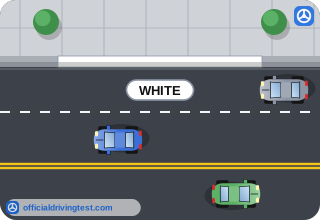
- Only short stops are permitted
- Parking is allowed for any length of time
- Parking is for residents only
- Parking is limited to buses
Show answer
Correct answer: Only short stops are permitted
A curb painted white indicates that only short stops are permitted.
Source: New Mexico Driver Manual (Version 11.19.19), page 14
-
What does a yellow painted curb indicate?
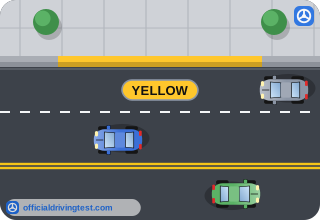
- Parking is allowed for any length of time
- Reserved parking for residents
- Parking for electric vehicles only
- A loading zone or some other restriction
Show answer
Correct answer: A loading zone or some other restriction
A curb painted yellow indicates a loading zone or some other restriction.
Source: New Mexico Driver Manual (Version 11.19.19), page 14
-
What does a red painted curb indicate?
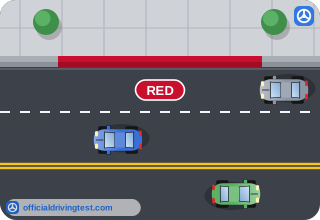
- A zone where parking is limited to two hours
- A zone reserved for passenger pickup only
- A fire zone with no parking or standing permitted
- A zone where parking is permitted at night
Show answer
Correct answer: A fire zone with no parking or standing permitted
A curb painted red indicates a fire zone with no parking or standing permitted.
Source: New Mexico Driver Manual (Version 11.19.19), page 14
-
What does a blue painted curb indicate?
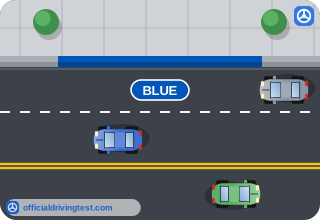
- Visitor parking only
- Handicap parking only
- Electric vehicle charging only
- Taxi parking only
Show answer
Correct answer: Handicap parking only
A curb painted blue indicates handicap parking only.
Source: New Mexico Driver Manual (Version 11.19.19), page 14