Missouri: Traffic signals Practice Test
Red, yellow and green lights, arrows, the flashing yellow arrow and flashing signals.
Independent educational site · not affiliated with any government agency or DMV
Ready? Test yourself
- Instant feedback with an explanation
- Every answer cites its source in the manual
- Your best score is saved on this device
Questions are original and based on the official manual "Missouri Driver Guide" (Revised August 2026), Missouri Department of Revenue.
All 23 questions in this practice test
Take the test above first, then use this list to study. Tap “Show answer” to see the correct answer and explanation.
Show the questions and answersHide the questions
-
A dual-use lane signal shows both a turn arrow and a straight arrow. What may you do?
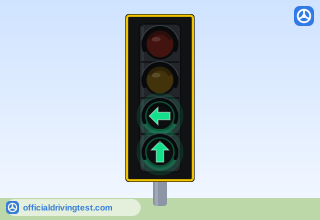
- Either turn or go straight
- Go straight only
- Turn only
- Stop until a green circle appears
Show answer
Correct answer: Either turn or go straight
When both arrows appear on the electric traffic signal of a dual-use lane, you may either turn or go straight.
Source: Missouri Driver Guide (Revised August 2026), page 43 · Open this page in the manual (Manual page 43)
-
In a dual-use lane you want to turn, but only the straight arrow is showing. What must you do?
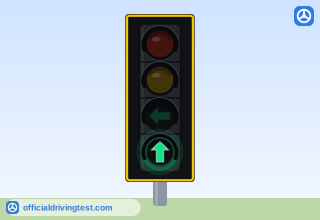
- Turn when traffic is clear
- Turn after stopping completely
- Wait for the turn arrow
- Go straight and turn at the next block
Show answer
Correct answer: Wait for the turn arrow
If you want to turn and only the straight arrow is showing, you must wait for the turn arrow.
Source: Missouri Driver Guide (Revised August 2026), page 43 · Open this page in the manual (Manual page 43)
-
If a traffic officer gives directions that conflict with a traffic signal, what must you do?
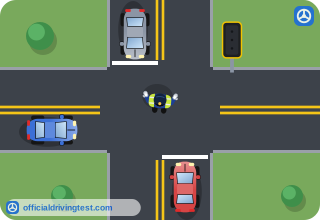
- Follow the signal and ignore the officer
- Stop and wait for another officer
- Follow the signal unless the officer shouts
- Do what the officer says and ignore the signal
Show answer
Correct answer: Do what the officer says and ignore the signal
You must obey traffic officers at all times and ignore any traffic signs or signals when an officer is giving directions.
Source: Missouri Driver Guide (Revised August 2026), page 43 · Open this page in the manual (Manual page 43)
-
Besides law enforcement, who else may provide traffic control that you must obey?
- Parking lot attendants and tow drivers
- Highway personnel and school crossing guards
- Only officers in marked patrol cars
- Only officers with emergency lights on
Show answer
Correct answer: Highway personnel and school crossing guards
Traffic control also can be provided by law enforcement, highway personnel or school crossing guards, and you must obey directions from these persons.
Source: Missouri Driver Guide (Revised August 2026), page 43 · Open this page in the manual (Manual page 43)
-
Flashing traffic signals may occur during which of these?
- Heavy morning traffic
- Clear weather only
- Special events
- School bus stops
Show answer
Correct answer: Special events
Flashing traffic signals may occur during emergencies, night time and low traffic volume periods and special events.
Source: Missouri Driver Guide (Revised August 2026), page 44 · Open this page in the manual (Manual page 44)
-
What does a flashing red light mean?
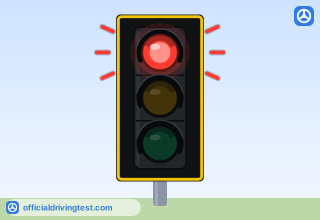
- The same as a stop sign
- Slow down and proceed with caution
- Stop only if other traffic is present
- The signal is changing to green
Show answer
Correct answer: The same as a stop sign
A flashing red light means the same thing as a stop sign.
Source: Missouri Driver Guide (Revised August 2026), page 44 · Open this page in the manual (Manual page 44)
-
What does a flashing yellow light tell you to do?
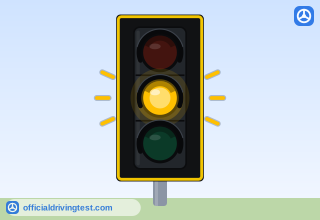
- Slow down and proceed with caution
- Stop and then proceed
- Stop and wait for green
- Speed up to clear the intersection
Show answer
Correct answer: Slow down and proceed with caution
A flashing yellow light tells you to slow down and proceed with caution.
Source: Missouri Driver Guide (Revised August 2026), page 44 · Open this page in the manual (Manual page 44)
-
At a red light, where must you stop?
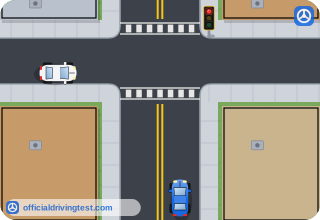
- At the center of the intersection so you can see cross traffic
- Just past the crosswalk, with the front wheels in the intersection
- At the stop line, crosswalk, or before the intersection
- Anywhere behind the vehicle ahead, even in the crosswalk
Show answer
Correct answer: At the stop line, crosswalk, or before the intersection
A red light tells you to stop at the stop line, crosswalk, or before the intersection.
Source: Missouri Driver Guide (Revised August 2026), page 44 · Open this page in the manual (Manual page 44)
-
At a red light, you must wait for the signal to turn green unless you are:
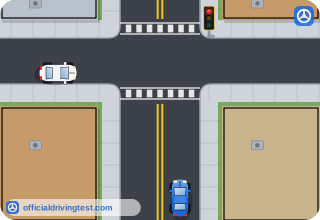
- Driving a slow vehicle
- Making a right turn
- Going straight with no traffic
- Turning left
Show answer
Correct answer: Making a right turn
Unless you are making a right turn, you must wait for the signal to turn green before you proceed.
Source: Missouri Driver Guide (Revised August 2026), page 44 · Open this page in the manual (Manual page 44)
-
Before turning right on a red light, what must you do?
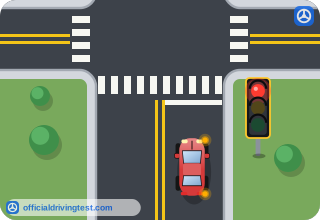
- Wait for the signal to change to yellow
- Slow down and make sure no pedestrians are present
- Honk your horn to warn pedestrians
- Make a complete stop and make sure the way is clear
Show answer
Correct answer: Make a complete stop and make sure the way is clear
After making a complete stop, you may turn right on a red light if the way is clear of pedestrians and traffic.
Source: Missouri Driver Guide (Revised August 2026), page 44 · Open this page in the manual (Manual page 44)
-
When must you NOT turn right on a red light?
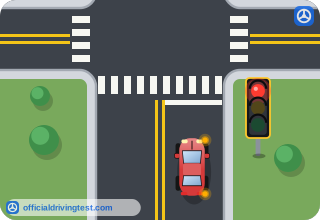
- When another vehicle is waiting behind you
- When the road is wet
- When a “No Right Turn On Red” sign is posted
- When you have made a complete stop
Show answer
Correct answer: When a “No Right Turn On Red” sign is posted
You must not turn right on a red light when there is a “No Right Turn On Red” sign posted.
Source: Missouri Driver Guide (Revised August 2026), page 44 · Open this page in the manual (Manual page 44)
-
A steady yellow light tells you that the traffic signal is:
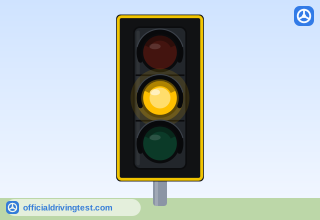
- Changing from green to red
- Changing from red to green
- About to start flashing
- Turning off
Show answer
Correct answer: Changing from green to red
A steady yellow light tells you the traffic signal is changing from green to red.
Source: Missouri Driver Guide (Revised August 2026), page 44 · Open this page in the manual (Manual page 44)
-
When may you go through a steady yellow light instead of stopping?
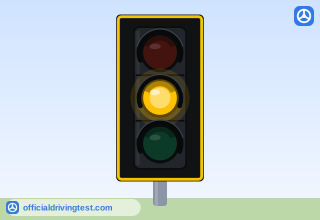
- When the cross street looks empty
- When you are driving below the speed limit
- When a pedestrian is waiting to cross
- When you are too close to stop safely
Show answer
Correct answer: When you are too close to stop safely
Stop for a steady yellow light unless you are within the intersection or are so close that you cannot safely stop before entering the intersection.
Source: Missouri Driver Guide (Revised August 2026), page 44 · Open this page in the manual (Manual page 44)
-
At a green light, what must you do first?
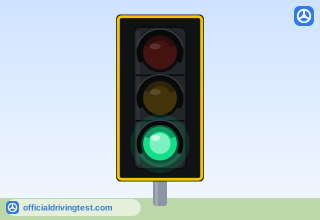
- Honk to warn pedestrians still in the intersection
- Yield to traffic and pedestrians still in the intersection
- Speed up to clear the intersection before the light changes
- Stop briefly at the stop line before you proceed
Show answer
Correct answer: Yield to traffic and pedestrians still in the intersection
A green light means you can go through the intersection, but you must first yield the right-of-way to traffic and pedestrians still in the intersection.
Source: Missouri Driver Guide (Revised August 2026), page 44 · Open this page in the manual (Manual page 44)
-
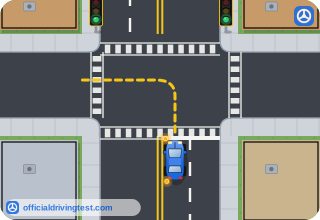
In a permissive left-turn phase, what must drivers do?
- Turn ahead of oncoming traffic, which must yield
- Wait for an adequate gap in the opposing traffic
- Stop and wait for a green arrow before turning
- Wait for oncoming traffic to flash its lights
Show answer
Correct answer: Wait for an adequate gap in the opposing traffic
In a permissive phase, vehicles are given a circular green or a flashing yellow arrow and are required to wait for an adequate gap in the opposing traffic prior to making their turn.
Source: Missouri Driver Guide (Revised August 2026), page 44 · Open this page in the manual (Manual page 44)
-
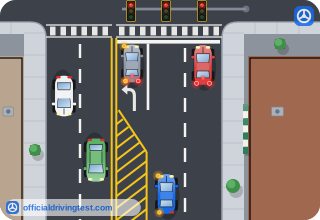
In a protected left-turn phase, when may vehicles turn?
- On a steady red arrow after a full stop
- On any green light after yielding to pedestrians
- Whenever the way ahead looks clear
- Only on a green arrow while opposing traffic is stopped
Show answer
Correct answer: Only on a green arrow while opposing traffic is stopped
In a protected phase, vehicles may turn only when they receive a green arrow while opposing vehicles are stopped by a red light.
Source: Missouri Driver Guide (Revised August 2026), page 44 · Open this page in the manual (Manual page 44)
-
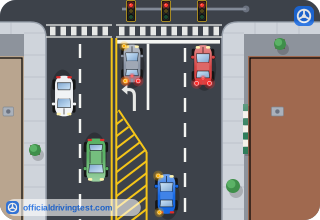
What does a protected/permissive left-turn phase give drivers?
- A protected green arrow phase or a permissive phase
- Only a steady yellow arrow phase
- A flashing red phase followed by a green arrow
- A phase where opposing traffic must always stop
Show answer
Correct answer: A protected green arrow phase or a permissive phase
In a protected/permissive phase, vehicles are given a protected phase (green arrow), or a permissive phase when drivers must choose an adequate gap in opposing traffic.
Source: Missouri Driver Guide (Revised August 2026), page 44 · Open this page in the manual (Manual page 44)
-
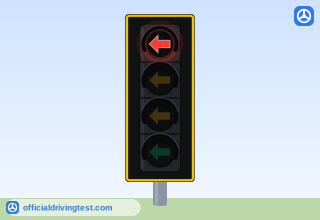
What must you wait for at a steady red arrow?
- The arrow to start flashing red
- A steady yellow arrow to appear
- A green signal or a flashing yellow arrow
- Opposing traffic to clear the intersection
Show answer
Correct answer: A green signal or a flashing yellow arrow
You must wait for the signal to turn green or a flashing yellow arrow before you proceed past a steady red arrow.
Source: Missouri Driver Guide (Revised August 2026), page 44 · Open this page in the manual (Manual page 44)
-
When does a steady yellow arrow appear?
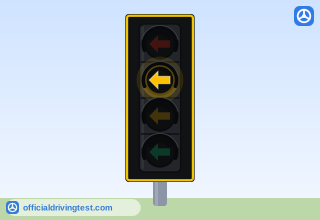
- After a flashing red light
- Before a green arrow
- After a steady red arrow
- After a green arrow
Show answer
Correct answer: After a green arrow
A steady yellow arrow appears after a green arrow.
Source: Missouri Driver Guide (Revised August 2026), page 44 · Open this page in the manual (Manual page 44)
-
What must you be ready to do when a steady yellow arrow appears?
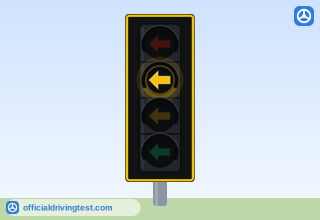
- Speed up to finish your turn
- Yield the right-of-way to oncoming traffic or stop
- Stop only if pedestrians are present
- Proceed without yielding to oncoming traffic
Show answer
Correct answer: Yield the right-of-way to oncoming traffic or stop
You must be ready to yield the right-of-way to oncoming traffic or to stop when a steady yellow arrow appears.
Source: Missouri Driver Guide (Revised August 2026), page 44 · Open this page in the manual (Manual page 44)
-
What does a flashing yellow arrow require of you?
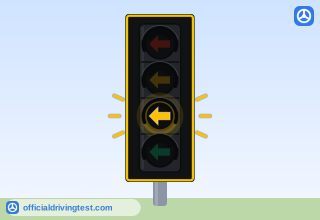
- Stop completely and wait for a green arrow before turning
- Slow down and turn only after the opposing signal turns red
- Wait for an adequate gap in opposing traffic before turning
- Turn at once, since oncoming traffic must stop for you
Show answer
Correct answer: Wait for an adequate gap in opposing traffic before turning
You are allowed to drive in the direction the arrow is pointing but are required to wait for an adequate gap in the opposing traffic prior to making your turn.
Source: Missouri Driver Guide (Revised August 2026), page 45 · Open this page in the manual (Manual page 45)
-
What must be true before you drive in the direction of a green arrow?
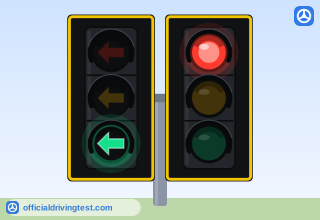
- You must be in the proper lane and the way must be clear
- You must first make a complete stop at the stop line
- Your turn signal must have flashed for three seconds
- Oncoming drivers must have flashed their lights
Show answer
Correct answer: You must be in the proper lane and the way must be clear
A green arrow lets you drive in the direction it points, but you must be in the proper lane and the way must be clear of all traffic and pedestrians.
Source: Missouri Driver Guide (Revised August 2026), page 45 · Open this page in the manual (Manual page 45)
-
What should you treat a dark traffic signal that is not working as?
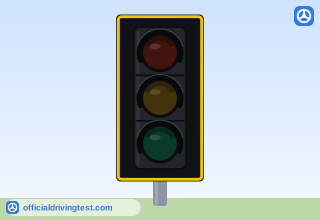
- A four-way stop
- A yield sign
- A flashing yellow light
- A free-flowing intersection
Show answer
Correct answer: A four-way stop
Dark signals, or traffic signals that are not working, operate as a four-way stop.
Source: Missouri Driver Guide (Revised August 2026), page 45 · Open this page in the manual (Manual page 45)