Missouri: Signals and vehicle controls — Part 3 Practice Test
Questions in this part include: “What important safety advantage does four-wheel ABS offer?” · “With ABS under hard braking, what should you do when you feel a pulsing in the brake pedal?”
Independent educational site · not affiliated with any government agency or DMV
Ready? Test yourself
- Instant feedback with an explanation
- Every answer cites its source in the manual
- Your best score is saved on this device
Questions are original and based on the official manual "Missouri Driver Guide" (Revised August 2026), Missouri Department of Revenue.
All 18 questions in this practice test
Take the test above first, then use this list to study. Tap “Show answer” to see the correct answer and explanation.
Show the questions and answersHide the questions
-
According to the manual, when must you use your headlights because of the weather?
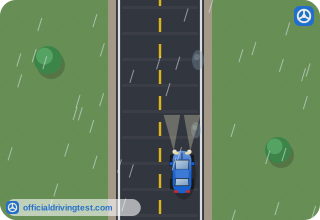
- Only when fog is thick enough to hide the road
- Only when it rains on a highway
- Only after ½ hour past sunset when it is raining
- Any time you need to use your windshield wipers
Show answer
Correct answer: Any time you need to use your windshield wipers
The manual says you must use your headlights any time weather conditions require the use of your windshield wipers.
Source: Missouri Driver Guide (Revised August 2026), page 62 · Open this page in the manual (Manual page 62)
-
In winter, what must you clean snow and ice off before driving?
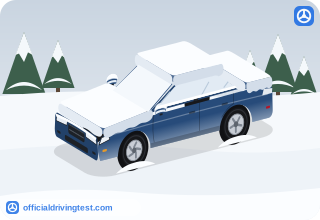
- Your windows, headlights, and taillights
- Only your windshield
- Your windows and the roof of your vehicle
- Your windows and your tires
Show answer
Correct answer: Your windows, headlights, and taillights
The manual says to clean all snow and ice off your windows, headlights, and taillights.
Source: Missouri Driver Guide (Revised August 2026), page 62 · Open this page in the manual (Manual page 62)
-
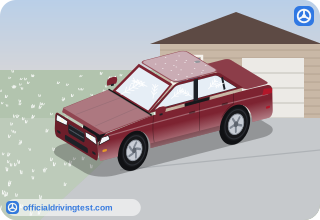
No matter how far you plan to drive in winter, when may you start driving?
- After you clear a small area of the windshield
- If the trip is short, even with some snow on the windows
- Only after all snow and ice is off your windows
- Once your wipers have pushed the snow aside
Show answer
Correct answer: Only after all snow and ice is off your windows
The manual says never to start driving until all snow and ice is off your windows, no matter how far you are going.
Source: Missouri Driver Guide (Revised August 2026), page 62 · Open this page in the manual (Manual page 62)
-
If you do not have tires rated for driving in snow, what should you have ready for bad weather?

- Tires with less air in them
- Chains to put on your tires
- A spare set of wiper blades
- A full tank of fuel
Show answer
Correct answer: Chains to put on your tires
The manual says that without snow-rated tires you should have chains ready to put on your tires during bad weather.
Source: Missouri Driver Guide (Revised August 2026), page 62 · Open this page in the manual (Manual page 62)
-
Even with snow tires or chains, what can you not do on snow or ice?

- Use your headlights
- Use your windshield wipers
- Steer the vehicle
- Drive safely at normal speeds
Show answer
Correct answer: Drive safely at normal speeds
The manual says that even with snow tires or chains you cannot drive safely on snow or ice at normal speeds.
Source: Missouri Driver Guide (Revised August 2026), page 62 · Open this page in the manual (Manual page 62)
-
How should you start moving when your vehicle is on snow or ice?

- With a quick burst of speed
- In a high gear with firm acceleration
- Slowly and smoothly
- By rocking the brake and accelerator quickly
Show answer
Correct answer: Slowly and smoothly
The manual says to start slowly and smoothly when starting on snow or ice.
Source: Missouri Driver Guide (Revised August 2026), page 62 · Open this page in the manual (Manual page 62)
-
If your tires start to spin on snow or ice, what should you try first to clear a path?

- Accelerating hard until the tires grip
- Driving backwards and forwards a few times
- Turning the steering wheel back and forth quickly
- Letting some air out of the tires
Show answer
Correct answer: Driving backwards and forwards a few times
The manual says to try clearing a path by driving backwards and forwards a few times.
Source: Missouri Driver Guide (Revised August 2026), page 62 · Open this page in the manual (Manual page 62)
-
If driving back and forth does not free your spinning tires, what can you spread around your wheels?

- Motor oil or windshield washer fluid
- Fresh snow packed tightly in front
- Loose leaves, grass, or wet newspaper
- Salt, sand, or cat box litter
Show answer
Correct answer: Salt, sand, or cat box litter
The manual says to spread an abrasive material like salt, sand, or cat box litter around your wheels.
Source: Missouri Driver Guide (Revised August 2026), page 62 · Open this page in the manual (Manual page 62)
-
According to the manual, why must you never let anyone stand in line with your wheels on snow or ice?

- The wheels may throw up gravel or ice and cause an injury
- The vehicle could suddenly roll forward and hit the person
- The exhaust fumes could make the person ill
- The person could slip and fall under the tires
Show answer
Correct answer: The wheels may throw up gravel or ice and cause an injury
The manual says your wheels may throw up gravel or ice and cause an injury.
Source: Missouri Driver Guide (Revised August 2026), page 62 · Open this page in the manual (Manual page 62)
-
On a slippery road, how can you check how slippery it is once you have started?

- Accelerate quickly for a moment
- Turn the wheel sharply from side to side
- Gently brake while driving
- Slam the brakes once to test them
Show answer
Correct answer: Gently brake while driving
The manual says to gently brake while driving to see how slippery the road is and then adjust your speed.
Source: Missouri Driver Guide (Revised August 2026), page 63 · Open this page in the manual (Manual page 63)
-
How should you apply the brakes when you want to slow down or stop on snow or ice?

- Quickly and firmly
- In one hard push
- Only with the parking brake
- Gently and smoothly
Show answer
Correct answer: Gently and smoothly
The manual says to apply the brakes gently and smoothly and never to slam on them, which may cause a skid.
Source: Missouri Driver Guide (Revised August 2026), page 63 · Open this page in the manual (Manual page 63)
-
On very slippery surfaces, what braking technique does the manual describe?
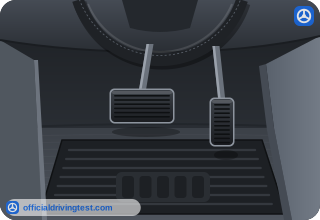
- Pump the brakes by gently pushing down and letting up several times
- Slam on the brakes once, then release them
- Alternate between the brake and the accelerator several times
- Tap the parking brake once and then coast to a stop
Show answer
Correct answer: Pump the brakes by gently pushing down and letting up several times
On very slippery surfaces the manual says to pump the brakes by gently pushing down and letting up on them several times.
Source: Missouri Driver Guide (Revised August 2026), page 63 · Open this page in the manual (Manual page 63)
-
Why should you not use four-wheel drive on ice?

- It prevents the wheels from gripping any surface
- Four-wheel drive vehicles can easily overturn on ice
- It causes the engine to overheat on slick surfaces
- It uses more fuel and wears the tires faster
Show answer
Correct answer: Four-wheel drive vehicles can easily overturn on ice
The manual says not to use four-wheel drive on ice because four-wheel drive vehicles can easily overturn on ice.
Source: Missouri Driver Guide (Revised August 2026), page 63 · Open this page in the manual (Manual page 63)
-
If you hit an icy patch while in four-wheel drive, what should you do?

- Brake hard to slow down at once
- Accelerate to drive through it
- Turn the wheel sharply toward the shoulder
- Take your foot off the accelerator
Show answer
Correct answer: Take your foot off the accelerator
The manual says to take your foot off the accelerator if you hit an icy patch in four-wheel drive.
Source: Missouri Driver Guide (Revised August 2026), page 63 · Open this page in the manual (Manual page 63)
-
Why should you not use cruise control on wet pavement?
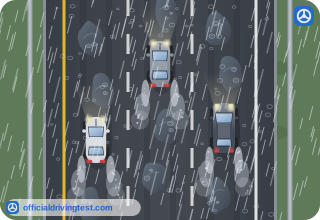
- It cuts power to the tires as soon as rain begins
- It will keep providing power to the tires if you lose traction
- It makes the steering wheel harder to turn on curves
- It can shut off the engine when the tires get wet
Show answer
Correct answer: It will keep providing power to the tires if you lose traction
The manual says cruise control keeps providing power to the tires if you lose traction and may cause you to lose control.
Source: Missouri Driver Guide (Revised August 2026), page 63 · Open this page in the manual (Manual page 63)
-
What important safety advantage does four-wheel ABS offer?
- It shortens your stopping distance on every road surface
- It keeps the vehicle from skidding on ice at any speed
- It prevents the wheels from locking during emergency braking
- It stops the engine from stalling during hard braking
Show answer
Correct answer: It prevents the wheels from locking during emergency braking
The manual says four-wheel ABS prevents the wheels from locking during emergency braking situations.
Source: Missouri Driver Guide (Revised August 2026), page 63 · Open this page in the manual (Manual page 63)
-
With ABS under hard braking, what should you do when you feel a pulsing in the brake pedal?
- Lift your foot off the brake and pump the pedal several times
- Keep your foot on the brake with firm, continuous pressure while steering
- Release the pedal, then press it again once the pulsing stops
- Brake lightly and steer only after the vehicle has stopped
Show answer
Correct answer: Keep your foot on the brake with firm, continuous pressure while steering
The manual says to keep your foot on the brake and maintain firm and continuous pressure while steering so the ABS works properly.
Source: Missouri Driver Guide (Revised August 2026), page 64 · Open this page in the manual (Manual page 64)
-
If your vehicle has ABS, what do mechanical noises and slight pedal pulsations tell you?
- The brakes are failing and need repair
- The wheels have already locked
- The brake fluid is low
- They are normal and show the ABS is working
Show answer
Correct answer: They are normal and show the ABS is working
The manual says mechanical noises and slight pedal pulsations are normal and let you know the ABS is working.
Source: Missouri Driver Guide (Revised August 2026), page 64 · Open this page in the manual (Manual page 64)