Missouri: Signals and vehicle controls — Part 2 Practice Test
Questions in this part include: “When should you turn your headlights on for night driving?” · “Besides how far ahead you can see, what else do headlights limit at night?”
Independent educational site · not affiliated with any government agency or DMV
Ready? Test yourself
- Instant feedback with an explanation
- Every answer cites its source in the manual
- Your best score is saved on this device
Questions are original and based on the official manual "Missouri Driver Guide" (Revised August 2026), Missouri Department of Revenue.
All 18 questions in this practice test
Take the test above first, then use this list to study. Tap “Show answer” to see the correct answer and explanation.
Show the questions and answersHide the questions
-
Which of these helps avoid carbon monoxide poisoning?
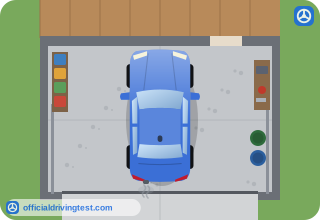
- Not leaving the motor running in a garage
- Running the motor in a closed garage for warmth
- Using the heater in a parked vehicle with the windows closed
- Leaving the vents open when following another vehicle closely
Show answer
Correct answer: Not leaving the motor running in a garage
Vehicle motors give off carbon monoxide, a deadly gas, so do not leave the motor running in a garage.
Source: Missouri Driver Guide (Revised August 2026), page 59 · Open this page in the manual (Manual page 59)
-
Which of these helps avoid carbon monoxide poisoning?
- Parking with the motor running and the windows closed
- Using the air conditioner in a parked vehicle with the windows closed
- Keeping the vents open while following closely behind another vehicle
- Not driving with a defective muffler or exhaust system
Show answer
Correct answer: Not driving with a defective muffler or exhaust system
Vehicle motors give off carbon monoxide, a deadly gas, so do not drive with a defective muffler or exhaust system.
Source: Missouri Driver Guide (Revised August 2026), page 59 · Open this page in the manual (Manual page 59)
-
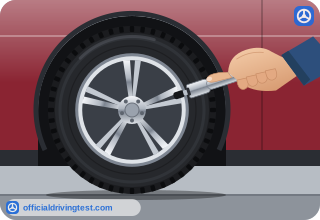
Where can you find the recommended tire pressure for your vehicle?
- On a sticker inside the glove box of the vehicle only
- In the vehicle owner’s manual or on the driver’s side door jam
- On the dashboard, beside the speedometer and gauges
- In the tire pressure table of the Missouri driver guide
Show answer
Correct answer: In the vehicle owner’s manual or on the driver’s side door jam
Check the tire pressure using the recommended PSI located in the vehicle owner’s manual or the driver’s side door jam.
Source: Missouri Driver Guide (Revised August 2026), page 60 · Open this page in the manual (Manual page 60)
-
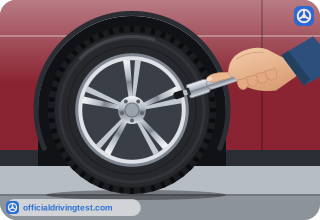
Your tire pressure is above the number listed in the owner’s manual or on the door jam. What should you do?
- Drive until the tires wear down
- Add more air to the tires
- Leave it as it is
- Let air out until it matches
Show answer
Correct answer: Let air out until it matches
If your psi is above the listed number, let air out until it matches. If below, add air or have a tire professional help you.
Source: Missouri Driver Guide (Revised August 2026), page 60 · Open this page in the manual (Manual page 60)
-
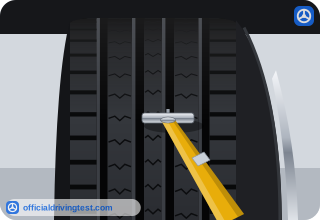
How often does the manual say to check your tires for wear and damage?
- Once a year, when the vehicle is inspected
- Only when a tire warning light comes on
- Once every month, or before a long road trip
- Only when you are buying new tires or wheels
Show answer
Correct answer: Once every month, or before a long road trip
Once every month, or before you embark upon a long road trip, check your tires for wear and damage problems.
Source: Missouri Driver Guide (Revised August 2026), page 60 · Open this page in the manual (Manual page 60)
-
In the penny test for tire tread, what does it mean if any part of Lincoln’s head is covered by the tread?
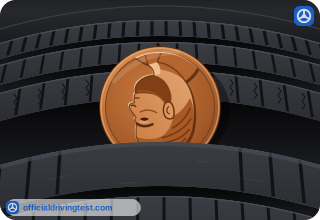
- You are driving with the safe amount of tread
- The tread is too worn and the tire must be replaced
- The tire pressure is too low for safe driving
- The tire needs to be rotated to the other side
Show answer
Correct answer: You are driving with the safe amount of tread
If any part of Lincoln’s head is covered by the tread, you are driving with the safe amount of tread.
Source: Missouri Driver Guide (Revised August 2026), page 60 · Open this page in the manual (Manual page 60)
-
What happens to a tire’s grip when the tread gets below approximately 2/32 of an inch?
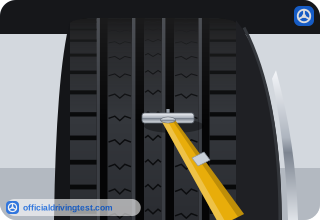
- Its pressure rises quickly and the tire may burst at once
- Its braking distance becomes shorter on wet and icy roads
- Its fuel use drops, and it wears more evenly on every road
- Its ability to grip the road in adverse conditions is greatly reduced
Show answer
Correct answer: Its ability to grip the road in adverse conditions is greatly reduced
Below approximately 2/32 of an inch of tread, the car’s ability to grip the road in adverse conditions is greatly reduced.
Source: Missouri Driver Guide (Revised August 2026), page 60 · Open this page in the manual (Manual page 60)
-
When should you turn your headlights on for night driving?
- From ½ hour after sunset until ½ hour before sunrise
- From 1 hour after sunset until 1 hour before sunrise
- From 1 hour before sunset until 1 hour after sunrise
- Only when it is fully dark and no street lights are on
Show answer
Correct answer: From ½ hour after sunset until ½ hour before sunrise
The manual says to turn headlights on from ½ hour after sunset until ½ hour before sunrise.
Source: Missouri Driver Guide (Revised August 2026), page 62 · Open this page in the manual (Manual page 62)
-
At about what distance from an oncoming vehicle should you switch to low beams?
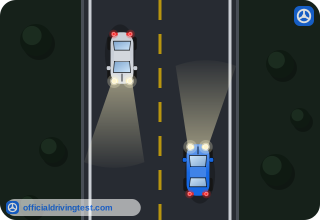
- Within 1,000 feet
- Within 200 feet
- Within 100 feet
- Within 500 feet
Show answer
Correct answer: Within 500 feet
The manual says to use low beams when you come within 500 feet (about one block) of an oncoming vehicle.
Source: Missouri Driver Guide (Revised August 2026), page 62 · Open this page in the manual (Manual page 62)
-
At night, within what distance of the vehicle ahead should you use low beams when following it?
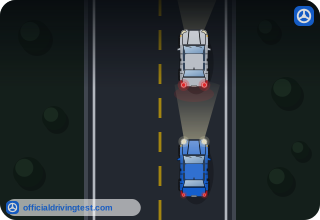
- Within 300 feet
- Within 100 feet
- Within 150 feet
- Within 1,000 feet
Show answer
Correct answer: Within 300 feet
The manual says to use low beams when following another vehicle within 300 feet.
Source: Missouri Driver Guide (Revised August 2026), page 62 · Open this page in the manual (Manual page 62)
-
At night, when should you use your high beams?
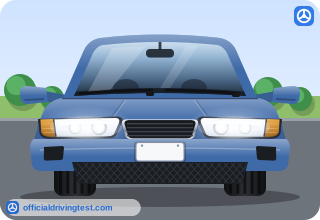
- Only when you are driving in fog
- Whenever you go around a curve
- When there are no oncoming vehicles
- Whenever you are following another vehicle
Show answer
Correct answer: When there are no oncoming vehicles
The manual says to use high beams when there are no oncoming vehicles.
Source: Missouri Driver Guide (Revised August 2026), page 62 · Open this page in the manual (Manual page 62)
-
When driving at night, what should you use as a guide if there is no edgeline?
- The line of utility poles
- The headlights of oncoming vehicles
- The edge of the shoulder gravel
- The center line
Show answer
Correct answer: The center line
The manual says to use the edgeline as a guide, and the center line if there is no edgeline.
Source: Missouri Driver Guide (Revised August 2026), page 62 · Open this page in the manual (Manual page 62)
-
Why should you watch carefully for highway signs when driving at night?
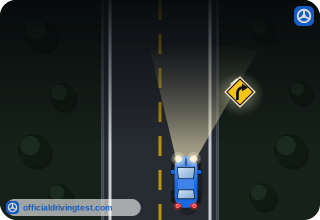
- Headlight glare makes them too bright to read
- There are fewer of them on dark roads
- They are harder to see at night
- They are placed lower to the ground at night
Show answer
Correct answer: They are harder to see at night
The manual says to watch carefully for highway signs because they are harder to see at night.
Source: Missouri Driver Guide (Revised August 2026), page 62 · Open this page in the manual (Manual page 62)
-
When driving at night, what should you watch carefully for along the side of the road?
- Parking meters along the curb
- People and vehicles stopped there
- Empty parking lanes and curbs
- Road signs that are placed too low
Show answer
Correct answer: People and vehicles stopped there
The manual says to watch carefully for people and vehicles stopped on the side of the road.
Source: Missouri Driver Guide (Revised August 2026), page 62 · Open this page in the manual (Manual page 62)
-
What makes seeing the road more difficult when you drive at night?
- Wet tree branches over the road
- Reflection from the lane markings
- The glow of your own dashboard lights
- The glare of oncoming headlights
Show answer
Correct answer: The glare of oncoming headlights
The manual says the glare of oncoming headlights makes seeing the road more difficult at night.
Source: Missouri Driver Guide (Revised August 2026), page 62 · Open this page in the manual (Manual page 62)
-
Besides how far ahead you can see, what else do headlights limit at night?
- Your view of the sides of the road
- Your view behind you in the mirrors
- Your view of the dashboard gauges
- Your ability to hear other vehicles
Show answer
Correct answer: Your view of the sides of the road
The manual says headlights limit your view of the sides of the road.
Source: Missouri Driver Guide (Revised August 2026), page 62 · Open this page in the manual (Manual page 62)
-
How often does the manual say to have your headlights checked for correct aim?
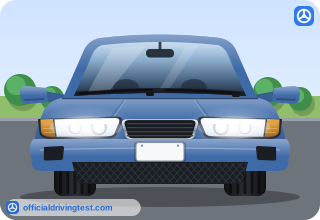
- Only when a headlight burns out
- Every day before you drive
- From time to time
- Once, when you buy the vehicle
Show answer
Correct answer: From time to time
The manual says to make sure headlights are clean and working well and to have them checked from time to time for correct aim.
Source: Missouri Driver Guide (Revised August 2026), page 62 · Open this page in the manual (Manual page 62)
-
For night driving, what should you make sure about your windows?
- That they are tinted dark
- That they are clean
- That they are rolled all the way down
- That they have a glare-reducing film
Show answer
Correct answer: That they are clean
The manual says to make sure your windows are clean for night driving.
Source: Missouri Driver Guide (Revised August 2026), page 62 · Open this page in the manual (Manual page 62)