Missouri: Signals and vehicle controls — Part 1 Practice Test
Questions in this part include: “When the examiner asks you to find and use the vehicle's controls, what are you tested for regarding finding a control?” · “Should you signal when you change direction even if you do not see anyone else around?”
Independent educational site · not affiliated with any government agency or DMV
Ready? Test yourself
- Instant feedback with an explanation
- Every answer cites its source in the manual
- Your best score is saved on this device
Questions are original and based on the official manual "Missouri Driver Guide" (Revised August 2026), Missouri Department of Revenue.
All 19 questions in this practice test
Take the test above first, then use this list to study. Tap “Show answer” to see the correct answer and explanation.
Show the questions and answersHide the questions
-
When the examiner asks you to find and use the vehicle's controls, what are you tested for regarding finding a control?
- Naming it from memory
- Adjusting it before the examiner asks
- Finding it without searching
- Repairing it if it fails
Show answer
Correct answer: Finding it without searching
You are tested for finding the control without searching and for using it correctly.
Source: Missouri Driver Guide (Revised August 2026), page 19 · Open this page in the manual (Manual page 19)
-
Before you stop, turn, or change lanes, what should you do?
- Sound your horn twice to warn nearby drivers
- Let the other drivers know by signaling
- Flash your high beams at the drivers behind you
- Wait until the other drivers have passed you
Show answer
Correct answer: Let the other drivers know by signaling
Before you stop, turn, or change lanes, you should let the other drivers know what you are going to do by signaling, with your hand and arm or your vehicle's lights.
Source: Missouri Driver Guide (Revised August 2026), page 24 · Open this page in the manual (Manual page 24)
-
How far before you turn should you signal at least?
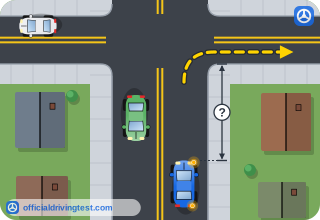
- 25 feet
- 50 feet
- 100 feet
- 300 feet
Show answer
Correct answer: 100 feet
You should signal at least 100 feet before you turn so the other drivers can be ready.
Source: Missouri Driver Guide (Revised August 2026), page 24 · Open this page in the manual (Manual page 24)
-
What does the manual say about checking your vehicle's turn signals?
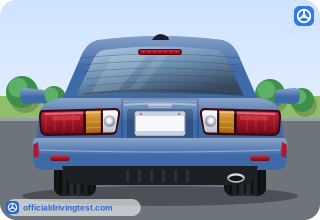
- Check them often to ensure they work properly
- Check them only before a long trip
- Check them once a year at inspection
- Check them only when a signal seems to fail
Show answer
Correct answer: Check them often to ensure they work properly
The manual says to check your vehicle's turn signals often to ensure they are working properly.
Source: Missouri Driver Guide (Revised August 2026), page 24 · Open this page in the manual (Manual page 24)
-
How should you sit while driving, according to the manual?
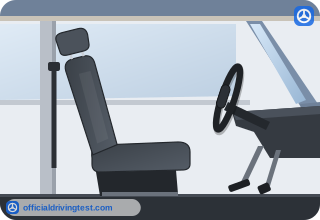
- Leaning back with one arm resting on the door armrest
- With your back straight, upright and relaxed against the seat
- Slightly forward with your chest close to the steering wheel
- Reclined so that your arms are fully extended to the wheel
Show answer
Correct answer: With your back straight, upright and relaxed against the seat
The manual advises sitting with your back straight, upright, and relaxed against the seat.
Source: Missouri Driver Guide (Revised August 2026), page 56 · Open this page in the manual (Manual page 56)
-
How far from the pedals and steering wheel should the seat be set?
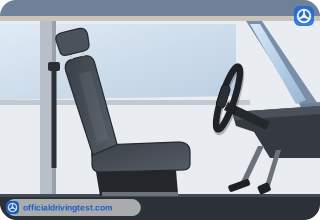
- Close enough that your arms are fully extended at the wheel
- As far back as it goes so the wheel is well out of reach
- Close enough that your elbows touch the wheel at all times
- Close enough to reach the pedals, with your elbows in front of you
Show answer
Correct answer: Close enough to reach the pedals, with your elbows in front of you
Move the seat close enough to reach the pedals but far enough away that your elbows are in front of you when you hold the steering wheel.
Source: Missouri Driver Guide (Revised August 2026), page 56 · Open this page in the manual (Manual page 56)
-
Where should your left hand be placed on the steering wheel?
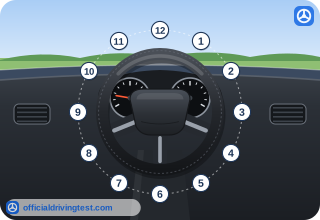
- Between the ten and twelve o’clock positions
- Between the one and two o’clock positions
- Between the seven and nine o’clock positions
- At the six o’clock position
Show answer
Correct answer: Between the seven and nine o’clock positions
The manual says to place the left hand between the seven and nine o’clock positions.
Source: Missouri Driver Guide (Revised August 2026), page 56 · Open this page in the manual (Manual page 56)
-
Where should your right hand be placed on the steering wheel?
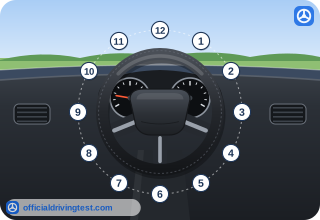
- Between the three and five o’clock positions
- Between the ten and twelve o’clock positions
- Between the nine and eleven o’clock positions
- At the twelve o’clock position
Show answer
Correct answer: Between the three and five o’clock positions
The manual says to place the right hand between the three and five o’clock positions.
Source: Missouri Driver Guide (Revised August 2026), page 56 · Open this page in the manual (Manual page 56)
-
Which technique should you use to turn the steering wheel when turning corners?
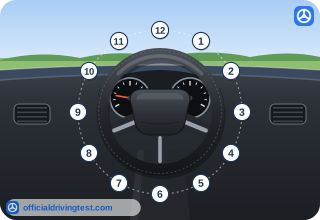
- With the palm of one hand
- One hand at the top of the wheel
- Fingertips of the left hand only
- Hand-over-hand
Show answer
Correct answer: Hand-over-hand
Turn the wheel hand-over-hand. Turning it with just the palm of one hand could cause a loss of control.
Source: Missouri Driver Guide (Revised August 2026), page 56 · Open this page in the manual (Manual page 56)
-
Why should you not turn the wheel with just the palm of one hand?
- It wears out the steering system
- You could lose control
- It makes the turn signal stay on
- It makes the vehicle accelerate
Show answer
Correct answer: You could lose control
Turning the wheel with just the palm of one hand could cause you to lose control.
Source: Missouri Driver Guide (Revised August 2026), page 56 · Open this page in the manual (Manual page 56)
-
How should you straighten the steering wheel when you complete a turn?
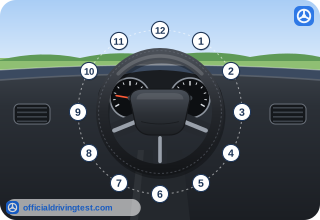
- By hand
- By letting it slide back on its own
- By pressing the brake pedal
- By releasing both hands at once
Show answer
Correct answer: By hand
When you complete a turn, you straighten out the steering wheel by hand.
Source: Missouri Driver Guide (Revised August 2026), page 56 · Open this page in the manual (Manual page 56)
-
Where should you look while steering?
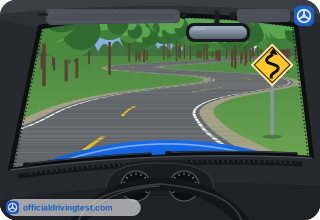
- Only at the road right in front of the hood of your vehicle
- At the rear bumper of the vehicle directly ahead of you
- Well down the road, not just at the road in front of your vehicle
- At the hands holding the steering wheel, to check your grip
Show answer
Correct answer: Well down the road, not just at the road in front of your vehicle
Looking well down the road helps you see traffic situations where you will need to steer or slow before you reach them.
Source: Missouri Driver Guide (Revised August 2026), page 56 · Open this page in the manual (Manual page 56)
-
What happens if you turn the ignition key to the “lock” position while the vehicle is still moving?
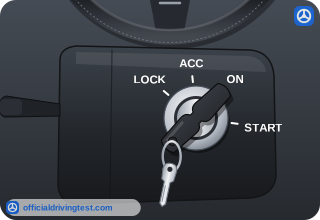
- The engine runs more quietly while you coast downhill
- The steering wheel locks and you lose control of the vehicle
- The brakes lock up and stop the vehicle more quickly
- The headlights switch off, but you can still steer normally
Show answer
Correct answer: The steering wheel locks and you lose control of the vehicle
Turning the key to “lock” in motion causes the steering wheel to lock if you try to turn it, and you will lose control of your vehicle.
Source: Missouri Driver Guide (Revised August 2026), page 57 · Open this page in the manual (Manual page 57)
-
When should you use your turn signals?
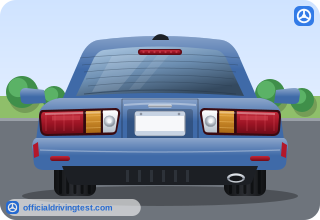
- Only when another vehicle is close enough to see you
- Before you change lanes, turn, merge into traffic, or park
- Only when turning at an intersection with other traffic
- Only when changing lanes on a road with several lanes
Show answer
Correct answer: Before you change lanes, turn, merge into traffic, or park
You should use your turn signals before you change lanes, turn right or left, merge into traffic, or park.
Source: Missouri Driver Guide (Revised August 2026), page 58 · Open this page in the manual (Manual page 58)
-
Should you signal when you change direction even if you do not see anyone else around?
- No, signaling is needed only when other vehicles are visible
- No, signaling is needed only on roads with several lanes
- Yes, but only when you are making a left turn at night
- Yes, because someone may need to know what you are doing
Show answer
Correct answer: Yes, because someone may need to know what you are doing
Get into the habit of signaling every time you change direction, since it is easy to miss someone who needs to know what you are doing.
Source: Missouri Driver Guide (Revised August 2026), page 58 · Open this page in the manual (Manual page 58)
-
There are other streets, driveways, or entrances between you and where you want to turn. When should you signal?
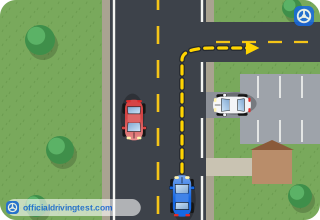
- After you have passed them
- As soon as you see the first one
- Only at the last one before your turn
- Just before you reach the first one
Show answer
Correct answer: After you have passed them
If there are other streets, driveways, or entrances between you and your turn, wait until you have passed them to signal.
Source: Missouri Driver Guide (Revised August 2026), page 58 · Open this page in the manual (Manual page 58)
-
Another vehicle is about to enter the street between you and where you plan to turn. When should you signal your turn?
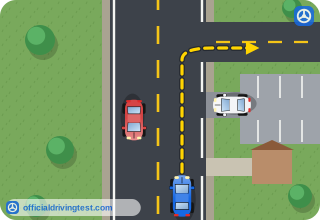
- Right away, before the vehicle enters
- When you are next to the vehicle
- Only when you begin the turn
- After you have passed that vehicle
Show answer
Correct answer: After you have passed that vehicle
If another vehicle is about to enter the street between you and your turn, wait until you have passed it to signal.
Source: Missouri Driver Guide (Revised August 2026), page 58 · Open this page in the manual (Manual page 58)
-
Why should you make sure your turn signal is off after a turn or lane change?
- It could drain the battery during the drive
- Other drivers might think you plan to turn again
- It could make your brake lights stay on
- It could lock the steering wheel
Show answer
Correct answer: Other drivers might think you plan to turn again
After small turns the signal may not turn off by itself. If it stays on, other drivers might think you plan to turn again.
Source: Missouri Driver Guide (Revised August 2026), page 59 · Open this page in the manual (Manual page 59)
-
According to the manual, what is the only reason to use your horn?
- To warn other drivers
- To show anger or frustration
- To greet other drivers
- To tell drivers ahead to speed up
Show answer
Correct answer: To warn other drivers
There is only one reason to use your horn: to warn other drivers. Needless use may distract other drivers and cause a crash.
Source: Missouri Driver Guide (Revised August 2026), page 59 · Open this page in the manual (Manual page 59)