Missouri: Sharing the road — Part 4 Practice Test
School buses, motorcycles, large trucks and their no-zones, bicycles and electric bicycles, farm vehicles and commercial vehicle size limits. — Part 4
Independent educational site · not affiliated with any government agency or DMV
Ready? Test yourself
- Instant feedback with an explanation
- Every answer cites its source in the manual
- Your best score is saved on this device
Questions are original and based on the official manual "Missouri Driver Guide" (Revised August 2026), Missouri Department of Revenue.
All 33 questions in this practice test
Take the test above first, then use this list to study. Tap “Show answer” to see the correct answer and explanation.
Show the questions and answersHide the questions
-
How far beyond the city limits does the commercial zone on interstate highways extend?
- Four miles
- Two miles
- Ten miles
- Eighteen miles
Show answer
Correct answer: Two miles
The chapter says the commercial zone on interstate highways extends only two miles beyond the city limits.
Source: Missouri Driver Guide (Revised August 2026), page 87 · Open this page in the manual (Manual page 87)
-
Without a special permit, what is the maximum length of any single vehicle?
- 35 feet
- 40 feet
- 50 feet
- 45 feet
Show answer
Correct answer: 45 feet
The chapter sets the maximum length of any single vehicle at 45 feet.
Source: Missouri Driver Guide (Revised August 2026), page 87 · Open this page in the manual (Manual page 87)
-
The 45-foot maximum length for a bus or trackless trolley coach does not include what?
- One foot in front and back for the safety bumper
- Three feet of rear overhang for loads
- The side mirrors and the rear ladder
- Two feet in front for the wheelchair lift
Show answer
Correct answer: One foot in front and back for the safety bumper
The 45-foot limit for a bus or trackless trolley coach does not count one foot in front and back for the safety bumper.
Source: Missouri Driver Guide (Revised August 2026), page 87 · Open this page in the manual (Manual page 87)
-
On interstates and certain designated highways, what is the maximum length of the semi-trailer of a truck-tractor and semi-trailer (no overall maximum length, includes load)?
- 40 feet
- 48 feet
- 53 feet
- 57 feet
Show answer
Correct answer: 53 feet
On interstates and certain designated highways the semi-trailer may be 53 feet long, with no overall maximum length.
Source: Missouri Driver Guide (Revised August 2026), page 87 · Open this page in the manual (Manual page 87)
-
On all other roads, what is the maximum length of a truck-tractor and semi-trailer?
- 50 feet
- 70 feet
- 60 feet
- 80 feet
Show answer
Correct answer: 60 feet
On all other roads the maximum length of a truck-tractor and semi-trailer is 60 feet.
Source: Missouri Driver Guide (Revised August 2026), page 87 · Open this page in the manual (Manual page 87)
-
On interstates and certain designated highways, what is the maximum length of the semi-trailer or trailer in a double-bottom combination (no overall maximum length)?
- 28 feet
- 24 feet
- 33 feet
- 40 feet
Show answer
Correct answer: 28 feet
For truck-tractor, semi-trailer, and trailer combinations (double bottoms), the semi-trailer or trailer may be 28 feet on interstates and certain designated highways.
Source: Missouri Driver Guide (Revised August 2026), page 87 · Open this page in the manual (Manual page 87)
-
On all other roads, what is the overall maximum length of a truck-tractor, semi-trailer, and trailer combination (double bottoms)?
- 58 feet
- 70 feet
- 80 feet
- 65 feet
Show answer
Correct answer: 65 feet
On all other roads the overall maximum length of a double-bottom combination is 65 feet.
Source: Missouri Driver Guide (Revised August 2026), page 87 · Open this page in the manual (Manual page 87)
-
On interstates and certain primary highways, what is the maximum length of a truck and trailer(s) and all other combinations of vehicles?
- 48 feet
- 65 feet
- 58 feet
- 70 feet
Show answer
Correct answer: 65 feet
On interstates and certain primary highways a truck and trailer(s) or other combination may be 65 feet long.
Source: Missouri Driver Guide (Revised August 2026), page 87 · Open this page in the manual (Manual page 87)
-
On all other roads, what is the overall maximum length of a truck and trailer(s) and all other combinations of vehicles?
- 40 feet
- 55 feet
- 50 feet
- 60 feet
Show answer
Correct answer: 55 feet
On all other roads the overall maximum length of a truck and trailer(s) or other combination is 55 feet.
Source: Missouri Driver Guide (Revised August 2026), page 87 · Open this page in the manual (Manual page 87)
-
What is the maximum length of an automobile transporter or boat transporter with a conventional 5th wheel, for the combination unit plus a 3-foot front to 4-foot rear overhang?
- 65 feet
- 85 feet
- 90 feet
- 75 feet
Show answer
Correct answer: 75 feet
The chapter lists 75 feet for the combination unit of an automobile or boat transporter with a conventional 5th wheel, plus a 3-foot front to 4-foot rear overhang.
Source: Missouri Driver Guide (Revised August 2026), page 88 · Open this page in the manual (Manual page 88)
-
On interstate and designated highways, what is the maximum length of a driveaway saddle mount combination (double or triple)?
- 97 feet
- 80 feet
- 90 feet
- 105 feet
Show answer
Correct answer: 97 feet
The chapter lists 97 feet as the maximum length of driveaway saddle mount combinations on interstate and designated highways.
Source: Missouri Driver Guide (Revised August 2026), page 88 · Open this page in the manual (Manual page 88)
-
Motor vehicle carriers may carry loads that extend beyond their legal length limits. How far may a load extend beyond the front and beyond the rear of the vehicle?
- No more than four feet beyond the front and three feet beyond the rear
- No more than two feet beyond the front and two feet beyond the rear
- No more than three feet beyond the front and four feet beyond the rear
- No more than three feet beyond the front and six feet beyond the rear
Show answer
Correct answer: No more than three feet beyond the front and four feet beyond the rear
Loads must not extend more than three feet beyond the front or four feet beyond the rear of the vehicle.
Source: Missouri Driver Guide (Revised August 2026), page 88 · Open this page in the manual (Manual page 88)
-
Which of these is exempt from the size limitations in the commercial vehicles chapter?
- A tractor-trailer carrying a load of furniture
- A bus carrying passengers for hire on a regular route
- Farm machinery driven occasionally for short distances
- A moving van relocating the contents of a household
Show answer
Correct answer: Farm machinery driven occasionally for short distances
The exemptions list includes farm machinery driven occasionally for short distances.
Source: Missouri Driver Guide (Revised August 2026), page 88 · Open this page in the manual (Manual page 88)
-
The size-limit exemptions for farm machinery, road-making machines and towing disabled vehicles do not include which roads?
- Interstate highways
- Roads inside a commercial zone
- Bridges with a posted weight limit
- Unpaved county roads
Show answer
Correct answer: Interstate highways
The chapter states that these exemptions do not include interstate highways.
Source: Missouri Driver Guide (Revised August 2026), page 88 · Open this page in the manual (Manual page 88)
-
What does the commercial vehicles chapter say about a bridge that has a weight limit different from the road's weight limit?
- The limit is printed on the vehicle’s registration
- The limit is announced at the nearest weigh station
- The limit is mailed to every commercial driver
- The different limit will be posted
Show answer
Correct answer: The different limit will be posted
A bridge’s weight limit may differ from the road’s, and if it does the limit will be posted.
Source: Missouri Driver Guide (Revised August 2026), page 88 · Open this page in the manual (Manual page 88)
-
Without a special permit, what is the maximum weight on any single axle on interstates?
- 18,000 pounds
- 20,000 pounds
- 24,000 pounds
- 26,000 pounds
Show answer
Correct answer: 20,000 pounds
The chapter lists 20,000 pounds as the maximum weight allowed on any single axle on interstates.
Source: Missouri Driver Guide (Revised August 2026), page 88 · Open this page in the manual (Manual page 88)
-
Without a special permit, what is the maximum weight on any single axle in a commercial zone?
- 21,400 pounds
- 22,400 pounds
- 23,400 pounds
- 24,400 pounds
Show answer
Correct answer: 22,400 pounds
The chapter lists 22,400 pounds as the maximum weight allowed on any single axle in a commercial zone.
Source: Missouri Driver Guide (Revised August 2026), page 88 · Open this page in the manual (Manual page 88)
-
Without a special permit, what is the maximum weight on any single axle on all routes other than interstates and commercial zones?
- 21,000 pounds
- 23,000 pounds
- 25,000 pounds
- 22,000 pounds
Show answer
Correct answer: 22,000 pounds
The chapter lists 22,000 pounds as the maximum weight allowed on any single axle on all other routes.
Source: Missouri Driver Guide (Revised August 2026), page 88 · Open this page in the manual (Manual page 88)
-
Without a special permit, what is the maximum weight on any tandem axle on interstates?
- 34,000 pounds
- 32,000 pounds
- 38,000 pounds
- 40,000 pounds
Show answer
Correct answer: 34,000 pounds
The chapter lists 34,000 pounds as the maximum weight allowed on any tandem axle on interstates.
Source: Missouri Driver Guide (Revised August 2026), page 88 · Open this page in the manual (Manual page 88)
-
Without a special permit, what is the maximum weight on any tandem axle on all routes other than interstates?
- 30,000 pounds
- 38,000 pounds
- 36,000 pounds
- 42,000 pounds
Show answer
Correct answer: 36,000 pounds
The chapter lists 36,000 pounds as the maximum weight allowed on any tandem axle on all other routes.
Source: Missouri Driver Guide (Revised August 2026), page 88 · Open this page in the manual (Manual page 88)
-
What does the actual gross weight allowed for a commercial vehicle depend on?
- The number of tires on the vehicle and trailer
- The height of the load above the roadway
- The distance from the first to the last axle
- The class of the driver’s license held
Show answer
Correct answer: The distance from the first to the last axle
The chapter says the actual gross weight allowed depends on the distance from the first to last axle.
Source: Missouri Driver Guide (Revised August 2026), page 88 · Open this page in the manual (Manual page 88)
-
How is the maximum gross weight allowed in a commercial zone determined?
- Multiply the number of axles by 22,400 pounds
- Multiply the number of axles by 20,000 pounds
- Multiply the number of tires by 22,400 pounds
- Multiply the number of axles by 36,000 pounds
Show answer
Correct answer: Multiply the number of axles by 22,400 pounds
To determine the maximum gross weight allowed in a commercial zone, you multiply the number of axles by 22,400 pounds.
Source: Missouri Driver Guide (Revised August 2026), page 88 · Open this page in the manual (Manual page 88)
-
What is the maximum gross weight allowed on all highways in Missouri, except where bridges are posted with lesser limits?
- 60,000 pounds
- 70,000 pounds
- 100,000 pounds
- 80,000 pounds
Show answer
Correct answer: 80,000 pounds
The maximum gross weight allowed on all highways in Missouri is 80,000 pounds, except where bridge structures are posted with lesser weight limits.
Source: Missouri Driver Guide (Revised August 2026), page 88 · Open this page in the manual (Manual page 88)
-
What does the Missouri Vehicle Route Map show?
- The routes on which the larger and heavier trucks are allowed to travel
- The locations of all weigh stations and truck rest areas in the state
- The roads where trucks are required to use the left lane only
- The bridges that have been closed to every truck for repairs
Show answer
Correct answer: The routes on which the larger and heavier trucks are allowed to travel
The map shows the routes on which the larger and heavier trucks are allowed to travel as specified by state statute.
Source: Missouri Driver Guide (Revised August 2026), page 89 · Open this page in the manual (Manual page 89)
-
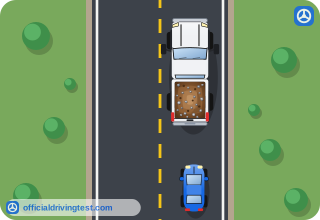
To avoid any part of a load falling off your vehicle, what must you do?
- Mark it with a red flag
- Secure it or have a protective cover on it
- Have it weighed at a weigh station
- Keep it below one-half of the legal limit
Show answer
Correct answer: Secure it or have a protective cover on it
To avoid any part of a load falling off your vehicle, you must secure it or have a protective cover on it.
Source: Missouri Driver Guide (Revised August 2026), page 90 · Open this page in the manual (Manual page 90)
-
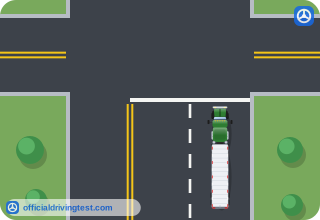
When a vehicle turns, how does the path of the rear wheels compare with the path of the front wheels (off-tracking)?
- The rear wheels take a longer path
- The rear wheels take the same path
- The rear wheels take a wider path
- The rear wheels take a shorter path
Show answer
Correct answer: The rear wheels take a shorter path
When a vehicle turns, the rear wheels take a shorter path than the front wheels.
Source: Missouri Driver Guide (Revised August 2026), page 90 · Open this page in the manual (Manual page 90)
-
What happens to the difference between the paths of the front and rear wheels as the distance between them grows?
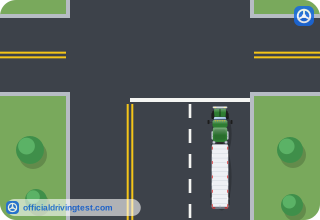
- The difference gets greater
- The difference gets smaller
- The difference stays the same
- The difference disappears at low speed
Show answer
Correct answer: The difference gets greater
The greater the distance between the front and rear wheels, the greater the difference in their paths.
Source: Missouri Driver Guide (Revised August 2026), page 90 · Open this page in the manual (Manual page 90)
-
To compensate for off-tracking, where should you begin a left turn in a long vehicle?
- As far to the left as possible
- In the center of the lane
- As far to the right as possible
- Right behind the vehicle ahead
Show answer
Correct answer: As far to the right as possible
To compensate for off-tracking, begin a left turn as far to the right as possible.
Source: Missouri Driver Guide (Revised August 2026), page 90 · Open this page in the manual (Manual page 90)
-
To compensate for off-tracking, where should you begin a right turn in a long vehicle?
- As far to the right as possible
- Against the curb
- As far to the left as possible
- At the edge of the shoulder
Show answer
Correct answer: As far to the left as possible
To compensate for off-tracking, begin a right turn as far to the left as possible.
Source: Missouri Driver Guide (Revised August 2026), page 90 · Open this page in the manual (Manual page 90)
-
What does the chapter say about posted heights at bridges or underpasses?
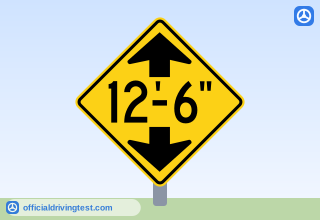
- Do not assume that they are correct
- They are always accurate for any vehicle
- They apply only to vehicles with a load
- They do not apply when the road is dry
Show answer
Correct answer: Do not assume that they are correct
Under Space Overhead, the chapter says not to assume that posted heights at bridges or underpasses are correct.
Source: Missouri Driver Guide (Revised August 2026), page 91 · Open this page in the manual (Manual page 91)
-
To make sure you have enough space over your vehicle, which of these should you check?
- Mud flaps, spare tires, fuel tanks, and bumpers
- Curbs, potholes, lane lines, and guardrails
- Wires, signs, trees, and air conditioning units
- Mirrors, license plates, headlights, and taillights
Show answer
Correct answer: Wires, signs, trees, and air conditioning units
The chapter says to check all wires, signs, trees, and air conditioning units for overhead space.
Source: Missouri Driver Guide (Revised August 2026), page 91 · Open this page in the manual (Manual page 91)
-
Which surface should a commercial driver be wary of because it may not hold the vehicle’s weight, especially when wet?
- Dry paved interstate lanes
- Freshly painted lane lines
- Unpaved roads or parking areas
- Roads inside a commercial zone
Show answer
Correct answer: Unpaved roads or parking areas
The chapter lists unpaved roads or parking areas, especially when wet, among the soft surfaces to be wary of.
Source: Missouri Driver Guide (Revised August 2026), page 91 · Open this page in the manual (Manual page 91)
-
Compared with driving a car, how much of a gap do you need to cross the road in a long or heavily weighted vehicle?
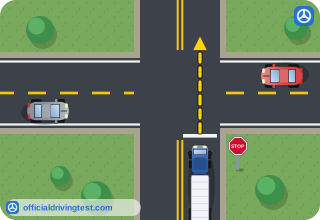
- A larger gap
- A smaller gap
- The same gap
- A gap only at night
Show answer
Correct answer: A larger gap
In a long or heavily weighted vehicle, you will need a larger gap to cross the road than you would in a car.
Source: Missouri Driver Guide (Revised August 2026), page 91 · Open this page in the manual (Manual page 91)