Missouri: Sharing the road — Part 3 Practice Test
School buses, motorcycles, large trucks and their no-zones, bicycles and electric bicycles, farm vehicles and commercial vehicle size limits. — Part 3
Independent educational site · not affiliated with any government agency or DMV
Ready? Test yourself
- Instant feedback with an explanation
- Every answer cites its source in the manual
- Your best score is saved on this device
Questions are original and based on the official manual "Missouri Driver Guide" (Revised August 2026), Missouri Department of Revenue.
All 34 questions in this practice test
Take the test above first, then use this list to study. Tap “Show answer” to see the correct answer and explanation.
Show the questions and answersHide the questions
-
A rear red reflector on a bicycle must be at least what size?
- One square inch
- Five square inches
- Two square inches
- Ten square inches
Show answer
Correct answer: Two square inches
The manual says the rear red reflector must be at least two square inches.
Source: Missouri Driver Guide (Revised August 2026), page 33 · Open this page in the manual (Manual page 33)
-
Reflective material or lights on the pedals, crank arms, shoes, or lower legs must be seen from how far when reflected by a vehicle's low beam headlights?
- 100 feet
- 200 feet
- 300 feet
- 600 feet
Show answer
Correct answer: 200 feet
The manual says reflective material or lights on the pedals, crank arms, shoes or lower legs must be visible at 200 feet.
Source: Missouri Driver Guide (Revised August 2026), page 33 · Open this page in the manual (Manual page 33)
-
Reflective material or lights on each side of the bicycle or bicyclist must be seen from how far when reflected by a vehicle's low beam headlights?
- 100 feet
- 500 feet
- 600 feet
- 300 feet
Show answer
Correct answer: 300 feet
The manual says side reflective material or lights must be visible at 300 feet.
Source: Missouri Driver Guide (Revised August 2026), page 33 · Open this page in the manual (Manual page 33)
-
The side reflective material requirement does not apply to which vehicles?
- Mopeds that comply with National Highway Traffic Safety Administration rules
- Bicycles that are equipped with a rear red light and a white front light
- Any bicycle that is ridden in a marked bicycle lane after dark
- Any bicycle that is ridden on a one-way street after dark
Show answer
Correct answer: Mopeds that comply with National Highway Traffic Safety Administration rules
The manual says the side reflective requirement does not apply to mopeds that comply with the National Highway Traffic Safety Administration regulations.
Source: Missouri Driver Guide (Revised August 2026), page 33 · Open this page in the manual (Manual page 33)
-
An electric bicycle, as the manual defines it, has an electric motor of less than how many watts?
- 250 watts
- 500 watts
- 750 watts
- 1,500 watts
Show answer
Correct answer: 750 watts
The manual defines an electric bicycle as having fully operable pedals, a seat, and an electric motor of less than 750 watts.
Source: Missouri Driver Guide (Revised August 2026), page 33 · Open this page in the manual (Manual page 33)
-
At what speed does the motor of a Class 1 electric bicycle cease to provide assistance?
- 15 miles per hour
- 20 miles per hour
- 28 miles per hour
- 30 miles per hour
Show answer
Correct answer: 20 miles per hour
A Class 1 electric bicycle provides assistance only when the rider is pedaling and stops providing it at twenty miles per hour.
Source: Missouri Driver Guide (Revised August 2026), page 33 · Open this page in the manual (Manual page 33)
-
Which class of electric bicycle has a motor used exclusively to propel the bicycle?
- Class 1
- Class 3
- Class 4
- Class 2
Show answer
Correct answer: Class 2
A Class 2 electric bicycle has a motor used exclusively to propel the bicycle.
Source: Missouri Driver Guide (Revised August 2026), page 33 · Open this page in the manual (Manual page 33)
-
At what speed does the motor of a Class 3 electric bicycle cease to provide assistance?
- 28 miles per hour
- 15 miles per hour
- 20 miles per hour
- 30 miles per hour
Show answer
Correct answer: 28 miles per hour
A Class 3 electric bicycle stops providing assistance at twenty-eight miles per hour.
Source: Missouri Driver Guide (Revised August 2026), page 33 · Open this page in the manual (Manual page 33)
-
How does the manual define road rage?
- Any lawful decision to pass a slower driver on the highway
- A planned trip taken with a group of vehicles together
- An uncontrolled display of anger by a motor vehicle operator
- Driving above the speed limit for a short distance
Show answer
Correct answer: An uncontrolled display of anger by a motor vehicle operator
The manual defines road rage as an uncontrolled display of anger by the operator of a motor vehicle which can result in property damage or personal injury.
Source: Missouri Driver Guide (Revised August 2026), page 34 · Open this page in the manual (Manual page 34)
-
Which of these is behavior associated with road rage?
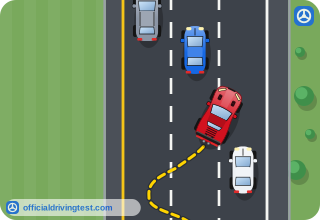
- Signaling before changing lanes
- Braking or slowing suddenly
- Yielding to a pedestrian
- Keeping a safe following distance
Show answer
Correct answer: Braking or slowing suddenly
The manual lists braking or slowing suddenly among behaviors associated with road rage.
Source: Missouri Driver Guide (Revised August 2026), page 34 · Open this page in the manual (Manual page 34)
-
When you are confronted with behaviors associated with road rage, what should you try to do?
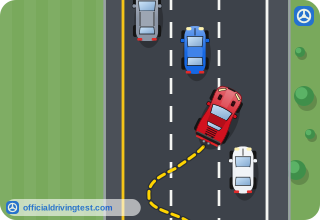
- Follow the vehicle to learn its destination
- Speed up to get away from it
- Make a gesture to show the other driver your anger
- Remain calm and not react with similar behavior
Show answer
Correct answer: Remain calm and not react with similar behavior
The manual says to remain calm and not react with similar behavior.
Source: Missouri Driver Guide (Revised August 2026), page 34 · Open this page in the manual (Manual page 34)
-
If you are confronted with road rage, which of these should you try to get?
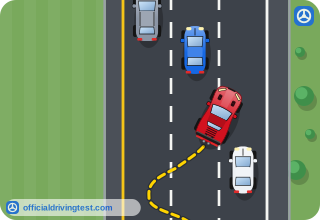
- A description of the vehicle, including its license plate
- The other driver's home address and telephone number
- The other driver's full legal name and age
- A photograph taken while you are driving
Show answer
Correct answer: A description of the vehicle, including its license plate
The manual says to get a description of the vehicle, such as approximate year, make, model, color and license plate number.
Source: Missouri Driver Guide (Revised August 2026), page 34 · Open this page in the manual (Manual page 34)
-
If you have a cellular phone when confronted with road rage, what should you do before calling to report it?
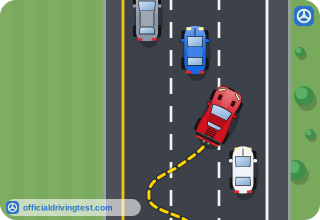
- Stop in the traffic lane
- Follow the other driver while dialing
- Exit the roadway to a safe area
- Pull alongside the other vehicle
Show answer
Correct answer: Exit the roadway to a safe area
The manual says to exit the roadway to a safe area and then dial the emergency number.
Source: Missouri Driver Guide (Revised August 2026), page 34 · Open this page in the manual (Manual page 34)
-
To whom should you report an incident of road rage?
- The other driver's insurance company or employer
- The nearest local authorities, as soon as possible
- The nearest license office or inspection station
- No one, if no damage or injury occurred
Show answer
Correct answer: The nearest local authorities, as soon as possible
The manual says to report the incident to the nearest local authorities as soon as possible.
Source: Missouri Driver Guide (Revised August 2026), page 34 · Open this page in the manual (Manual page 34)
-
If a judge finds you guilty of littering, what may you have to pay or serve?
- Up to a $100 fine and/or up to 10 days in jail
- Up to a $250 fine and/or up to 30 days in jail
- Up to a $1,000 fine and/or up to one year in jail
- Up to a $5,000 fine and/or up to five years in jail
Show answer
Correct answer: Up to a $1,000 fine and/or up to one year in jail
The manual says a guilty finding for littering may bring up to a $1,000 fine and/or up to one year in jail.
Source: Missouri Driver Guide (Revised August 2026), page 34 · Open this page in the manual (Manual page 34)
-
In relation to a large vehicle such as a truck or bus, where should you never stay?
- Far ahead of it in the next lane
- Several car lengths behind it
- Alongside it or immediately behind it
- On the opposite side of the road from it
Show answer
Correct answer: Alongside it or immediately behind it
You should never stay alongside, or immediately behind, a large vehicle such as a truck or bus, because these vehicles have large blind spots.
Source: Missouri Driver Guide (Revised August 2026), page 38 · Open this page in the manual (Manual page 38)
-
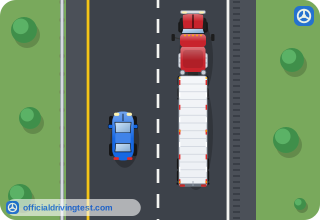
What does the manual say about passing a truck?
- It takes less time because trucks move slowly
- Trucks cannot be passed on four-lane highways
- It takes the same time as passing a car
- It takes longer to pass a truck
Show answer
Correct answer: It takes longer to pass a truck
It takes longer to pass a truck.
Source: Missouri Driver Guide (Revised August 2026), page 38 · Open this page in the manual (Manual page 38)
-
What should you do once you are in front of a truck you have passed?
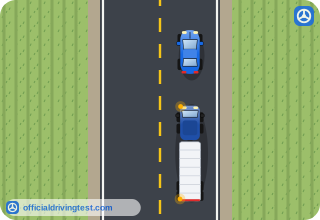
- Maintain your speed and do not slow down
- Slow down to give the truck more room
- Brake lightly to warn the truck driver
- Move to the shoulder to let the truck by
Show answer
Correct answer: Maintain your speed and do not slow down
Maintain your speed and do not slow down once you are in front of the truck.
Source: Missouri Driver Guide (Revised August 2026), page 38 · Open this page in the manual (Manual page 38)
-
What does the manual advise about driving next to other vehicles on multi-lane roads?
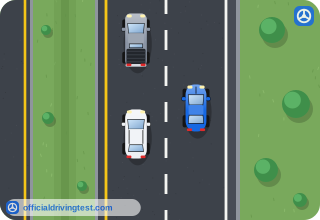
- Avoid it; move ahead or drop behind the other vehicle
- Stay beside the vehicle to block lane changes
- Stay beside the vehicle and match its speed
- Move closer to the vehicle to leave room on the other side
Show answer
Correct answer: Avoid it; move ahead or drop behind the other vehicle
Someone may crowd your lane or try to change lanes and pull into you, so move ahead or drop behind the other vehicle.
Source: Missouri Driver Guide (Revised August 2026), page 57 · Open this page in the manual (Manual page 57)
-
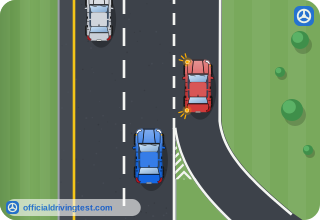
Another vehicle is entering a multi-lane roadway and there is no vehicle in the lane next to you. What should you do?
- Speed up to stay ahead of the entering vehicle
- Move over a lane to make room
- Stay in your lane and sound your horn
- Brake to stop in your lane
Show answer
Correct answer: Move over a lane to make room
Make room for vehicles entering on a multi-lane roadway by moving over a lane if no vehicle is in the lane next to you.
Source: Missouri Driver Guide (Revised August 2026), page 57 · Open this page in the manual (Manual page 57)
-
Why should you keep extra space between your vehicle and parked vehicles?
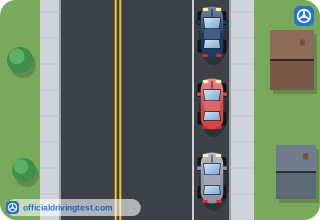
- Someone could step out of or from between parked vehicles, or one could pull out
- Parked vehicles block your view of the road signs and signals ahead
- Parked vehicles often roll out into the traffic lane on their own
- Parked vehicles always have their driver doors open into the lane
Show answer
Correct answer: Someone could step out of or from between parked vehicles, or one could pull out
Someone could step out from a parked vehicle or from between vehicles, or a parked vehicle could pull out.
Source: Missouri Driver Guide (Revised August 2026), page 57 · Open this page in the manual (Manual page 57)
-
A bicyclist is ahead of you and an oncoming vehicle is approaching. What does the manual advise?
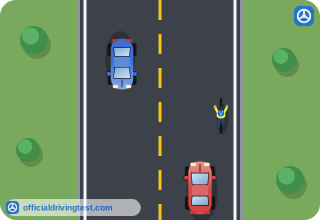
- Pass the bicycle quickly before the oncoming vehicle arrives
- Pass the bicycle while the oncoming vehicle is passing
- Slow down and let the oncoming vehicle pass first
- Sound your horn and pass on the right of the bicycle
Show answer
Correct answer: Slow down and let the oncoming vehicle pass first
Take potential hazards one at a time: slow down and let the oncoming vehicle pass first so you can give extra room to the bicycle.
Source: Missouri Driver Guide (Revised August 2026), page 58 · Open this page in the manual (Manual page 58)
-
Why should you give extra space to pedestrians or bicyclists, especially children?
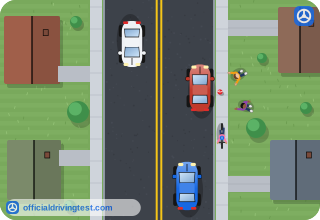
- They always ride or walk in the center of the road
- They may move into your path quickly and without warning
- They are always required to yield to every motor vehicle
- They cannot see the vehicles that approach from behind them
Show answer
Correct answer: They may move into your path quickly and without warning
Pedestrians and bicyclists, especially children, may move into your path quickly and without warning, so wait until it is safe to pass.
Source: Missouri Driver Guide (Revised August 2026), page 58 · Open this page in the manual (Manual page 58)
-
What does the commercial vehicles chapter say about the size and weight limits it lists?
- They include the load of the vehicle
- They apply only to the empty vehicle without cargo
- They apply only to the trailer, never the tractor
- They apply only to vehicles on interstate highways
Show answer
Correct answer: They include the load of the vehicle
The chapter notes that all size and weight limits listed include the load of the vehicle.
Source: Missouri Driver Guide (Revised August 2026), page 87 · Open this page in the manual (Manual page 87)
-
In the commercial vehicles chapter, limits that refer to interstates or certain designated highways also include roads up to how far from the interstate or highway?
- Two miles
- Five miles
- Twenty miles
- Ten miles
Show answer
Correct answer: Ten miles
The note says limits that refer to interstates or certain designated highways include roads up to ten miles from them.
Source: Missouri Driver Guide (Revised August 2026), page 87 · Open this page in the manual (Manual page 87)
-
Without a special permit, what is the maximum height of any vehicle outside a commercial zone on designated highways, plus ten miles from them?
- 12 feet
- 14 feet
- 13 feet
- 16 feet
Show answer
Correct answer: 14 feet
The chapter sets the maximum height outside a commercial zone on designated highways plus ten miles therefrom at 14 feet.
Source: Missouri Driver Guide (Revised August 2026), page 87 · Open this page in the manual (Manual page 87)
-
Without a special permit, what is the maximum height of any vehicle in a commercial zone?
- 11 feet
- 15 feet
- 12 feet
- 17 feet
Show answer
Correct answer: 15 feet
The chapter sets the maximum height of any vehicle in a commercial zone at 15 feet.
Source: Missouri Driver Guide (Revised August 2026), page 87 · Open this page in the manual (Manual page 87)
-
Without a special permit, what is the maximum height of a vehicle on highways other than designated highways (and the ten miles from them) and commercial zones?
- 12½ feet
- 14½ feet
- 16 feet
- 13½ feet
Show answer
Correct answer: 13½ feet
The chapter sets the maximum height on all other highways at 13½ feet.
Source: Missouri Driver Guide (Revised August 2026), page 87 · Open this page in the manual (Manual page 87)
-
Without a special permit, what is the maximum width of any vehicle?
- 8½ feet
- 7 feet
- 9½ feet
- 10 feet
Show answer
Correct answer: 8½ feet
The chapter sets the maximum width of any vehicle at 8½ feet.
Source: Missouri Driver Guide (Revised August 2026), page 87 · Open this page in the manual (Manual page 87)
-
Commercial zones exist only in cities with a population of at least how many people?
- 25,000
- 100,000
- 75,000
- 150,000
Show answer
Correct answer: 75,000
The chapter says commercial zones exist only in cities with a population of 75,000 or more.
Source: Missouri Driver Guide (Revised August 2026), page 87 · Open this page in the manual (Manual page 87)
-
A commercial zone is one mile beyond the city limits plus one more mile for every how many residents or portion thereof?
- 10,000
- 25,000
- 50,000
- 100,000
Show answer
Correct answer: 50,000
The commercial zone is one mile beyond the city limits plus one mile for every 50,000 residents or portion thereof, with listed exceptions.
Source: Missouri Driver Guide (Revised August 2026), page 87 · Open this page in the manual (Manual page 87)
-
How far beyond the city limits does the commercial zone for St. Louis City extend?
- 18 miles
- 8 miles
- 15 miles
- 25 miles
Show answer
Correct answer: 18 miles
The chapter says the commercial zone for St. Louis City extends 18 miles beyond the city limits.
Source: Missouri Driver Guide (Revised August 2026), page 87 · Open this page in the manual (Manual page 87)
-
Which city is included in the commercial zone for Kansas City, which extends 12 miles beyond the city limits?
- Independence
- Lee’s Summit
- Liberty
- Harrisonville
Show answer
Correct answer: Harrisonville
The Kansas City commercial zone extends 12 miles beyond the city limits and includes the city of Harrisonville.
Source: Missouri Driver Guide (Revised August 2026), page 87 · Open this page in the manual (Manual page 87)
-
How far beyond the city limits do the commercial zones for Springfield, St. Joseph, and Columbia extend?
- One mile
- Two miles
- Five miles
- Six miles
Show answer
Correct answer: Two miles
The chapter says the commercial zones for Springfield, St. Joseph, and Columbia extend only two miles beyond the city limits.
Source: Missouri Driver Guide (Revised August 2026), page 87 · Open this page in the manual (Manual page 87)