Missouri: Parking rules
Where Missouri forbids parking, parallel parking, parking on a hill and spaces for people with disabilities. Split into 2 shorter tests so you're not stuck in one long quiz.
Independent educational site · not affiliated with any government agency or DMV
All 44 Parking rules questions with answers
Choose a part above to take a practice test, or study every question and answer here.
Show the questions and answersHide the questions
-
What size is the parallel parking space used in the driving test?
- 20 feet long and seven feet wide
- 30 feet long and nine feet wide
- 25 feet long and seven feet wide
- 25 feet long and ten feet wide
Show answer
Correct answer: 25 feet long and seven feet wide
The parallel parking task is done in a space 25 feet long and seven feet wide.
Source: Missouri Driver Guide (Revised August 2026), page 20 · Open this page in the manual (Manual page 20)
-
In the driving test, when you park parallel to the curb or park on a hill, how far from the curb may you park at most?
- 6 inches
- 18 inches
- 12 inches
- 24 inches
Show answer
Correct answer: 18 inches
Both parking tasks test whether you park no more than 18 inches from the curb.
Source: Missouri Driver Guide (Revised August 2026), page 20 · Open this page in the manual (Manual page 20)
-
How much time do you have to park the vehicle in the parallel parking task?
- 30 seconds
- One minute
- Five minutes
- Two minutes
Show answer
Correct answer: Two minutes
You are tested on your ability to park the vehicle within two minutes.
Source: Missouri Driver Guide (Revised August 2026), page 20 · Open this page in the manual (Manual page 20)
-
Which of these are you tested for when you park on a hill in the driving test?
- Turning on the hazard flashers
- Setting the parking brake
- Leaving the engine running
- Placing a block behind a tire
Show answer
Correct answer: Setting the parking brake
When you park on a hill you are tested for setting the parking brake, among other things.
Source: Missouri Driver Guide (Revised August 2026), page 20 · Open this page in the manual (Manual page 20)
-
When you park, where must your vehicle be in relation to the travel lanes?
- Far enough from any travel lane to avoid interfering with traffic
- Partly in the nearest lane so other drivers see it
- At the center of the street where it is most visible
- Directly beside a travel lane with the wheels turned out
Show answer
Correct answer: Far enough from any travel lane to avoid interfering with traffic
Your parked vehicle must be far enough from any travel lane to avoid interfering with traffic, and visible to vehicles approaching from either direction.
Source: Missouri Driver Guide (Revised August 2026), page 35 · Open this page in the manual (Manual page 35)
-
Where does the manual say you should always park if possible?
- Beside any curb on a busy street
- On the shoulder of the road
- In a designated area
- In the first open space you see
Show answer
Correct answer: In a designated area
You should always park in a designated area if possible.
Source: Missouri Driver Guide (Revised August 2026), page 35 · Open this page in the manual (Manual page 35)
-
On a one-way street, on which side may you normally park?
- Only on the right side
- On either the right or the left side
- Only on the left side
- Only on the side that has a curb
Show answer
Correct answer: On either the right or the left side
On one-way streets you may normally park on either the right or the left side of the street.
Source: Missouri Driver Guide (Revised August 2026), page 35 · Open this page in the manual (Manual page 35)
-
In which position do you leave a parked vehicle that has an automatic transmission?
- In neutral
- In reverse
- In drive
- In park
Show answer
Correct answer: In park
The vehicle with an automatic transmission is left in park when you park it.
Source: Missouri Driver Guide (Revised August 2026), page 35 · Open this page in the manual (Manual page 35)
-
How do you leave a parked vehicle that has a manual transmission?
- In neutral
- In park
- In gear
- With the clutch held down
Show answer
Correct answer: In gear
A vehicle with a manual transmission is left in gear when parked.
Source: Missouri Driver Guide (Revised August 2026), page 35 · Open this page in the manual (Manual page 35)
-
What should you always do when you park?
- Set your parking brake
- Leave the headlights on
- Leave the engine running
- Leave the keys in the ignition
Show answer
Correct answer: Set your parking brake
You must always set your parking brake when you park.
Source: Missouri Driver Guide (Revised August 2026), page 35 · Open this page in the manual (Manual page 35)
-
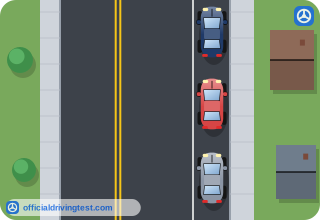
Before you open your vehicle’s door, what should you do?
- Turn on your emergency flashers
- Sound your horn
- Turn off your headlights
- Check traffic
Show answer
Correct answer: Check traffic
You check traffic before you open the door, and if you have to use the street side, again before you get out.
Source: Missouri Driver Guide (Revised August 2026), page 35 · Open this page in the manual (Manual page 35)
-
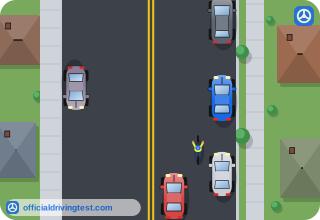
On which side should you always have passengers, especially children, exit the vehicle?
- The street side
- The curb side
- The driver’s side
- The side with the most room
Show answer
Correct answer: The curb side
Passengers, especially children, should always exit on the curb side.
Source: Missouri Driver Guide (Revised August 2026), page 35 · Open this page in the manual (Manual page 35)
-
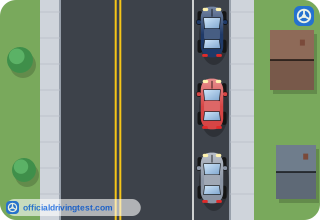
Who often travels on the right-hand side of the travel lanes, near parked cars?
- Bicyclists
- Large trucks
- Slow-moving farm vehicles
- Delivery vehicles
Show answer
Correct answer: Bicyclists
Bicyclists often travel on the right-hand side of the travel lanes near parked cars, so check for them before getting out.
Source: Missouri Driver Guide (Revised August 2026), page 35 · Open this page in the manual (Manual page 35)
-
After you get out of your vehicle, when should you shut the door?
- Only after you walk to the rear of the vehicle
- Only after the engine has cooled
- As soon as you can
- After you wait for traffic to clear
Show answer
Correct answer: As soon as you can
You should shut the door as soon as you can after getting out.
Source: Missouri Driver Guide (Revised August 2026), page 35 · Open this page in the manual (Manual page 35)
-
What does the manual say about keys in a parked vehicle?
- You may leave them if the doors are locked
- Never leave them in the vehicle
- You may leave them for a few minutes if you stay close
- You may leave them if the engine is off
Show answer
Correct answer: Never leave them in the vehicle
The manual says never to leave the keys in a parked vehicle.
Source: Missouri Driver Guide (Revised August 2026), page 35 · Open this page in the manual (Manual page 35)
-
When should you lock the doors of your vehicle?
- Only when you leave it parked overnight
- Only when you are parking on a steep hill
- Only when you are parking in a crowded area
- Whenever it will be out of your sight at any time
Show answer
Correct answer: Whenever it will be out of your sight at any time
You should lock the doors whenever you leave your vehicle if it will be out of your sight at any time.
Source: Missouri Driver Guide (Revised August 2026), page 35 · Open this page in the manual (Manual page 35)
-
If you must park on a roadway, how far from traffic should you park?
- Just far enough to open your door
- About one car length from traffic
- As far away from traffic as possible
- Far enough for cars to pass on both sides
Show answer
Correct answer: As far away from traffic as possible
If you must park on a roadway, you should park as far away from traffic as possible.
Source: Missouri Driver Guide (Revised August 2026), page 35 · Open this page in the manual (Manual page 35)
-
If you must park on a roadway and there is a curb, how close to it should you park?
- As close to it as you can
- Far enough to open the doors fully
- Half a car width from it
- About one car length from it
Show answer
Correct answer: As close to it as you can
When there is a curb, you park as close to it as you can.
Source: Missouri Driver Guide (Revised August 2026), page 35 · Open this page in the manual (Manual page 35)
-
Some parking restrictions are indicated in what way?
- By numbers painted on the road
- By flashing lights on the curb
- By lines painted on the sidewalk
- By colored curb markings
Show answer
Correct answer: By colored curb markings
Some parking restrictions are indicated by colored curb markings, so check the curb and signs.
Source: Missouri Driver Guide (Revised August 2026), page 35 · Open this page in the manual (Manual page 35)
-
On a two-way street, on which side of the street do you not park?
- The right side
- The left side
- Both sides at once
- Neither side
Show answer
Correct answer: The left side
The manual says not to park on the left side of a two-way street.
Source: Missouri Driver Guide (Revised August 2026), page 35 · Open this page in the manual (Manual page 35)
-
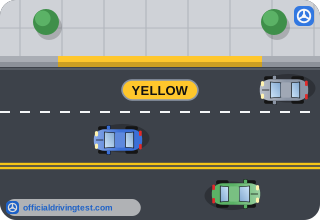
What does the manual say about parking alongside a curb that is painted yellow?
- Do not park there
- You may park there if you leave your flashers on
- You may park there only at night
- You may park there if the street is one-way
Show answer
Correct answer: Do not park there
Do not park alongside a curb that is painted yellow.
Source: Missouri Driver Guide (Revised August 2026), page 35 · Open this page in the manual (Manual page 35)
-
Which of these is a place where you cannot park?
- On the right side of a one-way street
- On the left side of a one-way street
- On a bridge
- In a designated parking area
Show answer
Correct answer: On a bridge
The manual lists a bridge among the places where you cannot park.
Source: Missouri Driver Guide (Revised August 2026), page 35 · Open this page in the manual (Manual page 35)
-
Which of these is a place where you cannot park?
- On the right side of a one-way street
- In front of a fire hydrant, blocking it
- In a designated parking area
- As close to the curb as you can, if you must park on a roadway
Show answer
Correct answer: In front of a fire hydrant, blocking it
You must not park where you would block a fire hydrant.
Source: Missouri Driver Guide (Revised August 2026), page 35 · Open this page in the manual (Manual page 35)
-
Which of these is a place where you cannot park?
- On the left side of a one-way street
- In a designated parking area
- As close to the curb as you can, if you must park on a roadway
- In an intersection
Show answer
Correct answer: In an intersection
You cannot park in an intersection.
Source: Missouri Driver Guide (Revised August 2026), page 35 · Open this page in the manual (Manual page 35)
-
Which of these is a place where you cannot park?
- On the right side of a one-way street
- On the left side of a one-way street
- On a crosswalk or sidewalk
- As close to the curb as you can, if you must park on a roadway
Show answer
Correct answer: On a crosswalk or sidewalk
You cannot park on a crosswalk or sidewalk.
Source: Missouri Driver Guide (Revised August 2026), page 35 · Open this page in the manual (Manual page 35)
-
Which of these is a place where you cannot park?
- Across a driveway entrance
- On the right side of a one-way street
- In a designated parking area
- As close to the curb as you can, if you must park on a roadway
Show answer
Correct answer: Across a driveway entrance
You cannot park across a driveway entrance.
Source: Missouri Driver Guide (Revised August 2026), page 35 · Open this page in the manual (Manual page 35)
-
Which of these is a way of parking that is not allowed?
- On the right side of a one-way street
- On the left side of a one-way street
- As close to the curb as you can, if you must park on a roadway
- With your vehicle facing against traffic
Show answer
Correct answer: With your vehicle facing against traffic
You cannot park with your vehicle facing against traffic.
Source: Missouri Driver Guide (Revised August 2026), page 35 · Open this page in the manual (Manual page 35)
-
Which of these is a place where you cannot park?
- On the right side of a one-way street
- Where you would block normal traffic flow
- On the left side of a one-way street
- In a designated parking area
Show answer
Correct answer: Where you would block normal traffic flow
You cannot park where you block the normal traffic flow or create a hazard to other drivers.
Source: Missouri Driver Guide (Revised August 2026), page 35 · Open this page in the manual (Manual page 35)
-
What must a vehicle display to use a handicapped parking space?
- A handicapped person placard or license plates
- A special decal from the county sheriff
- A parking permit issued by the property owner
- A state inspection sticker marked for access
Show answer
Correct answer: A handicapped person placard or license plates
Handicapped parking spaces may only be used when the vehicle displays a handicapped person placard or license plates.
Source: Missouri Driver Guide (Revised August 2026), page 35 · Open this page in the manual (Manual page 35)
-
A vehicle with a handicapped placard may use a handicapped parking space when which of these is true?
- The placard holder is not in the vehicle but will return shortly
- The driver is running a quick errand and will return soon
- A physically handicapped person is being dropped off or picked up
- The lot is full and no other spaces are open nearby
Show answer
Correct answer: A physically handicapped person is being dropped off or picked up
A physically handicapped person must be the occupant at the time of parking, or be dropped off or picked up.
Source: Missouri Driver Guide (Revised August 2026), page 35 · Open this page in the manual (Manual page 35)
-
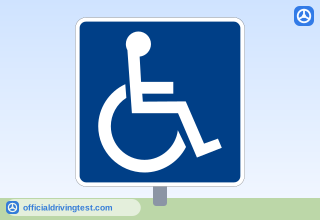
What does the International Symbol of Access, a wheelchair figure, mark?
- Spaces reserved for vehicles used by law enforcement officers on duty
- Spaces for vehicles operated by or used to transport people with handicaps
- Spaces for vehicles that are being loaded or unloaded for a short time
- Spaces set aside for drivers who are over age 65 or have a license restriction
Show answer
Correct answer: Spaces for vehicles operated by or used to transport people with handicaps
The International Symbol of Access marks spaces for vehicles operated by or used to transport people with handicaps.
Source: Missouri Driver Guide (Revised August 2026), page 36 · Open this page in the manual (Manual page 36)
-
When convicted, violators of the handicapped parking law are punished by a fine of what amount?
- At least $25 and no more than $100
- At least $100 and no more than $500
- At least $300 and no more than $1,000
- At least $50 and no more than $300
Show answer
Correct answer: At least $50 and no more than $300
Violators, when convicted, are fined no less than $50 and no more than $300.
Source: Missouri Driver Guide (Revised August 2026), page 36 · Open this page in the manual (Manual page 36)
-
Which of these is illegal according to the handicapped parking law?
- Stopping to drop off a handicapped person
- Parking in a handicapped space with a valid placard while the holder is aboard
- Parking in a handicapped parking access aisle
- Displaying a placard while transporting the person who holds it
Show answer
Correct answer: Parking in a handicapped parking access aisle
The law makes it illegal to park in handicapped parking access aisles.
Source: Missouri Driver Guide (Revised August 2026), page 36 · Open this page in the manual (Manual page 36)
-
When is it illegal to use a handicapped person’s placard or plates to park in a designated handicapped space?
- When the handicapped person is not being transported at the time
- When the vehicle is parked in the space for more than one hour
- When the handicapped person is a passenger in the vehicle
- When the space is closer to the entrance than other spaces
Show answer
Correct answer: When the handicapped person is not being transported at the time
It is illegal to use the placard or plates if the handicapped person is not being transported at the time.
Source: Missouri Driver Guide (Revised August 2026), page 36 · Open this page in the manual (Manual page 36)
-
Which of these is on the manual’s list of things to do before leaving your parked vehicle?
- Leave the keys in the ignition
- Leave the motor running
- Leave the parking brake off
- Lock it and pocket the keys
Show answer
Correct answer: Lock it and pocket the keys
Before leaving a parked vehicle, you lock it and pocket the keys.
Source: Missouri Driver Guide (Revised August 2026), page 36 · Open this page in the manual (Manual page 36)
-
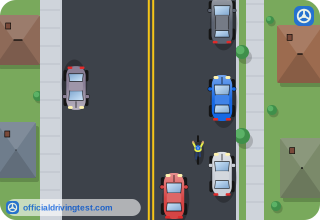
Before stepping out of your parked vehicle, what should you check?
- Your instrument panel
- Your rearview mirror for traffic
- The tire pressure
- Your blind spot over the right shoulder
Show answer
Correct answer: Your rearview mirror for traffic
You check your rearview mirror for traffic before stepping out.
Source: Missouri Driver Guide (Revised August 2026), page 36 · Open this page in the manual (Manual page 36)
-
Before you drive away from any parking space, what should you do?
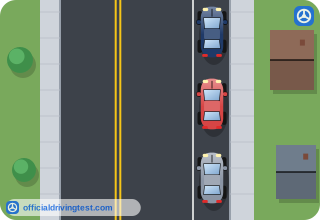
- Check for traffic and signal
- Sound your horn and move out slowly
- Let the engine idle for a minute
- Turn on your high beams
Show answer
Correct answer: Check for traffic and signal
Before driving away from a parking space, you check for traffic and signal.
Source: Missouri Driver Guide (Revised August 2026), page 36 · Open this page in the manual (Manual page 36)
-
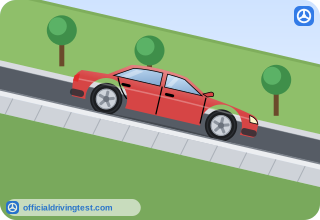
When you park facing downhill, with or without a curb, which way do you turn your wheels?
- To the left
- Straight ahead
- To the right
- To the left only if there is no curb
Show answer
Correct answer: To the right
For a vehicle parked facing downhill, with or without a curb, the wheels are turned to the right.
Source: Missouri Driver Guide (Revised August 2026), page 36 · Open this page in the manual (Manual page 36)
-
When you park facing uphill where there is no curb, which way do you turn your wheels?
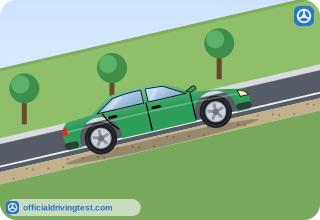
- To the left
- To the right
- Straight ahead
- Toward the center of the road
Show answer
Correct answer: To the right
For a vehicle parked facing uphill without a curb, the wheels are turned to the right.
Source: Missouri Driver Guide (Revised August 2026), page 36 · Open this page in the manual (Manual page 36)
-
When you begin parallel parking, about how far to the left of the vehicle ahead of the space do you stop, even with it?
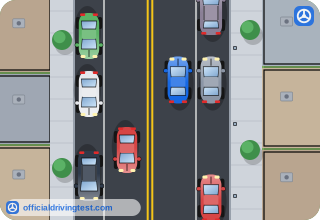
- About 6 inches
- About 3 feet
- About 5 feet
- About 1½ feet
Show answer
Correct answer: About 1½ feet
You stop even with the vehicle ahead of the parking space, about 1½ feet to the left of it.
Source: Missouri Driver Guide (Revised August 2026), page 36 · Open this page in the manual (Manual page 36)
-
In parallel parking, which way do you first turn your wheels when you back into the space?
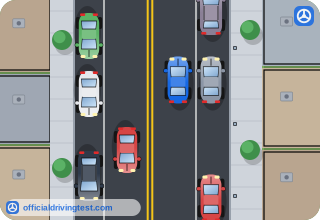
- Sharply to the left
- Slightly to the left
- Sharply to the right
- Straight, until the rear wheels reach the curb
Show answer
Correct answer: Sharply to the right
You turn the wheels sharply to the right and back slowly into the parking space.
Source: Missouri Driver Guide (Revised August 2026), page 36 · Open this page in the manual (Manual page 36)
-
While backing into a parallel parking space, which way do you turn your wheels once you are clear of the front vehicle?
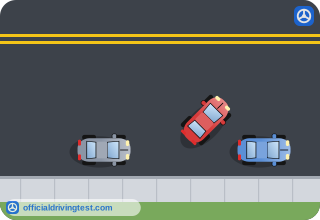
- Sharply to the left
- Sharply to the right
- Slightly to the right
- Straight ahead
Show answer
Correct answer: Sharply to the left
When clear of the front vehicle, you turn the wheels sharply to the left and continue backing.
Source: Missouri Driver Guide (Revised August 2026), page 36 · Open this page in the manual (Manual page 36)
-
While backing into a parallel parking space, what must you be sure about the front of your vehicle?
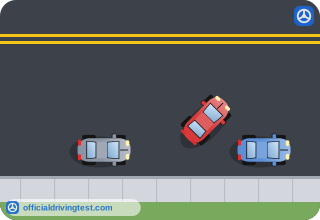
- That it stays even with the front of the vehicle ahead
- That it leaves room for the car behind to back out
- That it points toward the center of the street
- That it does not block passing or oncoming traffic
Show answer
Correct answer: That it does not block passing or oncoming traffic
You must be sure the front of your vehicle does not block passing or oncoming traffic.
Source: Missouri Driver Guide (Revised August 2026), page 36 · Open this page in the manual (Manual page 36)
-
After you pull forward toward the curb in parallel parking, where in the space should you park?
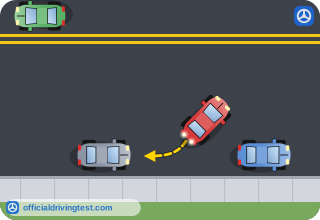
- As far forward as you can
- In the center of the parking space
- As close to the vehicle behind as you can
- As far back as you can
Show answer
Correct answer: In the center of the parking space
You park in the center of the parking space.
Source: Missouri Driver Guide (Revised August 2026), page 36 · Open this page in the manual (Manual page 36)