Mississippi: Speed and following distance — Part 2 Practice Test
Questions in this part include: “According to the manual's braking chart, what is the total distance required to stop at 20 mph under ideal conditions?” · “What is the speed limit for interstate driving in Mississippi, day and night?”
Independent educational site · not affiliated with any government agency or DMV
Ready? Test yourself
- Instant feedback with an explanation
- Every answer cites its source in the manual
- Your best score is saved on this device
Questions are original and based on the official manual "Mississippi Driver's License Manual" (Revised December 2024), Mississippi Department of Public Safety, Driver Service Bureau.
All 19 questions in this practice test
Take the test above first, then use this list to study. Tap “Show answer” to see the correct answer and explanation.
Show the questions and answersHide the questions
-
According to the manual's braking chart, what is the total distance required to stop at 20 mph under ideal conditions?
- 47 feet
- 68 feet
- 88 feet
- 116 feet
Show answer
Correct answer: 68 feet
The manual's chart shows a total stopping distance of 68 feet at 20 mph under ideal conditions.
Source: Mississippi Driver's License Manual (Revised December 2024), page 44 · Open this page in the manual (Manual page 44)
-
According to the manual's braking chart, what is the total distance required to stop at 40 mph under ideal conditions?
- 94 feet
- 146 feet
- 245 feet
- 176 feet
Show answer
Correct answer: 176 feet
The manual's chart shows a total stopping distance of 176 feet at 40 mph under ideal conditions.
Source: Mississippi Driver's License Manual (Revised December 2024), page 44 · Open this page in the manual (Manual page 44)
-
According to the manual's braking chart, what is the total distance required to stop at 50 mph under ideal conditions?
- 245 feet
- 176 feet
- 205 feet
- 326 feet
Show answer
Correct answer: 245 feet
The manual's chart shows a total stopping distance of 245 feet at 50 mph under ideal conditions.
Source: Mississippi Driver's License Manual (Revised December 2024), page 44 · Open this page in the manual (Manual page 44)
-
According to the manual's braking chart, what is the total distance required to stop at 70 mph under ideal conditions?
- 326 feet
- 251 feet
- 415 feet
- 375 feet
Show answer
Correct answer: 415 feet
The manual's chart shows a total stopping distance of 415 feet at 70 mph under ideal conditions.
Source: Mississippi Driver's License Manual (Revised December 2024), page 44 · Open this page in the manual (Manual page 44)
-
According to the manual's braking chart, how far does a vehicle travel during the thinking and reaction distance at 30 mph?
- 46 feet
- 70 feet
- 94 feet
- 116 feet
Show answer
Correct answer: 70 feet
The manual's chart shows 70 feet of thinking and reaction distance at 30 mph.
Source: Mississippi Driver's License Manual (Revised December 2024), page 44 · Open this page in the manual (Manual page 44)
-
According to the manual's braking chart, how far does a vehicle travel from the application of the brakes to a stop at 60 mph?
- 141 feet
- 251 feet
- 326 feet
- 185 feet
Show answer
Correct answer: 185 feet
The manual's chart shows 185 feet from the application of the brakes to a stop at 60 mph.
Source: Mississippi Driver's License Manual (Revised December 2024), page 44 · Open this page in the manual (Manual page 44)
-
In the manual's braking chart, what do the yellow segments show?
- The distance required for thinking prior to activation of brakes
- The distance from the application of brakes to a full stop
- The total distance required to stop the vehicle
- The distance to the vehicle ahead
Show answer
Correct answer: The distance required for thinking prior to activation of brakes
The manual says the yellow segments show the distance required for thinking prior to activation of the brakes.
Source: Mississippi Driver's License Manual (Revised December 2024), page 44 · Open this page in the manual (Manual page 44)
-
Which conditions do the braking distances in the manual's chart assume?
- Worn tires, good brakes, and dry pavement
- Good tires, good brakes, and wet pavement
- Good tires, good brakes, and dry pavement
- Good tires, worn brakes, and dry pavement
Show answer
Correct answer: Good tires, good brakes, and dry pavement
The manual says the braking distances shown assume ideal conditions: good tires, good brakes, and dry pavement.
Source: Mississippi Driver's License Manual (Revised December 2024), page 44 · Open this page in the manual (Manual page 44)
-
What does the manual say happens to stopping distances if the weather is bad, the road is slick, or you are tired or intoxicated?
- The distances stay about the same
- The distances will be drastically different
- The distances are slightly shorter
- The distances change only above 50 mph
Show answer
Correct answer: The distances will be drastically different
The manual says that in bad weather, on a slick road, or when you are tired or intoxicated, stopping distances will be drastically different from the chart.
Source: Mississippi Driver's License Manual (Revised December 2024), page 44 · Open this page in the manual (Manual page 44)
-
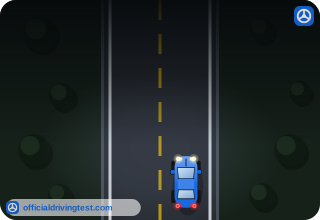
What does the manual say you should do about speed at night, because visibility is greatly reduced?
- Keep the same speed as by day
- Drive faster to leave the dark sooner
- Follow other vehicles closely
- Reduce your speed and exercise caution
Show answer
Correct answer: Reduce your speed and exercise caution
Visibility is greatly reduced at night, so you need to reduce your speed and exercise caution.
Source: Mississippi Driver's License Manual (Revised December 2024), page 63 · Open this page in the manual (Manual page 63)
-
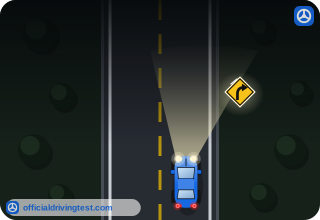
What does the manual mean by not "over-driving" your headlights at night?
- Not driving with your high beams on in town or city streets
- Not driving so fast you cannot stop in the distance you see
- Not driving farther than your fuel allows you to go
- Not driving with only one headlight working
Show answer
Correct answer: Not driving so fast you cannot stop in the distance you see
You can only see as far as your headlights reach, so you should not drive so fast that you cannot stop within the distance you can see.
Source: Mississippi Driver's License Manual (Revised December 2024), page 63 · Open this page in the manual (Manual page 63)
-
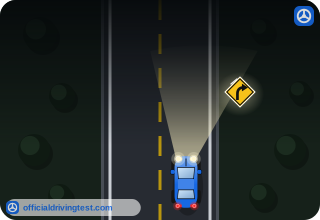
What does the manual say about your speed when you use the high beam at night?
- It may be the same as by day
- It may be higher than by day
- It should be lower than by day
- It does not matter with high beams
Show answer
Correct answer: It should be lower than by day
The manual says that even with the high beam, speed should be lower than by day.
Source: Mississippi Driver's License Manual (Revised December 2024), page 63 · Open this page in the manual (Manual page 63)
-
What is the speed limit for interstate driving in Mississippi, day and night?
- 65 mph
- 70 mph
- 60 mph
- 55 mph
Show answer
Correct answer: 70 mph
The interstate speed limit is seventy miles per hour for both day and night.
Source: Mississippi Driver's License Manual (Revised December 2024), page 70 · Open this page in the manual (Manual page 70)
-
All speed limits are set for which conditions?
- Heavy traffic and rain
- Night driving on dry pavement
- Typical rush-hour traffic
- Ideal road and weather conditions
Show answer
Correct answer: Ideal road and weather conditions
Speed limits are for ideal road and weather conditions, so you adjust your speed according to circumstances.
Source: Mississippi Driver's License Manual (Revised December 2024), page 70 · Open this page in the manual (Manual page 70)
-
Besides the maximum speed, which interstate speed limit should you be mindful of?
- A lower limit for night driving
- A separate lower limit for the right lane
- The posted minimum speed limit
- A higher limit for the left lane
Show answer
Correct answer: The posted minimum speed limit
The manual tells you to be mindful of the posted minimum speed limit.
Source: Mississippi Driver's License Manual (Revised December 2024), page 70 · Open this page in the manual (Manual page 70)
-
According to the manual, what is a main reason for collisions on the interstate?
- Tailgating another vehicle
- Driving in the right lane
- Using the acceleration lane
- Passing on the right
Show answer
Correct answer: Tailgating another vehicle
Tailgating another vehicle is a main reason for collisions on the interstate.
Source: Mississippi Driver's License Manual (Revised December 2024), page 70 · Open this page in the manual (Manual page 70)
-
If you are driving at seventy mph on the interstate, what is the least distance to keep from the vehicle ahead?
- Five car lengths
- Four car lengths
- Ten car lengths
- Seven car lengths
Show answer
Correct answer: Seven car lengths
At seventy mph you stay at least seven car lengths from the vehicle ahead.
Source: Mississippi Driver's License Manual (Revised December 2024), page 70 · Open this page in the manual (Manual page 70)
-
If you are driving at fifty mph on the interstate, what is the least distance to keep from the vehicle ahead?
- Three car lengths
- Five car lengths
- Seven car lengths
- Four car lengths
Show answer
Correct answer: Five car lengths
At fifty mph you stay at least five car lengths from the vehicle ahead.
Source: Mississippi Driver's License Manual (Revised December 2024), page 70 · Open this page in the manual (Manual page 70)
-
Outside business or residential districts, a truck driver must not follow within how far of other trucks, except when attempting to pass?
- One hundred feet
- Three hundred feet
- Two hundred feet
- Five hundred feet
Show answer
Correct answer: Three hundred feet
Outside business or residential districts a truck must not follow within three hundred feet of other trucks, except when attempting to pass.
Source: Mississippi Driver's License Manual (Revised December 2024), page 87 · Open this page in the manual (Manual page 87)