Mississippi: Sharing the road
School buses, large trucks and their blind spots, bicycles, slow-moving and animal-drawn vehicles, and respect for other road users. Split into 4 shorter tests so you're not stuck in one long quiz.
Independent educational site · not affiliated with any government agency or DMV
Choose a part
Sharing the road — Part 1
Questions in this part include: “Which of these is part of the manual’s definition of a school bus?”
StartSharing the road — Part 2
Questions in this part include: “On what kind of highway does the manual give an exception to the rule of stopping for a school bus?”
StartSharing the road — Part 3
Questions in this part include: “Once you have completed passing a large vehicle, what should you do about your speed?”
StartSharing the road — Part 4
Questions in this part include: “Where in the lane must cyclists ride?”
StartAll 76 Sharing the road questions with answers
Choose a part above to take a practice test, or study every question and answer here.
Show the questions and answersHide the questions
-
Which of these is part of the manual’s definition of a school bus?
- Only a yellow vehicle owned by a local public school district
- Only a vehicle that carries more than a set number of children
- Only a vehicle that is painted yellow and has a stop arm on it
- A privately owned vehicle run for compensation to carry children to school
Show answer
Correct answer: A privately owned vehicle run for compensation to carry children to school
A school bus is any vehicle owned by a public or governmental agency, or privately owned and operated for compensation, for transporting children to and from school.
Source: Mississippi Driver's License Manual (Revised December 2024), page 18 · Open this page in the manual (Manual page 18)
-
What does the manual say you should always do with pedestrians and other drivers?
- Let them go first at every intersection
- Treat them with the respect you want them to show you
- Stay as far away from them as the road allows
- Sound your horn to warn them you are there
Show answer
Correct answer: Treat them with the respect you want them to show you
The manual’s reminder says to always treat pedestrians and other drivers with the same respect you want them to show you.
Source: Mississippi Driver's License Manual (Revised December 2024), page 18 · Open this page in the manual (Manual page 18)
-
What does the manual say you should not assume about a bicyclist?
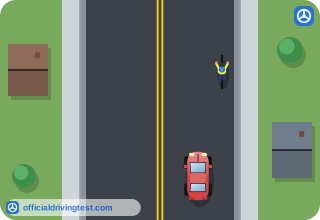
- That the cyclist is younger than sixteen years old
- That the cyclist will ride in a straight line
- That the cyclist has training in bicycle safety
- That the cyclist is going to stop at the next corner
Show answer
Correct answer: That the cyclist has training in bicycle safety
The manual says not to assume that any cyclist has training in bicycle safety.
Source: Mississippi Driver's License Manual (Revised December 2024), page 22 · Open this page in the manual (Manual page 22)
-
Why should you pay careful attention to cars parked on the side of the street?
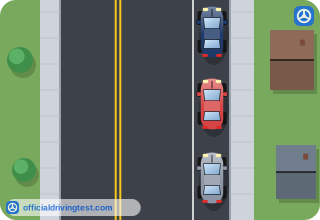
- Their alarm might sound and startle you
- The door might open and obstruct your lane
- Their headlights might flash into your eyes
- The driver might throw an object into your lane
Show answer
Correct answer: The door might open and obstruct your lane
The manual warns that the door of a parked car might open and obstruct your lane.
Source: Mississippi Driver's License Manual (Revised December 2024), page 22 · Open this page in the manual (Manual page 22)
-
While you drive, what should you pay careful attention to in other vehicles?
- Signals that other drivers want you to speed up or go around
- Signs that other drivers are about to pull into a parking lot
- Signs that other drivers are looking for a place to park
- Signals that other vehicles may be pulling out into traffic
Show answer
Correct answer: Signals that other vehicles may be pulling out into traffic
The manual lists signals that other vehicles may be pulling out into the flow of traffic among the things to pay careful attention to.
Source: Mississippi Driver's License Manual (Revised December 2024), page 22 · Open this page in the manual (Manual page 22)
-
Which of these actions by other drivers does the manual tell you to pay careful attention to?
- Sudden turns and stops
- Slow driving in the right lane
- Flashing headlights at night
- Carrying more than two passengers
Show answer
Correct answer: Sudden turns and stops
Sudden turns and stops by other drivers are on the manual’s list of things to pay careful attention to while you drive.
Source: Mississippi Driver's License Manual (Revised December 2024), page 22 · Open this page in the manual (Manual page 22)
-
What does the manual say to do about reckless drivers?
- Follow them closely to note their license plate
- Pass them as quickly as you can
- Get out of their way if possible
- Sound your horn to warn them
Show answer
Correct answer: Get out of their way if possible
The manual says to get out of the way of reckless drivers if possible.
Source: Mississippi Driver's License Manual (Revised December 2024), page 22 · Open this page in the manual (Manual page 22)
-
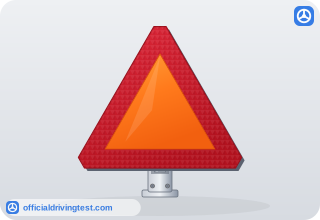
A fluorescent or reflective orange and red triangle on the rear of a vehicle identifies what kind of vehicle?
- An emergency vehicle
- A vehicle carrying a wide load
- A school bus
- A slow-moving vehicle
Show answer
Correct answer: A slow-moving vehicle
The orange and red triangle emblem identifies slow-moving vehicles.
Source: Mississippi Driver's License Manual (Revised December 2024), page 34 · Open this page in the manual (Manual page 34)
-
Which vehicles display a fluorescent or reflective orange and red triangle on the rear?
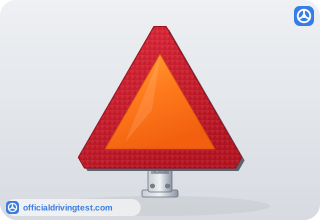
- Vehicles drawn by animals, farm equipment, or construction equipment
- Emergency vehicles and police cars on patrol in rural areas
- School buses and church vans that carry passengers at night
- Motorcycles and bicycles that travel on state highways
Show answer
Correct answer: Vehicles drawn by animals, farm equipment, or construction equipment
The manual says the triangle is displayed on vehicles drawn by animals, farm equipment, or construction equipment.
Source: Mississippi Driver's License Manual (Revised December 2024), page 34 · Open this page in the manual (Manual page 34)
-
When should you watch carefully for slow-moving vehicles?
- Only at night
- Only during the day
- Both day and night
- Only on interstate highways
Show answer
Correct answer: Both day and night
The manual says to watch carefully for slow-moving vehicles both day and night.
Source: Mississippi Driver's License Manual (Revised December 2024), page 34 · Open this page in the manual (Manual page 34)
-
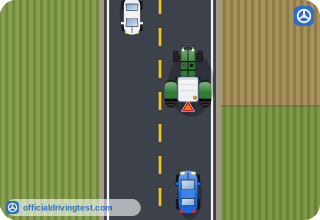
When you approach a slow-moving vehicle, what should you do before you pass?
- Sound your horn to warn the driver that you are passing
- Use caution and be sure it is safe before you pass
- Pass at once before other traffic arrives behind you
- Follow closely until the driver pulls over to the side
Show answer
Correct answer: Use caution and be sure it is safe before you pass
The manual says to use caution when approaching a slow-moving vehicle and be sure it is safe before you pass.
Source: Mississippi Driver's License Manual (Revised December 2024), page 34 · Open this page in the manual (Manual page 34)
-
Why should you remember to pass farm machinery with caution?
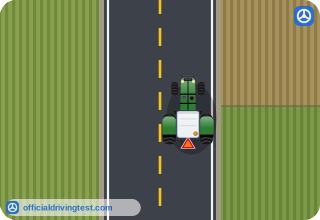
- The operator may not hear approaching vehicles
- The operator is required to stop for you
- Farm machinery cannot use state highways
- Farm machinery is always faster than traffic
Show answer
Correct answer: The operator may not hear approaching vehicles
The manual says the operator of the farm machinery may not hear approaching vehicles.
Source: Mississippi Driver's License Manual (Revised December 2024), page 34 · Open this page in the manual (Manual page 34)
-
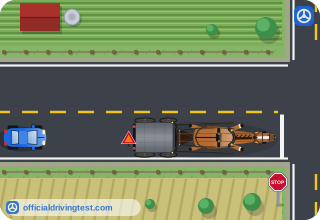
What rights do animal-drawn vehicles and horseback riders have on the road?
- The right of way over all motor vehicles on rural roads
- Permission to ignore traffic signs on rural roads
- The same rights to use the road as a motor vehicle
- No right to use state highways at any time
Show answer
Correct answer: The same rights to use the road as a motor vehicle
The manual says they have the same rights to use the road as a motor vehicle and must follow the same rules of the road.
Source: Mississippi Driver's License Manual (Revised December 2024), page 34 · Open this page in the manual (Manual page 34)
-
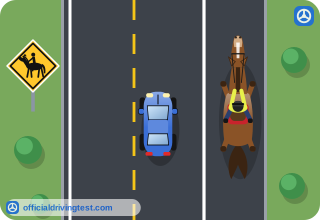
Why should you not use your horn or "rev" your engine near a horse?
- It is against the law within 100 feet of a horse
- It may scare the horse and cause a crash
- It tells the rider to stop
- It makes the horse move toward the shoulder
Show answer
Correct answer: It may scare the horse and cause a crash
The manual says the noise may scare the horse and cause a crash.
Source: Mississippi Driver's License Manual (Revised December 2024), page 34 · Open this page in the manual (Manual page 34)
-
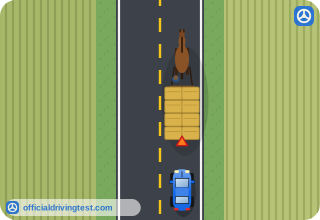
What should you anticipate from animal-drawn vehicles to avoid possible crashes?
- Sudden stops in the middle of the road
- Right turns onto highways only
- U-turns at every intersection
- Left turns into fields and driveways
Show answer
Correct answer: Left turns into fields and driveways
The manual says you should anticipate left turns made by animal-drawn vehicles into fields and driveways.
Source: Mississippi Driver's License Manual (Revised December 2024), page 34 · Open this page in the manual (Manual page 34)
-
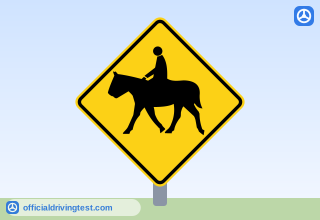
Where will warning signs for animal-drawn vehicles and horseback riders be posted?
- On every rural road throughout the state
- Only on interstate highways near large cities
- In areas where you are likely to find them
- Only near fairgrounds and county horse arenas
Show answer
Correct answer: In areas where you are likely to find them
The manual says warning signs will be posted in areas where you are likely to find animal-drawn vehicles and horseback riders.
Source: Mississippi Driver's License Manual (Revised December 2024), page 34 · Open this page in the manual (Manual page 34)
-
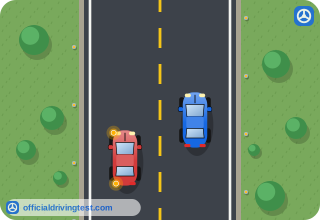
When you are being passed on a two-lane or three-lane highway, what should you do?
- Move toward the center of the road
- Speed up to stay even with the other car
- Keep to the right
- Brake hard to let the other car by
Show answer
Correct answer: Keep to the right
When being passed on a two-lane or three-lane highway, you should keep to the right.
Source: Mississippi Driver's License Manual (Revised December 2024), page 47 · Open this page in the manual (Manual page 47)
-
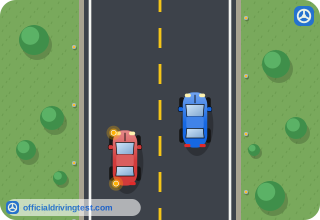
When another driver is passing you, when may you increase your speed?
- As soon as the other car pulls alongside your vehicle
- Not until the other car has completely passed you
- Once the other car is halfway past your vehicle
- Whenever the road ahead of you is clear of traffic
Show answer
Correct answer: Not until the other car has completely passed you
You should not increase your speed until the other car has completely passed you.
Source: Mississippi Driver's License Manual (Revised December 2024), page 47 · Open this page in the manual (Manual page 47)
-
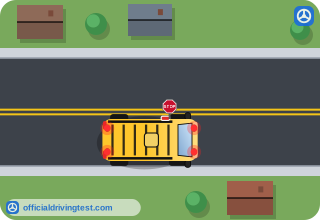
When you meet a school bus with its red lights flashing or its stop sign extended, how far away from the bus must you at least stop?
- Ten feet
- Five feet
- Twenty feet
- Fifty feet
Show answer
Correct answer: Ten feet
Mississippi law requires you to come to a complete stop at least ten feet away from the bus.
Source: Mississippi Driver's License Manual (Revised December 2024), page 58 · Open this page in the manual (Manual page 58)
-
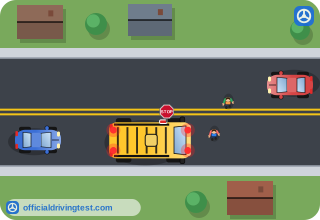
You have stopped for a school bus with red lights flashing. When may you proceed?
- As soon as the children have crossed the roadway, even if the red lights are still flashing
- As soon as the bus has resumed motion, even if the stop sign is still out
- After the children have crossed and the bus has moved, its red lights are off and its stop sign is retracted
- After counting to ten with the bus red lights still flashing
Show answer
Correct answer: After the children have crossed and the bus has moved, its red lights are off and its stop sign is retracted
You must remain stopped until the children have crossed the roadway and the bus has resumed motion, its red lights no longer flash, and its stop sign is retracted.
Source: Mississippi Driver's License Manual (Revised December 2024), page 58 · Open this page in the manual (Manual page 58)
-
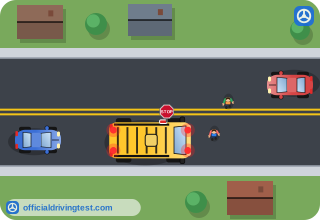
According to the manual’s general rule, which drivers must stop for a school bus with its red lights flashing?
- Only drivers traveling in the same direction as the bus
- Drivers traveling in either direction
- Only drivers traveling in the opposite direction
- Only drivers within ten feet of the bus
Show answer
Correct answer: Drivers traveling in either direction
The manual says you must stop for the school bus regardless of your direction of travel.
Source: Mississippi Driver's License Manual (Revised December 2024), page 58 · Open this page in the manual (Manual page 58)
-
On what kind of highway does the manual give an exception to the rule of stopping for a school bus?
- A one-way street
- A residential street
- A highway with a single lane each way
- A divided highway
Show answer
Correct answer: A divided highway
The one exception to the school bus stopping procedures is for drivers traveling on a divided highway.
Source: Mississippi Driver's License Manual (Revised December 2024), page 58 · Open this page in the manual (Manual page 58)
-
For the school bus exception, a divided highway must have at least how many lanes?
- Four
- Two
- Three
- Five
Show answer
Correct answer: Four
The manual describes a divided highway for this exception as one with four or more lanes, with at least two lanes of travel in opposite directions.
Source: Mississippi Driver's License Manual (Revised December 2024), page 58 · Open this page in the manual (Manual page 58)
-
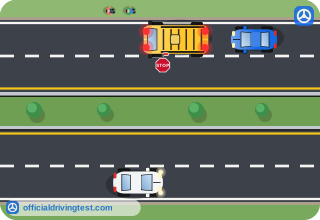
You are on a divided highway, traveling in the same direction as a stopped school bus with its red lights flashing. What must you do?
- Continue without stopping
- Slow down and pass on the left
- Come to a complete stop
- Stop only if children are in your lane
Show answer
Correct answer: Come to a complete stop
Drivers traveling in the same direction as the stopped school bus on a divided highway must still stop and proceed only after the children have exited the roadway and the bus has moved on.
Source: Mississippi Driver's License Manual (Revised December 2024), page 58 · Open this page in the manual (Manual page 58)
-
You are on a divided highway, traveling in the opposite direction from a stopped school bus with its red lights flashing. What does the law say?
- You must stop at least ten feet from the bus
- You may continue on your side without stopping
- You must stop and wait for the bus to resume motion
- You must stop if children are crossing your side
Show answer
Correct answer: You may continue on your side without stopping
Drivers traveling in the opposite direction from the stopped bus on a divided highway may continue on their side without stopping.
Source: Mississippi Driver's License Manual (Revised December 2024), page 58 · Open this page in the manual (Manual page 58)
-
A school bus stops in a loading zone that is part of or adjacent to the highway. When do you not have to stop for it?
- When no children are visible at the loading zone
- When you are more than ten feet from the bus
- When the loading zone is on your left side
- Where pedestrians are not allowed to cross the roadway
Show answer
Correct answer: Where pedestrians are not allowed to cross the roadway
You do not have to stop when the school bus is in a loading zone where pedestrians are not allowed to cross the roadway.
Source: Mississippi Driver's License Manual (Revised December 2024), page 58 · Open this page in the manual (Manual page 58)
-
If you cannot see the side mirrors on a large vehicle you are following, what does that mean?
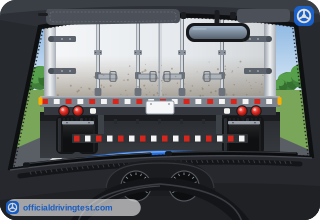
- The driver can see you through the rear window
- The driver cannot see you
- You are in a safe following position
- The driver is about to make a turn
Show answer
Correct answer: The driver cannot see you
If you cannot see the large vehicle's side mirrors, its driver cannot see you.
Source: Mississippi Driver's License Manual (Revised December 2024), page 72 · Open this page in the manual (Manual page 72)
-
How can you keep out of the rear blind spot of a large vehicle you are following?
- Follow as closely as you can so the driver notices you
- Stay directly behind the center of the rear of the trailer
- Do not follow too closely; stay visible in its side mirrors
- Drive just behind the rear wheels of the trailer
Show answer
Correct answer: Do not follow too closely; stay visible in its side mirrors
Staying back and positioned where the driver can see your vehicle in his side mirrors keeps you out of the rear blind spot.
Source: Mississippi Driver's License Manual (Revised December 2024), page 72 · Open this page in the manual (Manual page 72)
-
When following a large vehicle at night, what should you always do with your headlights?
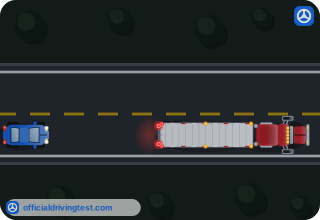
- Dim them
- Switch to high beams to see around it
- Turn them off
- Flash them so the driver notices you
Show answer
Correct answer: Dim them
Bright lights from the vehicle behind can blind the driver when they reflect off the large side mirrors, so you dim your headlights.
Source: Mississippi Driver's License Manual (Revised December 2024), page 72 · Open this page in the manual (Manual page 72)
-
If you are stopped behind a large vehicle on an upgrade, what should you do?
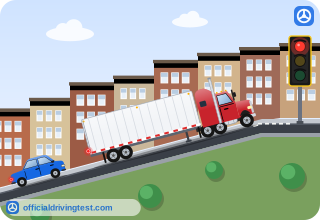
- Leave additional space in case it drifts backwards
- Stay close behind it so that it cannot drift backwards
- Leave no more space than you would on a level road
- Sound your horn before the vehicle starts to move
Show answer
Correct answer: Leave additional space in case it drifts backwards
On an upgrade a large vehicle may drift backwards slightly when it starts to move, so you leave additional space.
Source: Mississippi Driver's License Manual (Revised December 2024), page 72 · Open this page in the manual (Manual page 72)
-
When you are stopped behind a large vehicle on an upgrade, where in your lane should you keep your vehicle?
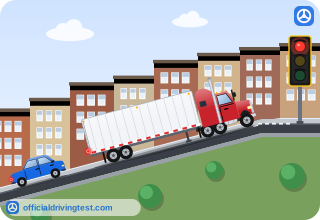
- To the right in your lane
- Exactly in the center of your lane
- To the left in your lane
- Partly in the next lane
Show answer
Correct answer: To the left in your lane
Keeping to the left in your lane lets the driver see that you are stopped behind the vehicle.
Source: Mississippi Driver's License Manual (Revised December 2024), page 72 · Open this page in the manual (Manual page 72)
-
How do oversized vehicles compare with other vehicles when they need to stop?
- They stop sooner because of their weight
- They take longer to stop
- They stop in about the same time
- They stop faster on a downgrade
Show answer
Correct answer: They take longer to stop
The manual says oversized vehicles take longer to stop, so you do not follow them too closely.
Source: Mississippi Driver's License Manual (Revised December 2024), page 72 · Open this page in the manual (Manual page 72)
-
According to the manual, approximately how much does an average tractor-trailer weigh?
- 40,000 pounds
- 60,000 pounds
- 100,000 pounds
- 80,000 pounds
Show answer
Correct answer: 80,000 pounds
The manual states that an average tractor-trailer weighs approximately 80,000 pounds.
Source: Mississippi Driver's License Manual (Revised December 2024), page 72 · Open this page in the manual (Manual page 72)
-
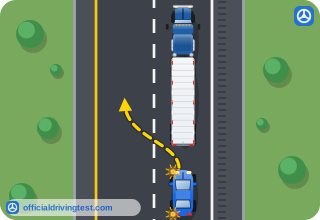
Before you move into the passing lane to pass a large vehicle, what should you do?
- Sound your horn, then move into the passing lane at once if it looks clear
- Check only to your rear, then pass if you can finish the pass quickly
- Check front and rear, then pass only if clear and in a legal passing zone
- Check to your front, then pass anywhere the road is straight and level
Show answer
Correct answer: Check front and rear, then pass only if clear and in a legal passing zone
You check to your front and rear, then move into the passing lane only if it is clear and in a legal passing zone.
Source: Mississippi Driver's License Manual (Revised December 2024), page 72 · Open this page in the manual (Manual page 72)
-
On a level highway, how much longer does it take to pass a large vehicle than to pass a car?
- 3 to 5 seconds longer
- 1 to 2 seconds longer
- 6 to 8 seconds longer
- 10 to 12 seconds longer
Show answer
Correct answer: 3 to 5 seconds longer
On a level highway, passing a large vehicle takes 3 to 5 seconds longer than passing a car.
Source: Mississippi Driver's License Manual (Revised December 2024), page 72 · Open this page in the manual (Manual page 72)
-
Why may it be easier to pass a large vehicle on an upgrade?
- Its driver must pull over
- Its momentum carries it faster
- Its brakes engage automatically
- It often loses speed
Show answer
Correct answer: It often loses speed
On an upgrade a large vehicle often loses speed, which can make it easier to pass.
Source: Mississippi Driver's License Manual (Revised December 2024), page 72 · Open this page in the manual (Manual page 72)
-
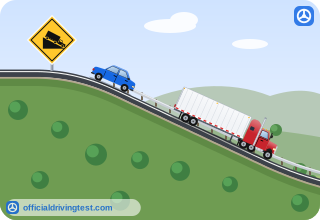
Why may you need to increase your speed to pass a large vehicle on a downgrade?
- It often loses speed on a downgrade
- Its momentum will cause it to go faster
- Its driver is required to speed up
- Passing zones are shorter on a downgrade
Show answer
Correct answer: Its momentum will cause it to go faster
On a downgrade the large vehicle's momentum will cause it to go faster, so you may need to increase your speed to pass.
Source: Mississippi Driver's License Manual (Revised December 2024), page 72 · Open this page in the manual (Manual page 72)
-
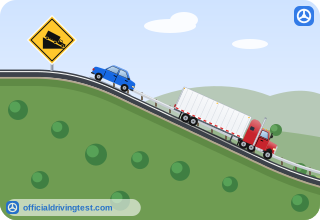
On a downgrade, what is always an option instead of speeding up to pass a large vehicle?
- Passing on the shoulder
- Waiting to pass when it is safer to do so
- Following very closely until it slows
- Flashing your lights so the driver pulls over
Show answer
Correct answer: Waiting to pass when it is safer to do so
The manual says that simply waiting to pass when it is safer to do so is always an option.
Source: Mississippi Driver's License Manual (Revised December 2024), page 72 · Open this page in the manual (Manual page 72)
-
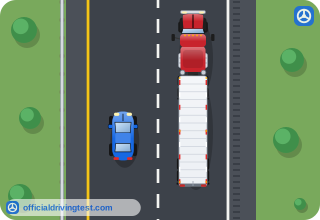
When is it safe to return to the lane of a large vehicle you have passed?
- As soon as you can see the truck's headlights in your rearview mirror
- As soon as your front bumper is ahead of the truck's cab and your signal is on
- When the truck's driver flashes the headlights to signal that it is clear
- When you see the truck's front wheels meet the pavement in your rearview mirror
Show answer
Correct answer: When you see the truck's front wheels meet the pavement in your rearview mirror
You move back only when you can see the front wheels of the truck meeting the pavement in your rearview mirror.
Source: Mississippi Driver's License Manual (Revised December 2024), page 72 · Open this page in the manual (Manual page 72)
-
Once you have completed passing a large vehicle, what should you do about your speed?
- Maintain your speed
- Slow down right away
- Brake to let the truck back ahead
- Reduce speed to leave a larger gap
Show answer
Correct answer: Maintain your speed
The manual says to maintain your speed once you have completed the passing maneuver.
Source: Mississippi Driver's License Manual (Revised December 2024), page 72 · Open this page in the manual (Manual page 72)
-
When a large vehicle passes you, how can you help its driver?
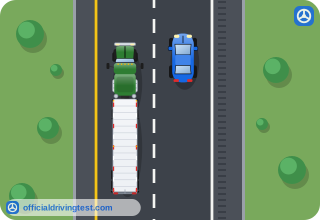
- Move toward the center of your lane
- Move partly onto the shoulder
- Keep to the far side of your lane
- Move into the next lane to make room
Show answer
Correct answer: Keep to the far side of your lane
Keeping to the far side of your lane helps the driver of a large vehicle that is passing you.
Source: Mississippi Driver's License Manual (Revised December 2024), page 72 · Open this page in the manual (Manual page 72)
-
When you meet a large vehicle coming from the opposite direction, where should you drive?
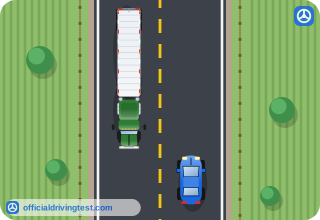
- Toward the center line of the road
- Along the left edge of your lane
- Straddling the lane line
- As far to the right as possible
Show answer
Correct answer: As far to the right as possible
Keeping as far to the right as possible avoids a sideswipe crash and reduces the wind turbulence.
Source: Mississippi Driver's License Manual (Revised December 2024), page 72 · Open this page in the manual (Manual page 72)
-
According to the manual, what does wind turbulence from a large vehicle do to nearby vehicles?
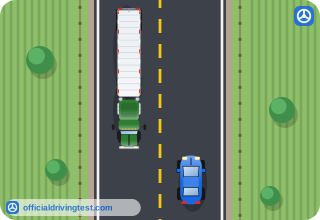
- It pulls vehicles together
- It pushes vehicles apart
- It pulls smaller vehicles toward the truck's side
- It has no effect on a vehicle in the next lane
Show answer
Correct answer: It pushes vehicles apart
The manual says that wind turbulence pushes vehicles apart; it does not pull them together.
Source: Mississippi Driver's License Manual (Revised December 2024), page 72 · Open this page in the manual (Manual page 72)
-
When preparing to make a right turn, to which side of its lane may a large vehicle need to swing?
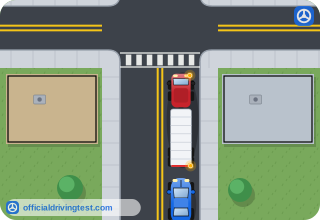
- To the right
- To the center of the road
- To the left
- It stays in the middle of its lane
Show answer
Correct answer: To the left
Large vehicles need more space to turn and swing to the left of the lane when preparing to make a right turn.
Source: Mississippi Driver's License Manual (Revised December 2024), page 72 · Open this page in the manual (Manual page 72)
-
When should you not pass a truck on the right?
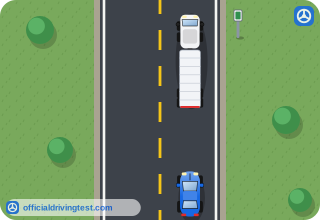
- If there is a possibility that it might be making a right turn
- When the truck is traveling uphill on a two-lane highway
- When the truck is moving faster than the car passing it
- If the truck is already traveling in the left-hand lane
Show answer
Correct answer: If there is a possibility that it might be making a right turn
Because a truck may be making a right turn, you do not pass it on the right if that is possible.
Source: Mississippi Driver's License Manual (Revised December 2024), page 72 · Open this page in the manual (Manual page 72)
-
According to Mississippi law, how is a bicycle considered when it is ridden on public roads?
- A vehicle
- A pedestrian
- A recreational device
- A motorized scooter
Show answer
Correct answer: A vehicle
Mississippi law considers a bicycle a vehicle when it is ridden on public roads.
Source: Mississippi Driver's License Manual (Revised December 2024), page 73 · Open this page in the manual (Manual page 73)
-
What rights and responsibilities does a person riding a bicycle have?
- The same as a pedestrian
- Fewer rights than a motor vehicle driver but the same responsibilities
- The same as a driver of a motor vehicle
- Only the responsibilities of a passenger
Show answer
Correct answer: The same as a driver of a motor vehicle
Any person riding a bicycle has the same rights and responsibilities as a driver of a motor vehicle.
Source: Mississippi Driver's License Manual (Revised December 2024), page 73 · Open this page in the manual (Manual page 73)
-
How must a driver treat oncoming bicyclists?
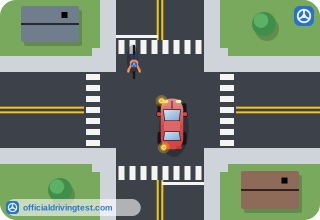
- Expect them to yield to you because you are in a larger vehicle
- Yield to them just as you would yield to oncoming motorists
- Sound your horn and continue without slowing
- Pass close in front of them before they reach you
Show answer
Correct answer: Yield to them just as you would yield to oncoming motorists
Drivers must yield to oncoming bicyclists just as they would yield to oncoming motorists.
Source: Mississippi Driver's License Manual (Revised December 2024), page 73 · Open this page in the manual (Manual page 73)
-
What is the least distance a driver must leave between the vehicle and a bicycle when passing the bicycle?
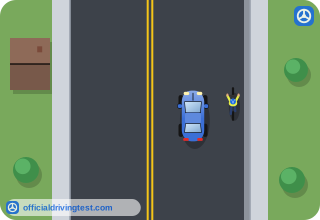
- Two feet
- Four feet
- Five feet
- Three feet
Show answer
Correct answer: Three feet
Drivers must leave a safe distance of at least three feet between the vehicle and the bicycle when passing.
Source: Mississippi Driver's License Manual (Revised December 2024), page 73 · Open this page in the manual (Manual page 73)
-
When may a driver pass a bicycle traveling in the same direction in a non-passing zone?
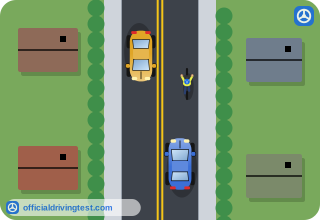
- Never, under any circumstances
- Only if the bicyclist waves you by
- Only when it is safe to do so
- Only after sounding the horn
Show answer
Correct answer: Only when it is safe to do so
A driver may pass a bicycle traveling in the same direction in a non-passing zone only when it is safe to do so.
Source: Mississippi Driver's License Manual (Revised December 2024), page 73 · Open this page in the manual (Manual page 73)
-
After passing a bicyclist proceeding in the same direction, when may you make a right turn?
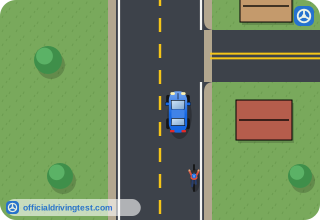
- Only if the turn can be made with reasonable safety
- Immediately after passing, if you signal your intention first
- Only after the bicyclist has come to a complete stop
- Only after you have sounded your horn to warn the bicyclist
Show answer
Correct answer: Only if the turn can be made with reasonable safety
After passing a bicyclist, a driver makes a right turn only if it can be made with reasonable safety.
Source: Mississippi Driver's License Manual (Revised December 2024), page 73 · Open this page in the manual (Manual page 73)
-
Which of these is a driver told not to do around a cyclist?
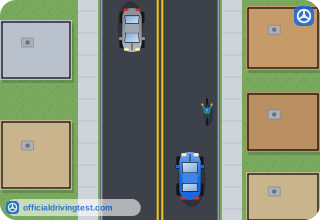
- Leave a safe distance when passing
- Yield to oncoming bicyclists
- Slow down behind a bicyclist when traffic is oncoming
- Cut off a cyclist by turning in front of them
Show answer
Correct answer: Cut off a cyclist by turning in front of them
Drivers must not “cut off” a cyclist by turning in front of them.
Source: Mississippi Driver's License Manual (Revised December 2024), page 73 · Open this page in the manual (Manual page 73)
-
What does the manual say to do when passing a bicyclist?
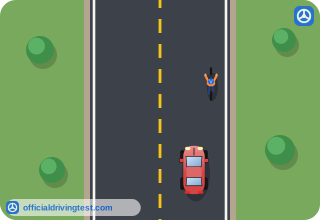
- Pass within the same lane, keeping close to the center line
- Reduce speed, move into the next lane and pass in the normal manner
- Keep your speed and share the lane with the bicyclist as you pass
- Sound your horn and pass on the bicyclist's right side in the lane
Show answer
Correct answer: Reduce speed, move into the next lane and pass in the normal manner
You do not try to share the lane; you reduce speed, move into the next lane and pass as you would pass a motor vehicle.
Source: Mississippi Driver's License Manual (Revised December 2024), page 73 · Open this page in the manual (Manual page 73)
-
If there is oncoming traffic when you want to pass a bicyclist, what should you do?
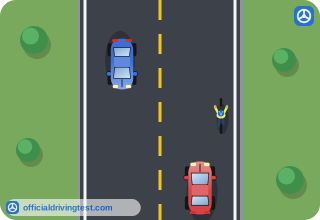
- Pass anyway by sharing the lane with the bicyclist as you go by
- Slow down behind the bicyclist and pass when traffic has cleared
- Speed up to pass the bicyclist before the oncoming traffic arrives
- Sound your horn and pass on the left of the oncoming traffic
Show answer
Correct answer: Slow down behind the bicyclist and pass when traffic has cleared
With oncoming traffic, you slow down behind the bicyclist and pass when the oncoming traffic has cleared.
Source: Mississippi Driver's License Manual (Revised December 2024), page 73 · Open this page in the manual (Manual page 73)
-
Why should you leave plenty of room when passing a bicyclist?
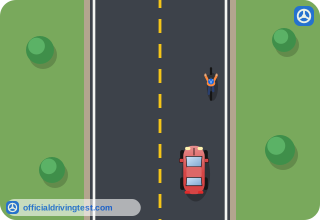
- Bicyclists cannot hear vehicles that approach from behind
- A passing vehicle must stay in its own lane by law
- Bicyclists must stop when a vehicle passes them
- The wind from your vehicle can make the bicyclist lose control
Show answer
Correct answer: The wind from your vehicle can make the bicyclist lose control
The wind effects from a moving vehicle can cause a bicyclist to lose control if the vehicle passes too closely.
Source: Mississippi Driver's License Manual (Revised December 2024), page 73 · Open this page in the manual (Manual page 73)
-
How fast can an experienced bicyclist ride, according to the manual?
- 20-25 miles per hour
- 10-15 miles per hour
- 30-35 miles per hour
- 5-10 miles per hour
Show answer
Correct answer: 20-25 miles per hour
An experienced bicyclist can ride 20-25 miles per hour and may be closer than you think.
Source: Mississippi Driver's License Manual (Revised December 2024), page 73 · Open this page in the manual (Manual page 73)
-
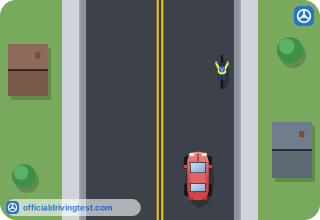
Which traffic laws must cyclists observe?
- Only the laws that apply on roads with a bike lane
- Only the signs and signals that are posted for pedestrians
- All traffic laws, including stopping for stop signs and stop lights
- Only the laws that apply to riding at night
Show answer
Correct answer: All traffic laws, including stopping for stop signs and stop lights
Cyclists must observe all traffic laws, including stopping for stop signs, stop lights, and obeying any other road signs.
Source: Mississippi Driver's License Manual (Revised December 2024), page 73 · Open this page in the manual (Manual page 73)
-
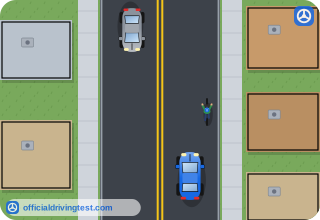
What must cyclists use to signal their turns?
- A horn or a bell
- A flashing taillight only
- Their headlight
- Arm/hand signals
Show answer
Correct answer: Arm/hand signals
Cyclists must use arm/hand signals for turning.
Source: Mississippi Driver's License Manual (Revised December 2024), page 73 · Open this page in the manual (Manual page 73)
-
Where in the lane must cyclists ride?
- In the center of the lane, where drivers can see them
- As far to the right as is safely possible
- Along the left edge of the lane, near the center line
- Wherever the traffic is lightest at that moment
Show answer
Correct answer: As far to the right as is safely possible
Cyclists must ride as far to the right in the lane as is safely possible.
Source: Mississippi Driver's License Manual (Revised December 2024), page 73 · Open this page in the manual (Manual page 73)
-
Generally, how far from the right edge of the road does a cyclist ride?
- One to two feet
- Five to six feet
- Two to four feet
- Six to eight inches
Show answer
Correct answer: Two to four feet
Riding as far right as is safely possible generally means riding two to four feet from the right edge of the road.
Source: Mississippi Driver's License Manual (Revised December 2024), page 73 · Open this page in the manual (Manual page 73)
-
In which situation may a cyclist move to the left, farther into the traffic lane?
- When overtaking and passing another vehicle going the same way
- When the bicycle is moving faster than the cars behind it on the road
- When a driver behind the cyclist is waiting to pass and honks
- When the cyclist wants to ride at the same speed as traffic
Show answer
Correct answer: When overtaking and passing another vehicle going the same way
A cyclist may move farther into the traffic lane when overtaking and passing another vehicle traveling in the same direction.
Source: Mississippi Driver's License Manual (Revised December 2024), page 73 · Open this page in the manual (Manual page 73)
-
Which condition on the right side of the lane allows a cyclist to move farther into the traffic lane?
- Broken or missing pavement
- A smooth and clear right edge
- Light traffic behind the cyclist
- A long straight road ahead
Show answer
Correct answer: Broken or missing pavement
Unsafe conditions on the right side of the lane, such as broken or missing pavement, let a cyclist move farther into the lane.
Source: Mississippi Driver's License Manual (Revised December 2024), page 73 · Open this page in the manual (Manual page 73)
-
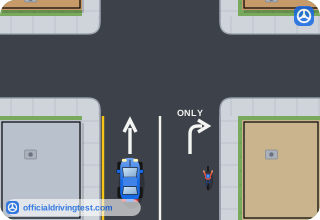
At an intersection where the right lane is for right turns only, when may a cyclist move into the traffic lane?
- When the cyclist intends to turn right at the intersection
- When the cyclist intends to stop at the intersection
- When the cyclist intends to travel straight through the intersection
- When the traffic signal is green for the cyclist
Show answer
Correct answer: When the cyclist intends to travel straight through the intersection
A cyclist may move left when the right lane is for right turns only and the cyclist intends to go straight through or to turn left.
Source: Mississippi Driver's License Manual (Revised December 2024), page 73 · Open this page in the manual (Manual page 73)
-
According to the manual, which action is one of the most effective ways for a cyclist to reduce the risk of serious injury?
- Riding in a group
- Wearing a helmet
- Riding only at low speeds
- Using a bicycle with wide tires
Show answer
Correct answer: Wearing a helmet
The manual says that wearing a helmet is one of the most effective ways to reduce the risk of serious injury.
Source: Mississippi Driver's License Manual (Revised December 2024), page 74 · Open this page in the manual (Manual page 74)
-
According to the manual, what determines whether riding a bicycle without a helmet may be illegal?
- The rider's age
- The time of day
- The type of bicycle
- Local laws
Show answer
Correct answer: Local laws
The manual notes that, depending on local laws, riding without a helmet may be illegal.
Source: Mississippi Driver's License Manual (Revised December 2024), page 74 · Open this page in the manual (Manual page 74)
-
In which direction should a cyclist ride?
- Facing oncoming traffic
- Against traffic on the left side of the road
- With the direction of traffic
- In either direction if the road is empty
Show answer
Correct answer: With the direction of traffic
A cyclist travels with the direction of traffic and never rides facing oncoming traffic.
Source: Mississippi Driver's License Manual (Revised December 2024), page 74 · Open this page in the manual (Manual page 74)
-
Which action does the manual tell cyclists to avoid so that they ride predictably?
- Weaving in and out of traffic or back and forth on the road
- Signaling turns with the arm
- Riding as far to the right as is safely possible
- Yielding to oncoming traffic when entering a roadway
Show answer
Correct answer: Weaving in and out of traffic or back and forth on the road
To ride predictably, a cyclist does not weave in and out of traffic or back and forth on the road.
Source: Mississippi Driver's License Manual (Revised December 2024), page 74 · Open this page in the manual (Manual page 74)
-
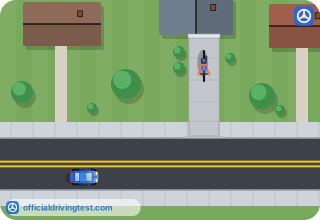
Before riding out of an alley, a driveway, or from behind parked cars, what must a cyclist be certain of?
- That the headlight is turned on
- That a car is behind to follow
- That the bicycle's brakes are tight
- That the path is clear
Show answer
Correct answer: That the path is clear
A cyclist must be certain the path is clear before riding out of alleys or driveways or from behind parked cars.
Source: Mississippi Driver's License Manual (Revised December 2024), page 74 · Open this page in the manual (Manual page 74)
-
What should a cyclist use if riding at night?
- A bright taillight and a bell mounted on the handlebars
- A bright headlight, taillight, and reflective vest or clothing
- A loud horn and a flag fixed to the back of the bicycle
- Only bright clothing, since a headlight is not needed
Show answer
Correct answer: A bright headlight, taillight, and reflective vest or clothing
A bright headlight, taillight, and reflective vest or clothing should be used when riding at night.
Source: Mississippi Driver's License Manual (Revised December 2024), page 74 · Open this page in the manual (Manual page 74)
-
What does the manual suggest cyclists use for carrying items?
- A bag hung over the handlebars while riding
- A luggage carrier, basket, or saddle bags (panniers)
- A bag held in one hand while the other steers
- A backpack carried by a passenger sitting behind
Show answer
Correct answer: A luggage carrier, basket, or saddle bags (panniers)
Cyclists should use a luggage carrier, basket, or saddle bags (panniers) for carrying items.
Source: Mississippi Driver's License Manual (Revised December 2024), page 74 · Open this page in the manual (Manual page 74)
-
How many people may ride a bicycle that is built for one?
- Two, if both wear helmets
- Two, if the second sits on the luggage carrier
- Two, during daylight only
- One; never ride two people on it
Show answer
Correct answer: One; never ride two people on it
The manual says never to ride two people on a bicycle built for one.
Source: Mississippi Driver's License Manual (Revised December 2024), page 74 · Open this page in the manual (Manual page 74)
-
Which action does the manual say a cyclist should never do?
- Hitch the bicycle to another vehicle
- Use a basket for carrying items
- Pull off the road to let motorists pass
- Wear a reflective vest at night
Show answer
Correct answer: Hitch the bicycle to another vehicle
A cyclist should never hitch the bicycle to another vehicle.
Source: Mississippi Driver's License Manual (Revised December 2024), page 74 · Open this page in the manual (Manual page 74)
-
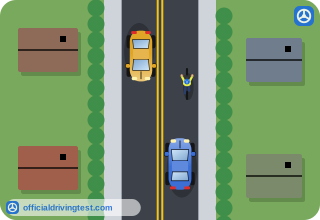
If traffic conditions make it difficult for motorists to pass a cyclist, what should the cyclist do?
- Move to the center of the lane to slow the motorists down
- Speed up until the motorists fall far behind the bicycle
- Pull off the road periodically to let the motorists pass safely
- Ride on the left side of the road facing the motorists
Show answer
Correct answer: Pull off the road periodically to let the motorists pass safely
A cyclist should use common courtesy and pull off the road periodically so motorists can pass safely, not letting long lines of cars back up.
Source: Mississippi Driver's License Manual (Revised December 2024), page 74 · Open this page in the manual (Manual page 74)
-
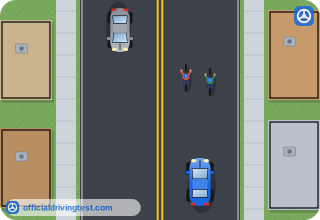
What does state law say about bicyclists riding side by side?
- It forbids side-by-side riding on all public roads in the state
- It permits it only at night, when a headlight and taillight are used
- It permits it only when both riders are wearing helmets and bright clothing
- It permits it, but riders two abreast should not impede traffic
Show answer
Correct answer: It permits it, but riders two abreast should not impede traffic
State law permits bicyclists to ride side-by-side, but two abreast should not impede the normal and reasonable movement of traffic.
Source: Mississippi Driver's License Manual (Revised December 2024), page 74 · Open this page in the manual (Manual page 74)
-
When riding on a multi-lane roadway, where should a cyclist ride?
- Straddling two lanes so that drivers see the cyclist
- Within a single lane
- Always in the left lane
- On the line between two lanes
Show answer
Correct answer: Within a single lane
On a multi-lane roadway a cyclist always rides within a single lane.
Source: Mississippi Driver's License Manual (Revised December 2024), page 74 · Open this page in the manual (Manual page 74)
-
Which vehicles are excluded from the Natchez Trace Parkway?
- Commercial vehicles
- Motorcycles
- Passenger automobiles
- Vehicles with out-of-state license plates
Show answer
Correct answer: Commercial vehicles
Commercial vehicles are excluded from the Parkway, and access is limited.
Source: Mississippi Driver's License Manual (Revised December 2024), page 90 · Open this page in the manual (Manual page 90)