Railroad crossings and other signs in Mississippi
The Mississippi Driver's License Manual shows or names everything on this page: 16 in all, on pages 27, 30, 34–36, 59.
Independent educational site · not affiliated with any government agency or DMV
Railroad crossings
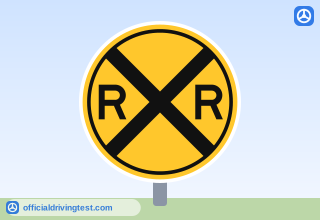
Railroad Crossing Ahead
RAILROAD COSSING ahead.
Manual page 30 · Open this page in the manual (Manual page 30)
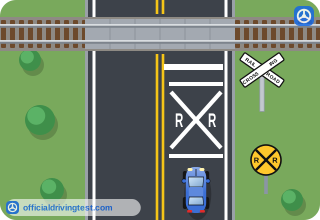
Railroad Pavement Markings
Pavement markings warn and direct drivers and regulate traffic. In front of railroad crossings, the pavement is marked with a large X and two R’s. A solid yellow line is used to prevent passing in advance of the crossing, and a white line is painted on each side of the track.
Manual page 35 · Open this page in the manual (Manual page 35)
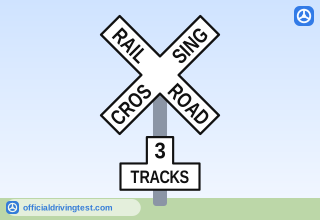
Railroad Crossbuck with 3 TRACKS
This white “cross buck” sign is posted at most railroad crossings. If there is more than one track, the number of tracks is shown on a sign below the cross buck.
Manual page 35 · Open this page in the manual (Manual page 35)
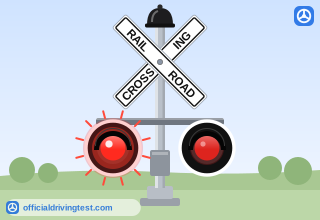
Railroad Flashing Light Signals
Flashing light signals are used with the “cross buck” sign at many railroad crossings. ALWAYS STOP when the lights begin to flash. The lights mean a train is coming. Remain STOPPED until the lights stop flashing. Then you can proceed safely.
Manual page 35 · Open this page in the manual (Manual page 35)
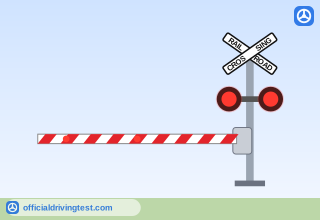
Railroad Gate with Flashing Lights
Gates are used with flashing light signals at some crossings. ALWAYS STOP when the lights begin to flash before the gates lower across your side of the tracks. Remain STOPPED until the gates are raised and the lights stop flashing.
Manual page 35 · Open this page in the manual (Manual page 35)
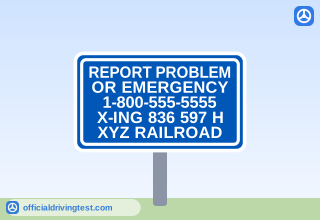
REPORT PROBLEM OR EMERGENCY (Railroad Sign)
IF A VEHICLE BECOMES STRANDED ON A RAILROAD TRACK, OR IF YOU NOTICE A DANGEROUS SITUATION ON OR NEAR A RAILROAD CROSSING, look for the blue Emergency Notification System (ENS) sign situated at every highway-rail grade crossing. The sign is located on the black and white cross buck or on the metal box near the crossing.
Manual page 36 · Open this page in the manual (Manual page 36)
Other signs and symbols
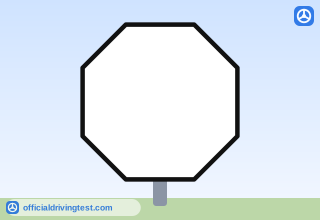
Octagon
OCTAGON: Exclusively for STOP signs.
Manual page 27 · Open this page in the manual (Manual page 27)
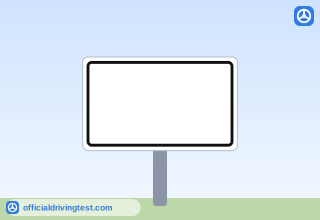
Horizontal Rectangle
HORIZONTAL RECTANGLE: Usually for guide signs.
Manual page 27 · Open this page in the manual (Manual page 27)
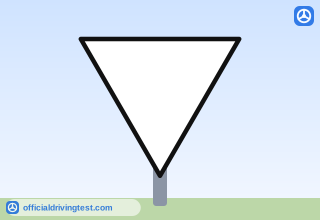
Equilateral Triangle
EQUILATERAL TRIANGLE: Exclusively for YIELD signs.
Manual page 27 · Open this page in the manual (Manual page 27)
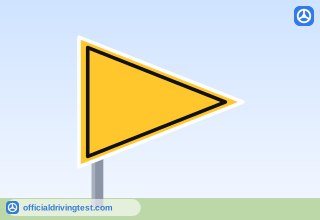
Pennant
PENNANT: Warning of NO PASSING ZONE ahead.
Manual page 27 · Open this page in the manual (Manual page 27)
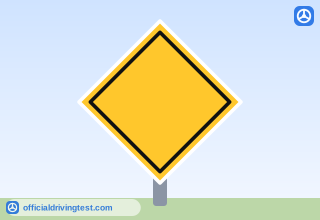
Diamond
DIAMOND: Exclusively to warn of existing or possible hazard on or adjacent to roadway.
Manual page 27 · Open this page in the manual (Manual page 27)
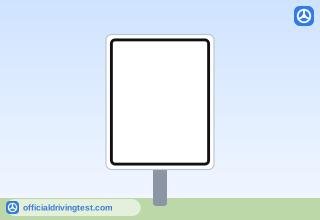
Vertical Rectangle
VERTICAL RECTANGLE: Usually used for regulatory signs (such as speed limits).
Manual page 27 · Open this page in the manual (Manual page 27)
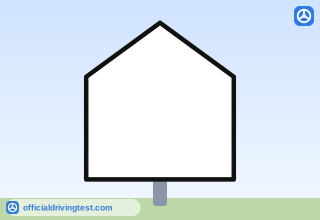
Pentagon
PENTAGON: School crossing signs and warning of school zones ahead.
Manual page 27 · Open this page in the manual (Manual page 27)
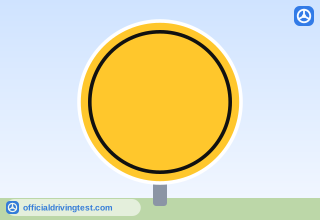
Round
ROUND: Warning of railroad crossing ahead.
Manual page 27 · Open this page in the manual (Manual page 27)
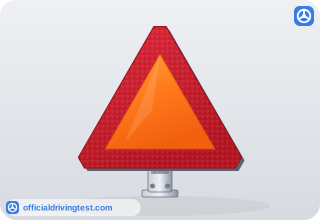
Slow-Moving Vehicle Emblem
This emblem identifies SLOW-MOVING VEHICLES (vehicles that travel twenty-five miles per hour or less). Watch carefully for these vehicles both day and night
Manual page 34 · Open this page in the manual (Manual page 34)
Person with White Cane
People who are blind or who have visual impairments can be vulnerable pedestrians. Be on the lookout for pedestrians carrying a white cane, which may have a red tip. Take every precaution and extend every courtesy to keep them safe at intersections and crosswalks. Come to a complete stop if necessary.
Manual page 59 · Open this page in the manual (Manual page 59)