Minnesota: Seat belts and child safety — Part 2 Practice Test
Questions in this part include: “Car seats and booster seats must be what kind of restraint system?” · “What should you do with a child safety seat that has been in a crash?”
Independent educational site · not affiliated with any government agency or DMV
Ready? Test yourself
- Instant feedback with an explanation
- Every answer cites its source in the manual
- Your best score is saved on this device
Questions are original and based on the official manual "Minnesota Driver’s Manual" (June 2026), Minnesota Driver and Vehicle Services.
All 18 questions in this practice test
Take the test above first, then use this list to study. Tap “Show answer” to see the correct answer and explanation.
Show the questions and answersHide the questions
-
Car seats and booster seats must be what kind of restraint system?
- Registered with DVS
- Federally approved
- Bought new from a retailer
- Approved by an insurance company
Show answer
Correct answer: Federally approved
Car seats and booster seats, also known as child safety restraint systems, must be federally approved.
Source: Minnesota Driver’s Manual (June 2026), page 38
-
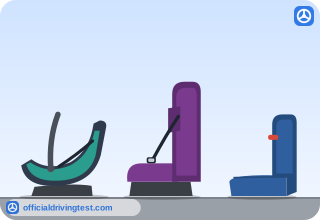
Children under 2 years of age must ride in what kind of seat until they reach its weight or height limit?
- A forward-facing car seat
- A booster seat
- A rear-facing car seat
- A regular seat with a seat belt
Show answer
Correct answer: A rear-facing car seat
Children under 2 years of age must ride in a rear-facing car seat until they reach the weight or height limit of the car seat.
Source: Minnesota Driver’s Manual (June 2026), page 38
-
A child older than 2 who exceeds the rear-facing height or weight limit of the car seat must sit in what?
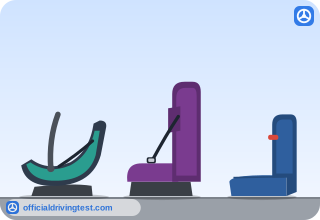
- A forward-facing car seat until reaching its height or weight limit
- A booster seat secured with only the lap portion of a belt
- A regular seat with a seat belt
- The front seat with the airbag turned off
Show answer
Correct answer: A forward-facing car seat until reaching its height or weight limit
Children older than 2 who exceed the rear-facing limit must sit in a forward-facing car seat until they reach the height or weight limit.
Source: Minnesota Driver’s Manual (June 2026), page 38
-
The manual says the height or weight limit of a forward-facing car seat is typically what weight?
- 40-60 pounds
- 20-30 pounds
- 30-40 pounds
- 60-80 pounds
Show answer
Correct answer: 40-60 pounds
The manual says forward-facing car seat limits are typically 40-60 pounds, depending on the manufacturer.
Source: Minnesota Driver’s Manual (June 2026), page 38
-
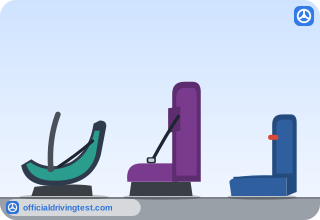
A child from 4 to 9 years old who is too tall or too heavy for the car seat must use what?
- A forward-facing car seat with a harness only
- A lap belt with no booster seat
- A booster seat and be secured with a safety belt
- A rear-facing car seat
Show answer
Correct answer: A booster seat and be secured with a safety belt
A child from 4 to 9 years old must use a booster seat and be secured with a safety belt if they are too tall or too heavy for the car seat.
Source: Minnesota Driver’s Manual (June 2026), page 38
-
At what age must a child sit without a booster seat and be secured with a seat belt, if they have not outgrown it earlier?
- 6 years old
- 9 years old
- 8 years old
- 12 years old
Show answer
Correct answer: 9 years old
When a child is 9 years old, or exceeds the weight or height limit of the booster seat, they must sit without the booster and be secured with a seat belt.
Source: Minnesota Driver’s Manual (June 2026), page 38
-
What should you do with a child safety seat that has been in a crash?
- Use it only for short trips
- Use it only if it looks undamaged
- Use it only in the back seat
- Do not use it
Show answer
Correct answer: Do not use it
The manual says not to use a safety seat that has been in a crash.
Source: Minnesota Driver’s Manual (June 2026), page 38
-
Child restraint systems expire how long after the date of manufacture?
- Two years
- Four years
- Six years
- Ten years
Show answer
Correct answer: Six years
Child restraint systems expire six years from the date of manufacture.
Source: Minnesota Driver’s Manual (June 2026), page 38
-
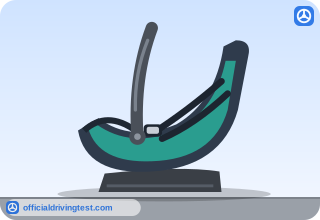
What does the manual say about placing a rear-facing infant seat in front of an active airbag?
- Never place it there
- Do it only if no other seat is available
- Do it only if the child is under one year old
- Do it only with the seat belt removed
Show answer
Correct answer: Never place it there
Never place rear-facing infant seats in front of an active airbag.
Source: Minnesota Driver’s Manual (June 2026), page 38
-
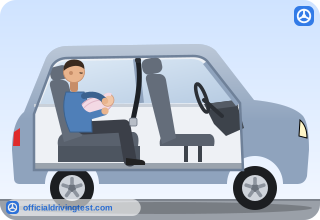
What does the manual say about holding a child on a passenger’s lap while riding in a vehicle?
- It is fine for infants
- It is fine on short trips
- It is fine if both are belted together
- It should not be done
Show answer
Correct answer: It should not be done
The manual says not to hold children on a passenger's lap while riding in a vehicle.
Source: Minnesota Driver’s Manual (June 2026), page 38
-
Where should children not ride?
- In a forward-facing car seat in the back seat
- In the cargo area of a truck or station wagon
- In a booster seat secured with a safety belt
- In the back seat behind the driver
Show answer
Correct answer: In the cargo area of a truck or station wagon
Children should not ride in the cargo area of a truck or station wagon.
Source: Minnesota Driver’s Manual (June 2026), page 38
-
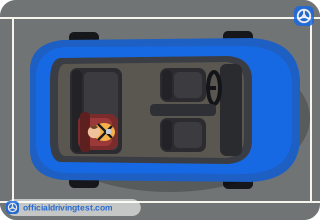
What does the manual say about leaving children or vulnerable adults alone in a motor vehicle?
- It is fine for a few minutes if the windows are open
- Never leave them alone in it
- It is fine if the engine is running
- It is fine if the doors are locked
Show answer
Correct answer: Never leave them alone in it
The manual says never to leave children or vulnerable adults alone in a motor vehicle, because temperatures can reach dangerous extremes and other dangers can occur.
Source: Minnesota Driver’s Manual (June 2026), page 38
-
What does the manual say about leaving pets in a vehicle?
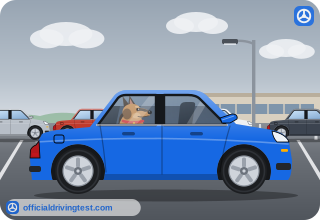
- Do not leave them, especially on very hot or cold days
- It is fine if the windows are cracked open a few inches
- It is fine for up to 30 minutes
- It is fine in the shade
Show answer
Correct answer: Do not leave them, especially on very hot or cold days
Do not leave pets in vehicles, especially on very hot or cold days, because temperature extremes can be very dangerous to animals.
Source: Minnesota Driver’s Manual (June 2026), page 39
-
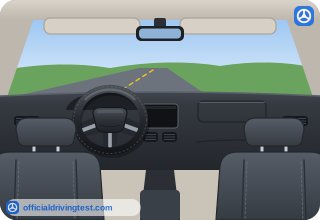
Which statement about airbags is correct?
- They are designed to keep occupants from being ejected from the vehicle
- They replace the need for seat belts
- They work with seat belts but are not designed to keep occupants from being ejected
- They work only when seat belts are not worn
Show answer
Correct answer: They work with seat belts but are not designed to keep occupants from being ejected
Airbags work with seat belts to prevent injuries but are not designed to keep occupants from being ejected.
Source: Minnesota Driver’s Manual (June 2026), page 39
-
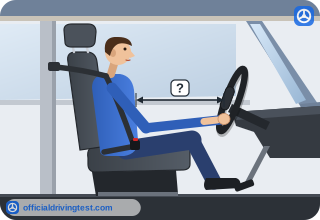
The manual suggests keeping at least how many inches between yourself and the steering wheel?
- 4 inches
- 6 inches
- 15 inches
- 10 inches
Show answer
Correct answer: 10 inches
The airbag safety suggestions say to try to keep at least 10 inches between yourself and the steering wheel.
Source: Minnesota Driver’s Manual (June 2026), page 39
-
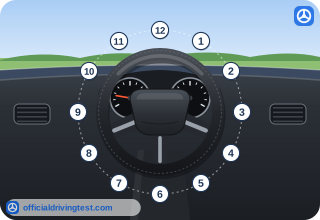
The manual’s airbag safety suggestions say to avoid which hand position on the steering wheel?
- 9 and 3 o’clock
- 10 and 2 o’clock
- 8 and 4 o’clock
- 7 and 5 o’clock
Show answer
Correct answer: 10 and 2 o’clock
The airbag safety suggestions say to keep your hands at 8 and 4 or 9 and 3 o'clock and to avoid the 10 and 2 o'clock position.
Source: Minnesota Driver’s Manual (June 2026), page 39
-
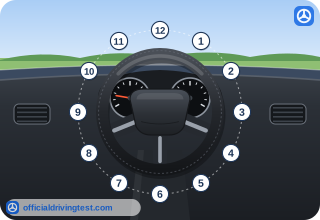
The manual’s airbag safety suggestions say to keep your thumbs in what position on the steering wheel?
- Hooked over the rim
- Tucked inside the rim
- Turned out
- Wrapped around the rim
Show answer
Correct answer: Turned out
The airbag safety suggestions say to keep your thumbs turned out on the steering wheel.
Source: Minnesota Driver’s Manual (June 2026), page 39
-
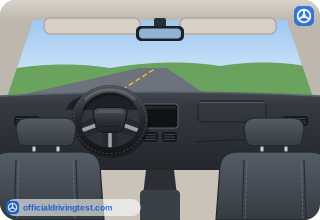
The manual’s airbag safety suggestions say to move front passenger seats in what way?
- As far back as possible
- As far forward as possible
- To the middle of the seat track
- Up as high as possible
Show answer
Correct answer: As far back as possible
The airbag safety suggestions say to move front passenger seats as far back as possible.
Source: Minnesota Driver’s Manual (June 2026), page 39