Massachusetts: Pedestrians
Yielding to pedestrians at crosswalks and signals, blind pedestrians, crossing guards, and the rules for people on foot. Split into 3 shorter tests so you're not stuck in one long quiz.
Independent educational site · not affiliated with any government agency or DMV
Choose a part
Pedestrians — Part 1
Questions in this part include: “Where is it especially important to remember that pedestrians, bicyclists, and other drivers may not hear you?”
StartPedestrians — Part 2
Questions in this part include: “What color lights flash, and in what pattern, when a Rectangular Rapid Flashing Beacon is activated?”
StartPedestrians — Part 3
Questions in this part include: “How do crossing guards make themselves highly visible?”
StartAll 59 Pedestrians questions with answers
Choose a part above to take a practice test, or study every question and answer here.
Show the questions and answersHide the questions
-
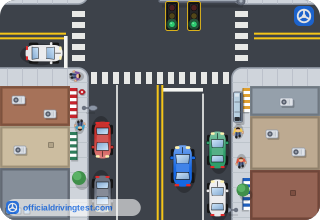
Why should you not rely on traffic signals at crosswalks?
- Traffic signals at crosswalks are usually out of order
- Traffic signals do not apply to people on foot
- Traffic signals only work for large vehicles
- Other drivers and pedestrians may ignore signals
Show answer
Correct answer: Other drivers and pedestrians may ignore signals
The manual says not to rely on traffic signals because other drivers, bicyclists, and pedestrians may ignore them.
Source: Massachusetts Driver's Manual (Revised April 2026), page 41 · Open this page in the manual (Manual page 41)
-
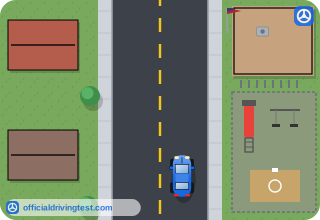
Why should you always pay close attention near playgrounds, schoolyards, and shopping centers?
- Speed limits are always higher near them
- Children and pedestrians may be hidden from sight
- Police often watch for tailgating near them
- Parking is never allowed anywhere near them
Show answer
Correct answer: Children and pedestrians may be hidden from sight
Children, pedestrians, and bicyclists may be hidden from sight near playgrounds, schoolyards, and shopping centers.
Source: Massachusetts Driver's Manual (Revised April 2026), page 41 · Open this page in the manual (Manual page 41)
-
Where is it especially important to remember that pedestrians, bicyclists, and other drivers may not hear you?
- On freeways and expressways
- On rural roads at night
- In crosswalks and parking lots
- At drive-through windows
Show answer
Correct answer: In crosswalks and parking lots
The manual says this is especially important in crosswalks and parking lots.
Source: Massachusetts Driver's Manual (Revised April 2026), page 41 · Open this page in the manual (Manual page 41)
-
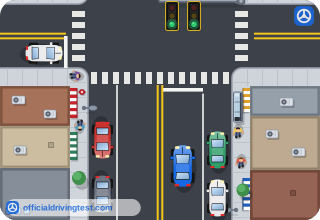
Which pedestrians should you take extra care to look for, according to the manual?
- Only those who are standing in marked crosswalks at an intersection
- Only those at traffic signals
- Those who may be distracted by cell phones or headphones
- Only those carrying large bags
Show answer
Correct answer: Those who may be distracted by cell phones or headphones
Take extra care to look for pedestrians, especially ones who may be distracted due to cell phones or headphones.
Source: Massachusetts Driver's Manual (Revised April 2026), page 49 · Open this page in the manual (Manual page 49)
-
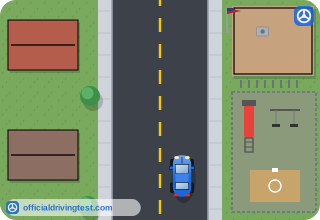
Why should you be extra careful around children?
- They always obey crosswalk rules
- They walk only on sidewalks
- They are unpredictable and hard to see
- They are easy to see from far away in any light
Show answer
Correct answer: They are unpredictable and hard to see
Children are unpredictable and hard to see, so be careful near school zones, parks, bus stops, and playgrounds.
Source: Massachusetts Driver's Manual (Revised April 2026), page 49 · Open this page in the manual (Manual page 49)
-
What does the manual say about joggers and skaters?
- They do not always obey traffic signal and crosswalk rules
- They always obey all traffic signal and crosswalk rules at intersections
- They always stay on sidewalks
- They never use crosswalks
Show answer
Correct answer: They do not always obey traffic signal and crosswalk rules
Joggers and skaters do not always obey traffic signal and crosswalk rules.
Source: Massachusetts Driver's Manual (Revised April 2026), page 49 · Open this page in the manual (Manual page 49)
-
When backing up, what should you do instead of using only vehicle mirrors or sensors?
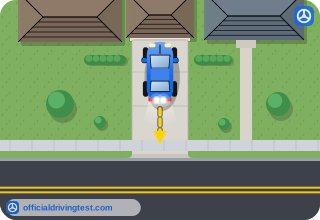
- Sound your horn once
- Back up quickly to clear the area behind you
- Wait for another driver to signal you
- Turn your head and look out the window
Show answer
Correct answer: Turn your head and look out the window
Blind spots may hide people or objects behind the vehicle, so turn your head and look out the window before you start to back up.
Source: Massachusetts Driver's Manual (Revised April 2026), page 50 · Open this page in the manual (Manual page 50)
-
Before getting into your vehicle, what should you check behind it for?
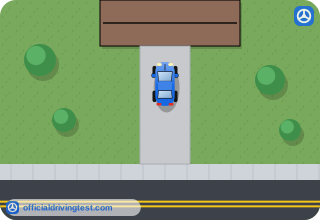
- Fallen leaves
- Children or animals
- Other parked cars
- Loose license plates
Show answer
Correct answer: Children or animals
Before getting into your vehicle, check behind it for children or animals.
Source: Massachusetts Driver's Manual (Revised April 2026), page 50 · Open this page in the manual (Manual page 50)
-
What should you do for a blind pedestrian crossing at a street crossing?
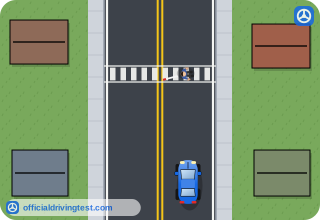
- Stop and remain stopped until the person has safely crossed
- Slow down and carefully drive around the person crossing in front
- Honk once and proceed when the person looks your way
- Wave the person across
Show answer
Correct answer: Stop and remain stopped until the person has safely crossed
Always stop for a blind pedestrian at a street crossing and remain stopped until the person has safely crossed.
Source: Massachusetts Driver's Manual (Revised April 2026), page 50 · Open this page in the manual (Manual page 50)
-
What should you not do when a blind pedestrian is crossing in front of you?
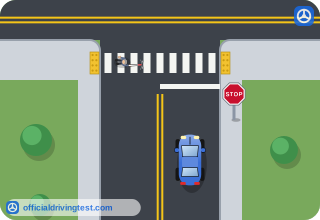
- Remain stopped
- Stop for the person
- Honk or wave the person on
- Wait until the person has crossed
Show answer
Correct answer: Honk or wave the person on
The manual says not to honk or wave a blind pedestrian on.
Source: Massachusetts Driver's Manual (Revised April 2026), page 50 · Open this page in the manual (Manual page 50)
-
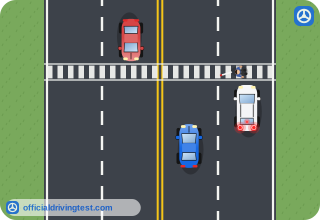
When another vehicle is stopped for a blind pedestrian crossing a street, what must you never do?
- Stop behind it
- Pass the stopped vehicle
- Look for the pedestrian
- Remain stopped until the person crosses
Show answer
Correct answer: Pass the stopped vehicle
The manual says never to pass another vehicle that is stopped for a blind pedestrian.
Source: Massachusetts Driver's Manual (Revised April 2026), page 50 · Open this page in the manual (Manual page 50)
-
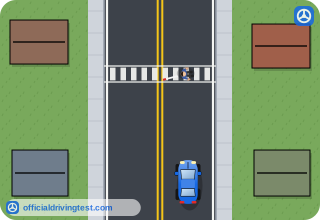
What does the White Cane Law require you to do?
- Yield only if the pedestrian waves or signals you first to go by
- Slow down to 10 mph near a blind pedestrian
- Honk twice before passing a cane user
- Stop completely for a blind pedestrian crossing a street
Show answer
Correct answer: Stop completely for a blind pedestrian crossing a street
The White Cane Law requires you to stop completely for a blind pedestrian crossing a street.
Source: Massachusetts Driver's Manual (Revised April 2026), page 50 · Open this page in the manual (Manual page 50)
-
What may blind pedestrians use?
- A reflective orange vest only
- A red flag
- A yellow armband
- A white cane or a guide dog
Show answer
Correct answer: A white cane or a guide dog
Blind pedestrians may use a white cane or a guide dog.
Source: Massachusetts Driver's Manual (Revised April 2026), page 50 · Open this page in the manual (Manual page 50)
-
What should you not assume about a pedestrian, bicyclist, or other driver who may be Deaf or Hard of Hearing?
- That they will notice your headlights and move out of the way for you
- That they can hear your car and will yield or move out of the way
- That they will stay on the sidewalk
- That they can read your lips
Show answer
Correct answer: That they can hear your car and will yield or move out of the way
You cannot visually identify someone who is Deaf or Hard of Hearing, so do not assume they can hear your car and will yield.
Source: Massachusetts Driver's Manual (Revised April 2026), page 50 · Open this page in the manual (Manual page 50)
-
Why should you pay close attention at and near train and bus stops?
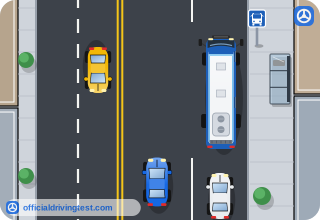
- Pedestrian traffic may be heavier
- Speed limits are always lower there
- Parking is never allowed there
- Traffic signals are always missing
Show answer
Correct answer: Pedestrian traffic may be heavier
At and near mass transit stops, pedestrian traffic may be heavier.
Source: Massachusetts Driver's Manual (Revised April 2026), page 50 · Open this page in the manual (Manual page 50)
-
Why should you pay close attention around senior centers and senior residences?
- Seniors always walk faster than other pedestrians and cross very quickly at signals
- More elderly pedestrians, who may have diminished eyesight and reduced hearing
- Seniors always cross with the signal and use marked crosswalks
- Seniors may not use crosswalks under Massachusetts law
Show answer
Correct answer: More elderly pedestrians, who may have diminished eyesight and reduced hearing
Seniors may have diminished eyesight and reduced hearing, mobility, and reaction times.
Source: Massachusetts Driver's Manual (Revised April 2026), page 50 · Open this page in the manual (Manual page 50)
-
Where should you always look ahead for hidden pedestrians?
- Only in marked crosswalks and at corners with traffic signals nearby
- Only at the end of long straight roads
- Only near traffic lights
- Around a curve, at the top of a hill, or between parked cars
Show answer
Correct answer: Around a curve, at the top of a hill, or between parked cars
Look ahead for places where pedestrians may be hidden, such as around a curve, at the top of a hill, or between parked cars.
Source: Massachusetts Driver's Manual (Revised April 2026), page 50 · Open this page in the manual (Manual page 50)
-
What is the leading threat to the safety of pedestrians, according to the manual?
- Poor lighting at crosswalks
- The speed of vehicles
- Drivers who use their horns
- Narrow sidewalks
Show answer
Correct answer: The speed of vehicles
The manual names the speed of vehicles as the leading threat to pedestrian safety.
Source: Massachusetts Driver's Manual (Revised April 2026), page 78 · Open this page in the manual (Manual page 78)
-
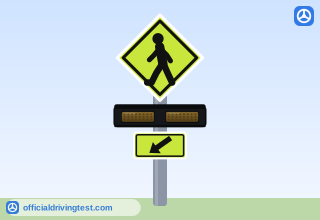
How is a Rectangular Rapid Flashing Beacon activated?
- Only by a timer that is set at the intersection
- By a pedestrian's push button or a detection system
- By any vehicle that approaches the crosswalk
- Only by a police officer at the crossing
Show answer
Correct answer: By a pedestrian's push button or a detection system
Rectangular Rapid Flashing Beacons are activated by pedestrians manually by a push button or by a pedestrian detection system.
Source: Massachusetts Driver's Manual (Revised April 2026), page 82 · Open this page in the manual (Manual page 82)
-
Where are Rectangular Rapid Flashing Beacons often located?
- At unsignaled intersections or mid-block crosswalks
- Only at railroad crossings and near rail yards
- Only at freeway exit ramps and entrance ramps
- Only at school bus stops and bus lanes
Show answer
Correct answer: At unsignaled intersections or mid-block crosswalks
They are often located in intersections without traffic signals or at mid-block crosswalks.
Source: Massachusetts Driver's Manual (Revised April 2026), page 82 · Open this page in the manual (Manual page 82)
-
What color lights flash, and in what pattern, when a Rectangular Rapid Flashing Beacon is activated?
- Red lights in a steady pattern
- White lights in an alternating pattern
- Green lights in an irregular pattern
- Amber lights in an irregular pattern
Show answer
Correct answer: Amber lights in an irregular pattern
When activated, amber lights flash in an irregular pattern.
Source: Massachusetts Driver's Manual (Revised April 2026), page 82 · Open this page in the manual (Manual page 82)
-
What must you do when a Rectangular Rapid Flashing Beacon is flashing?
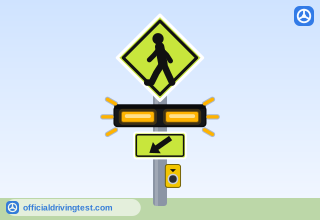
- Stop for pedestrians
- Slow down and keep going
- Stop only if pedestrians are in your lane
- Honk to warn pedestrians
Show answer
Correct answer: Stop for pedestrians
You must stop for pedestrians when the beacon is flashing.
Source: Massachusetts Driver's Manual (Revised April 2026), page 82 · Open this page in the manual (Manual page 82)
-
When does a Pedestrian Hybrid Beacon operate?
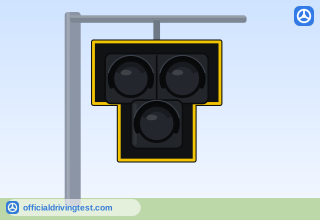
- Continuously, day and night
- Only when activated by a pedestrian
- Only during school hours
- Only when a vehicle approaches
Show answer
Correct answer: Only when activated by a pedestrian
A Pedestrian Hybrid Beacon only operates when activated by a pedestrian.
Source: Massachusetts Driver's Manual (Revised April 2026), page 82 · Open this page in the manual (Manual page 82)
-
What can you do when all the lights of a Pedestrian Hybrid Beacon are dark?
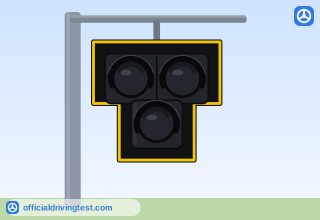
- Stop and wait for a green light
- Slow down and prepare to stop
- Proceed with caution
- Stop and then proceed if clear
Show answer
Correct answer: Proceed with caution
When all lights of a Pedestrian Hybrid Beacon are dark, you can proceed with caution.
Source: Massachusetts Driver's Manual (Revised April 2026), page 82 · Open this page in the manual (Manual page 82)
-
What must you do when the bottom yellow light of a Pedestrian Hybrid Beacon is flashing?
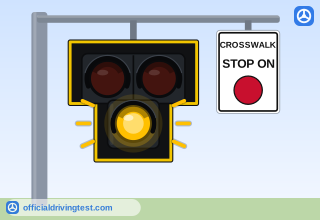
- Stop and proceed with caution if clear
- Slow down
- Prepare to stop
- Stop for pedestrians
Show answer
Correct answer: Slow down
When the bottom yellow light is flashing, you must slow down.
Source: Massachusetts Driver's Manual (Revised April 2026), page 82 · Open this page in the manual (Manual page 82)
-
What must you do when the bottom yellow light of a Pedestrian Hybrid Beacon is solid?
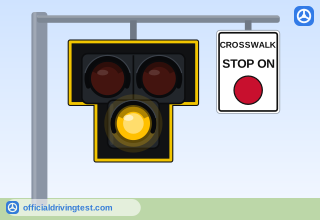
- Slow down and keep going
- Stop and wait for a green light
- Prepare to stop
- Proceed with caution
Show answer
Correct answer: Prepare to stop
When the bottom yellow light is solid, you must prepare to stop.
Source: Massachusetts Driver's Manual (Revised April 2026), page 82 · Open this page in the manual (Manual page 82)
-
What must you do when the top two red lights of a Pedestrian Hybrid Beacon are solid?
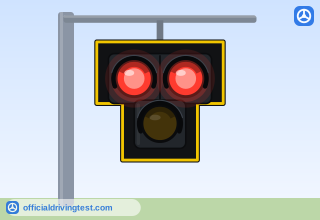
- Stop for pedestrians
- Slow down and proceed
- Prepare to stop
- Proceed with caution
Show answer
Correct answer: Stop for pedestrians
When the top two red lights are solid, you must stop for pedestrians.
Source: Massachusetts Driver's Manual (Revised April 2026), page 82 · Open this page in the manual (Manual page 82)
-
What must you do when the top two red lights of a Pedestrian Hybrid Beacon are flashing?
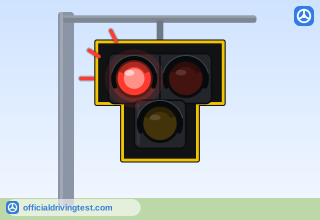
- Stop and stay until the lights go dark
- Slow down and prepare to stop
- Proceed without stopping
- Stop, then proceed with caution if clear
Show answer
Correct answer: Stop, then proceed with caution if clear
When the top two red lights are flashing, you must stop and proceed with caution if clear.
Source: Massachusetts Driver's Manual (Revised April 2026), page 82 · Open this page in the manual (Manual page 82)
-
Pedestrians who are already in the crosswalk when a countdown timer reaches zero have what?
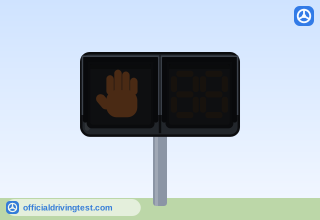
- The right-of-way
- The duty to return to the curb
- A requirement to wait for a police officer
- Permission to cross only after vehicles pass
Show answer
Correct answer: The right-of-way
Pedestrians who are already in the crosswalk when the countdown reaches zero have the right-of-way.
Source: Massachusetts Driver's Manual (Revised April 2026), page 82 · Open this page in the manual (Manual page 82)
-
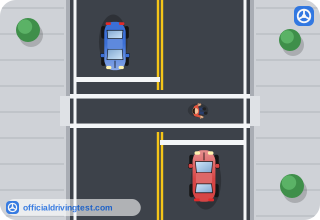
What must you do about pedestrians entering or using a crosswalk in your travel path?
- Slow down and sound your horn
- Yield to them
- Pass them on the left side
- Stop only if they are in your lane
Show answer
Correct answer: Yield to them
You must yield to pedestrians entering or using a crosswalk in your travel path.
Source: Massachusetts Driver's Manual (Revised April 2026), page 83 · Open this page in the manual (Manual page 83)
-
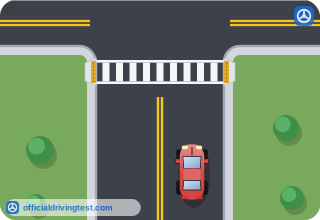
What must you never let your vehicle do at a crosswalk?
- Stop before the crosswalk
- Wait for pedestrians to finish crossing
- Block the crosswalk
- Yield to a pedestrian using the crosswalk
Show answer
Correct answer: Block the crosswalk
Never let your vehicle block a crosswalk.
Source: Massachusetts Driver's Manual (Revised April 2026), page 83 · Open this page in the manual (Manual page 83)
-
Under the manual’s laws for drivers, which traffic signal requires you to yield to pedestrians?
- When your signal is red or red and yellow
- Only when your signal is a green arrow
- Only when your signal is a flashing yellow
- Only when a pedestrian signal shows WALK
Show answer
Correct answer: When your signal is red or red and yellow
You must yield to pedestrians if your traffic signal is red or if it is red and yellow.
Source: Massachusetts Driver's Manual (Revised April 2026), page 83 · Open this page in the manual (Manual page 83)
-
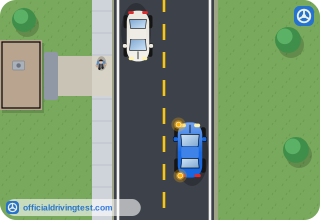
When turning into a driveway or parking lot, what must you do about pedestrians?
- Honk to warn them
- Yield to them
- Turn ahead of them
- Proceed if the driveway has no sign
Show answer
Correct answer: Yield to them
You must yield to pedestrians when turning into a driveway or parking lot.
Source: Massachusetts Driver's Manual (Revised April 2026), page 83 · Open this page in the manual (Manual page 83)
-
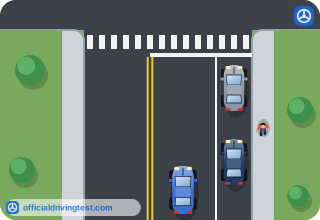
What should pedestrians do if a crosswalk is available?
- Cross at the middle of the block
- Cross only when no vehicles are visible
- Cross wherever traffic is lightest
- Use the crosswalk
Show answer
Correct answer: Use the crosswalk
Pedestrians should use a crosswalk if one is available.
Source: Massachusetts Driver's Manual (Revised April 2026), page 83 · Open this page in the manual (Manual page 83)
-
At crosswalks with pedestrian signals, what should pedestrians do?
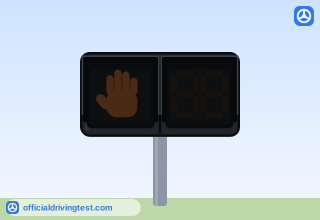
- Push the button on the pole and wait for a WALK signal
- Cross when the first vehicle stops
- Wait for a vehicle to wave them across
- Cross while the DON'T WALK signal is flashing
Show answer
Correct answer: Push the button on the pole and wait for a WALK signal
At crosswalks with pedestrian signals, pedestrians push the button on the pole and wait for a WALK signal.
Source: Massachusetts Driver's Manual (Revised April 2026), page 83 · Open this page in the manual (Manual page 83)
-
What happens at intersections without pedestrian signal buttons?
- They never give WALK signals
- They give WALK signals only at night
- They give WALK signals only when a vehicle stops
- They automatically give WALK signals
Show answer
Correct answer: They automatically give WALK signals
Intersections without buttons automatically give WALK signals.
Source: Massachusetts Driver's Manual (Revised April 2026), page 83 · Open this page in the manual (Manual page 83)
-
If a pedestrian is already in the crosswalk when DON'T WALK is shown, what should the pedestrian do?
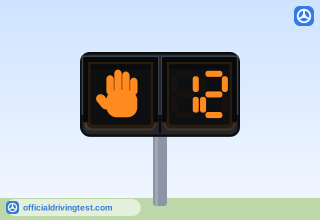
- Return to the starting curb
- Finish crossing
- Stop in the middle of the crosswalk
- Wait for the next WALK signal
Show answer
Correct answer: Finish crossing
When DON'T WALK is shown, you should not begin to cross, but if you are already in the crosswalk you should finish crossing.
Source: Massachusetts Driver's Manual (Revised April 2026), page 83 · Open this page in the manual (Manual page 83)
-
Before crossing a road, pedestrians should look out especially for what?
- Vehicles parked at the curb
- Cars turning onto the road they are crossing
- Bicycles on the far sidewalk
- Drivers who are stopped at a red light
Show answer
Correct answer: Cars turning onto the road they are crossing
Pedestrians should look out especially for cars turning onto the road they are crossing.
Source: Massachusetts Driver's Manual (Revised April 2026), page 83 · Open this page in the manual (Manual page 83)
-
What does a painted crosswalk warn drivers?
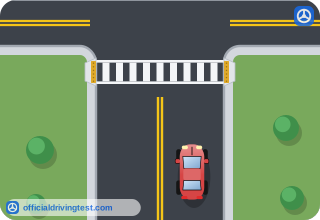
- That a railroad crossing is ahead
- That the lane is reserved for buses
- That pedestrians may be crossing the road
- That vehicles may not stop in that area
Show answer
Correct answer: That pedestrians may be crossing the road
A painted crosswalk warns drivers that pedestrians may be crossing the road.
Source: Massachusetts Driver's Manual (Revised April 2026), page 92 · Open this page in the manual (Manual page 92)
-
What are stop paddles that crossing guards use?
- Flashing lights fixed to the crossing guard's vest or hat
- Hand-held stop signs held up to warn drivers of children crossing
- Orange flags waved to tell drivers that they should slow down
- Signs posted on poles in the middle of the road near a school
Show answer
Correct answer: Hand-held stop signs held up to warn drivers of children crossing
Stop paddles are hand-held stop signs that crossing guards hold up while walking into the street to warn drivers of children crossing.
Source: Massachusetts Driver's Manual (Revised April 2026), page 92 · Open this page in the manual (Manual page 92)
-
How do crossing guards make themselves highly visible?
- They wear a uniform that has flashing lights on it
- They carry bright orange flags in both of their hands
- They stand in the middle of the crosswalk at all times
- They wear brightly colored and highly reflective clothing
Show answer
Correct answer: They wear brightly colored and highly reflective clothing
Crossing guards wear brightly colored and highly reflective clothing so that they will be highly visible.
Source: Massachusetts Driver's Manual (Revised April 2026), page 92 · Open this page in the manual (Manual page 92)
-
What should you look for, and be prepared to do, near places where crossing guards and children may be in the road?
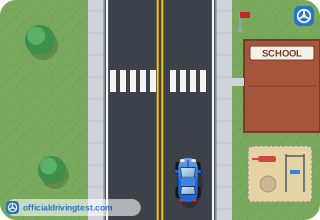
- Look for warning signs and be prepared to stop
- Look for other drivers and be ready to pass
- Look for police vehicles and be ready to turn
- Look for school buses and be ready to speed up
Show answer
Correct answer: Look for warning signs and be prepared to stop
As a driver, you should look for warning signs that crossing guards and children may be in the road and be prepared to stop.
Source: Massachusetts Driver's Manual (Revised April 2026), page 92 · Open this page in the manual (Manual page 92)
-
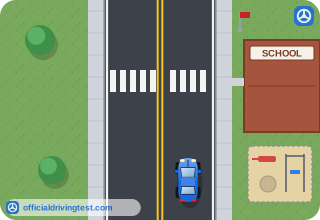
What do crossing guards depend on drivers to do?
- Drive faster to clear the crosswalk
- Honk to warn children in the road
- Be aware and obey their signals
- Follow the vehicle ahead through the crosswalk
Show answer
Correct answer: Be aware and obey their signals
Crossing guards depend on drivers to be aware and obey their signals.
Source: Massachusetts Driver's Manual (Revised April 2026), page 92 · Open this page in the manual (Manual page 92)
-
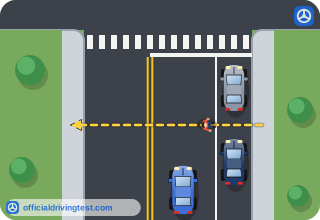
When must you yield to pedestrians who are in a roadway?
- Only in marked crosswalks
- Always
- Only when they have a walk signal
- Only at intersections
Show answer
Correct answer: Always
The manual says you must always yield to pedestrians who are in a roadway.
Source: Massachusetts Driver's Manual (Revised April 2026), page 99 · Open this page in the manual (Manual page 99)
-
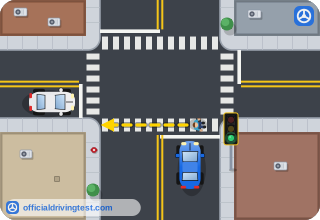
You are stopped at a traffic light that turns green. What must you do about pedestrians already in the crosswalk?
- Proceed if you signal first
- Honk to warn them
- Go ahead, since the light is green
- Yield to them
Show answer
Correct answer: Yield to them
The manual says that if the light turns green you must yield to pedestrians already in the crosswalk.
Source: Massachusetts Driver's Manual (Revised April 2026), page 99 · Open this page in the manual (Manual page 99)
-
While you are turning, pedestrians have the right-of-way when they are:
- Crossing a driveway or an alley
- Waiting for a bus on a corner
- Walking against a don't-walk signal
- Walking on the shoulder of a highway
Show answer
Correct answer: Crossing a driveway or an alley
The manual says that when turning, pedestrians have the right-of-way if using a sidewalk or crossing a driveway or an alley.
Source: Massachusetts Driver's Manual (Revised April 2026), page 100 · Open this page in the manual (Manual page 100)
-
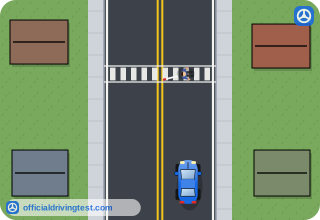
What does the White Cane Law require of a driver when a blind pedestrian is crossing a street?
- To slow down and proceed with caution
- To come to a complete stop
- To sound the horn once
- To pass only on the left
Show answer
Correct answer: To come to a complete stop
The White Cane Law states that a driver must come to a complete stop when a blind pedestrian is crossing a street.
Source: Massachusetts Driver's Manual (Revised April 2026), page 100 · Open this page in the manual (Manual page 100)
-
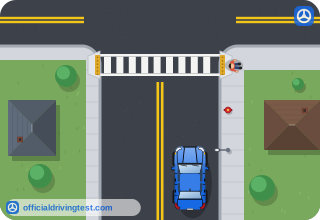
When a crosswalk is available, what does state law require pedestrians to do?
- Cross at the nearest corner in any direction
- Cross where traffic is moving slowest
- Cross mid-block if no cars are close
- Use it to cross
Show answer
Correct answer: Use it to cross
The manual says state law requires pedestrians to use a crosswalk when one is available.
Source: Massachusetts Driver's Manual (Revised April 2026), page 112 · Open this page in the manual (Manual page 112)
-
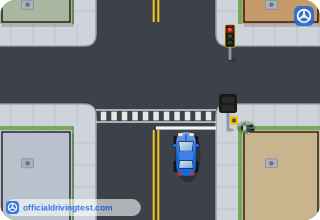
A pedestrian reaches an intersection that has a traffic signal. What should the pedestrian do?
- Cross as soon as traffic slows down
- Press the button and wait for the WALK signal
- Wait for a driver to wave you across
- Press the button and cross while it is lit
Show answer
Correct answer: Press the button and wait for the WALK signal
The manual says that if an intersection has a traffic signal, pedestrians should press the button and wait for the WALK signal.
Source: Massachusetts Driver's Manual (Revised April 2026), page 112 · Open this page in the manual (Manual page 112)
-
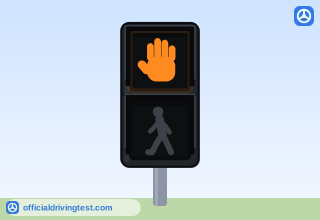
A pedestrian signal says DON'T WALK. What should a pedestrian do?
- Cross quickly if no cars are coming
- Cross if the drivers are stopped for you
- Do not begin to cross
- Cross if you walk with a group
Show answer
Correct answer: Do not begin to cross
The manual says pedestrians must not cross if the signal says DON'T WALK.
Source: Massachusetts Driver's Manual (Revised April 2026), page 112 · Open this page in the manual (Manual page 112)
-
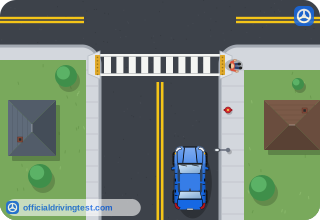
Before crossing a roadway, what should a pedestrian do at the curb?
- Look right, then left, then right again, before stepping off
- Stop, look left, look right, and look left again for traffic
- Stop and look left only, since traffic comes from there
- Look right, look left, and then cross quickly
Show answer
Correct answer: Stop, look left, look right, and look left again for traffic
The manual says to stop at the curb, look left, look right, and look left again for traffic before crossing.
Source: Massachusetts Driver's Manual (Revised April 2026), page 112 · Open this page in the manual (Manual page 112)
-
A pedestrian is about to cross a one-way street. What does the manual say about looking for traffic?
- Look only in the direction that the traffic is moving
- Look only to the left, since the traffic comes from there
- No need to look at all when the traffic is one-way
- Look left, right, and left again, even on a one-way street
Show answer
Correct answer: Look left, right, and left again, even on a one-way street
The manual says to stop at the curb and look left, right, and left again for traffic, and to do this even on a one-way street.
Source: Massachusetts Driver's Manual (Revised April 2026), page 112 · Open this page in the manual (Manual page 112)
-
Where should pedestrians be especially alert while crossing?
- At intersections that have push buttons for pedestrians
- At crosswalks that are located on one-way streets
- At intersections that give automatic WALK signals
- At intersections that allow motor vehicles to turn right on red
Show answer
Correct answer: At intersections that allow motor vehicles to turn right on red
The manual says pedestrians should be especially alert at intersections that allow motor vehicles to turn right on red.
Source: Massachusetts Driver's Manual (Revised April 2026), page 112 · Open this page in the manual (Manual page 112)
-
A pedestrian must enter the street from between parked cars. What should the pedestrian do?
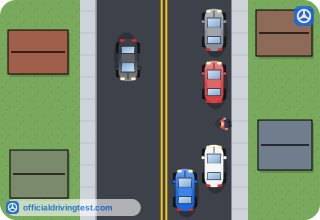
- Cross quickly so drivers see you
- Stop and look before crossing
- Wait for a driver to flash headlights
- Cross only if no bicycles are near
Show answer
Correct answer: Stop and look before crossing
The manual says that if you must enter the street from between parked cars, you should stop and look before crossing.
Source: Massachusetts Driver's Manual (Revised April 2026), page 112 · Open this page in the manual (Manual page 112)
-
What must a pedestrian do when a sidewalk is available?
- Walk in the bike lane
- Walk in the travel lane facing traffic
- Use the sidewalk
- Choose either the sidewalk or the shoulder
Show answer
Correct answer: Use the sidewalk
The manual says you must use a sidewalk when one is available.
Source: Massachusetts Driver's Manual (Revised April 2026), page 112 · Open this page in the manual (Manual page 112)
-
When there is no sidewalk, where should a pedestrian walk?
- On the shoulder, facing traffic
- On the shoulder, with traffic at your back
- In the travel lane, facing traffic
- Along the center line of the road
Show answer
Correct answer: On the shoulder, facing traffic
The manual says that when no sidewalk is available, you should walk on the shoulder facing traffic.
Source: Massachusetts Driver's Manual (Revised April 2026), page 112 · Open this page in the manual (Manual page 112)
-
Where must pedestrians never walk?
- On any road that does not have a sidewalk or a shoulder
- Along or across expressways, interstate highways, or turnpikes
- On any one-way street that has two lanes or more
- In any crosswalk that is controlled by a traffic signal
Show answer
Correct answer: Along or across expressways, interstate highways, or turnpikes
The manual says never to walk along or across expressways, interstate highways, or turnpikes.
Source: Massachusetts Driver's Manual (Revised April 2026), page 112 · Open this page in the manual (Manual page 112)
-
What should pedestrians wear, especially at night?
- Dark, plain clothing that does not catch the eye
- Light clothing with no strips or patterns
- Any clothing, as long as shoes are worn
- Clothing with bright colors or reflective strips
Show answer
Correct answer: Clothing with bright colors or reflective strips
The manual says pedestrians should wear clothing with bright colors or reflective strips, especially at night.
Source: Massachusetts Driver's Manual (Revised April 2026), page 112 · Open this page in the manual (Manual page 112)
-
Bicycle lanes are not intended for pedestrians. Where must pedestrians stay?
- On the shoulder of the road
- In the green crossing area
- Beside the travel lane
- On the sidewalk
Show answer
Correct answer: On the sidewalk
The manual says bicycle lanes are not intended for pedestrians, who must stay on the sidewalk.
Source: Massachusetts Driver's Manual (Revised April 2026), page 117 · Open this page in the manual (Manual page 117)