Maryland: Right-of-way and turning
Who yields at intersections and four-way stops, lane use when turning, U-turns, passing, roundabouts and funeral processions. Split into 2 shorter tests so you're not stuck in one long quiz.
Independent educational site · not affiliated with any government agency or DMV
All 47 Right-of-way and turning questions with answers
Choose a part above to take a practice test, or study every question and answer here.
Show the questions and answersHide the questions
-
What does the manual say about the right-of-way?
- Never assume you automatically have it
- The driver of the larger vehicle always has it
- The driver traveling at the higher speed has it
- You have it whenever you are the first to signal
Show answer
Correct answer: Never assume you automatically have it
Although the rules say who should yield, you should never assume you automatically have the right-of-way.
Source: Maryland Driver’s Manual (October 2025 Edition (DL-002 10-25)), page 13
-
What does yielding the right-of-way mean?
- Stopping your vehicle for at least three seconds
- Speeding up to clear the intersection before others
- Letting other vehicles, bicyclists, or pedestrians go first
- Honking to warn others that you are coming through
Show answer
Correct answer: Letting other vehicles, bicyclists, or pedestrians go first
Yielding the right-of-way means letting other vehicles, bicyclists, or pedestrians move ahead of you or cross in front of you, letting them go first.
Source: Maryland Driver’s Manual (October 2025 Edition (DL-002 10-25)), page 13
-
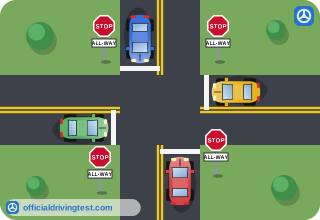
At an intersection, which driver should you yield the right-of-way to?
- The driver who arrives at the intersection after you
- The driver who is at or arrives before you
- The driver who is driving the larger vehicle
- The driver who is the first to sound a horn
Show answer
Correct answer: The driver who is at or arrives before you
You should yield to the driver who is at the intersection or arrives before you.
Source: Maryland Driver’s Manual (October 2025 Edition (DL-002 10-25)), page 13
-
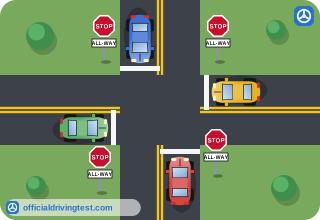
If you and another driver arrive at an intersection at the same time, whom should you yield to?
- The driver on your left
- The driver in the larger vehicle
- The driver who signals first
- The driver on your right
Show answer
Correct answer: The driver on your right
The manual says to yield to the driver on your right if both of you arrive at an intersection at the same time.
Source: Maryland Driver’s Manual (October 2025 Edition (DL-002 10-25)), page 13
-
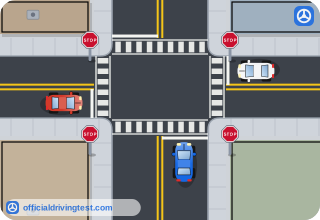
At a four-way intersection with stop signs, whom should you yield to?
- The driver on your right
- The driver on your left
- The driver directly across from you
- The driver who arrived after you
Show answer
Correct answer: The driver on your right
The manual lists the driver on your right at a four-way intersection with stop signs as the one to yield to.
Source: Maryland Driver’s Manual (October 2025 Edition (DL-002 10-25)), page 14
-
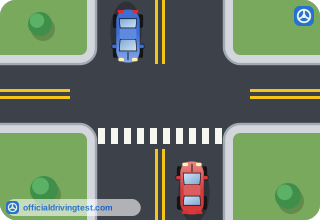
Which road users should you yield to if they are still in an intersection when you arrive?
- Only the pedestrians who are in a marked crosswalk
- Only the drivers who are turning left
- Pedestrians, bicyclists, and other drivers
- Only vehicles that are larger than yours
Show answer
Correct answer: Pedestrians, bicyclists, and other drivers
You should yield to pedestrians, bicyclists, and other drivers who are still in an intersection.
Source: Maryland Driver’s Manual (October 2025 Edition (DL-002 10-25)), page 14
-
As you stop at a “T” intersection, whom should you yield to?
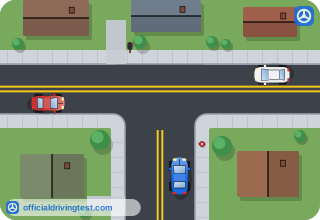
- Only the drivers who are turning left
- Drivers already on the road
- Drivers who are waiting behind you
- Only pedestrians who are crossing
Show answer
Correct answer: Drivers already on the road
The manual says to yield to drivers already on the road as you stop at a “T” intersection.
Source: Maryland Driver’s Manual (October 2025 Edition (DL-002 10-25)), page 14
-
What should you do when you approach an intersection with a yield sign facing you?
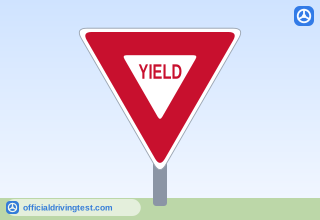
- Go first, because the other drivers must stop for you
- Speed up to cross ahead of other traffic
- Honk to tell the other drivers to wait
- Yield the right-of-way to other drivers
Show answer
Correct answer: Yield the right-of-way to other drivers
You should yield to other drivers if you are approaching an intersection with a yield sign facing you.
Source: Maryland Driver’s Manual (October 2025 Edition (DL-002 10-25)), page 14
-
When you are making a left turn, whom should you yield to?
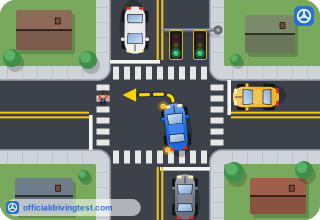
- Drivers in the opposing traffic lane
- Drivers following behind you in your own lane
- Vehicles that are parked along the road
- No one, because a left turn has the right-of-way
Show answer
Correct answer: Drivers in the opposing traffic lane
When making a left turn you should yield to drivers in the opposing traffic lane.
Source: Maryland Driver’s Manual (October 2025 Edition (DL-002 10-25)), page 14
-
What is the opposing traffic lane?
- The lane next to yours with vehicles going the same way
- The lane that is used only for passing
- The lane with vehicles going in the opposite direction
- The lane that is reserved for turning vehicles
Show answer
Correct answer: The lane with vehicles going in the opposite direction
The opposing traffic lane is the one with vehicles going in the opposite direction.
Source: Maryland Driver’s Manual (October 2025 Edition (DL-002 10-25)), page 14
-
When you are entering a road from a driveway or a private road, what should you do?
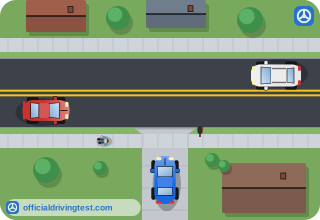
- Enter first, since you are already moving
- Yield the right-of-way to drivers on the road
- Yield only to drivers who are on your right
- Yield only when a sign tells you to do so
Show answer
Correct answer: Yield the right-of-way to drivers on the road
You should yield to drivers on a road you are entering from a driveway or a private road.
Source: Maryland Driver’s Manual (October 2025 Edition (DL-002 10-25)), page 14
-
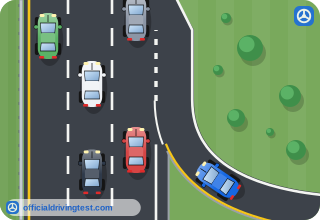
If you are on an entrance or acceleration ramp, whom should you yield to?
- Drivers who are behind you on the ramp
- Drivers who are leaving the highway at the next exit
- Only trucks and buses on the highway
- Drivers already on the highway
Show answer
Correct answer: Drivers already on the highway
You should yield to drivers already on a highway if you are on the entrance or acceleration ramp.
Source: Maryland Driver’s Manual (October 2025 Edition (DL-002 10-25)), page 14
-
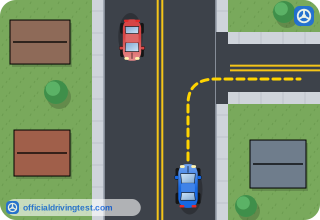
When turning, when should you switch on your turn signal?
- Just as you start turning
- After you have started the turn
- Before you get to the turn
- Only when other vehicles are near
Show answer
Correct answer: Before you get to the turn
You should switch on your turn signal before you get to the turn to let other drivers know what you plan to do.
Source: Maryland Driver’s Manual (October 2025 Edition (DL-002 10-25)), page 15
-
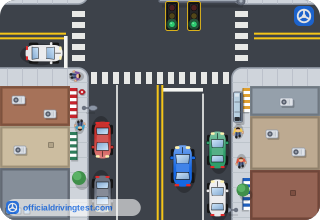
Where should you look to make sure it is safe to turn?
- Only at the road in front of your vehicle and to your left
- In front, behind, and to both sides of your vehicle
- Only in your mirrors and at the vehicle ahead of you
- Only toward the lane you plan to turn into
Show answer
Correct answer: In front, behind, and to both sides of your vehicle
When turning you should look in front, behind, and to both sides of your vehicle to make sure it is safe to turn.
Source: Maryland Driver’s Manual (October 2025 Edition (DL-002 10-25)), page 15
-
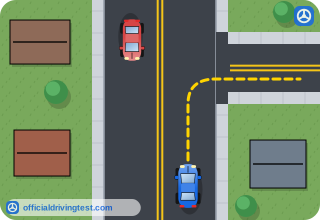
When should you plan your turn?
- As you enter the intersection
- After you have started the turn
- When the car behind you honks
- Before reaching the turning point
Show answer
Correct answer: Before reaching the turning point
The manual says to plan your turn before reaching the turning point.
Source: Maryland Driver’s Manual (October 2025 Edition (DL-002 10-25)), page 15
-
What should you do with your speed when making a turn?
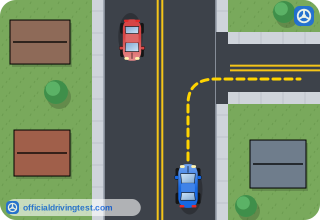
- Adjust your speed for the turn
- Keep the same speed you were already driving
- Speed up so you can finish the turn quickly
- Wait to slow down until you are in the turn
Show answer
Correct answer: Adjust your speed for the turn
When turning you should adjust your speed for the turn.
Source: Maryland Driver’s Manual (October 2025 Edition (DL-002 10-25)), page 15
-
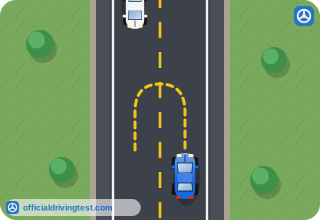
What does the manual say about U-turns?
- They are legal on every road unless a sign says otherwise
- They are legal only on roads with one lane
- They can be extremely dangerous and are not legal everywhere
- They are safe as long as you signal first
Show answer
Correct answer: They can be extremely dangerous and are not legal everywhere
U-turns can be extremely dangerous and are not legal everywhere.
Source: Maryland Driver’s Manual (October 2025 Edition (DL-002 10-25)), page 15
-
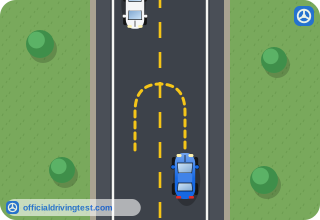
If you must make a U-turn, what should you do first?
- Turn on your right turn signal
- Check to see if U-turns are allowed
- Turn on your hazard lights
- Stop in the middle of the road
Show answer
Correct answer: Check to see if U-turns are allowed
If you must make a U-turn, you should first check to see if U-turns are allowed.
Source: Maryland Driver’s Manual (October 2025 Edition (DL-002 10-25)), page 15
-
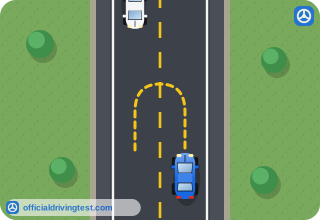
Which turn signal do you use before making a U-turn?
- The right turn signal
- Your hazard lights
- No signal is needed
- The left turn signal
Show answer
Correct answer: The left turn signal
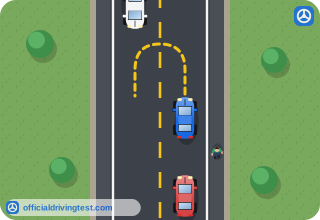
For a U-turn you turn on your left turn signal and stop and yield for traffic coming toward you.
Source: Maryland Driver’s Manual (October 2025 Edition (DL-002 10-25)), page 15
-
When you make a U-turn, for whom do you stop and yield?
- Traffic coming toward you
- Traffic coming from behind you
- Only pedestrians in the crosswalk
- Only oncoming trucks and buses
Show answer
Correct answer: Traffic coming toward you
For a U-turn you stop and yield for traffic coming toward you.
Source: Maryland Driver’s Manual (October 2025 Edition (DL-002 10-25)), page 15
-
When making a U-turn and the way is clear, into which lane do you turn, traveling in the opposite direction?
- The inside lane next to the center
- The lane with the least traffic in it
- The outside or right-hand lane
- The shoulder on the left side
Show answer
Correct answer: The outside or right-hand lane
When the way is clear you turn into the outside or right-hand lane traveling in the opposite direction.
Source: Maryland Driver’s Manual (October 2025 Edition (DL-002 10-25)), page 15
-
When you turn on a red signal, to whom must you yield the right-of-way?
- Pedestrians and all other traffic
- Only pedestrians in the crosswalk
- Only vehicles coming from your left
- Only emergency vehicles
Show answer
Correct answer: Pedestrians and all other traffic
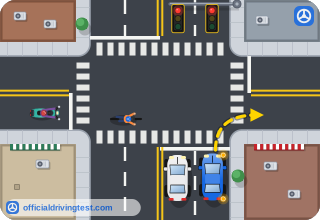
When turning on a red signal, you must yield the right-of-way to pedestrians and all other traffic.
Source: Maryland Driver’s Manual (October 2025 Edition (DL-002 10-25)), page 17
-
On a steady green signal, you may go straight or turn unless a sign or another signal prohibits the turn. Whom must you yield to?
- Only vehicles approaching from behind
- Only pedestrians who have a walk signal
- Pedestrians and vehicles already in the intersection
- No one; green gives you absolute right-of-way
Show answer
Correct answer: Pedestrians and vehicles already in the intersection
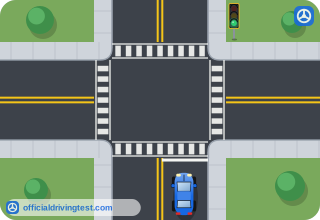
On a steady green you must yield to pedestrians and vehicles already in the intersection.
Source: Maryland Driver’s Manual (October 2025 Edition (DL-002 10-25)), page 17
-
When you come to a traffic circle, whom must you always yield to?
- Traffic waiting to enter behind you
- Traffic already in the circle
- Only vehicles that signal
- Only large vehicles
Show answer
Correct answer: Traffic already in the circle
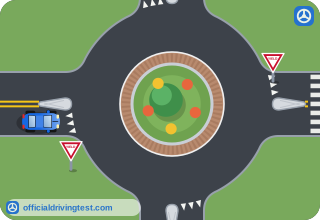
The manual says you must always yield to traffic already in the traffic circle.
Source: Maryland Driver’s Manual (October 2025 Edition (DL-002 10-25)), page 31
-
What should you do with your speed as you come to a traffic circle?
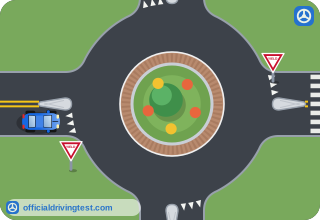
- Maintain it
- Increase it to merge
- Reduce it
- Match the traffic already in the circle
Show answer
Correct answer: Reduce it
The manual says to reduce your speed as you come to a traffic circle.
Source: Maryland Driver’s Manual (October 2025 Edition (DL-002 10-25)), page 31
-
Which side of the island should you keep to in a traffic circle?
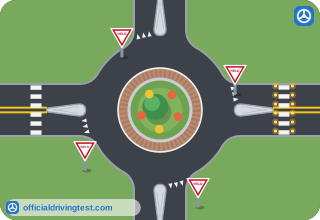
- The right side
- The left side
- Either side
- The side with less traffic
Show answer
Correct answer: The right side
The manual says to keep to the right of the island in a traffic circle.
Source: Maryland Driver’s Manual (October 2025 Edition (DL-002 10-25)), page 31
-
At a traffic circle, where should you cautiously approach and wait for a gap in traffic?
- The stop line
- The edge of the island
- The yield line
- The exit lane
Show answer
Correct answer: The yield line
The manual says to cautiously approach the yield line and wait for a gap in traffic.
Source: Maryland Driver’s Manual (October 2025 Edition (DL-002 10-25)), page 31
-
While you wait at the yield line for a gap, what else should you watch for?
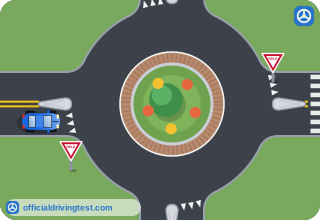
- Vehicles parked inside the circle
- Vehicles exiting the traffic circle
- Vehicles stopped at the island
- Vehicles turning around in the circle
Show answer
Correct answer: Vehicles exiting the traffic circle
The manual says to wait for a gap in traffic and watch for vehicles exiting the traffic circle.
Source: Maryland Driver’s Manual (October 2025 Edition (DL-002 10-25)), page 31
-
When do you not need to wait to enter a traffic circle?
- When you are in the right lane
- When the yield sign is missing
- When pedestrians have crossed
- When there is no traffic in it
Show answer
Correct answer: When there is no traffic in it
The manual says you do not need to wait to enter the traffic circle if there is no traffic in it.
Source: Maryland Driver’s Manual (October 2025 Edition (DL-002 10-25)), page 31
-
What should you do if a traffic circle has more than one lane?
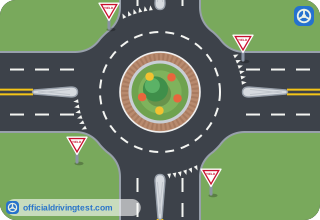
- Move to the inside lane to pass slower traffic
- Change lanes as often as needed
- Always use the outside lane
- Stay in your lane
Show answer
Correct answer: Stay in your lane
The manual says that if a traffic circle has more than one lane, you should stay in your lane.
Source: Maryland Driver’s Manual (October 2025 Edition (DL-002 10-25)), page 31
-
In a traffic circle with more than one lane, which signal should you turn on when preparing to exit?
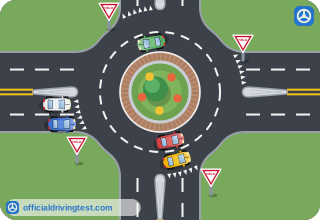
- Your left turn signal
- Your right turn signal
- Your emergency flashers
- No signal
Show answer
Correct answer: Your right turn signal
The manual says that when preparing to exit you should turn on your right turn signal.
Source: Maryland Driver’s Manual (October 2025 Edition (DL-002 10-25)), page 31
-
In a multi-lane traffic circle, when should you move to the outside lane to exit?
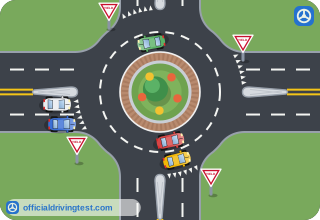
- Before you enter the circle and approach the yield line
- Right after you enter the traffic circle
- After you pass the exit before the one you plan to take
- After you pass the exit that you plan to take
Show answer
Correct answer: After you pass the exit before the one you plan to take
The manual says to move to the outside lane after you pass the exit before the one you plan to take.
Source: Maryland Driver’s Manual (October 2025 Edition (DL-002 10-25)), page 31
-
What must you turn on when you drive in a funeral procession?
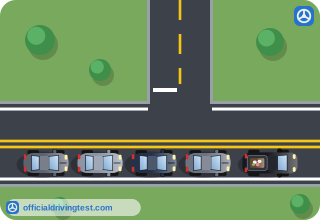
- Your headlights and flashing hazard lights
- Your high beams and your turn signals
- Your parking lights and your horn
- Your fog lights and your turn signals
Show answer
Correct answer: Your headlights and flashing hazard lights
The manual says drivers in a funeral procession must turn on their headlights and flashing hazard lights so other vehicles give them the right-of-way.
Source: Maryland Driver’s Manual (October 2025 Edition (DL-002 10-25)), page 32
-
Under what conditions may you go through a red traffic signal in a funeral procession?
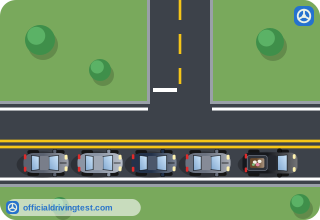
- If you are part of the procession and sound your horn
- If you are part of the procession and no cross traffic is seen
- If you are part of the procession and have your lights on
- If you follow the lead vehicle at a slow speed
Show answer
Correct answer: If you are part of the procession and have your lights on
The manual says you may go through a red traffic signal if you are part of a funeral procession and have your lights on.
Source: Maryland Driver’s Manual (October 2025 Edition (DL-002 10-25)), page 32
-
A funeral procession is crossing an intersection while other drivers have a green signal. What must the other drivers do?
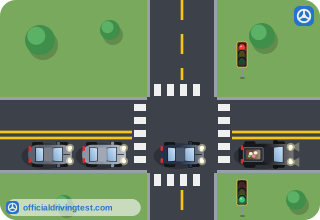
- Go ahead, because a green signal gives them the right-of-way
- Yield the right-of-way to vehicles in the procession
- Slow down and drive through behind the lead vehicle
- Stop only if the procession has a police escort
Show answer
Correct answer: Yield the right-of-way to vehicles in the procession
The manual says that even with a green signal, other vehicles must yield the right-of-way to vehicles in a funeral procession.
Source: Maryland Driver’s Manual (October 2025 Edition (DL-002 10-25)), page 32
-
How long must other vehicles yield to a funeral procession?
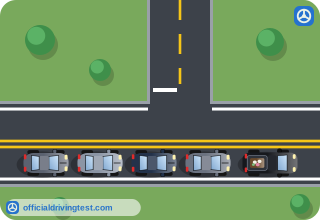
- Until the lead vehicle has passed
- Until the first three vehicles have passed
- Until the hazard lights are turned off
- Until all vehicles in the procession have passed
Show answer
Correct answer: Until all vehicles in the procession have passed
The manual says other vehicles must yield until all vehicles in the procession have passed, unless they can safely proceed without crossing the procession’s path.
Source: Maryland Driver’s Manual (October 2025 Edition (DL-002 10-25)), page 32
-
What must you do about pedestrians when you turn on a green signal?
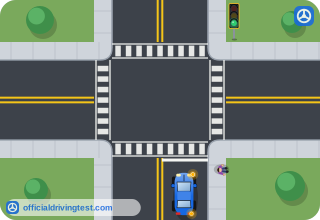
- Turn first, because you have the green
- Sound your horn so they wait
- Yield to them
- Slow down but keep turning
Show answer
Correct answer: Yield to them
The manual says you must yield to pedestrians when turning on a green signal.
Source: Maryland Driver’s Manual (October 2025 Edition (DL-002 10-25)), page 37
-
You turn on a red signal after stopping, where that turn is permitted. What must you do about pedestrians?
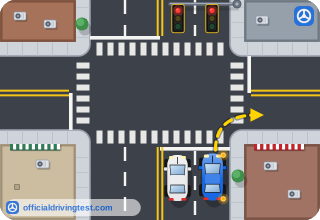
- Turn first, because you have already stopped
- Yield to them
- Stop again before the crosswalk and then go
- Let them wait until you have turned
Show answer
Correct answer: Yield to them
Even when a turn on red is permitted after stopping, you must yield to pedestrians.
Source: Maryland Driver’s Manual (October 2025 Edition (DL-002 10-25)), page 37
-
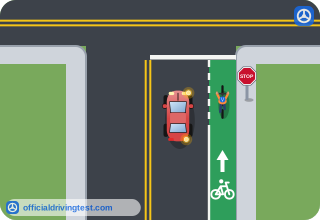
When you enter or cross a bike lane or shoulder, what must you do?
- Cross quickly, since bicyclists must yield to cars
- Stop and wait for the bicyclist to wave you through
- Yield the right-of-way to bicyclists riding in them
- Yield only if a bicyclist signals first
Show answer
Correct answer: Yield the right-of-way to bicyclists riding in them
When you enter or cross a bike lane or shoulder, you must yield the right-of-way to bicyclists riding in them.
Source: Maryland Driver’s Manual (October 2025 Edition (DL-002 10-25)), page 40
-
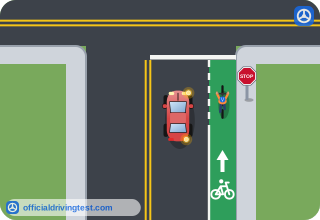
When a motor vehicle is making a turn near a bicyclist, who has the right-of-way?
- The turning driver, because the bicycle is smaller
- The bicyclist, so the driver must yield
- The vehicle that is moving faster
- Neither; both must stop and wave each other on
Show answer
Correct answer: The bicyclist, so the driver must yield
Bicyclists have the right-of-way when a motor vehicle is making a turn, so the driver must yield to bicyclists.
Source: Maryland Driver’s Manual (October 2025 Edition (DL-002 10-25)), page 40
-
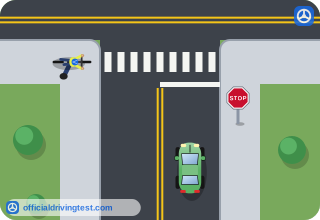
In a crosswalk, bicycles have the same right of way as whom?
- Motorcycles
- Emergency vehicles
- Vehicles turning left
- Pedestrians
Show answer
Correct answer: Pedestrians
Bicycles have the same right of way as pedestrians in a crosswalk.
Source: Maryland Driver’s Manual (October 2025 Edition (DL-002 10-25)), page 40
-
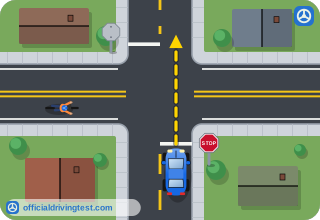
Unless a bicyclist signals a turn, what should you always assume at an intersection?
- That the bicyclist is turning right
- That the bicyclist will stop and yield to you
- That the bicyclist is turning left
- That the bicyclist is going straight through
Show answer
Correct answer: That the bicyclist is going straight through
Always assume that bicyclists are going straight through an intersection unless they signal that they are turning.
Source: Maryland Driver’s Manual (October 2025 Edition (DL-002 10-25)), page 41
-
What is a through lane?
- A lane used only for passing
- A lane that continues straight
- A lane that ends at the next intersection
- A lane reserved for buses and carpools
Show answer
Correct answer: A lane that continues straight
The manual defines a through lane as a lane that continues straight.
Source: Maryland Driver’s Manual (October 2025 Edition (DL-002 10-25)), page 41
-
Immediately after passing a bike on a shoulder or bike lane, what must you never do?
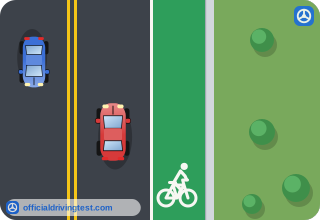
- Merge into the lane on your left
- Stop in the through lane
- Slow down below the speed limit
- Make a right turn from a through lane
Show answer
Correct answer: Make a right turn from a through lane
Never make a right turn from a through lane immediately after passing a bike on a shoulder or bike lane.
Source: Maryland Driver’s Manual (October 2025 Edition (DL-002 10-25)), page 41
-
Before you turn right, what should you try to make sure of?
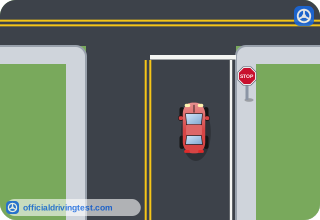
- There are no bicycles on your right or in your right blind spot
- There are no pedestrians waiting on the opposite corner
- There are no parked cars within a block of the corner
- There are no traffic signs blocking your view of the road
Show answer
Correct answer: There are no bicycles on your right or in your right blind spot
You should try to make sure there are no bicycles on your right or in your right blind spot when you turn right.
Source: Maryland Driver’s Manual (October 2025 Edition (DL-002 10-25)), page 41
-
When turning, how should you yield to bicycles?
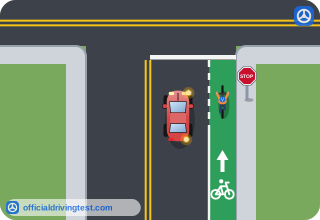
- Only when the bicycle is in a marked bike lane
- Only when the bicyclist makes eye contact
- Like you do with any other vehicle going straight
- Like you would to a parked vehicle at the curb
Show answer
Correct answer: Like you do with any other vehicle going straight
When turning, you yield to bicycles like you do with any other vehicle going straight.
Source: Maryland Driver’s Manual (October 2025 Edition (DL-002 10-25)), page 41
-
What must you not do when you turn left?
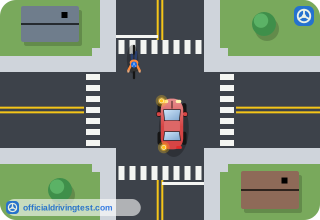
- Look closely for bicycles before beginning the turn
- Turn left immediately in front of a bicycle
- Slow down and signal before making the turn
- Wait until the intersection is clear before turning
Show answer
Correct answer: Turn left immediately in front of a bicycle
The manual says not to turn left immediately in front of a bicycle.
Source: Maryland Driver’s Manual (October 2025 Edition (DL-002 10-25)), page 41