Maryland: Parking rules Practice Test
Where you may not park, securing a parked vehicle, and the rules for disability parking spaces, plates and placards.
Independent educational site · not affiliated with any government agency or DMV
Ready? Test yourself
- Instant feedback with an explanation
- Every answer cites its source in the manual
- Your best score is saved on this device
Questions are original and based on the official manual "Maryland Driver’s Manual" (October 2025 Edition (DL-002 10-25)), Maryland Motor Vehicle Administration.
All 19 questions in this practice test
Take the test above first, then use this list to study. Tap “Show answer” to see the correct answer and explanation.
Show the questions and answersHide the questions
-
What are you responsible for when your vehicle is parked?
- Making sure it faces the same way as traffic
- Making sure it is not a hazard
- Making sure the engine is kept running
- Making sure its lights stay switched on
Show answer
Correct answer: Making sure it is not a hazard
You are responsible for making sure that your vehicle is not a hazard when it is parked.
Source: Maryland Driver’s Manual (October 2025 Edition (DL-002 10-25)), page 16
-
Where should you always park?
- Anywhere that is not blocking a driveway
- On the shoulder of the road
- In any open space near your destination
- In areas that are clearly meant for parking
Show answer
Correct answer: In areas that are clearly meant for parking
You should always park in areas that are clearly meant for parking.
Source: Maryland Driver’s Manual (October 2025 Edition (DL-002 10-25)), page 16
-
When parking along the road, where should you park your vehicle?
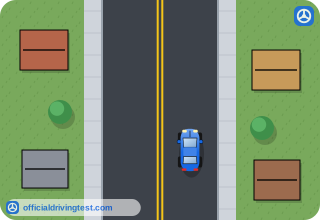
- As far away from traffic as possible
- Partly in the traffic lane to stay visible
- In the center of the road
- As near to traffic as possible
Show answer
Correct answer: As far away from traffic as possible
When parking along the road you should park as far away from traffic as possible.
Source: Maryland Driver’s Manual (October 2025 Edition (DL-002 10-25)), page 16
-
If there is a curb where you park along the road, how close should you park to it?
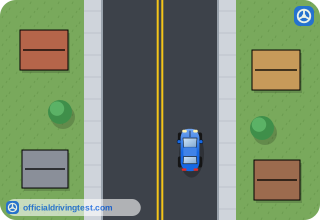
- Far enough away that you can open the door freely
- Far enough away that your tires cannot touch it
- As close to it as possible
- Far enough away for another vehicle to park between
Show answer
Correct answer: As close to it as possible
If there is a curb you should park as close to it as possible.
Source: Maryland Driver’s Manual (October 2025 Edition (DL-002 10-25)), page 16
-
Which of these should you always do when you park?
- Leave your windows fully open
- Set your parking brake
- Leave your lights switched on
- Leave the engine idling
Show answer
Correct answer: Set your parking brake
The manual says you should set your parking brake when you park.
Source: Maryland Driver’s Manual (October 2025 Edition (DL-002 10-25)), page 16
-
When you park a vehicle with an automatic transmission, what should you do?
- Place the vehicle in neutral
- Place the vehicle in reverse
- Place the vehicle in drive
- Place the vehicle in ‘park’
Show answer
Correct answer: Place the vehicle in ‘park’
A vehicle with an automatic transmission should be placed in ‘park’ when you park.
Source: Maryland Driver’s Manual (October 2025 Edition (DL-002 10-25)), page 16
-
When you park a vehicle with a manual transmission, what should you do?
- Place the vehicle in gear
- Place the vehicle in neutral
- Place the vehicle in ‘park’
- Leave the clutch pedal pressed
Show answer
Correct answer: Place the vehicle in gear
A vehicle with a manual transmission should be placed in gear when you park.
Source: Maryland Driver’s Manual (October 2025 Edition (DL-002 10-25)), page 16
-
Before opening your vehicle’s door, what should you check?
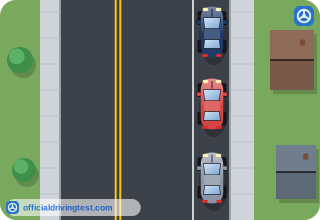
- Your fuel gauge and tires
- Your parking brake and lights
- Your mirrors and traffic
- Your keys and registration card
Show answer
Correct answer: Your mirrors and traffic
You should check your mirrors and traffic before opening the door.
Source: Maryland Driver’s Manual (October 2025 Edition (DL-002 10-25)), page 16
-
After getting out of your parked vehicle, when should you shut the door?
- After you have locked the vehicle
- As soon as you can
- After you have walked around the vehicle
- Only after other traffic has passed
Show answer
Correct answer: As soon as you can
The manual says to shut the door as soon as you can after getting out.
Source: Maryland Driver’s Manual (October 2025 Edition (DL-002 10-25)), page 16
-
What should you do with your car keys when you park?
- Leave them in the ignition
- Leave them on the seat
- Hide them inside the vehicle
- Take them with you
Show answer
Correct answer: Take them with you
You should take your car keys with you when you park.
Source: Maryland Driver’s Manual (October 2025 Edition (DL-002 10-25)), page 16
-
What does the manual say is a good habit whenever you leave your vehicle?
- Locking the doors
- Rolling the windows down
- Leaving the engine running
- Leaving the hazard lights on
Show answer
Correct answer: Locking the doors
The manual says it is a good habit to lock the doors whenever you leave your vehicle.
Source: Maryland Driver’s Manual (October 2025 Edition (DL-002 10-25)), page 16
-
What may you receive if you illegally use disability parking spaces, disability license plates or disability placards?
- Only a written warning
- Big fines
- No penalty for a first offense
- A suspended license for the first offense only
Show answer
Correct answer: Big fines
The manual says you can receive big fines for illegal use of disability parking spaces, license plates and placards.
Source: Maryland Driver’s Manual (October 2025 Edition (DL-002 10-25)), page 49
-
When may you park in a disability parking space?
- When you are only dropping off a passenger who has a disability for a short time
- When the placard is displayed, even if the person who qualified for it is not in the vehicle
- When you have a disability placard issued by a local employer or hospital
- When you have an MVA-issued plate or placard and the person who qualified for it is driving or riding
Show answer
Correct answer: When you have an MVA-issued plate or placard and the person who qualified for it is driving or riding
Parking in a disability space is allowed only with an MVA-issued plate or placard when the person who qualified for it is the driver or a passenger.
Source: Maryland Driver’s Manual (October 2025 Edition (DL-002 10-25)), page 49
-
You have a disability license plate. May you park in front of or block any part of a curb cut?
- No, you can still be cited
- Yes, as long as the plate is displayed
- Yes, for up to 15 minutes
- Yes, if no one else is waiting
Show answer
Correct answer: No, you can still be cited
Parking in front of or blocking any part of a curb cut can bring a citation, even with a disability plate or placard.
Source: Maryland Driver’s Manual (October 2025 Edition (DL-002 10-25)), page 49
-
You have a disability placard. May you park on any part of the access aisle next to a disability parking space?
- Yes, as long as the placard is displayed
- Yes, if the access aisle is empty
- No, you can still be cited
- Yes, for loading and unloading only
Show answer
Correct answer: No, you can still be cited
Parking on any part of an access aisle can bring a citation, even if you have a disability license plate or placard.
Source: Maryland Driver’s Manual (October 2025 Edition (DL-002 10-25)), page 50
-
What is an access aisle next to a disability parking space?
- A lane that only vehicles with disability plates may use to enter or leave a parking lot
- The area people in wheelchairs or other mobility devices use to get in and out of their vehicle
- Extra parking space reserved for vehicles that carry large cargo
- A walkway that leads from the parking lot to the street and sidewalk
Show answer
Correct answer: The area people in wheelchairs or other mobility devices use to get in and out of their vehicle
An access aisle is the area people in wheelchairs or other mobility devices use to get in and out of their vehicle.
Source: Maryland Driver’s Manual (October 2025 Edition (DL-002 10-25)), page 50
-
Which use of a disability placard can result in a citation?
- Using it while the person who qualified for it is a passenger
- Using it while the person who qualified for it is driving
- Renewing it before its expiration date
- Using it after its expiration date
Show answer
Correct answer: Using it after its expiration date
Using a disability placard after its expiration date is a violation that can bring a citation.
Source: Maryland Driver’s Manual (October 2025 Edition (DL-002 10-25)), page 50
-
Which use of a disability license plate or placard can result in a citation?
- Using it without the person with the disability present and without proper identification
- Using it while the person with the disability is riding as a passenger in the vehicle
- Using it for a vehicle that is owned by the person with the disability
- Using it on a vehicle that is driven by the person who qualified for it
Show answer
Correct answer: Using it without the person with the disability present and without proper identification
Using a disability license plate or placard without the person with the disability present and without proper identification can bring a citation.
Source: Maryland Driver’s Manual (October 2025 Edition (DL-002 10-25)), page 50
-
Which action when applying for a disability license plate or placard can bring a citation?
- Asking the MVA a question about eligibility
- Applying at an MVA branch office
- Any fraud or misrepresentation
- Applying for a renewal before the expiration date
Show answer
Correct answer: Any fraud or misrepresentation
Any fraud or misrepresentation when applying for a disability license plate or placard can bring a citation.
Source: Maryland Driver’s Manual (October 2025 Edition (DL-002 10-25)), page 50