Maine: Seat belts and child safety
Maine’s safety belt law, air bags, and keeping children safe in the vehicle. Split into 2 shorter tests so you're not stuck in one long quiz.
Independent educational site · not affiliated with any government agency or DMV
Choose a part
Seat belts and child safety — Part 1
Questions in this part include: “Where does the manual tell you to look for specific information about your air bags?”
StartSeat belts and child safety — Part 2
Questions in this part include: “Under the safety belt law printed in the manual, a child safety seat must meet the standards of which of these?”
StartAll 42 Seat belts and child safety questions with answers
Choose a part above to take a practice test, or study every question and answer here.
Show the questions and answersHide the questions
-
In Maine, what does the law say about driving without wearing a safety belt?
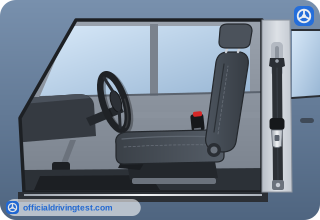
- It is against the law to drive without wearing one
- It is required only on highways and expressways
- It is only a recommendation if the vehicle has air bags
- It is required only for drivers under 18
Show answer
Correct answer: It is against the law to drive without wearing one
The manual states that in Maine it is against the law to drive without wearing a safety belt.
Source: Maine Driver’s License Manual (Rev 4/24), page 4-2 · Open this page in the manual (Manual page 4-2)
-
According to the manual, who in your vehicle must have a fastened safety belt or child safety seat?
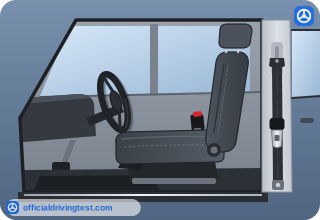
- Everyone
- Only the driver
- Only the driver and front seat passengers
- Only passengers under 18
Show answer
Correct answer: Everyone
Everyone in the vehicle must have a fastened safety belt or child safety seat.
Source: Maine Driver’s License Manual (Rev 4/24), page 4-2 · Open this page in the manual (Manual page 4-2)
-
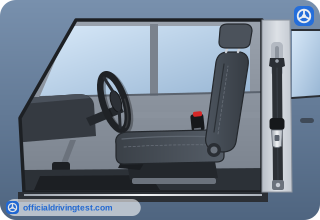
What is one thing safety belts do in a crash?
- They keep the vehicle from rolling over
- They make the vehicle stop in a shorter distance
- They turn off the engine automatically on impact
- They keep you from being thrown from the vehicle
Show answer
Correct answer: They keep you from being thrown from the vehicle
Safety belts reduce injuries and deaths in crashes and keep you from being thrown from the vehicle.
Source: Maine Driver’s License Manual (Rev 4/24), page 4-2 · Open this page in the manual (Manual page 4-2)
-
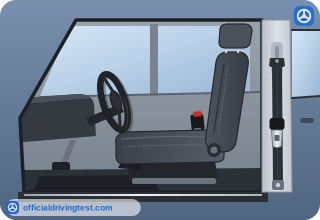
How do safety belts help the driver control the car at sudden stops and turns?
- They shift your weight toward the brake pedal
- They reduce the effort needed to steer
- They keep you from moving around on the seat
- They lock the steering wheel in place
Show answer
Correct answer: They keep you from moving around on the seat
Safety belts keep you from moving around on the seat at sudden stops and turns, so you stay behind the wheel.
Source: Maine Driver’s License Manual (Rev 4/24), page 4-2 · Open this page in the manual (Manual page 4-2)
-
In a collision without a safety belt, what happens to you at the moment your car stops?
- You stop moving at the same moment the car does
- You keep moving at the speed you were traveling
- You are pushed back into your seat at once
- You are held in place by the air bag alone
Show answer
Correct answer: You keep moving at the speed you were traveling
Without a belt, your car stops but you keep going at the same speed you were traveling until you hit the dashboard or windshield.
Source: Maine Driver’s License Manual (Rev 4/24), page 4-2 · Open this page in the manual (Manual page 4-2)
-
How do safety belts help you stay alert?
- By reminding you to check your mirrors
- By holding your head upright against the head rest
- By keeping you from slouching while you drive
- By limiting how far your arms can move
Show answer
Correct answer: By keeping you from slouching while you drive
Safety belts help you stay alert by keeping you from slouching while you drive.
Source: Maine Driver’s License Manual (Rev 4/24), page 4-2 · Open this page in the manual (Manual page 4-2)
-
If your vehicle is struck from the side, how do safety belts help?
- They cushion the impact on the side of the vehicle
- They keep you in position so you can control the car
- They turn the steering wheel for you
- They keep the doors from opening
Show answer
Correct answer: They keep you in position so you can control the car
A side impact could push you across the seat, but safety belts keep you in position so you can control the car.
Source: Maine Driver’s License Manual (Rev 4/24), page 4-3 · Open this page in the manual (Manual page 4-3)
-
When must you buckle your safety belt?
- Before you start the car
- As soon as the car begins to move
- When you see an emergency developing
- Once you reach the first turn
Show answer
Correct answer: Before you start the car
There is no time to buckle a belt when an emergency happens, so you must do it before you start the car.
Source: Maine Driver’s License Manual (Rev 4/24), page 4-3 · Open this page in the manual (Manual page 4-3)
-
Where should the shoulder harness be worn?
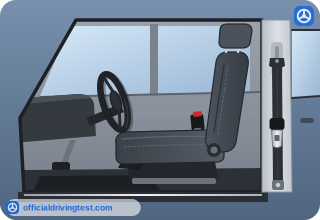
- Across your neck and upper arm
- Under your arm and across your ribs
- Behind your back and across your lap
- Across your shoulder and chest
Show answer
Correct answer: Across your shoulder and chest
The shoulder harness is worn across your shoulder and chest.
Source: Maine Driver’s License Manual (Rev 4/24), page 4-3 · Open this page in the manual (Manual page 4-3)
-
How snug should the shoulder strap be?
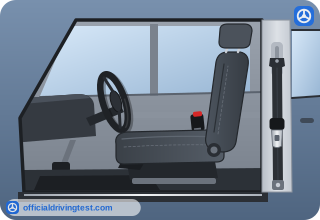
- Tight enough that no fingers fit between the belt and your chest
- Snug but loose enough to let your fist go between the belt and your chest
- Loose enough to let you lean forward and touch the dashboard
- Loose enough to let you slide your whole forearm under it
Show answer
Correct answer: Snug but loose enough to let your fist go between the belt and your chest
The shoulder strap should be snug but just loose enough to let your fist go between the belt and your chest.
Source: Maine Driver’s License Manual (Rev 4/24), page 4-3 · Open this page in the manual (Manual page 4-3)
-
Why should the shoulder harness not be under your arm or behind your back?
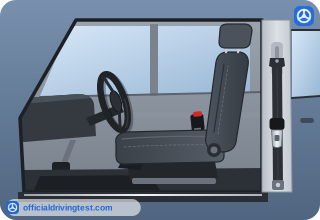
- It can cause internal injuries during a crash
- It can prevent the air bag from inflating
- It can make the belt too loose to buckle
- It can block your view of the mirrors
Show answer
Correct answer: It can cause internal injuries during a crash
A shoulder harness under your arm or behind your back can cause internal injuries during a crash.
Source: Maine Driver’s License Manual (Rev 4/24), page 4-3 · Open this page in the manual (Manual page 4-3)
-
Where should the lap belt rest?
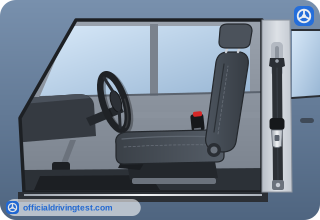
- Across the middle of your stomach
- Just under your ribs, above your hip bones
- Across your upper thighs near your knees
- Below your stomach, on your hip bones
Show answer
Correct answer: Below your stomach, on your hip bones
The lap belt should be tight but comfortable, below your stomach and resting on your hip bones, which helps keep you from sliding out of the belt in a crash.
Source: Maine Driver’s License Manual (Rev 4/24), page 4-3 · Open this page in the manual (Manual page 4-3)
-
Do you need to wear a safety belt if your vehicle has air bags?
- No, air bags give you full protection on their own
- Only when you drive at highway speeds
- Yes, you must also use your safety belt for full protection
- Only when a child is riding in the vehicle
Show answer
Correct answer: Yes, you must also use your safety belt for full protection
Safety belts should be worn even if you have air bags, because you must use your safety belts to gain full protection during a crash.
Source: Maine Driver’s License Manual (Rev 4/24), page 4-3 · Open this page in the manual (Manual page 4-3)
-
In what kind of crash do airbags inflate, according to the manual?
- A rear-end impact
- Any hard braking
- A rollover only
- A frontal impact
Show answer
Correct answer: A frontal impact
The manual says airbags inflate upon frontal impact and give extra protection when the front of your vehicle hits, or is hit by, an object.
Source: Maine Driver’s License Manual (Rev 4/24), page 4-3 · Open this page in the manual (Manual page 4-3)
-
What do air bags and safety belts together help keep from hitting the steering wheel or dash?
- Your knees and legs
- Your hands and arms
- Your head and upper body
- Your feet and ankles
Show answer
Correct answer: Your head and upper body
In a crash, air bags and safety belts help keep your head and upper body from hitting the steering wheel or dash.
Source: Maine Driver’s License Manual (Rev 4/24), page 4-3 · Open this page in the manual (Manual page 4-3)
-
Where does the manual tell you to look for specific information about your air bags?
- The label on the steering wheel
- Your owner's manual
- Your vehicle registration
- Your vehicle title
Show answer
Correct answer: Your owner's manual
The manual says to read your owner's manual for specific information about your air bags.
Source: Maine Driver’s License Manual (Rev 4/24), page 4-3 · Open this page in the manual (Manual page 4-3)
-
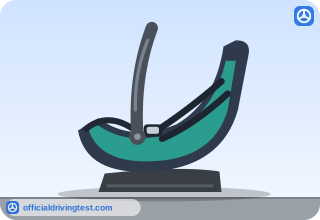
Where must a rear-facing child safety seat never be placed?
- In front of an active passenger air bag
- In the middle of the back seat
- On the passenger side of the rear seat
- Behind the driver's seat
Show answer
Correct answer: In front of an active passenger air bag
The manual says never to place a rear-facing child safety seat in front of an active passenger air bag.
Source: Maine Driver’s License Manual (Rev 4/24), page 4-4 · Open this page in the manual (Manual page 4-4)
-
How should a child safety seat be held in place?
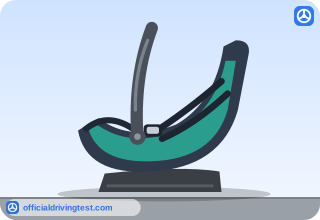
- By the vehicle's safety belts
- By a strap tied to the head rest
- By the child's own harness only
- By the weight of the child alone
Show answer
Correct answer: By the vehicle's safety belts
The child safety seat should be held properly in place by the vehicle's safety belts, with the child correctly buckled in it.
Source: Maine Driver’s License Manual (Rev 4/24), page 4-4 · Open this page in the manual (Manual page 4-4)
-
What can happen to unbuckled occupants when an airbag deploys?
- They are pushed safely back into their seats
- They are protected by the airbag alone
- They can be hurt or killed by the airbag
- They are thrown into the back seat
Show answer
Correct answer: They can be hurt or killed by the airbag
Unbuckled occupants can be hurt or killed by an airbag, so everyone should be buckled up.
Source: Maine Driver’s License Manual (Rev 4/24), page 4-4 · Open this page in the manual (Manual page 4-4)
-
Which is the safest place for a child of any age to ride?
- The front passenger seat
- The back seat
- The middle of the front seat
- Any seat next to a window
Show answer
Correct answer: The back seat
The back seat is the safest place for a child of any age to ride.
Source: Maine Driver’s License Manual (Rev 4/24), page 4-4 · Open this page in the manual (Manual page 4-4)
-
Which passenger should never be placed in the front seat of a car with a passenger side airbag?
- A teenager
- An adult over 65
- A front seat passenger wearing a safety belt
- An infant
Show answer
Correct answer: An infant
The manual says never to place an infant in the front seat of a car with a passenger side airbag.
Source: Maine Driver’s License Manual (Rev 4/24), page 4-4 · Open this page in the manual (Manual page 4-4)
-
Under the safety belt law printed in the manual, a child safety seat must meet the standards of which of these?
- The Maine Bureau of Motor Vehicles Child Seat Code
- The Uniform Vehicle Code
- The Federal Motor Vehicle Safety Standards
- The American Academy of Pediatrics guidelines
Show answer
Correct answer: The Federal Motor Vehicle Safety Standards
The manual defines a child safety seat as one that meets the standards described in the Federal Motor Vehicle Safety Standards.
Source: Maine Driver’s License Manual (Rev 4/24), page 4-4 · Open this page in the manual (Manual page 4-4)
-
What is a "federally approved child restraint system" designed to do?
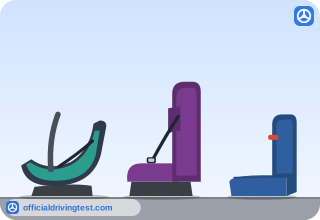
- Elevate a child so the child can properly sit in a lap and shoulder belt system
- Keep a child facing the rear of the vehicle during the whole trip
- Replace the vehicle's safety belt system so the child need not be buckled
- Protect the child from the air bag by tilting the seat backward
Show answer
Correct answer: Elevate a child so the child can properly sit in a lap and shoulder belt system
The manual defines it as a system designed to elevate a child so the child can properly sit in a federally approved lap and shoulder belt system.
Source: Maine Driver’s License Manual (Rev 4/24), page 4-4 · Open this page in the manual (Manual page 4-4)
-
A child less than 18 years of age who is taller than what height must be secured in a seat belt, unless the child must be in a child restraint system or child safety seat?
- 4 feet, 2 inches
- 4 feet, 5 inches
- 5 feet
- 4 feet, 9 inches
Show answer
Correct answer: 4 feet, 9 inches
The operator must ensure a child under 18 who is more than 4 feet, 9 inches in height is secured in a seat belt, unless a child restraint system or child safety seat is required.
Source: Maine Driver’s License Manual (Rev 4/24), page 4-5 · Open this page in the manual (Manual page 4-5)
-
A child less than 18 years of age who is older than what age must be secured in a seat belt, unless the child must be in a child restraint system or child safety seat?
- 5 years
- 8 years
- 6 years
- 10 years
Show answer
Correct answer: 8 years
The operator must ensure a child who is less than 18 but more than 8 years of age is secured in a seat belt, unless a child restraint system or child safety seat is required.
Source: Maine Driver’s License Manual (Rev 4/24), page 4-5 · Open this page in the manual (Manual page 4-5)
-
What must a passenger 18 years of age or older do in a vehicle that is required to be equipped with seat belts?
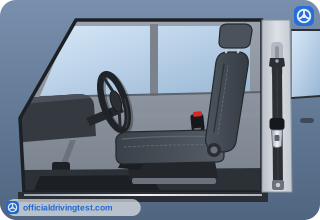
- Ride only in the rear seat
- Be properly secured in a seat belt
- Be secured only when the driver is under 18
- Be secured only when riding on a highway
Show answer
Correct answer: Be properly secured in a seat belt
A passenger 18 or older in a vehicle required to have seat belts must be properly secured in a seat belt.
Source: Maine Driver’s License Manual (Rev 4/24), page 4-5 · Open this page in the manual (Manual page 4-5)
-
Which of these people is not required to be secured in a seat belt while engaged in the delivery of mail?
- A private courier delivering packages for a company
- A school bus driver transporting students
- A tow truck driver responding to a call
- A rural mail carrier of the United States Postal Service
Show answer
Correct answer: A rural mail carrier of the United States Postal Service
A rural mail carrier of the United States Postal Service is not required to be secured in a seat belt while engaged in the delivery of mail.
Source: Maine Driver’s License Manual (Rev 4/24), page 4-5 · Open this page in the manual (Manual page 4-5)
-
Who is not responsible for securing in a seat belt a passenger transported for a fee?
- A taxicab or limousine operator
- The operator of a rental car
- A parent driving a child to school
- The operator of a delivery van
Show answer
Correct answer: A taxicab or limousine operator
The operator of a taxicab or a limousine is not responsible for securing in a seat belt a passenger transported for a fee.
Source: Maine Driver’s License Manual (Rev 4/24), page 4-5 · Open this page in the manual (Manual page 4-5)
-
A newspaper delivery person is not required to be secured in a seat belt while doing which of these?
- Driving to the pickup location for the newspapers
- Driving home after the route is finished
- Actually delivering newspapers from the vehicle
- Traveling on a highway between delivery routes
Show answer
Correct answer: Actually delivering newspapers from the vehicle
A newspaper delivery person is not required to be secured in a seat belt while engaged in the actual delivery of newspapers from a vehicle.
Source: Maine Driver’s License Manual (Rev 4/24), page 4-5 · Open this page in the manual (Manual page 4-5)
-
How far may a load on a passenger type vehicle extend beyond the line of the fenders on the right side?
- No more than 12 inches
- No more than 3 inches
- Not at all
- No more than six inches
Show answer
Correct answer: No more than six inches
A load may not extend more than six inches beyond the line of the fenders on the right side.
Source: Maine Driver’s License Manual (Rev 4/24), page 11-8 · Open this page in the manual (Manual page 11-8)
-
How far may a load on a passenger type vehicle extend beyond the line of the fenders on the left side?
- It should not extend beyond the line of the fenders
- It may extend up to twelve inches beyond the fenders
- It may extend up to three feet beyond the fenders
- It may extend up to two inches beyond the fenders
Show answer
Correct answer: It should not extend beyond the line of the fenders
No passenger type vehicle should carry a load that extends over the sides beyond the line of the fenders on the left side.
Source: Maine Driver’s License Manual (Rev 4/24), page 11-8 · Open this page in the manual (Manual page 11-8)
-
You must not drive a vehicle when there are more than how many persons in the front seat so that your view is obstructed?
- 2
- 4
- 3
- 5
Show answer
Correct answer: 3
The manual says you must not drive when more than 3 persons in the front seat obstruct your view to the front or sides.
Source: Maine Driver’s License Manual (Rev 4/24), page 11-8 · Open this page in the manual (Manual page 11-8)
-
You must not drive a vehicle if it is so loaded that the load:
- Is not covered with a tarp or tied with rope
- Interferes with your use of the vehicle controls
- Weighs more than the passengers
- Is carried on the roof
Show answer
Correct answer: Interferes with your use of the vehicle controls
The manual says you must not drive a vehicle if the load interferes with your use of the vehicle controls.
Source: Maine Driver’s License Manual (Rev 4/24), page 11-8 · Open this page in the manual (Manual page 11-8)
-
On which parts of a moving vehicle should you not let passengers sit?
- The back seat
- The front seat beside the driver
- The rear floor area
- The hood, roof or trunk
Show answer
Correct answer: The hood, roof or trunk
The manual says not to let passengers sit on the hood, roof or trunk of a moving vehicle.
Source: Maine Driver’s License Manual (Rev 4/24), page 11-8 · Open this page in the manual (Manual page 11-8)
-
In which of these may no person ride while it is being driven or moved on any highway?
- A utility trailer
- The back seat of a car
- The front seat of a van
- The passenger compartment of a pick-up truck
Show answer
Correct answer: A utility trailer
No person may ride in a camp trailer, mobile home, semi-trailer, utility trailer or trunk of a vehicle while it is being driven or moved on any highway.
Source: Maine Driver’s License Manual (Rev 4/24), page 11-8 · Open this page in the manual (Manual page 11-8)
-
A passenger under what age must ride in the passenger compartment of a pick-up truck, with some exceptions?
- Under 16
- Under 18
- Under 19
- Under 21
Show answer
Correct answer: Under 19
A passenger under 19 years of age must ride in the passenger compartment of a pick-up truck unless an exception applies.
Source: Maine Driver’s License Manual (Rev 4/24), page 11-8 · Open this page in the manual (Manual page 11-8)
-
Which passenger under 19 may ride outside the passenger compartment of a pick-up truck?
- A passenger riding on a short trip to a store
- A licensed hunter going to or from a hunting location
- A passenger sitting down in the bed
- A passenger riding to school with friends
Show answer
Correct answer: A licensed hunter going to or from a hunting location
A licensed hunter being transported to or from a hunting location is one of the exceptions.
Source: Maine Driver’s License Manual (Rev 4/24), page 11-8 · Open this page in the manual (Manual page 11-8)
-
Which of these under-19 passengers is an exception to the pick-up truck passenger compartment rule?
- A passenger on a rural road
- A passenger holding the tailgate
- A passenger traveling with a dog
- A participant in a parade
Show answer
Correct answer: A participant in a parade
A participant in a parade is one of the exceptions.
Source: Maine Driver’s License Manual (Rev 4/24), page 11-8 · Open this page in the manual (Manual page 11-8)
-
Which worker under 19 may ride outside the passenger compartment of a pick-up truck?
- A worker or trainee engaged in the necessary discharge of duties
- A worker riding because the passenger compartment is full
- Any worker who is 16 years old or older
- A worker riding only on roads with low speed limits
Show answer
Correct answer: A worker or trainee engaged in the necessary discharge of duties
A worker or trainee, including an agricultural worker or trainee, engaged in duties or training or transported between work or training locations is an exception.
Source: Maine Driver’s License Manual (Rev 4/24), page 11-8 · Open this page in the manual (Manual page 11-8)
-
Which under-19 passenger may ride outside the passenger compartment of a pick-up truck if secured?
- One holding onto the side of the truck bed with both hands
- One sitting on a blanket in the bed
- One belted in a manufacturer-installed seat outside the compartment
- One tied to the tailgate with a rope
Show answer
Correct answer: One belted in a manufacturer-installed seat outside the compartment
A passenger secured in a seatbelt in a manufacturer-installed seat located outside the passenger compartment is an exception.
Source: Maine Driver’s License Manual (Rev 4/24), page 11-9 · Open this page in the manual (Manual page 11-9)
-
When may a person driving an open vehicle transport a dog in the open portion on a public way?
- When a passenger rides in the open portion with the dog
- When the dog is secured so it cannot fall, jump or be thrown out
- When the dog wears a collar and tag
- When the dog sits in the center of the open portion
Show answer
Correct answer: When the dog is secured so it cannot fall, jump or be thrown out
The dog must be secured in a manner that prevents it from falling, jumping or being thrown from the vehicle.
Source: Maine Driver’s License Manual (Rev 4/24), page 11-9 · Open this page in the manual (Manual page 11-9)
-
Who may transport an unsecured dog in the open portion of a vehicle for farm work?
- Any driver of a farm vehicle on a public road at any time
- Any licensed hunter at all times
- Any driver of a convertible
- A farmer or farm employee, for farm activities requiring the dog
Show answer
Correct answer: A farmer or farm employee, for farm activities requiring the dog
An exception applies when a farmer or farm employee transports a dog for agricultural activities requiring the services of the dog.
Source: Maine Driver’s License Manual (Rev 4/24), page 11-9 · Open this page in the manual (Manual page 11-9)