Maine: Emergencies and crashes — Part 2 Practice Test
Avoiding crashes, skids, brake and tire problems, a stuck gas pedal, breakdowns, what to do after a crash, and winter and flood driving. — Part 2
Independent educational site · not affiliated with any government agency or DMV
Ready? Test yourself
- Instant feedback with an explanation
- Every answer cites its source in the manual
- Your best score is saved on this device
Questions are original and based on the official manual "Maine Driver’s License Manual" (Rev 4/24), Maine Bureau of Motor Vehicles.
All 34 questions in this practice test
Take the test above first, then use this list to study. Tap “Show answer” to see the correct answer and explanation.
Show the questions and answersHide the questions
-
After an accident, how long should you stay at the scene?
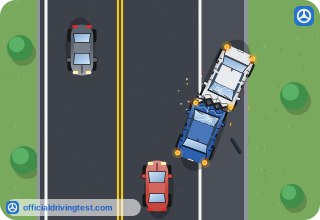
- Until the police arrive and have questioned everyone
- Until the other driver has left the accident scene
- Until your insurance agent arrives at the scene
- Until a tow truck arrives at the accident scene
Show answer
Correct answer: Until the police arrive and have questioned everyone
You stay at the scene until the police arrive and have questioned everyone involved.
Source: Maine Driver’s License Manual (Rev 4/24), page 9-3 · Open this page in the manual (Manual page 9-3)
-
After an accident, what does the manual say to do with your car if you can?
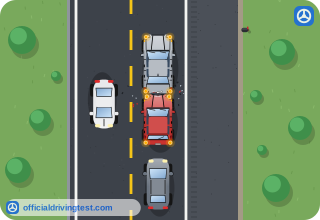
- Leave it where it stopped until the police arrive
- Back it up to the point of impact
- Move it off the road so that you do not block traffic
- Leave it in the lane with the flashers on
Show answer
Correct answer: Move it off the road so that you do not block traffic
If you can, you move your car off the road so that you do not block traffic.
Source: Maine Driver’s License Manual (Rev 4/24), page 9-3 · Open this page in the manual (Manual page 9-3)
-
Whose names and addresses should you get after an accident?
- Only the driver of the other vehicle in the accident
- All people involved, any witnesses, and any injured persons
- Only the other driver and the officer at the scene
- Only the injured persons and the witnesses present
Show answer
Correct answer: All people involved, any witnesses, and any injured persons
You get the names and addresses of all people involved in the accident and any witnesses, and also of any injured persons.
Source: Maine Driver’s License Manual (Rev 4/24), page 9-3 · Open this page in the manual (Manual page 9-3)
-
Which of these is information you should record about the other driver after an accident?
- Date of birth
- Employer's name
- Home telephone number
- Insurance company name
Show answer
Correct answer: Insurance company name
The list of the other driver's information includes the insurance company name.
Source: Maine Driver’s License Manual (Rev 4/24), page 9-3 · Open this page in the manual (Manual page 9-3)
-
When you record the other driver's name and address, what should you make sure of?
- That the driver's name is the one on the license
- That the name matches the one on the registration
- That the address matches the vehicle owner's address
- That the name is spelled the same as on the insurance card
Show answer
Correct answer: That the driver's name is the one on the license
The manual says to make sure the driver's name is the one on the license.
Source: Maine Driver’s License Manual (Rev 4/24), page 9-3 · Open this page in the manual (Manual page 9-3)
-
Which of these should you make note of after an accident?
- The brand and model of tires on each vehicle involved
- The fuel level of the tank in each vehicle involved
- The position and direction of travel of cars and pedestrians
- The occupations and employers of the people involved
Show answer
Correct answer: The position and direction of travel of cars and pedestrians
You should make note of the position and direction of travel of cars and pedestrians before and after the crash.
Source: Maine Driver’s License Manual (Rev 4/24), page 9-3 · Open this page in the manual (Manual page 9-3)
-
Which of these details about the accident should you make note of?
- The price of the car you were driving
- The time, date, and place of the accident
- The names of the drivers' employers
- The number of passengers each car has seated in the back
Show answer
Correct answer: The time, date, and place of the accident
The manual says to make note of the time, date, and place of the accident.
Source: Maine Driver’s License Manual (Rev 4/24), page 9-3 · Open this page in the manual (Manual page 9-3)
-
Besides the time, place and positions of cars, which conditions should you make note of after an accident?
- The color of each vehicle's interior
- The age of each vehicle's tires
- The radio station playing in each car
- Bad weather or roadway conditions
Show answer
Correct answer: Bad weather or roadway conditions
The manual lists bad weather or roadway conditions among the things to make note of.
Source: Maine Driver’s License Manual (Rev 4/24), page 9-3 · Open this page in the manual (Manual page 9-3)
-
When does the manual say you should always contact the police after an accident?
- If there is any injury
- Only if the other driver leaves
- Only if a vehicle must be towed
- Only if an officer is already nearby
Show answer
Correct answer: If there is any injury
The manual says to always contact the police if there is any injury.
Source: Maine Driver’s License Manual (Rev 4/24), page 9-3 · Open this page in the manual (Manual page 9-3)
-
What kind of information should you give the police about an accident?
- Your opinion of who was at fault
- Your guess about the other driver's speed
- Just the facts
- Whatever the other driver told you
Show answer
Correct answer: Just the facts
You give the police information about the accident at the time of the accident and give just the facts.
Source: Maine Driver’s License Manual (Rev 4/24), page 9-3 · Open this page in the manual (Manual page 9-3)
-
If you damage a parked car and cannot find the owner, what should you do?
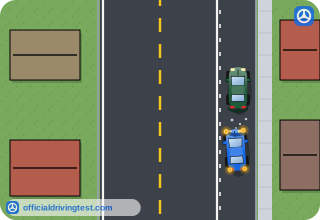
- Leave your insurance card under the wiper
- Leave a note in a place where the owner can find it
- Wait next to the car until the police arrive
- Report it only if the owner calls you
Show answer
Correct answer: Leave a note in a place where the owner can find it
You try to find the owner, and if the owner can’t be found you leave a note in a place where the owner can find it.
Source: Maine Driver’s License Manual (Rev 4/24), page 9-3 · Open this page in the manual (Manual page 9-3)
-
Which of these should the note left for the owner of a damaged parked car contain?
- Your Social Security number
- Your employer's name
- Your insurance policy number
- A description of property damage
Show answer
Correct answer: A description of property damage
The note includes a description of property damage, along with your name and address, license number, plate number, and the date and time.
Source: Maine Driver’s License Manual (Rev 4/24), page 9-3 · Open this page in the manual (Manual page 9-3)
-
What may happen to a driver who fails to report an accident that must be reported?
- Criminal charges and a driver's license suspension
- Only a warning letter sent from the police
- A refresher course and nothing else at all
- Loss of the vehicle registration and nothing more
Show answer
Correct answer: Criminal charges and a driver's license suspension
Failure to report an accident may result in criminal charges and a driver's license suspension.
Source: Maine Driver’s License Manual (Rev 4/24), page 9-3 · Open this page in the manual (Manual page 9-3)
-
After a non-reportable accident involving the injury or death of a dog, a cat or livestock, what must the operator do?
- Do nothing, because no report is needed for a non-reportable accident, whatever the animal
- Move the animal off the road and leave without notifying the owner or any other person
- Take reasonable steps to notify the owner or, if not found, local law enforcement or animal control
- Report the accident to the Bureau of Motor Vehicles within a day of the accident itself
Show answer
Correct answer: Take reasonable steps to notify the owner or, if not found, local law enforcement or animal control
Operators must “take reasonable steps” to notify the owner, or if the owner cannot be located, local law enforcement or animal control.
Source: Maine Driver’s License Manual (Rev 4/24), page 9-3 · Open this page in the manual (Manual page 9-3)
-
You come upon a personal injury accident and no one else is on the scene. What does the manual say you should do?
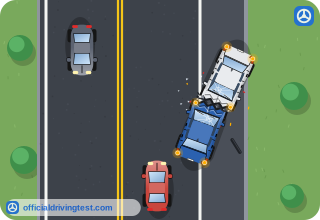
- Wait in your car until emergency crews arrive
- Try to help the victims
- Drive on and report it from the next town
- Stay away and let the police handle it
Show answer
Correct answer: Try to help the victims
If no one else is on the scene of a personal injury accident, you should try to help the victims.
Source: Maine Driver’s License Manual (Rev 4/24), page 9-4 · Open this page in the manual (Manual page 9-4)
-
If emergency medical assistance is already at an accident scene, where should you pay attention?
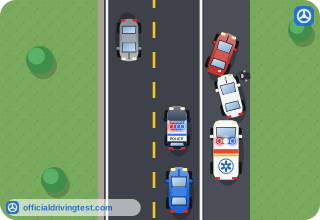
- To the accident, so you can help the victims
- To the injured people, so you can talk to them
- To the other onlookers, so you can keep them back
- To the road and traffic control officers, not the accident
Show answer
Correct answer: To the road and traffic control officers, not the accident
When emergency medical assistance is on the scene, you follow their instructions and pay attention to the road and traffic control officers, not the accident.
Source: Maine Driver’s License Manual (Rev 4/24), page 9-4 · Open this page in the manual (Manual page 9-4)
-
When does the manual say you may move an accident victim?
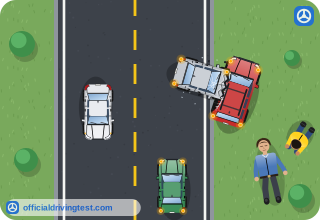
- Only when a fire or other life-threatening danger exists
- As soon as the victim asks to be moved elsewhere
- Whenever help is not yet on the scene of the crash
- When the victim is lying near the edge of the road
Show answer
Correct answer: Only when a fire or other life-threatening danger exists
Do not move the victim unless absolutely necessary due to a fire or other life-threatening danger.
Source: Maine Driver’s License Manual (Rev 4/24), page 9-4 · Open this page in the manual (Manual page 9-4)
-
If you must move a victim, how does the manual say to do it?
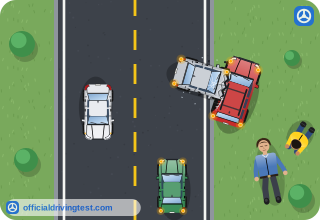
- Lift the victim by the arms and legs and carry them away
- Roll the victim onto their side and drag them feet-first away from danger
- Keep the back and neck straight and pull the victim head-first
- Bend the neck forward and pull the victim feet-first away from danger
Show answer
Correct answer: Keep the back and neck straight and pull the victim head-first
You keep the back and neck as straight as possible and pull the victim head-first away from danger.
Source: Maine Driver’s License Manual (Rev 4/24), page 9-4 · Open this page in the manual (Manual page 9-4)
-
What does the manual say to do if downed wires are present at a crash scene?
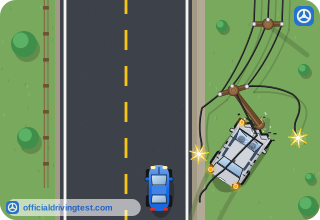
- Move them aside with a dry stick
- Don't go near them and wait for emergency crews
- Drive over them slowly
- Touch them with a piece of metal to see if they are live
Show answer
Correct answer: Don't go near them and wait for emergency crews
If downed wires are present, you don't go near them and wait for emergency crews to handle the situation.
Source: Maine Driver’s License Manual (Rev 4/24), page 9-4 · Open this page in the manual (Manual page 9-4)
-
If downed wires are touching a vehicle or lying near it, what should you warn the occupants to do?
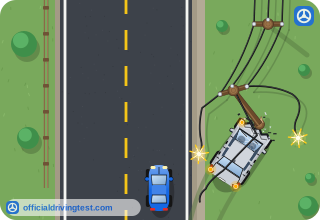
- Get out and run away at once
- Step out one at a time
- Hold onto the metal door frame
- Stay inside until help arrives
Show answer
Correct answer: Stay inside until help arrives
If the wires are touching the vehicle or lying near it, you warn occupants to stay inside until help arrives.
Source: Maine Driver’s License Manual (Rev 4/24), page 9-4 · Open this page in the manual (Manual page 9-4)
-
What does the manual say to do if an accident victim is not breathing?
- Begin CPR if properly trained, or mouth to mouth breathing
- Give the victim a small drink of water
- Sit the victim upright and wait
- Wait for the ambulance without touching the victim
Show answer
Correct answer: Begin CPR if properly trained, or mouth to mouth breathing
You check to see if the victim is breathing, and if not, begin CPR if you have been properly trained, or mouth to mouth breathing.
Source: Maine Driver’s License Manual (Rev 4/24), page 9-4 · Open this page in the manual (Manual page 9-4)
-
How can you help stop a victim's bleeding?
- Put ointment on the wound
- Pour cold water over the wound and leave it uncovered
- Put pressure directly on the wound with a hand or clean cloth
- Keep the victim moving so blood circulates
Show answer
Correct answer: Put pressure directly on the wound with a hand or clean cloth
You can help stop bleeding by putting pressure directly on the wound with your hand or a clean cloth, and maintaining pressure until help arrives.
Source: Maine Driver’s License Manual (Rev 4/24), page 9-4 · Open this page in the manual (Manual page 9-4)
-
A victim's wound is in an arm or leg and there are no apparent broken bones. What else can you do besides applying pressure?
- Bend the limb back and forth to loosen it
- Carefully lift the limb to help slow bleeding
- Lower the limb below the level of the body
- Wrap the limb tightly in a blanket
Show answer
Correct answer: Carefully lift the limb to help slow bleeding
If the wound is in an arm or leg with no apparent broken bones, you also carefully lift the limb to help slow bleeding while maintaining pressure on the wound.
Source: Maine Driver’s License Manual (Rev 4/24), page 9-4 · Open this page in the manual (Manual page 9-4)
-
What does the manual say you may apply to burns?
- A thin layer of ointment to protect the skin
- Grease or butter to seal the burned area
- A warm, wet towel left uncovered
- Cold water, then cover them with a clean cloth
Show answer
Correct answer: Cold water, then cover them with a clean cloth
Do not put ointment or grease on burns; you may apply cold water and cover them with a clean cloth.
Source: Maine Driver’s License Manual (Rev 4/24), page 9-4 · Open this page in the manual (Manual page 9-4)
-
What should you give an injured person to drink?
- Nothing, not even water
- Small sips of water only
- Warm tea
- A sports drink
Show answer
Correct answer: Nothing, not even water
Do not give an injured person anything to drink, not even water.
Source: Maine Driver’s License Manual (Rev 4/24), page 9-4 · Open this page in the manual (Manual page 9-4)
-
Why should you cover an accident victim with a blanket or a coat?
- To keep the victim from seeing the crash scene
- To protect the victim from broken glass
- To maintain body temperature and help prevent shock
- To signal to other drivers that help is needed
Show answer
Correct answer: To maintain body temperature and help prevent shock
Covering the victim with a blanket or a coat maintains body temperature and helps prevent shock.
Source: Maine Driver’s License Manual (Rev 4/24), page 9-4 · Open this page in the manual (Manual page 9-4)
-
When do skids happen, according to the manual?
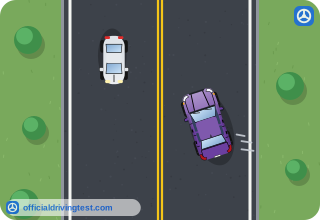
- When you drive slowly on dry pavement
- Traveling too fast or braking too hard
- When you steer gently around a curve
- When you ease off the gas pedal
Show answer
Correct answer: Traveling too fast or braking too hard
Skids happen when you are traveling too fast or when you brake too hard.
Source: Maine Driver’s License Manual (Rev 4/24), page 9-4 · Open this page in the manual (Manual page 9-4)
-
What can you not do while your tires are skidding?
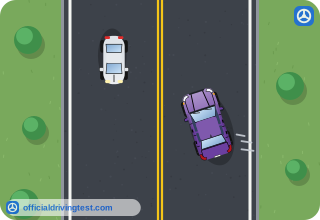
- Use the horn
- Turn on your lights
- Shift gears
- Steer
Show answer
Correct answer: Steer
While the tires are skidding you will not be able to steer.
Source: Maine Driver’s License Manual (Rev 4/24), page 9-4 · Open this page in the manual (Manual page 9-4)
-
If your vehicle begins to skid, what does the manual say to do to regain steering?
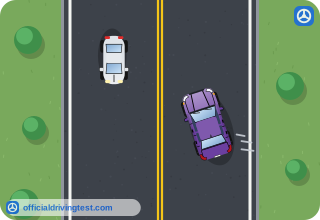
- Release pressure from the brake or accelerator
- Press the brake pedal down harder and hold it
- Press the accelerator to the floor and hold it
- Shift into park to stop the skid
Show answer
Correct answer: Release pressure from the brake or accelerator
To regain steering you release pressure from the brake or accelerator.
Source: Maine Driver’s License Manual (Rev 4/24), page 9-4 · Open this page in the manual (Manual page 9-4)
-
If your vehicle begins to skid, where does the manual say to look?
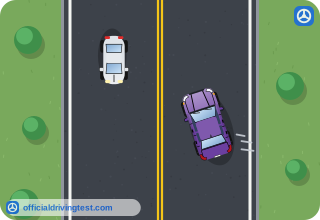
- At the skid marks
- At the speedometer
- Where you want to go
- At the pedals
Show answer
Correct answer: Where you want to go
When skidding you look where you want to go.
Source: Maine Driver’s License Manual (Rev 4/24), page 9-4 · Open this page in the manual (Manual page 9-4)
-
If your wheels drop off the paved road surface, what does the manual say to do?
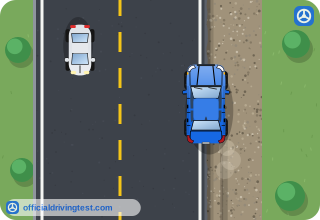
- Brake hard at once
- Slow down gradually and then turn back onto the road
- Turn sharply back onto the pavement right away
- Speed up to climb back onto the road
Show answer
Correct answer: Slow down gradually and then turn back onto the road
Don't panic; slow down gradually and then turn back onto the road.
Source: Maine Driver’s License Manual (Rev 4/24), page 9-4 · Open this page in the manual (Manual page 9-4)
-
If the right wheels of your car unexpectedly run off onto the shoulder, how should you hold the steering wheel?
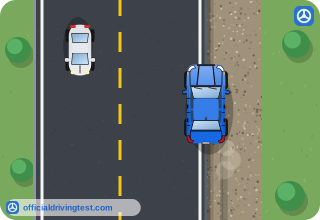
- Loosen your grip and let the car drift
- Turn it sharply to the left at once
- Take one hand off to steady yourself
- Grip it firmly
Show answer
Correct answer: Grip it firmly
The manual says not to panic and to grip the steering wheel firmly.
Source: Maine Driver’s License Manual (Rev 4/24), page 9-4 · Open this page in the manual (Manual page 9-4)
-
If the right wheels of your car run off onto the shoulder, what should you do with the gas pedal?
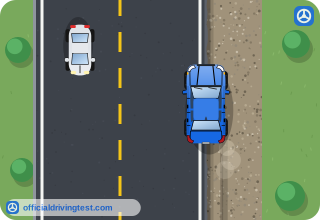
- Ease up on it
- Press it to the floor
- Pump it quickly
- Hold it steady
Show answer
Correct answer: Ease up on it
You ease up on the gas pedal when the right wheels run off the road.
Source: Maine Driver’s License Manual (Rev 4/24), page 9-5 · Open this page in the manual (Manual page 9-5)
-
If the right wheels of your car run off onto the shoulder, how should you use the brake pedal?
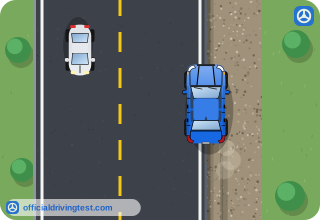
- Stomp on the brakes as hard as you can
- Do not use the brakes until you stop on the shoulder
- Step on the brakes gently, not suddenly and hard
- Hold the brake pedal to the floor
Show answer
Correct answer: Step on the brakes gently, not suddenly and hard
The manual says not to hit the brake pedal suddenly and hard but to step on the brakes gently.
Source: Maine Driver’s License Manual (Rev 4/24), page 9-5 · Open this page in the manual (Manual page 9-5)