Louisiana: Speed and following distance — Part 5 Practice Test
Louisiana speed limits, stopping distances, the 3-second rule, space around your vehicle, night and rural driving. — Part 5
Independent educational site · not affiliated with any government agency or DMV
Ready? Test yourself
- Instant feedback with an explanation
- Every answer cites its source in the manual
- Your best score is saved on this device
Questions are original and based on the official manual "Class D & E Driver’s Guide" (Revised August 2025 (DPSMV2052 R08/25)), Louisiana Office of Motor Vehicles.
All 36 questions in this practice test
Take the test above first, then use this list to study. Tap “Show answer” to see the correct answer and explanation.
Show the questions and answersHide the questions
-
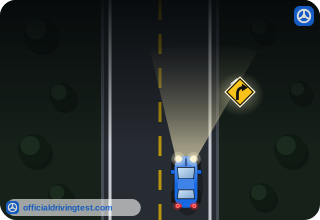
What is it called when you drive so fast at night or in bad weather that your stopping distance is greater than your visibility?
- Overcorrecting your steering
- Tailgating
- Over driving your headlights
- Running a dark zone
Show answer
Correct answer: Over driving your headlights
The guide says driving at such speeds at night or in bad weather means you are over driving your headlights.
Source: Class D & E Driver’s Guide (Revised August 2025 (DPSMV2052 R08/25)), page 86 · Open this page in the manual (Manual page 86)
-
What are speed limit signs based on, according to the guide?
- The average speed of the drivers who use the road each day
- Traffic congestion, intersections, and roadway conditions
- The number of lanes and the type of pavement only
- The weather forecast and the time of day
Show answer
Correct answer: Traffic congestion, intersections, and roadway conditions
The guide says speed limit signs are based on traffic congestion, intersections, and roadway conditions.
Source: Class D & E Driver’s Guide (Revised August 2025 (DPSMV2052 R08/25)), page 86 · Open this page in the manual (Manual page 86)
-
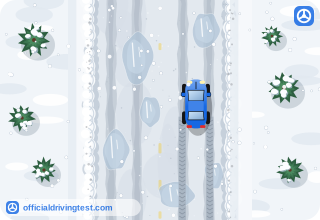
The posted limit allows 55 mph and you are driving in a snow storm. What does the guide say about driving 55 mph?
- It is acceptable because it equals the posted limit
- It is acceptable as long as you use your low beam headlights
- It is acceptable if you stay in the right-hand lane
- It is not recognized as an acceptable speed for a snowy roadway
Show answer
Correct answer: It is not recognized as an acceptable speed for a snowy roadway
The guide says driving 55 mph in a snow storm is not an acceptable speed for a snowy roadway, even if the posted limit allows 55 mph.
Source: Class D & E Driver’s Guide (Revised August 2025 (DPSMV2052 R08/25)), page 86 · Open this page in the manual (Manual page 86)
-
Speed limits are posted for what kind of driving conditions?
- Ideal conditions
- Average conditions
- Wet-weather conditions
- Nighttime conditions
Show answer
Correct answer: Ideal conditions
The guide says speed limits are posted for ideal conditions, so you must reduce speed when conditions are worse.
Source: Class D & E Driver’s Guide (Revised August 2025 (DPSMV2052 R08/25)), page 86 · Open this page in the manual (Manual page 86)
-
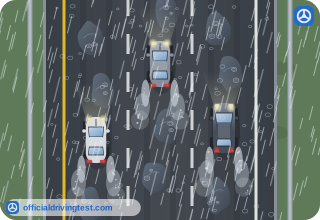
If the roadway is wet or icy, you cannot see well, or traffic is heavy, what must you do?
- Keep to the posted limit and use your horn more often
- Drive at the posted minimum limit for the road
- Reduce speed so your vehicle can stop and steer as needed
- Follow the vehicle ahead more closely to see better
Show answer
Correct answer: Reduce speed so your vehicle can stop and steer as needed
The guide says that in those conditions you must reduce speed to enable your vehicle to stop and steer as needed.
Source: Class D & E Driver’s Guide (Revised August 2025 (DPSMV2052 R08/25)), page 87 · Open this page in the manual (Manual page 87)
-
According to the guide, what is the best way to avoid speeding?
- Follow the vehicle in front of you
- Check your speedometer frequently
- Stay in the right-hand lane
- Trust your own sense of how fast you are going
Show answer
Correct answer: Check your speedometer frequently
The guide says the best way to avoid speeding is to check your speedometer frequently, since you may not judge your speed well without it.
Source: Class D & E Driver’s Guide (Revised August 2025 (DPSMV2052 R08/25)), page 87 · Open this page in the manual (Manual page 87)
-
When is it especially easy to be traveling much faster than you think?
- When switching from low speed single-lane roadways to high speed multiple-lane roadways
- When driving at night on a road you know well
- When driving behind a large truck on a two-lane road
- When switching from high speed multiple-lane roadways to lower speed single-lane roadways
Show answer
Correct answer: When switching from high speed multiple-lane roadways to lower speed single-lane roadways
The guide says it is easy to travel much faster than perceived, especially when switching from high speed multiple-lane roadways to lower speed single-lane roadways.
Source: Class D & E Driver’s Guide (Revised August 2025 (DPSMV2052 R08/25)), page 87 · Open this page in the manual (Manual page 87)
-
According to the General Speed Law, you must not drive at a speed greater than what?
- A speed that is reasonable
- The average speed of the traffic around you
- The speed of the vehicle in front of you
- The speed that most local drivers use
Show answer
Correct answer: A speed that is reasonable
The General Speed Law says you must not drive at a speed greater than is reasonable, and must drive at a safe, appropriate speed for the area, road, traffic, light and weather conditions.
Source: Class D & E Driver’s Guide (Revised August 2025 (DPSMV2052 R08/25)), page 87 · Open this page in the manual (Manual page 87)
-
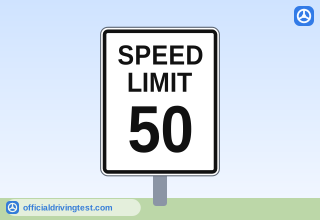
Which statement about the posted maximum speed limit is correct?
- You may drive faster than it when the road is dry
- You may drive faster than it when no other vehicle is in sight
- You must not drive faster than it
- You may drive faster than it when passing another vehicle
Show answer
Correct answer: You must not drive faster than it
The guide says you must not drive faster than the posted maximum limit.
Source: Class D & E Driver’s Guide (Revised August 2025 (DPSMV2052 R08/25)), page 87 · Open this page in the manual (Manual page 87)
-
What are you required to do about a posted minimum speed limit?
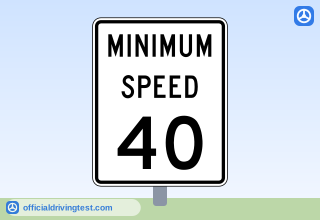
- Drive slower than it if traffic is light
- Not drive slower than it
- Drive slower than it only at night
- Drive slower than it if you turn on your flashers
Show answer
Correct answer: Not drive slower than it
The guide says you must not drive slower than the posted minimum limit.
Source: Class D & E Driver’s Guide (Revised August 2025 (DPSMV2052 R08/25)), page 87 · Open this page in the manual (Manual page 87)
-
While driving within the posted speed limit, what must you not do?
- Drive in the right-hand lane of a multiple-lane road
- Drive below the speed of the traffic in the other lanes
- Drive with your speedometer in view
- Drive so slowly that you impede other traffic
Show answer
Correct answer: Drive so slowly that you impede other traffic
The guide says that even within the posted limit, you must not drive so slowly that you impede other traffic.
Source: Class D & E Driver’s Guide (Revised August 2025 (DPSMV2052 R08/25)), page 87 · Open this page in the manual (Manual page 87)
-
At a location marked with a “school crossing” sign, when is a reduced speed limit required?
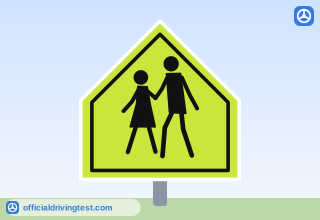
- When children are present
- Only during the morning hours
- Only when a school bus is stopped
- Only on school days after noon
Show answer
Correct answer: When children are present
The guide requires reduced speed limits at locations marked with a “school crossing” sign when children are present.
Source: Class D & E Driver’s Guide (Revised August 2025 (DPSMV2052 R08/25)), page 87 · Open this page in the manual (Manual page 87)
-
Besides streets near schools and playgrounds, reduced speed limits are required on streets in which type of area?
- Rural farmland areas
- Areas with more than two lanes
- Residential or business areas
- Areas outside city limits
Show answer
Correct answer: Residential or business areas
The guide requires reduced speed limits on streets in residential or business areas.
Source: Class D & E Driver’s Guide (Revised August 2025 (DPSMV2052 R08/25)), page 87 · Open this page in the manual (Manual page 87)
-
On which roads does the guide say minimum speeds are posted?
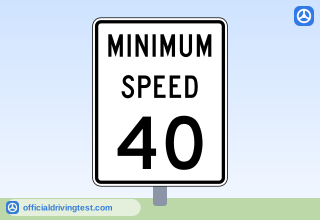
- Residential streets
- Interstates
- School zone roads
- Local parish roads
Show answer
Correct answer: Interstates
The guide says minimum speeds are posted for the interstates.
Source: Class D & E Driver’s Guide (Revised August 2025 (DPSMV2052 R08/25)), page 87 · Open this page in the manual (Manual page 87)
-
Why is driving too slowly also dangerous, according to the guide?
- Slow drivers cannot easily see the posted speed limit signs
- Slow drivers use more fuel and can overheat their engines
- Slow vehicles are harder to steer on wet or icy roadways
- Impatient drivers take chances to get around the slow driver
Show answer
Correct answer: Impatient drivers take chances to get around the slow driver
The guide says drivers tend to get impatient with a driver who is driving too slowly and take unnecessary chances to get around him or her.
Source: Class D & E Driver’s Guide (Revised August 2025 (DPSMV2052 R08/25)), page 87 · Open this page in the manual (Manual page 87)
-
What does Louisiana law say about taking part in a race, speed contest or speed exhibition on a public street or road?
- It is unlawful
- It is lawful on roads with no traffic
- It is lawful before sunrise
- It is lawful on roads with a posted limit above 55 mph
Show answer
Correct answer: It is unlawful
The guide says it is unlawful to participate in any race, speed contest or speed exhibition on any public street or road in the state.
Source: Class D & E Driver’s Guide (Revised August 2025 (DPSMV2052 R08/25)), page 87 · Open this page in the manual (Manual page 87)
-
How does the guide define drag racing?
- Operating one vehicle at a speed of more than 20 mph over the posted limit on any public street or road
- Operating two or more vehicles one behind the other at the posted speed limit in a competitive attempt to outdo each other
- Operating two or more vehicles side by side at accelerating speeds in a competitive attempt to outdo each other
- Operating a single vehicle at accelerating speeds in a competitive attempt to outdo the posted speed limit
Show answer
Correct answer: Operating two or more vehicles side by side at accelerating speeds in a competitive attempt to outdo each other
The guide defines drag racing as operating two or more vehicles from a point side by side at accelerating speeds in a competitive attempt to outdo each other.
Source: Class D & E Driver’s Guide (Revised August 2025 (DPSMV2052 R08/25)), page 87 · Open this page in the manual (Manual page 87)
-
According to the manual, why do rear-end crashes usually occur?
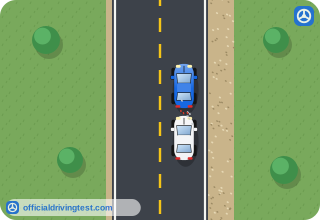
- Drivers follow too closely
- Drivers change lanes without signaling
- Drivers travel under the minimum speed
- Drivers brake in the deceleration lane
Show answer
Correct answer: Drivers follow too closely
The manual says rear-end crashes usually occur because of drivers following too closely.
Source: Class D & E Driver’s Guide (Revised August 2025 (DPSMV2052 R08/25)), page 101 · Open this page in the manual (Manual page 101)
-
If another vehicle is too close behind you, why should you still keep a safe following distance behind the vehicle ahead?
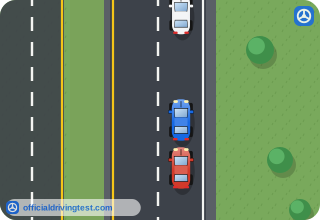
- It forces the vehicle behind you to drop back and pass you
- It lets you brake harder without the driver behind noticing
- It may keep you from being pushed into the vehicle ahead
- It allows you to raise your speed safely
Show answer
Correct answer: It may keep you from being pushed into the vehicle ahead
The manual says a safe following distance may prevent you from being pushed into the vehicle ahead in a rear-end crash.
Source: Class D & E Driver’s Guide (Revised August 2025 (DPSMV2052 R08/25)), page 101 · Open this page in the manual (Manual page 101)
-
If you are being followed too closely (tailgated), what should you do first?
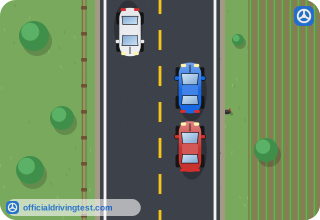
- Speed up so the driver cannot stay close behind you
- Slow down and encourage the driver behind you to pass
- Brake hard and often to warn the driver behind you
- Pull over and stop right away on the shoulder
Show answer
Correct answer: Slow down and encourage the driver behind you to pass
The manual says to slow down and encourage the tailgater to pass.
Source: Class D & E Driver’s Guide (Revised August 2025 (DPSMV2052 R08/25)), page 101 · Open this page in the manual (Manual page 101)
-
You slow down for a tailgater but the driver does not pass. What does the manual say to do next?
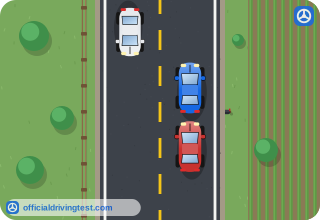
- Speed up until the driver drops back
- Tap your brakes repeatedly until the driver passes
- Keep driving at the same speed
- Pull over, stop and let the tailgater pass
Show answer
Correct answer: Pull over, stop and let the tailgater pass
If slowing down fails, the manual says to pull over, stop and let the tailgater pass.
Source: Class D & E Driver’s Guide (Revised August 2025 (DPSMV2052 R08/25)), page 101 · Open this page in the manual (Manual page 101)
-
What does the manual say to do with your doors when you are being followed too closely?
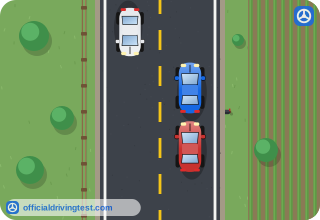
- Keep them locked
- Leave them unlocked so you can get out quickly
- Unlock only the driver’s door
- Open the driver’s door slightly
Show answer
Correct answer: Keep them locked
In the paragraph on tailgaters the manual says to keep your doors locked.
Source: Class D & E Driver’s Guide (Revised August 2025 (DPSMV2052 R08/25)), page 101 · Open this page in the manual (Manual page 101)
-
Which of these should you avoid on multi-lane streets to keep a space cushion?
- Driving in the center of your lane
- Signaling before a lane change
- Driving alongside other cars
- Using your mirrors
Show answer
Correct answer: Driving alongside other cars
The manual says to avoid driving alongside other cars on multi-lane streets.
Source: Class D & E Driver’s Guide (Revised August 2025 (DPSMV2052 R08/25)), page 101 · Open this page in the manual (Manual page 101)
-
Where in your lane should you drive to keep space between you and oncoming cars?
- Near the right edge of your lane
- In the center of your lane
- Near the center line
- On the shoulder
Show answer
Correct answer: In the center of your lane
The manual says to drive in the center of your lane to keep space between you and oncoming cars.
Source: Class D & E Driver’s Guide (Revised August 2025 (DPSMV2052 R08/25)), page 101 · Open this page in the manual (Manual page 101)
-
Which of these is one of the three basic elements of space management?
- Lane position
- Fuel economy
- Vehicle weight
- Tire pressure
Show answer
Correct answer: Lane position
The manual lists speed control, lane position and communication as the three basic elements of space management.
Source: Class D & E Driver’s Guide (Revised August 2025 (DPSMV2052 R08/25)), page 102 · Open this page in the manual (Manual page 102)
-
What is your most important goal in managing your road space?
- To keep the highest speed that traffic allows in the left lane
- To stay as close as is safe to the vehicle ahead of you
- To balance speed control, lane position and communication
- To change lanes whenever more space opens up
Show answer
Correct answer: To balance speed control, lane position and communication
The manual says your most important goal is to achieve a balance of these three tools at all times.
Source: Class D & E Driver’s Guide (Revised August 2025 (DPSMV2052 R08/25)), page 102 · Open this page in the manual (Manual page 102)
-
What does the manual say about leaving for your destination?
- Leave late to avoid traffic congestion
- Leave on time so that you do not need to rush while driving
- Leave during rush hour to follow the flow of traffic
- Leave early only on long trips
Show answer
Correct answer: Leave on time so that you do not need to rush while driving
The manual says to always leave on time so that you do not need to rush while driving.
Source: Class D & E Driver’s Guide (Revised August 2025 (DPSMV2052 R08/25)), page 102 · Open this page in the manual (Manual page 102)
-
What does the manual say about driving on empty rural highways?
- It can be just as dangerous as driving in heavy city traffic
- It is much safer than driving in heavy city traffic
- It is dangerous only at night or in bad weather
- It is safe because so few vehicles are on the road
Show answer
Correct answer: It can be just as dangerous as driving in heavy city traffic
The manual says driving on empty rural highways can be just as dangerous as driving in heavy city traffic.
Source: Class D & E Driver’s Guide (Revised August 2025 (DPSMV2052 R08/25)), page 103 · Open this page in the manual (Manual page 103)
-
Which types of road does the manual say rural roads consist of?
- Paved roads only
- Paved, gravel and cobblestone roads
- Paved, gravel and dirt roads
- Gravel, dirt and sand roads
Show answer
Correct answer: Paved, gravel and dirt roads
The manual says rural roads consist of paved, gravel and dirt roads.
Source: Class D & E Driver’s Guide (Revised August 2025 (DPSMV2052 R08/25)), page 103 · Open this page in the manual (Manual page 103)
-
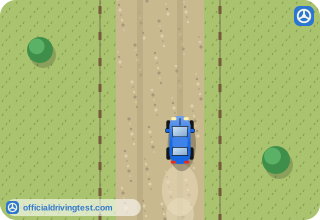
What should you do when you drive on gravel or dirt roads?
- Increase your speed to keep traction
- Reduce your speed and increase your following distance
- Reduce your speed and shorten your following distance
- Keep your speed and drive near the shoulder
Show answer
Correct answer: Reduce your speed and increase your following distance
The manual says that on gravel or dirt you must reduce your speed and increase your following distance.
Source: Class D & E Driver’s Guide (Revised August 2025 (DPSMV2052 R08/25)), page 103 · Open this page in the manual (Manual page 103)
-
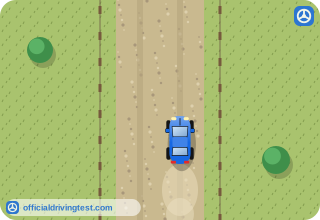
Why does it take much longer to stop on gravel or dirt roads?
- Brake fluid pressure drops
- Shoulders are narrower
- Vision is reduced
- Vehicles lose traction
Show answer
Correct answer: Vehicles lose traction
Vehicles do not have as much traction on gravel or dirt, so stopping takes much longer because of loss of traction.
Source: Class D & E Driver’s Guide (Revised August 2025 (DPSMV2052 R08/25)), page 103 · Open this page in the manual (Manual page 103)
-
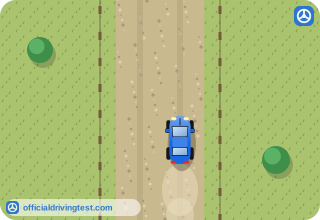
What can make gravel or dirt roads rough and rippled?
- A series of potholes
- Heavy rain only
- Wildlife crossing the road
- Narrow bridges
Show answer
Correct answer: A series of potholes
The manual says gravel or dirt roads can become rough and rippled where a series of potholes has formed.
Source: Class D & E Driver’s Guide (Revised August 2025 (DPSMV2052 R08/25)), page 103 · Open this page in the manual (Manual page 103)
-
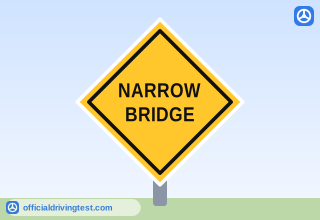
On a rural road, what should you be prepared to do when you see a narrow bridge sign?
- Speed up to cross first
- Stop for oncoming traffic
- Pass the vehicle ahead
- Sound your horn and keep going
Show answer
Correct answer: Stop for oncoming traffic
The manual says to look for narrow bridge signs and be prepared to stop for oncoming traffic.
Source: Class D & E Driver’s Guide (Revised August 2025 (DPSMV2052 R08/25)), page 103 · Open this page in the manual (Manual page 103)
-
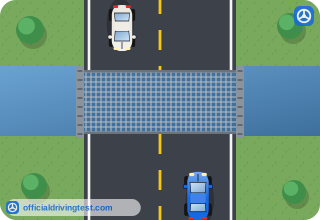
Why should you reduce speed on open bridge gratings or steel bridges?
- They are always covered with ice
- Their speed limit is posted at 20 miles per hour
- They have no shoulders
- Traction for braking and steering is reduced
Show answer
Correct answer: Traction for braking and steering is reduced
The manual says to reduce speed on open bridge gratings or steel bridges because traction for braking and steering is reduced.
Source: Class D & E Driver’s Guide (Revised August 2025 (DPSMV2052 R08/25)), page 103 · Open this page in the manual (Manual page 103)
-
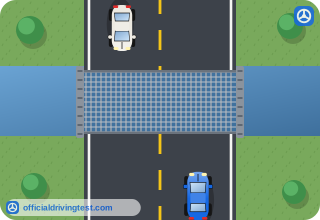
What should you do with the steering wheel on an open bridge grating or steel bridge?
- Keep a firm grip on it
- Loosen your grip to let the car settle
- Steer in small zigzags to keep traction
- Turn it sharply to test the traction
Show answer
Correct answer: Keep a firm grip on it
The manual says to keep a firm grip on the steering wheel on open bridge gratings or steel bridges.
Source: Class D & E Driver’s Guide (Revised August 2025 (DPSMV2052 R08/25)), page 103 · Open this page in the manual (Manual page 103)
-
What can create blind corners on rural roads?
- Open fields with short grass and wide shoulders
- Paved shoulders on both sides of the road
- Wooded areas, corn fields or other tall crops
- Wide ditches along the roadway
Show answer
Correct answer: Wooded areas, corn fields or other tall crops
The manual says blind corners created by wooded areas, corn fields or other tall crops can create vision limitations.
Source: Class D & E Driver’s Guide (Revised August 2025 (DPSMV2052 R08/25)), page 103 · Open this page in the manual (Manual page 103)