Louisiana: Signals and vehicle controls — Part 2 Practice Test
Checking your vehicle, tires, starting and stopping, steering, signaling, safety features, seasonal care, air brakes and towing a trailer. — Part 2
Independent educational site · not affiliated with any government agency or DMV
Ready? Test yourself
- Instant feedback with an explanation
- Every answer cites its source in the manual
- Your best score is saved on this device
Questions are original and based on the official manual "Class D & E Driver’s Guide" (Revised August 2025 (DPSMV2052 R08/25)), Louisiana Office of Motor Vehicles.
All 36 questions in this practice test
Take the test above first, then use this list to study. Tap “Show answer” to see the correct answer and explanation.
Show the questions and answersHide the questions
-
The manual says not to simply abandon a vehicle that stops running. What does it suggest instead?
- Leaving it on a public street until it is towed away
- Leaving it at a gas station for pickup by the owner
- Selling it to an agency for a fixed refund on the plate
- Donating it to an agency that takes old cars
Show answer
Correct answer: Donating it to an agency that takes old cars
The manual says several agencies will take your old car for donation and you may receive a tax credit.
Source: Class D & E Driver’s Guide (Revised August 2025 (DPSMV2052 R08/25)), page 44 · Open this page in the manual (Manual page 44)
-
When should you conduct a “pre-trip” inspection of your vehicle?
- Always, before driving
- Only before a long trip
- Only when the vehicle is new
- Only when a warning light comes on
Show answer
Correct answer: Always, before driving
The manual says you should always conduct a pre-trip inspection before driving, so the vehicle is well maintained and safer to drive.
Source: Class D & E Driver’s Guide (Revised August 2025 (DPSMV2052 R08/25)), page 44 · Open this page in the manual (Manual page 44)
-
What is the minimum tread depth the manual suggests between all treads when checking tires each week?
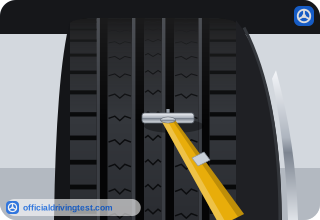
- At least 1/32 of an inch
- At least 1/8 of an inch
- At least 1/16 of an inch
- At least 1/4 of an inch
Show answer
Correct answer: At least 1/16 of an inch
The weekly checks say tires should have at least 1/16 of an inch depth between all treads.
Source: Class D & E Driver’s Guide (Revised August 2025 (DPSMV2052 R08/25)), page 44 · Open this page in the manual (Manual page 44)
-
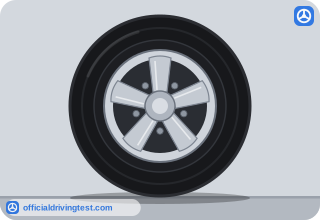
In the weekly tire checks, which of these should you check for besides even wear?
- Paint chips and scratches on the wheel rims
- Dry rot, bumps, bulges and tread separation
- A different brand of tire on each axle
- Loose lug nut covers and missing hubcaps
Show answer
Correct answer: Dry rot, bumps, bulges and tread separation
The weekly checks list dry rot (cracking), bumps, bulges and separation of the tread from the tire.
Source: Class D & E Driver’s Guide (Revised August 2025 (DPSMV2052 R08/25)), page 44 · Open this page in the manual (Manual page 44)
-
In the weekly checks, where is the engine oil level checked against its operating range?
- On the radiator cap
- On the fuel cap
- On the overflow tank
- On the dipstick
Show answer
Correct answer: On the dipstick
The manual says to make sure the oil level is within the vehicle’s operating range listed on the dipstick.
Source: Class D & E Driver’s Guide (Revised August 2025 (DPSMV2052 R08/25)), page 44 · Open this page in the manual (Manual page 44)
-
In the weekly checks, the radiator level should be within its operating level on which part?
- The overflow tank
- The dipstick
- The fuel cap
- The battery case
Show answer
Correct answer: The overflow tank
The manual says to make sure the radiator level is within operating level on the overflow tank.
Source: Class D & E Driver’s Guide (Revised August 2025 (DPSMV2052 R08/25)), page 44 · Open this page in the manual (Manual page 44)
-
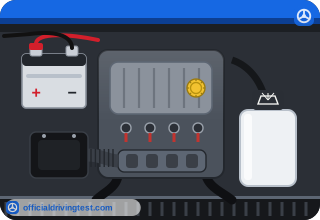
In the weekly checks, what should you look for when you inspect the battery?
- A low charge shown on the dashboard
- A loose hood latch near the cables
- Corrosion on the terminals or leakage
- Worn belts around the battery tray
Show answer
Correct answer: Corrosion on the terminals or leakage
The weekly checks say to check the battery for corrosion on terminals or leakage.
Source: Class D & E Driver’s Guide (Revised August 2025 (DPSMV2052 R08/25)), page 44 · Open this page in the manual (Manual page 44)
-
In the weekly checks, what should you make sure about the fuel cap?
- That it is locked with a key
- That it is present and fits properly
- That it has been replaced this year
- That it is the same color as the car
Show answer
Correct answer: That it is present and fits properly
The weekly checks say to make sure the fuel cap is present and fits properly.
Source: Class D & E Driver’s Guide (Revised August 2025 (DPSMV2052 R08/25)), page 44 · Open this page in the manual (Manual page 44)
-
How often does the manual suggest checking that the horn operates properly?
- Monthly
- Every six months
- Once a year
- Weekly
Show answer
Correct answer: Weekly
The horn check is on the manual’s suggested weekly checks.
Source: Class D & E Driver’s Guide (Revised August 2025 (DPSMV2052 R08/25)), page 44 · Open this page in the manual (Manual page 44)
-
The manual suggests checking the condition of the license plate for readability and reflective properties. How often?
- Daily
- Weekly
- Monthly
- Once a year
Show answer
Correct answer: Monthly
The license plate check is listed under the manual’s suggested monthly checks.
Source: Class D & E Driver’s Guide (Revised August 2025 (DPSMV2052 R08/25)), page 44 · Open this page in the manual (Manual page 44)
-
How often does the manual suggest checking mirrors and windows for cracks, and the windshield for cracks in the wiper operating area?
- Daily
- Monthly
- Weekly
- Once a year
Show answer
Correct answer: Monthly
This check is listed under the manual’s suggested monthly checks.
Source: Class D & E Driver’s Guide (Revised August 2025 (DPSMV2052 R08/25)), page 44 · Open this page in the manual (Manual page 44)
-
How often does the manual suggest making sure brake lights and emergency flashers are working?
- Daily
- Weekly
- Once a year
- Monthly
Show answer
Correct answer: Monthly
Checking brake lights and emergency flashers is on the suggested monthly checks.
Source: Class D & E Driver’s Guide (Revised August 2025 (DPSMV2052 R08/25)), page 45 · Open this page in the manual (Manual page 45)
-
How often does the manual suggest ensuring the wiper blades are not streaking and are cleaning the windshield properly?
- Monthly
- Every two years
- Weekly
- Once a year
Show answer
Correct answer: Monthly
Checking the wiper blades is on the suggested monthly checks.
Source: Class D & E Driver’s Guide (Revised August 2025 (DPSMV2052 R08/25)), page 45 · Open this page in the manual (Manual page 45)
-
How often does the manual suggest checking the spare tire, jack and emergency equipment for serviceability?
- Daily
- Weekly
- Monthly
- Once a year
Show answer
Correct answer: Monthly
Checking the spare tire, jack and emergency equipment is on the suggested monthly checks.
Source: Class D & E Driver’s Guide (Revised August 2025 (DPSMV2052 R08/25)), page 45 · Open this page in the manual (Manual page 45)
-
Where does the manual tell you to find the location and proper levels of the power steering, brake, transmission, engine oil and battery fluids?
- On the radiator cap
- In the vehicle owner’s manual
- On the fuse box lid
- On the underside of the hood
Show answer
Correct answer: In the vehicle owner’s manual
The manual says to check the vehicle owner’s manual for the location and proper levels of these fluids.
Source: Class D & E Driver’s Guide (Revised August 2025 (DPSMV2052 R08/25)), page 45 · Open this page in the manual (Manual page 45)
-
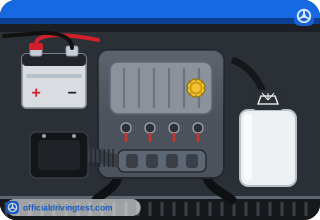
Before checking under the hood during the suggested checks, what must you make sure about the engine?
- That it is idling
- That it is running at a fast idle
- That it has been started within the last minute
- That it has cooled down
Show answer
Correct answer: That it has cooled down
The manual says to make sure the engine has cooled down before checking under the hood.
Source: Class D & E Driver’s Guide (Revised August 2025 (DPSMV2052 R08/25)), page 45 · Open this page in the manual (Manual page 45)
-
What should be applied while you make all the suggested vehicle checks?
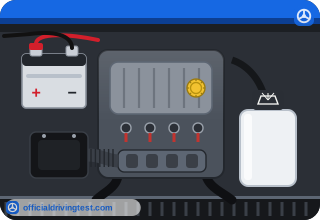
- The parking brake
- The emergency flashers
- The headlights
- The windshield wipers
Show answer
Correct answer: The parking brake
The manual says to ensure the parking brake is applied while making all suggested checks.
Source: Class D & E Driver’s Guide (Revised August 2025 (DPSMV2052 R08/25)), page 45 · Open this page in the manual (Manual page 45)
-
Before entering your vehicle, what does the manual tell you to do to look for obstacles in your travel path?
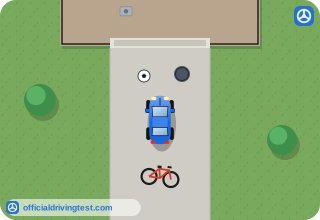
- Look only in your mirrors from the driver’s seat
- Sound the horn and wait for objects to move
- Walk around it and look in front, under and behind
- Look only through the windshield for objects ahead
Show answer
Correct answer: Walk around it and look in front, under and behind
The manual says to look in the front, under and behind, scanning for objects in your travel path, and to walk around your vehicle.
Source: Class D & E Driver’s Guide (Revised August 2025 (DPSMV2052 R08/25)), page 45 · Open this page in the manual (Manual page 45)
-
Before entering your vehicle, what does the manual say you should notice?
- Whether the fuel tank is completely full
- Whether children are standing or playing near the vehicle
- Whether the engine has been warmed up for five minutes
- Whether the radio is tuned to a traffic station
Show answer
Correct answer: Whether children are standing or playing near the vehicle
The manual’s list of what to do before entering your vehicle includes noticing children standing or playing near it.
Source: Class D & E Driver’s Guide (Revised August 2025 (DPSMV2052 R08/25)), page 45 · Open this page in the manual (Manual page 45)
-
Before starting your engine, what should you do about anything blocking your view through the windows?
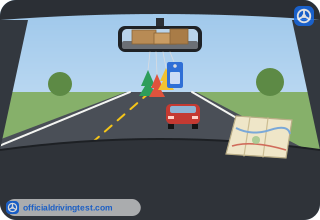
- Leave it in place if it is small
- Move it to the back seat only when it rains
- Wait until the engine warms up, then remove it
- Remove it and make sure all windows are clean
Show answer
Correct answer: Remove it and make sure all windows are clean
The manual says to make sure all windows are clean and to remove anything blocking your view.
Source: Class D & E Driver’s Guide (Revised August 2025 (DPSMV2052 R08/25)), page 45 · Open this page in the manual (Manual page 45)
-
Before starting your engine, how should you adjust the seat?
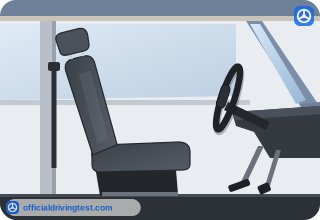
- So you can reach the pedals and controls safely
- As far back as it will go
- As close to the steering wheel as it will go
- So your knees are fully straight on the pedals
Show answer
Correct answer: So you can reach the pedals and controls safely
The manual says to adjust the seat so you can reach the pedals and controls safely.
Source: Class D & E Driver’s Guide (Revised August 2025 (DPSMV2052 R08/25)), page 45 · Open this page in the manual (Manual page 45)
-
Before starting your engine, what should you do about the doors?
- Leave the driver’s door slightly open until moving
- Close all doors but leave them unlocked
- Make sure all doors are fully closed and locked
- Close only the driver’s door
Show answer
Correct answer: Make sure all doors are fully closed and locked
The manual lists making sure all doors are fully closed and locked before starting the engine.
Source: Class D & E Driver’s Guide (Revised August 2025 (DPSMV2052 R08/25)), page 45 · Open this page in the manual (Manual page 45)
-
In which gear should your car be before you start the engine?
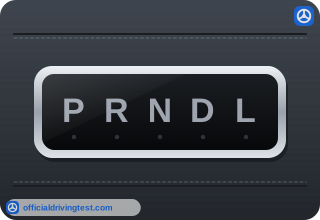
- In drive
- In park or neutral
- In reverse
- In low gear
Show answer
Correct answer: In park or neutral
The manual says to make sure your car is in park or neutral gear before starting the engine.
Source: Class D & E Driver’s Guide (Revised August 2025 (DPSMV2052 R08/25)), page 45 · Open this page in the manual (Manual page 45)
-
Before starting your engine, what should you check about the gauges?
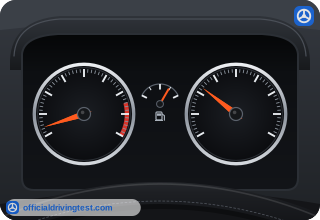
- That they work and accurately reflect engine conditions
- That they are all set to zero
- That they are covered to avoid glare
- That they match the readings of the previous trip
Show answer
Correct answer: That they work and accurately reflect engine conditions
The manual says to check gauges to assure they work and accurately reflect engine conditions.
Source: Class D & E Driver’s Guide (Revised August 2025 (DPSMV2052 R08/25)), page 45 · Open this page in the manual (Manual page 45)
-
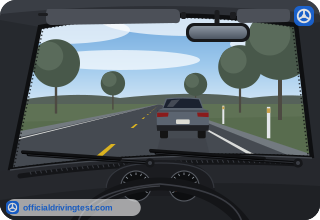
Before starting your engine, what should you check about the windshield wipers and cleaning fluid?
- That the wipers are turned off and the reservoir is empty
- That the wipers are turned on high before the engine starts
- That they work and there is enough cleaning fluid
- That the cleaning fluid is changed every week
Show answer
Correct answer: That they work and there is enough cleaning fluid
The manual says to make sure the wipers work and that there is sufficient cleaning fluid in the reservoir.
Source: Class D & E Driver’s Guide (Revised August 2025 (DPSMV2052 R08/25)), page 45 · Open this page in the manual (Manual page 45)
-
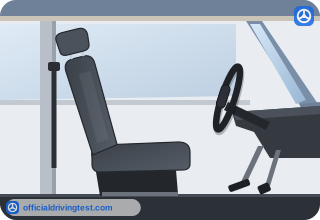
According to the manual, what does proper seating position maximize?
- Your fuel economy and the performance of your engine
- Your visibility and ability to react quickly in emergencies
- Your tire life and the stopping distance of your brakes
- Your passengers’ legroom and overall comfort on long trips
Show answer
Correct answer: Your visibility and ability to react quickly in emergencies
The manual says proper seating position maximizes your visibility and your ability to react quickly to emergency situations.
Source: Class D & E Driver’s Guide (Revised August 2025 (DPSMV2052 R08/25)), page 45 · Open this page in the manual (Manual page 45)
-
When you adjust your driver’s seat, how should the headrest be positioned?
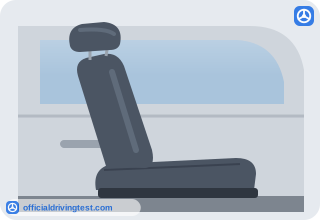
- So it touches the back of your neck at all times
- As low as it will go
- Removed, so it does not block the rear window
- So it will fully support your head when you lean back
Show answer
Correct answer: So it will fully support your head when you lean back
The manual says the headrest should be positioned so that it fully supports your head when you lean back.
Source: Class D & E Driver’s Guide (Revised August 2025 (DPSMV2052 R08/25)), page 46 · Open this page in the manual (Manual page 46)
-
In your normal driving position, how should your elbows be when you hold the steering wheel?
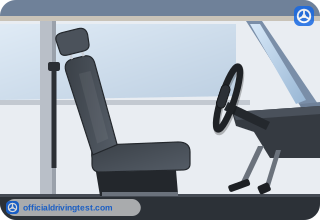
- Slightly bent
- Fully straight
- Locked against your sides
- Resting on the door
Show answer
Correct answer: Slightly bent
The manual says your elbows should always be slightly bent, which prevents tired, overextended arms and gives the airbag room to expand.
Source: Class D & E Driver’s Guide (Revised August 2025 (DPSMV2052 R08/25)), page 46 · Open this page in the manual (Manual page 46)
-
Why should your elbows be slightly bent while you hold the steering wheel?
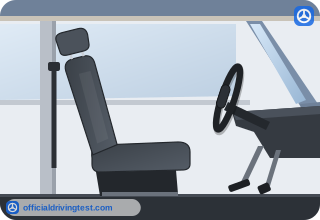
- It lets you steer with only one hand when you are tired
- It prevents overextended arms and gives the airbag room to expand
- It keeps the horn from sounding by accident when you turn
- It lets you rest your elbows on the door during long drives
Show answer
Correct answer: It prevents overextended arms and gives the airbag room to expand
The manual says slightly bent elbows prevent your arms from being overextended during turns and give the airbag room to expand in a crash.
Source: Class D & E Driver’s Guide (Revised August 2025 (DPSMV2052 R08/25)), page 46 · Open this page in the manual (Manual page 46)
-
Where should your right heel be so you can shift your foot between the gas and brake pedal without lifting your whole foot?
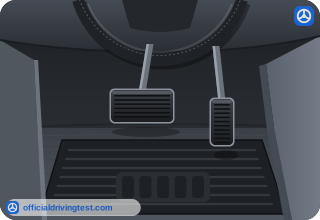
- Resting on the brake pedal
- Raised just above the floor
- Hooked over the gas pedal
- Firmly planted on the floor
Show answer
Correct answer: Firmly planted on the floor
The manual says your right heel should be firmly planted on the floor so you can shift between the pedals without lifting your whole foot.
Source: Class D & E Driver’s Guide (Revised August 2025 (DPSMV2052 R08/25)), page 46 · Open this page in the manual (Manual page 46)
-
As you press on the gas or brake pedal, how should your knees be?
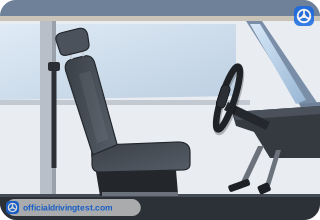
- Slightly bent, to prevent injury in a crash
- Fully straight, to give you the most control
- Locked, to keep your leg steady
- Spread wide apart, to keep your balance
Show answer
Correct answer: Slightly bent, to prevent injury in a crash
The manual says your knees should always be slightly bent to prevent an injury in case of a crash.
Source: Class D & E Driver’s Guide (Revised August 2025 (DPSMV2052 R08/25)), page 46 · Open this page in the manual (Manual page 46)
-
How should you turn the key as you put it into the ignition switch?
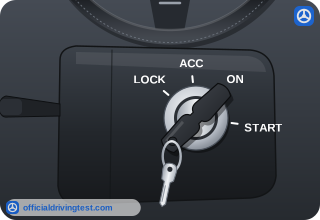
- Quickly in one motion
- Only after pressing the accelerator
- Smoothly and slowly
- Together with a firm press on the brake
Show answer
Correct answer: Smoothly and slowly
The manual says to turn the key smoothly and slowly.
Source: Class D & E Driver’s Guide (Revised August 2025 (DPSMV2052 R08/25)), page 46 · Open this page in the manual (Manual page 46)
-
When should you release the key after turning it to start the engine?
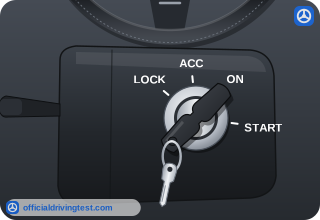
- After the dashboard lights go out
- Once you hear the engine engage
- After ten seconds
- After you press the accelerator
Show answer
Correct answer: Once you hear the engine engage
The manual says to release the key once you hear the engine engage.
Source: Class D & E Driver’s Guide (Revised August 2025 (DPSMV2052 R08/25)), page 46 · Open this page in the manual (Manual page 46)
-
Which part of your foot should you use when accelerating?
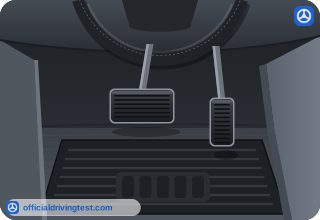
- Your whole foot, flat on the pedal
- Your heel, with the toes raised
- The arch of your foot only
- The ball of your foot and toes
Show answer
Correct answer: The ball of your foot and toes
The manual says to use the ball of your foot and toes, not the whole foot, when accelerating.
Source: Class D & E Driver’s Guide (Revised August 2025 (DPSMV2052 R08/25)), page 46 · Open this page in the manual (Manual page 46)
-
How should you press the accelerator pedal when moving off?
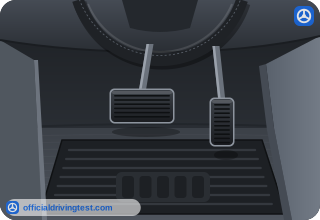
- Gently but firmly, with smooth acceleration
- Quickly and hard, to get up to speed
- Lightly, with the heel of your foot
- With a sudden push, then release it
Show answer
Correct answer: Gently but firmly, with smooth acceleration
The manual says to press gently but firmly, not to stomp on the gas pedal or race the engine, and to aim for smooth acceleration.
Source: Class D & E Driver’s Guide (Revised August 2025 (DPSMV2052 R08/25)), page 46 · Open this page in the manual (Manual page 46)
-
What does the manual say to do periodically while you are driving?
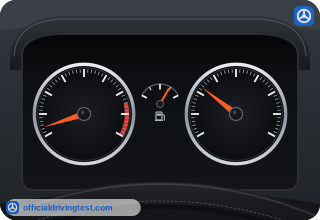
- Turn off the engine
- Shift into neutral
- Check your speedometer
- Turn on the emergency flashers
Show answer
Correct answer: Check your speedometer
The manual says to maintain a safe, steady speed and periodically check your speedometer while driving.
Source: Class D & E Driver’s Guide (Revised August 2025 (DPSMV2052 R08/25)), page 46 · Open this page in the manual (Manual page 46)