Louisiana: Sharing the road — Part 1 Practice Test
Bicyclists, motorcycles, big trucks and their No Zones, school buses, slow-moving vehicles, farm machinery, horses and animals on the road. — Part 1
Independent educational site · not affiliated with any government agency or DMV
Ready? Test yourself
- Instant feedback with an explanation
- Every answer cites its source in the manual
- Your best score is saved on this device
Questions are original and based on the official manual "Class D & E Driver’s Guide" (Revised August 2025 (DPSMV2052 R08/25)), Louisiana Office of Motor Vehicles.
All 33 questions in this practice test
Take the test above first, then use this list to study. Tap “Show answer” to see the correct answer and explanation.
Show the questions and answersHide the questions
-
What is the responsibility of each individual road user in the Highway Transportation System?
- To report the unsafe practices of other drivers to the police
- To avoid using the roads at times when traffic is heavy
- To pay for the repair of the roads that he or she uses most
- To respect the rules of the system and cooperate with others
Show answer
Correct answer: To respect the rules of the system and cooperate with others
The manual says each individual road user is the core of the HTS and is responsible for respecting the rules of the system and cooperating with others.
Source: Class D & E Driver’s Guide (Revised August 2025 (DPSMV2052 R08/25)), page 17 · Open this page in the manual (Manual page 17)
-
Because drivers and pedestrians inevitably make mistakes and drive recklessly, what is it important to be able to do?
- Report every unsafe driver to a law enforcement agency
- Anticipate and learn to cope with the unsafe practices of others
- Avoid driving whenever the roads are crowded
- Leave the roadway whenever another driver makes a mistake
Show answer
Correct answer: Anticipate and learn to cope with the unsafe practices of others
The manual says it is inevitable that drivers and pedestrians make mistakes, so it is important to anticipate and learn to cope with the unsafe practices of others.
Source: Class D & E Driver’s Guide (Revised August 2025 (DPSMV2052 R08/25)), page 19 · Open this page in the manual (Manual page 19)
-
How does the manual rate understanding other vehicles’ capabilities, even if you may never drive a large commercial truck or a motorcycle?
- As important as knowing the traffic laws
- Less important than knowing your own vehicle’s controls
- Important only if you share the road with motorcycles
- Not important unless you drive such a vehicle yourself
Show answer
Correct answer: As important as knowing the traffic laws
The manual says understanding other vehicles’ capabilities is as important to you as knowing the traffic laws.
Source: Class D & E Driver’s Guide (Revised August 2025 (DPSMV2052 R08/25)), page 19 · Open this page in the manual (Manual page 19)
-
Besides protecting yourself and your passengers, a driver has a responsibility toward whom or what?
- Other drivers and the vehicles they own, but not pedestrians
- Highway engineers and the traffic courts
- Other drivers, pedestrians and personal property
- Parish officials and the Office of Motor Vehicles
Show answer
Correct answer: Other drivers, pedestrians and personal property
The manual says that as part of the HTS, a driver must protect self and passengers and also has a responsibility toward other drivers, pedestrians and personal property.
Source: Class D & E Driver’s Guide (Revised August 2025 (DPSMV2052 R08/25)), page 21 · Open this page in the manual (Manual page 21)
-
What does the manual say is the most important factor in the regulation of the highway transportation system?
- The number of law enforcement officers on the road
- The driver who obeys traffic laws and follows the golden rule
- The traffic courts that punish drivers who break laws
- The engineers who design the highways and signs
Show answer
Correct answer: The driver who obeys traffic laws and follows the golden rule
The manual says the most important factor in regulating the highway transportation system is the driver who obeys traffic laws and follows the golden rule of driving.
Source: Class D & E Driver’s Guide (Revised August 2025 (DPSMV2052 R08/25)), page 21 · Open this page in the manual (Manual page 21)
-
What is the “golden rule” of driving, according to the manual?
- Always drive faster than the traffic around you
- Never let another driver go ahead of you
- Use your horn whenever another driver makes a mistake
- Treat others the way you would want to be treated
Show answer
Correct answer: Treat others the way you would want to be treated
The manual says the golden rule of driving is to treat others the way you would want to be treated.
Source: Class D & E Driver’s Guide (Revised August 2025 (DPSMV2052 R08/25)), page 21 · Open this page in the manual (Manual page 21)
-
According to the manual, much of the rise in road rage has to do with what?
- Poor vehicle maintenance
- Our unsociable behavior
- Long travel distances
- Bright headlights at night
Show answer
Correct answer: Our unsociable behavior
The manual says road rage is on the rise and much of that has to do with our unsociable behavior while driving.
Source: Class D & E Driver’s Guide (Revised August 2025 (DPSMV2052 R08/25)), page 46 · Open this page in the manual (Manual page 46)
-
In the manual’s list of factors that shape a driver’s attitude toward driving, susceptibility to peer pressure is grouped under which factor?
- Personality
- Demographic
- Driving ability
- Developmental
Show answer
Correct answer: Personality
The manual lists susceptibility to peer pressure, along with tolerance, aggressiveness and risk taking, as a personality factor in a driver’s attitude toward driving.
Source: Class D & E Driver’s Guide (Revised August 2025 (DPSMV2052 R08/25)), page 54 · Open this page in the manual (Manual page 54)
-
Which of these does the manual list as an example of aggressive driving?
- Slowing down for bad weather conditions
- Stopping completely at a red traffic light
- Failure to signal intent to change lanes
- Yielding to a pedestrian in a crosswalk
Show answer
Correct answer: Failure to signal intent to change lanes
The manual defines aggressive driving as an offense or combination of offenses such as following too closely, speeding, unsafe lane changes and failure to signal intent to change lanes.
Source: Class D & E Driver’s Guide (Revised August 2025 (DPSMV2052 R08/25)), page 59 · Open this page in the manual (Manual page 59)
-
Which of these does the manual say can create dangerous and potentially fatal situations on the road?
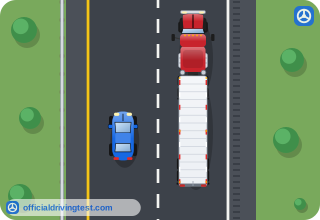
- Staying out of a truck’s blind spots
- Pulling in front of trucks too quickly
- Signaling before changing lanes
- Keeping a steady speed in your lane
Show answer
Correct answer: Pulling in front of trucks too quickly
The manual says pulling in front of trucks too quickly when passing, and frequent lane changes in truck blind spots, can create dangerous and potentially fatal situations.
Source: Class D & E Driver’s Guide (Revised August 2025 (DPSMV2052 R08/25)), page 59 · Open this page in the manual (Manual page 59)
-
To keep control of your driving, what does the manual say you should understand about traffic?
- You can control traffic by driving faster than others
- Other drivers will adjust to your driving
- Traffic always moves faster in the left lane
- You cannot control traffic, only react to it
Show answer
Correct answer: You cannot control traffic, only react to it
The manual says to understand that you cannot control traffic, only react to it.
Source: Class D & E Driver’s Guide (Revised August 2025 (DPSMV2052 R08/25)), page 59 · Open this page in the manual (Manual page 59)
-
To keep control of your driving, what does the manual say to do if you are running late?
- Drive faster to make up the time
- Use the horn to hurry slower traffic
- Call ahead so you can relax
- Follow the vehicle ahead closely to save time
Show answer
Correct answer: Call ahead so you can relax
The manual says that if you are running late, you should call ahead so you can relax.
Source: Class D & E Driver’s Guide (Revised August 2025 (DPSMV2052 R08/25)), page 59 · Open this page in the manual (Manual page 59)
-
To keep control of your driving, how does the manual say to handle peak roadway congestion?
- Alter your schedule to avoid peak congestion
- Drive on the shoulder to bypass traffic
- Drive faster than the traffic around you
- Sound the horn to move traffic along
Show answer
Correct answer: Alter your schedule to avoid peak congestion
The manual says to alter your schedule to avoid driving during peak roadway congestion periods.
Source: Class D & E Driver’s Guide (Revised August 2025 (DPSMV2052 R08/25)), page 59 · Open this page in the manual (Manual page 59)
-
Which of these is among the manual’s tips to keep control of your driving?
- Grip the steering wheel as tightly as you can
- Lean forward and watch the car ahead closely
- Keep your eyes fixed on the vehicle behind you
- Sit back in your seat and don’t clench your teeth
Show answer
Correct answer: Sit back in your seat and don’t clench your teeth
The manual lists relaxing and remaining aware of your posture, sitting back in your seat and not clenching your teeth, as a way to keep control of your driving.
Source: Class D & E Driver’s Guide (Revised August 2025 (DPSMV2052 R08/25)), page 59 · Open this page in the manual (Manual page 59)
-
When confronted by an aggressive driver, what does the manual say about eye contact and the room you give the driver?
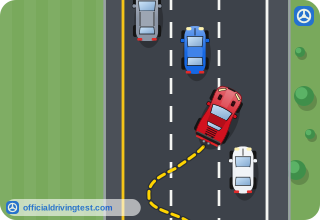
- Make eye contact to show you are not afraid
- Avoid eye contact and steer clear, giving plenty of room
- Stay beside the driver to keep watch
- Follow the driver to learn where the driver is going
Show answer
Correct answer: Avoid eye contact and steer clear, giving plenty of room
The manual says to avoid eye contact and steer clear, giving aggressive drivers plenty of room.
Source: Class D & E Driver’s Guide (Revised August 2025 (DPSMV2052 R08/25)), page 59 · Open this page in the manual (Manual page 59)
-
Which of these does the manual say NOT to do when confronted by an aggressive driver?
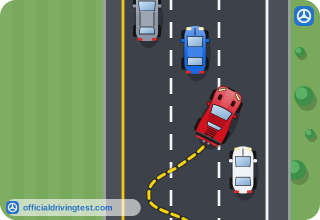
- Speed up or try to hold your position in the lane
- Stay calm and relaxed
- Ignore gestures and refuse to return them
- Put as much distance as possible between you and the driver
Show answer
Correct answer: Speed up or try to hold your position in the lane
The manual says not to challenge an aggressive driver by speeding up or attempting to hold your position in the traffic lane.
Source: Class D & E Driver’s Guide (Revised August 2025 (DPSMV2052 R08/25)), page 59 · Open this page in the manual (Manual page 59)
-
How does the manual say you should treat gestures from an aggressive driver?
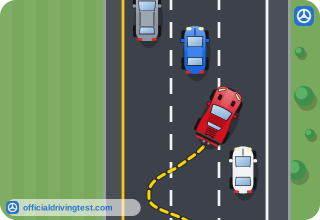
- Return them so the driver knows you are not afraid
- Stop and ask the driver what is wrong
- Ignore them and refuse to return them
- Flash your headlights in reply
Show answer
Correct answer: Ignore them and refuse to return them
The manual says to ignore gestures and refuse to return them when confronted by an aggressive driver.
Source: Class D & E Driver’s Guide (Revised August 2025 (DPSMV2052 R08/25)), page 59 · Open this page in the manual (Manual page 59)
-
When confronted by an aggressive driver, which of these actions does the manual tell you to avoid?
- Make every attempt to get out of the way safely
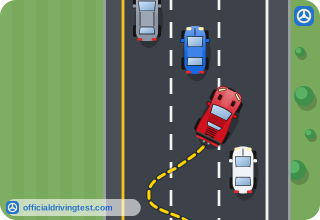
- Use the horn to “punish” the other driver
- Stay calm and be a cautious and courteous driver
- Emotionally and mentally disconnect from the situation
Show answer
Correct answer: Use the horn to “punish” the other driver
The manual says not to tailgate and not to use the horn to “punish” the other driver.
Source: Class D & E Driver’s Guide (Revised August 2025 (DPSMV2052 R08/25)), page 59 · Open this page in the manual (Manual page 59)
-
If an aggressive driver persists, where does the manual say to drive?
- Straight home
- To the nearest dark side street you can find
- To the shoulder of the road to talk it over
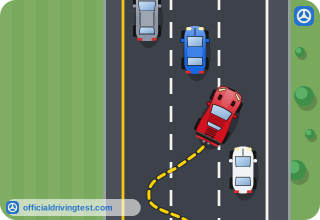
- To a police station or a public place with witnesses
Show answer
Correct answer: To a police station or a public place with witnesses
The manual says to drive to a police station or a public place where witnesses are readily available, and never to drive home if someone is following you.
Source: Class D & E Driver’s Guide (Revised August 2025 (DPSMV2052 R08/25)), page 60 · Open this page in the manual (Manual page 60)
-
If an aggressive driver persists, what does the manual say you should NOT do?
- Drive to a police station
- Drive to a public place with witnesses
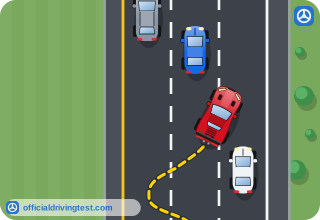
- Stop and try to solve it on the side of the road
- Avoid driving home if someone is following you
Show answer
Correct answer: Stop and try to solve it on the side of the road
The manual says not to stop and try to solve it on the side of the road when the aggressive driver persists.
Source: Class D & E Driver’s Guide (Revised August 2025 (DPSMV2052 R08/25)), page 60 · Open this page in the manual (Manual page 60)
-
How does the manual describe road rage?
- A criminal offense
- A minor traffic violation with only a fine
- A warning that police give to angry drivers
- A civil matter between two drivers
Show answer
Correct answer: A criminal offense
The manual states that road rage is a criminal offense.
Source: Class D & E Driver’s Guide (Revised August 2025 (DPSMV2052 R08/25)), page 60 · Open this page in the manual (Manual page 60)
-
According to the manual, when does road rage occur?
- When a driver exceeds the posted speed limit
- When a driver is stopped by police for a traffic offense
- When two drivers disagree about who has the right of way
- When a traffic incident escalates into a far more serious situation
Show answer
Correct answer: When a traffic incident escalates into a far more serious situation
The manual says road rage occurs when a traffic incident escalates into a far more serious situation, such as a violent response to an aggressive driving incident.
Source: Class D & E Driver’s Guide (Revised August 2025 (DPSMV2052 R08/25)), page 60 · Open this page in the manual (Manual page 60)
-
According to the manual, which of these is a critical factor in safe driving?
- The size of the vehicle
- Emotional intelligence
- The power of the engine
- The number of years licensed
Show answer
Correct answer: Emotional intelligence
The manual says emotional intelligence is a critical factor in safe driving.
Source: Class D & E Driver’s Guide (Revised August 2025 (DPSMV2052 R08/25)), page 60 · Open this page in the manual (Manual page 60)
-
Which of these does the manual list as an action associated with road rage?
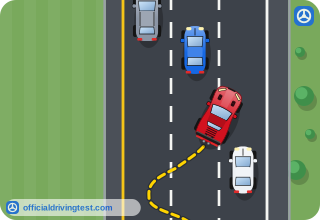
- Forcing a car to pull over
- Signaling a turn well in advance
- Yielding to a merging vehicle
- Leaving extra space ahead of your vehicle
Show answer
Correct answer: Forcing a car to pull over
The manual lists forcing a car to pull over among the actions associated with road rage.
Source: Class D & E Driver’s Guide (Revised August 2025 (DPSMV2052 R08/25)), page 60 · Open this page in the manual (Manual page 60)
-
Which of these driving behaviors does the manual associate with road rage?
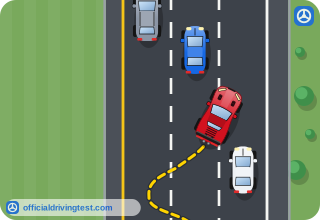
- Allowing a driver to merge
- Keeping a good distance from the car ahead
- Braking or slowing suddenly
- Waiting for pedestrians to cross
Show answer
Correct answer: Braking or slowing suddenly
The manual lists braking or slowing suddenly among the actions associated with road rage.
Source: Class D & E Driver’s Guide (Revised August 2025 (DPSMV2052 R08/25)), page 60 · Open this page in the manual (Manual page 60)
-
According to the manual, how can you help avoid road rage inside your car?
- Keep the radio at a loud volume
- Create a relaxing and comfortable environment
- Keep your attention on the driver behind you
- Keep the windows closed at all times
Show answer
Correct answer: Create a relaxing and comfortable environment
The manual lists creating a relaxing and comfortable environment in your car among the ways to avoid road rage.
Source: Class D & E Driver’s Guide (Revised August 2025 (DPSMV2052 R08/25)), page 60 · Open this page in the manual (Manual page 60)
-
According to the manual, what should you do if you witness aggressive driving?
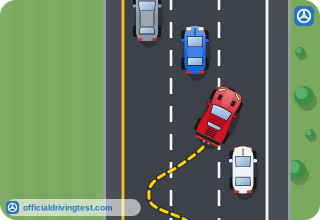
- Follow the driver to get the license plate number
- Flash your headlights at the driver
- Wait until your trip is over before reporting it
- Contact law enforcement as soon as possible
Show answer
Correct answer: Contact law enforcement as soon as possible
The manual says that if you witness aggressive driving, you should contact law enforcement as soon as possible.
Source: Class D & E Driver’s Guide (Revised August 2025 (DPSMV2052 R08/25)), page 60 · Open this page in the manual (Manual page 60)
-
What does the manual say to do if someone cuts you off by mistake?
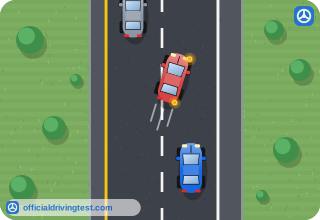
- Flash your headlights at the driver
- Speed up to pass and show your annoyance
- Be calm and always stay alert
- Sound the horn to warn the driver
Show answer
Correct answer: Be calm and always stay alert
The manual says to be calm and always stay alert if someone cuts you off by mistake, and to stay away from aggressive motorists instead of irritating them even more.
Source: Class D & E Driver’s Guide (Revised August 2025 (DPSMV2052 R08/25)), page 60 · Open this page in the manual (Manual page 60)
-
On which surfaces is the chance of a motorcycle rider falling greatest?
- Dry, smooth asphalt in clear daylight with no traffic
- Wet and icy roads, gravel roads and metal surfaces such as bridges
- Newly paved roads in clear weather and with dry pavement
- Dry concrete highways
Show answer
Correct answer: Wet and icy roads, gravel roads and metal surfaces such as bridges
The chances of a fall by a motorcycle rider are greatest on wet and icy roads, gravel roads and metal surfaces such as bridges, grating and streetcar or railroad tracks.
Source: Class D & E Driver’s Guide (Revised August 2025 (DPSMV2052 R08/25)), page 66 · Open this page in the manual (Manual page 66)
-
When you drive past parked cars, which of these is a clue that a car may turn out in front of you?
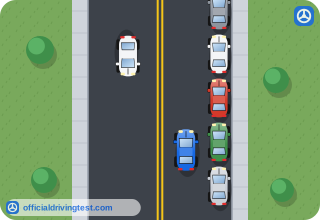
- Parking lights switched off
- Windows rolled up
- Front wheels turned toward the curb
- Smoke coming from the tail pipe
Show answer
Correct answer: Smoke coming from the tail pipe
The manual lists smoke coming from the tail pipe as a clue that a parked car may be about to turn out in front of you.
Source: Class D & E Driver’s Guide (Revised August 2025 (DPSMV2052 R08/25)), page 69 · Open this page in the manual (Manual page 69)
-
At a parallel parking area, which clue shows that a parked car may be about to turn out in front of you?
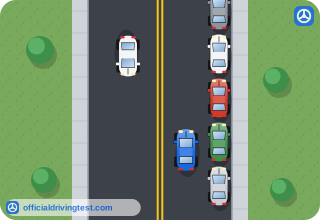
- Its front wheels are turned toward the curb
- Its driver’s door is locked
- Its front wheels are turning out
- Its engine is off
Show answer
Correct answer: Its front wheels are turning out
The manual says that at parallel parking areas, front wheels turning out is a clue that a car is about to pull out.
Source: Class D & E Driver’s Guide (Revised August 2025 (DPSMV2052 R08/25)), page 69 · Open this page in the manual (Manual page 69)
-
Which light on a parked car is a clue that it may turn out in front of you?
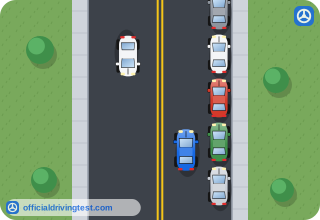
- White backing lights
- Parking lights
- Interior dome light
- Fog lights
Show answer
Correct answer: White backing lights
The manual lists red brake lights, a flashing turning signal and white backing lights as clues that a parked car may turn out.
Source: Class D & E Driver’s Guide (Revised August 2025 (DPSMV2052 R08/25)), page 69 · Open this page in the manual (Manual page 69)
-
If anyone is sitting in a parked car you are driving past, what should you expect?
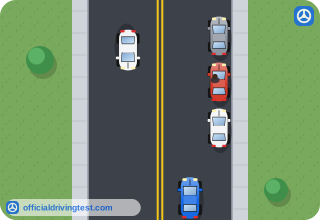
- That they will pull out without signaling
- That they will stay in the car
- That they will honk the horn
- That they will open the door
Show answer
Correct answer: That they will open the door
The manual says that if anyone is sitting in a car, you should expect them to open the door.
Source: Class D & E Driver’s Guide (Revised August 2025 (DPSMV2052 R08/25)), page 70 · Open this page in the manual (Manual page 70)