Louisiana: Right-of-way and turning — Part 6 Practice Test
Questions in this part include: “What does the manual say the law does about the right-of-way?”
Independent educational site · not affiliated with any government agency or DMV
Ready? Test yourself
- Instant feedback with an explanation
- Every answer cites its source in the manual
- Your best score is saved on this device
Questions are original and based on the official manual "Class D & E Driver’s Guide" (Revised August 2025 (DPSMV2052 R08/25)), Louisiana Office of Motor Vehicles.
All 19 questions in this practice test
Take the test above first, then use this list to study. Tap “Show answer” to see the correct answer and explanation.
Show the questions and answersHide the questions
-
If you intend to turn left at a traffic circle or roundabout, when do you signal “right” to take the exit?
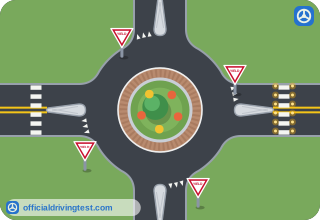
- As soon as you enter the circle
- After you have traveled three quarters of the way around
- After you have traveled one quarter of the way around
- After you have traveled half of the way around
Show answer
Correct answer: After you have traveled three quarters of the way around
The guide says that once you have traveled three quarters of the way around, you signal “right” to take the exit.
Source: Class D & E Driver’s Guide (Revised August 2025 (DPSMV2052 R08/25)), page 92 · Open this page in the manual (Manual page 92)
-
In a traffic circle or roundabout, what should you not do about large vehicles such as trucks and buses?
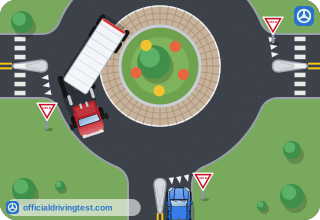
- Yield to them
- Signal near them
- Slow down for them
- Drive alongside them
Show answer
Correct answer: Drive alongside them
The guide says not to drive alongside large vehicles, such as trucks and buses, in a traffic circle or roundabout.
Source: Class D & E Driver’s Guide (Revised August 2025 (DPSMV2052 R08/25)), page 92 · Open this page in the manual (Manual page 92)
-
What does the manual say the law does about the right-of-way?
- It gives the right-of-way to the driver who arrived first
- It gives the right-of-way to the driver on the main road
- It says who must yield, but it does not give anyone the right-of-way
- It gives the right-of-way to the driver of the larger vehicle
Show answer
Correct answer: It says who must yield, but it does not give anyone the right-of-way
The law says who must yield the right-of-way to another roadway user; it does not give anyone the right-of-way.
Source: Class D & E Driver’s Guide (Revised August 2025 (DPSMV2052 R08/25)), page 93 · Open this page in the manual (Manual page 93)
-
Other drivers or pedestrians are not following the right-of-way rules, and the right-of-way belongs to you. What does the manual say to do?
- Insist on taking the right-of-way so they learn the rule
- Sound your horn until they yield
- Let them have the right-of-way
- Speed up and clear the intersection before they move
Show answer
Correct answer: Let them have the right-of-way
The manual says you should never insist on taking the right-of-way and should let others have it even if it belongs to you.
Source: Class D & E Driver’s Guide (Revised August 2025 (DPSMV2052 R08/25)), page 93 · Open this page in the manual (Manual page 93)
-
At a yield sign intersection, when may you proceed ahead?
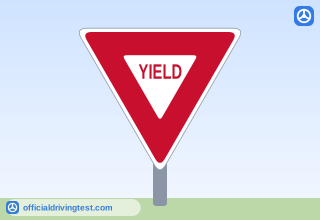
- Only when it will not interfere with approaching traffic
- As soon as you have slowed to a reasonable speed
- Once you have honked to warn approaching traffic
- As soon as the vehicles ahead of you have passed
Show answer
Correct answer: Only when it will not interfere with approaching traffic
At a yield sign intersection you slow down, stop if required, and proceed only when you will not interfere with approaching traffic.
Source: Class D & E Driver’s Guide (Revised August 2025 (DPSMV2052 R08/25)), page 93 · Open this page in the manual (Manual page 93)
-
The driver making a left turn must yield the right-of-way to whom?
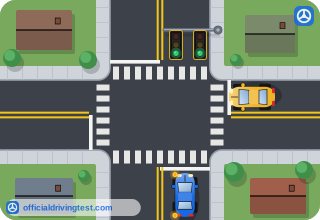
- Only oncoming motor vehicles, not bicyclists
- Traffic approaching from behind in the same lane
- Vehicles that are stopped behind the turning driver
- Oncoming traffic, including bicyclists
Show answer
Correct answer: Oncoming traffic, including bicyclists
A driver making a left turn must yield the right-of-way to oncoming traffic, including bicyclists.
Source: Class D & E Driver’s Guide (Revised August 2025 (DPSMV2052 R08/25)), page 93 · Open this page in the manual (Manual page 93)
-
Where must you yield the right-of-way to pedestrians who are legally crossing the roadway on which you are driving?
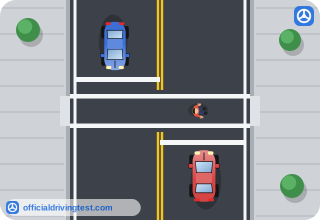
- At marked crosswalks only
- At crosswalks controlled by traffic signals only
- At marked or unmarked crosswalks
- At crosswalks on roads with a posted speed limit under 25 mph
Show answer
Correct answer: At marked or unmarked crosswalks
The manual says you must yield to pedestrians legally crossing the roadway, at marked or unmarked crosswalks.
Source: Class D & E Driver’s Guide (Revised August 2025 (DPSMV2052 R08/25)), page 93 · Open this page in the manual (Manual page 93)
-
What must you do for a person who is using a guide dog for the visually impaired?
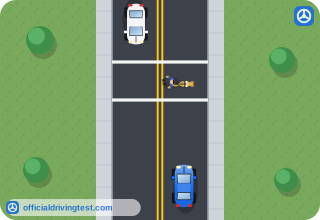
- Yield the right-of-way to the person
- Sound your horn so the person knows you are there
- Pass quickly on the left side of the person
- Slow down, but you are not required to yield
Show answer
Correct answer: Yield the right-of-way to the person
The manual lists persons using a guide dog for the visually impaired among those to whom you must yield the right-of-way.
Source: Class D & E Driver’s Guide (Revised August 2025 (DPSMV2052 R08/25)), page 93 · Open this page in the manual (Manual page 93)
-
What must you do for a person who is using a white cane with or without a red tip?
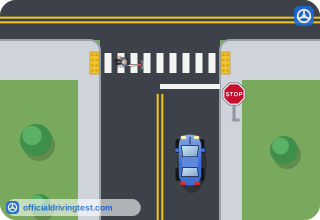
- Flash your headlights to warn the person you are approaching
- Drive around the person, leaving a wide gap
- Stop only if the person steps off the curb
- Yield the right-of-way to the person
Show answer
Correct answer: Yield the right-of-way to the person
The manual lists persons using a white cane, with or without a red tip, among those to whom you must yield the right-of-way.
Source: Class D & E Driver’s Guide (Revised August 2025 (DPSMV2052 R08/25)), page 93 · Open this page in the manual (Manual page 93)
-
At an uncontrolled intersection, you must yield to which vehicles?
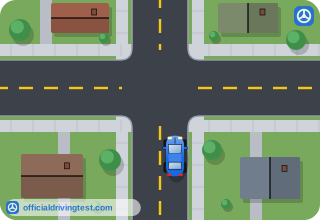
- Only vehicles approaching from your right side
- Only vehicles that are larger than yours
- Only vehicles that are traveling faster than you
- Vehicles that are already in the intersection
Show answer
Correct answer: Vehicles that are already in the intersection
The manual says you must yield at uncontrolled intersections where vehicles are already in the intersection.
Source: Class D & E Driver’s Guide (Revised August 2025 (DPSMV2052 R08/25)), page 93 · Open this page in the manual (Manual page 93)
-
At a "T" intersection, you must yield to which vehicles?
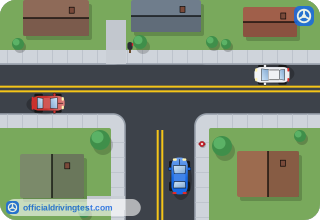
- Vehicles on the road that ends at the intersection
- Vehicles on the through road
- Vehicles waiting in line behind you
- Only vehicles that are turning left
Show answer
Correct answer: Vehicles on the through road
The manual says that at "T" intersections you must yield to vehicles on the through road.
Source: Class D & E Driver’s Guide (Revised August 2025 (DPSMV2052 R08/25)), page 93 · Open this page in the manual (Manual page 93)
-
You are driving on an unpaved road that intersects with a paved road. What must you do?
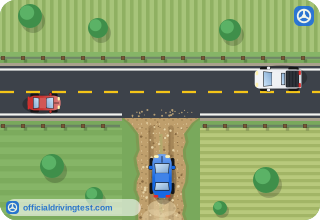
- Proceed first, because the paved road must yield to you
- Speed up to cross before traffic on the paved road arrives
- Yield the right-of-way
- Stop only if you are turning left onto the paved road
Show answer
Correct answer: Yield the right-of-way
The manual says you must yield the right-of-way when driving on an unpaved road that intersects with a paved road.
Source: Class D & E Driver’s Guide (Revised August 2025 (DPSMV2052 R08/25)), page 93 · Open this page in the manual (Manual page 93)
-
What must you do when returning to the roadway after your car has been parked?
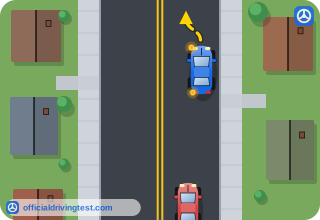
- Yield the right-of-way
- Enter the roadway at once, since moving traffic must make room
- Signal, and then traffic must yield to you
- Enter the roadway only when no vehicle is behind you
Show answer
Correct answer: Yield the right-of-way
The manual lists returning to the roadway after the car is parked among the times you must yield the right-of-way.
Source: Class D & E Driver’s Guide (Revised August 2025 (DPSMV2052 R08/25)), page 93 · Open this page in the manual (Manual page 93)
-
When you enter a road from a driveway, alley or roadside, whom must you yield to?
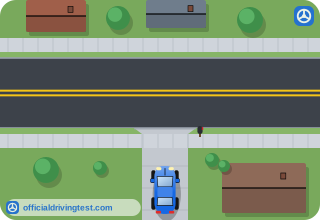
- Vehicles already on the main road
- Only vehicles approaching from your left
- Only vehicles that are turning into the driveway
- Vehicles that are stopped on the shoulder
Show answer
Correct answer: Vehicles already on the main road
The manual says that when entering a road from a driveway, alley or roadside you must yield to vehicles already on the main road.
Source: Class D & E Driver’s Guide (Revised August 2025 (DPSMV2052 R08/25)), page 93 · Open this page in the manual (Manual page 93)
-
A traffic light at an intersection has malfunctioned. What does the intersection become?
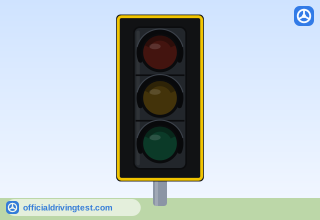
- An uncontrolled intersection where no one has to stop
- A yield intersection for the road with more traffic
- An intersection where the larger vehicle goes first
- A 4-way stop intersection
Show answer
Correct answer: A 4-way stop intersection
The manual says that if a traffic light has malfunctioned, the intersection becomes a 4-way stop intersection.
Source: Class D & E Driver’s Guide (Revised August 2025 (DPSMV2052 R08/25)), page 93 · Open this page in the manual (Manual page 93)
-
Two vehicles approach a controlled or 4-way stop intersection at the same time. Who must yield the right-of-way?
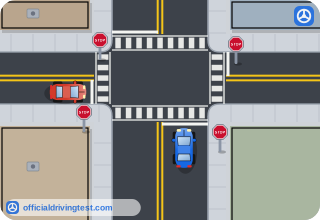
- The driver on the right yields to the vehicle on the left
- The driver on the left yields to the vehicle on the right
- The driver of the larger vehicle yields to the smaller one
- The driver traveling faster yields to the slower one
Show answer
Correct answer: The driver on the left yields to the vehicle on the right
When two vehicles approach an intersection at the same time, the driver on the left must yield the right-of-way to the vehicle on the right.
Source: Class D & E Driver’s Guide (Revised August 2025 (DPSMV2052 R08/25)), page 93 · Open this page in the manual (Manual page 93)
-
At a roundabout, entering traffic yields to what?
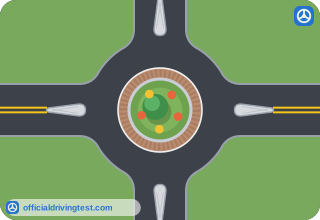
- The traffic waiting at the next entry
- Only vehicles that are about to exit
- The traffic in the circulating lane(s)
- Nothing, since entering traffic has the right-of-way
Show answer
Correct answer: The traffic in the circulating lane(s)
The manual says that at roundabouts, entering traffic yields to the circulating lane(s).
Source: Class D & E Driver’s Guide (Revised August 2025 (DPSMV2052 R08/25)), page 93 · Open this page in the manual (Manual page 93)
-
When you merge onto an interstate from an entrance ramp, who has the right of way?
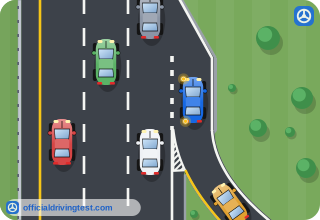
- Vehicles entering from the ramp
- Interstate traffic
- The driver who signals first
- Larger vehicles only
Show answer
Correct answer: Interstate traffic
The manual states that interstate traffic has the right of way.
Source: Class D & E Driver’s Guide (Revised August 2025 (DPSMV2052 R08/25)), page 100 · Open this page in the manual (Manual page 100)
-
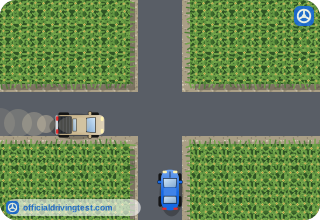
How should you approach a rural intersection that is not controlled by yield or stop signs?
- Maintain your speed, since you have the right of way here
- Speed up to clear the intersection before others arrive
- Slow down and be prepared to stop for crossing or oncoming traffic
- Stop and wait for the other drivers to signal you to go
Show answer
Correct answer: Slow down and be prepared to stop for crossing or oncoming traffic
The manual says to slow down and be prepared to stop for crossing or oncoming traffic at an uncontrolled rural intersection.
Source: Class D & E Driver’s Guide (Revised August 2025 (DPSMV2052 R08/25)), page 104 · Open this page in the manual (Manual page 104)