Louisiana: Right-of-way and turning — Part 2 Practice Test
Questions in this part include: “Searching to make sure other roadway users will not cross your travel path is especially important at which places?” · “What does the manual say an intersection is?”
Independent educational site · not affiliated with any government agency or DMV
Ready? Test yourself
- Instant feedback with an explanation
- Every answer cites its source in the manual
- Your best score is saved on this device
Questions are original and based on the official manual "Class D & E Driver’s Guide" (Revised August 2025 (DPSMV2052 R08/25)), Louisiana Office of Motor Vehicles.
All 19 questions in this practice test
Take the test above first, then use this list to study. Tap “Show answer” to see the correct answer and explanation.
Show the questions and answersHide the questions
-
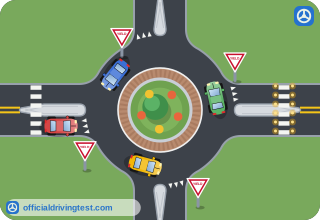
According to the manual, roundabouts reduce what that is often the cause of crashes at traditional intersections?
- Traffic noise and exhaust fumes
- Pedestrian crossings and bicycle lanes
- Traffic congestion and conflicts
- The need for any traffic signs
Show answer
Correct answer: Traffic congestion and conflicts
Roundabouts reduce traffic congestion and conflicts that are often the cause of crashes at traditional intersections.
Source: Class D & E Driver’s Guide (Revised August 2025 (DPSMV2052 R08/25)), page 37 · Open this page in the manual (Manual page 37)
-
In a roundabout, traffic yields to which traffic?
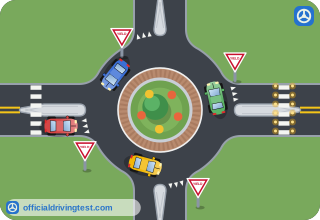
- The circulation traffic
- The traffic waiting behind you
- The largest vehicle
- The traffic that arrived first at the entrance
Show answer
Correct answer: The circulation traffic
In a roundabout, traffic yields to the circulation traffic, and the vehicle in the roundabout has the right of way.
Source: Class D & E Driver’s Guide (Revised August 2025 (DPSMV2052 R08/25)), page 37 · Open this page in the manual (Manual page 37)
-
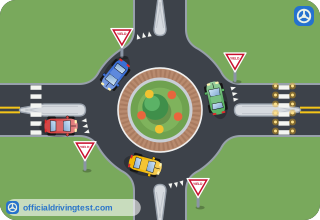
What does the manual say about stopping once you are inside a roundabout?
- You should stop and wait if another vehicle is waiting to enter
- You should stop if you are unsure which exit to take
- You should stop briefly to check traffic before leaving
- You should never stop
Show answer
Correct answer: You should never stop
The manual says never to stop once inside the roundabout.
Source: Class D & E Driver’s Guide (Revised August 2025 (DPSMV2052 R08/25)), page 37 · Open this page in the manual (Manual page 37)
-
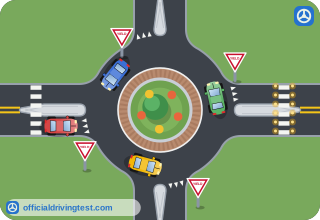
What should you look for to know where to exit a roundabout?
- Stop lines on the pavement
- Destination signs
- The color of the center island
- The direction the car ahead signals
Show answer
Correct answer: Destination signs
The manual says to look for destination signs and exit in that direction.
Source: Class D & E Driver’s Guide (Revised August 2025 (DPSMV2052 R08/25)), page 37 · Open this page in the manual (Manual page 37)
-
Searching to make sure other roadway users will not cross your travel path is especially important at which places?
- Straight rural roads with no side streets
- Long stretches of interstate with no ramps
- Intersections and highway-railroad grade crossings
- Roads with no other traffic in sight
Show answer
Correct answer: Intersections and highway-railroad grade crossings
At any time other vehicles or pedestrians may cross or enter your travel path, which is especially true at intersections and highway-railroad grade crossings.
Source: Class D & E Driver’s Guide (Revised August 2025 (DPSMV2052 R08/25)), page 62 · Open this page in the manual (Manual page 62)
-
What does the manual say an intersection is?
- Only a place where two public roads cross with a traffic signal
- Any place where traffic flow merges or crosses
- Only a place where two numbered highways meet
- Any place where a road ends at a stop sign
Show answer
Correct answer: Any place where traffic flow merges or crosses
Intersections are any place where traffic flow merges or crosses, including cross streets, side streets, driveways, shopping center lanes and parking lot entrances.
Source: Class D & E Driver’s Guide (Revised August 2025 (DPSMV2052 R08/25)), page 62 · Open this page in the manual (Manual page 62)
-
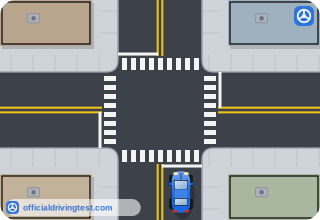
Before entering an intersection, in which directions should you look for approaching vehicles and crossing pedestrians?
- Only to the front and the right
- Only to the left and the rear
- To the front and the rear
- To the front, left and right
Show answer
Correct answer: To the front, left and right
Before entering an intersection, you look to the front, left and right for approaching vehicles and crossing pedestrians.
Source: Class D & E Driver’s Guide (Revised August 2025 (DPSMV2052 R08/25)), page 62 · Open this page in the manual (Manual page 62)
-
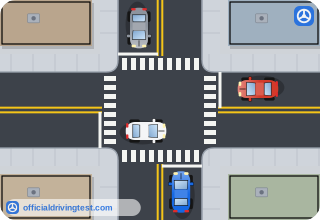
If you are stopped at an intersection, how should you look before entering it?
- Left, right and left again
- Right, left and right again
- Left and right once each
- Straight ahead only
Show answer
Correct answer: Left, right and left again
If you are stopped, you look left, right and left again before entering the intersection.
Source: Class D & E Driver’s Guide (Revised August 2025 (DPSMV2052 R08/25)), page 62 · Open this page in the manual (Manual page 62)
-
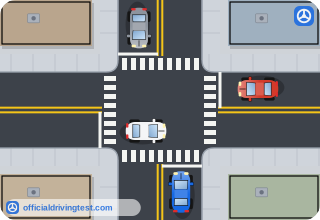
Why should you look to the front, left and right at an intersection even if other traffic has a red light or a stop sign?
- Red lights and stop signs do not apply to cross traffic
- Cross traffic always has the right-of-way
- Some drivers may not obey signals or signs, or may not see them
- Traffic signals at intersections are often switched off
Show answer
Correct answer: Some drivers may not obey signals or signs, or may not see them
You should not rely on signals or signs to tell you that no one will cross in front of you, because some drivers may not obey them or may not see them.
Source: Class D & E Driver’s Guide (Revised August 2025 (DPSMV2052 R08/25)), page 62 · Open this page in the manual (Manual page 62)
-
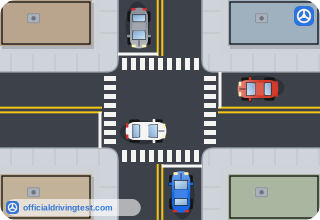
When is searching for cross traffic at an intersection especially important?
- Only when the traffic light is flashing
- Just after the light has turned green
- Only when there is a stop sign instead of a light
- Just after the light has turned yellow
Show answer
Correct answer: Just after the light has turned green
This searching technique is especially important just after the light has turned green, because people on the cross street are most likely to hurry through before the light changes to red.
Source: Class D & E Driver’s Guide (Revised August 2025 (DPSMV2052 R08/25)), page 62 · Open this page in the manual (Manual page 62)
-
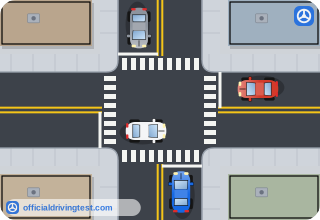
Why should you make sure the travel path is clear all the way through an intersection before you enter it?
- So you can drive through without signaling
- So you can change lanes inside the intersection
- So you can speed up after the light turns green
- So you will not block the intersection if you stop
Show answer
Correct answer: So you will not block the intersection if you stop
You make sure the path is clear all the way through and you can clearly see crossing traffic so you will not block the intersection if you have to stop.
Source: Class D & E Driver’s Guide (Revised August 2025 (DPSMV2052 R08/25)), page 62 · Open this page in the manual (Manual page 62)
-
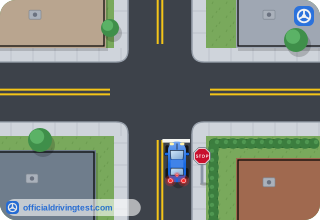
At an intersection, your stopped vehicle's view of the cross street is blocked. What should you do?
- Edge forward slowly until you can see
- Honk your horn and drive across
- Wait for the cross traffic to wave you through
- Accelerate quickly to clear the intersection
Show answer
Correct answer: Edge forward slowly until you can see
If you are stopped and your view of traffic or a cross street is blocked, you edge forward slowly until you can see.
Source: Class D & E Driver’s Guide (Revised August 2025 (DPSMV2052 R08/25)), page 62 · Open this page in the manual (Manual page 62)
-
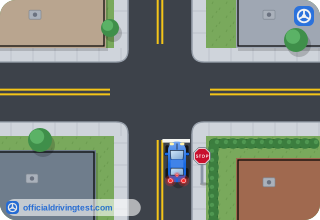
Why does edging forward slowly help when your view of the cross street is blocked?
- It lets you turn without using a signal
- It keeps cross traffic from seeing your brake lights
- Crossing drivers can see the front of your vehicle first
- It lets you claim the right-of-way
Show answer
Correct answer: Crossing drivers can see the front of your vehicle first
By moving forward slowly, crossing drivers can see the front of your vehicle before you can see them, which gives them a chance to slow down and warn you.
Source: Class D & E Driver’s Guide (Revised August 2025 (DPSMV2052 R08/25)), page 62 · Open this page in the manual (Manual page 62)
-
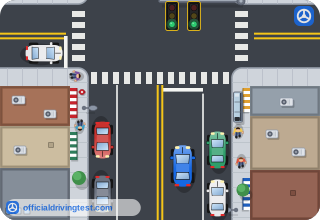
Whenever there is a lot of activity along the side of the road, what is there a good chance of?
- Traffic ahead will speed up quickly
- Someone will cross or enter the road
- The road will narrow
- The speed limit will change
Show answer
Correct answer: Someone will cross or enter the road
Whenever there is a lot of activity along the side of the road, there is a good chance that someone will cross or enter the road.
Source: Class D & E Driver’s Guide (Revised August 2025 (DPSMV2052 R08/25)), page 62 · Open this page in the manual (Manual page 62)
-
When turning left at an intersection, what should you do to be ready to turn?
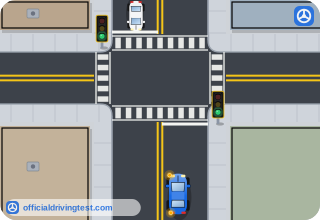
- Stop short of the crosswalk
- Stay well back from the intersection
- Move to the right lane first
- Pull into the intersection
Show answer
Correct answer: Pull into the intersection
When turning left at an intersection, you pull into the intersection to be ready to turn left.
Source: Class D & E Driver’s Guide (Revised August 2025 (DPSMV2052 R08/25)), page 62 · Open this page in the manual (Manual page 62)
-
Before turning left across oncoming traffic, what should you look for?
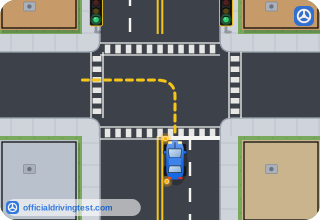
- A safe gap in the traffic
- A vehicle ahead to follow through the turn
- A green arrow for all lanes
- An empty lane to your right
Show answer
Correct answer: A safe gap in the traffic
Before turning left across oncoming traffic, you look for a safe gap in the traffic.
Source: Class D & E Driver’s Guide (Revised August 2025 (DPSMV2052 R08/25)), page 62 · Open this page in the manual (Manual page 62)
-
When turning left, which traffic must you yield to?
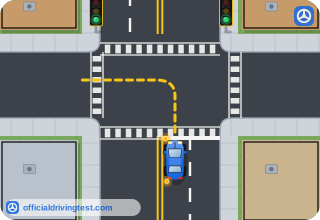
- Only oncoming vehicles that are going straight ahead
- Only oncoming vehicles turning right
- Oncoming vehicles going straight ahead or turning right
- Only vehicles behind you
Show answer
Correct answer: Oncoming vehicles going straight ahead or turning right
When turning left you must yield to oncoming vehicles going straight ahead or turning right.
Source: Class D & E Driver’s Guide (Revised August 2025 (DPSMV2052 R08/25)), page 63 · Open this page in the manual (Manual page 63)
-
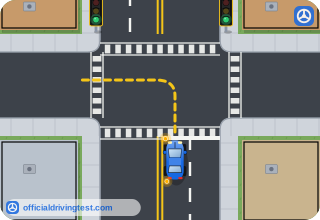
Before turning left, you search to be sure of what?
- That the driver behind you has enough room to pass you on the right
- That nothing in the travel path could leave you stranded in oncoming traffic
- That the oncoming lane has a green arrow for left turns
- That no vehicles are parked along the curb on the far side
Show answer
Correct answer: That nothing in the travel path could leave you stranded in oncoming traffic
Before turning left you search for vehicles or pedestrians in the travel path that could leave your vehicle stranded in the path of oncoming traffic.
Source: Class D & E Driver’s Guide (Revised August 2025 (DPSMV2052 R08/25)), page 63 · Open this page in the manual (Manual page 63)
-
Before turning right, what should you make sure of?
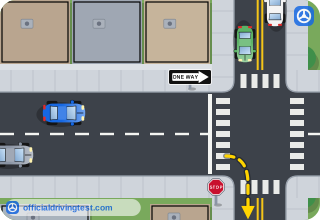
- No traffic is approaching from your right and no oncoming traffic is going straight
- No vehicle is following you and no pedestrians are waiting at the curb
- The oncoming lanes are empty for at least 500 feet in both directions
- No traffic approaching from your left and no oncoming vehicle turning left into your path
Show answer
Correct answer: No traffic approaching from your left and no oncoming vehicle turning left into your path
Before turning right, you make sure there is no traffic approaching from your left and no oncoming traffic turning left into your path.
Source: Class D & E Driver’s Guide (Revised August 2025 (DPSMV2052 R08/25)), page 63 · Open this page in the manual (Manual page 63)