Louisiana: Licensing basics — Part 6 Practice Test
Louisiana license classes, the graduated licensing program, the documents to bring, the vision, knowledge and road skills tests, renewal, restrictions, the Class D chauffeur’s license and vehicle registration. — Part 6
Independent educational site · not affiliated with any government agency or DMV
Ready? Test yourself
- Instant feedback with an explanation
- Every answer cites its source in the manual
- Your best score is saved on this device
Questions are original and based on the official manual "Class D & E Driver’s Guide" (Revised August 2025 (DPSMV2052 R08/25)), Louisiana Office of Motor Vehicles.
All 35 questions in this practice test
Take the test above first, then use this list to study. Tap “Show answer” to see the correct answer and explanation.
Show the questions and answersHide the questions
-
What is the role of traffic courts in managing the Highway Transportation System?
- They regulate license plates and titles
- They design safer highways and vehicles
- They teach basic vehicle-operation skills
- They help assure proper enforcement of the law
Show answer
Correct answer: They help assure proper enforcement of the law
The manual says the traffic courts help to assure proper enforcement of the law.
Source: Class D & E Driver’s Guide (Revised August 2025 (DPSMV2052 R08/25)), page 18 · Open this page in the manual (Manual page 18)
-
In which two ways does engineering work as a means of managing the Highway Transportation System?
- Highway engineering and vehicle engineering
- Sign engineering and signal engineering
- Bridge engineering and tire engineering
- Parish engineering and state engineering
Show answer
Correct answer: Highway engineering and vehicle engineering
The manual says engineering works in two ways: highway engineering makes the HTS safer, and vehicle engineering makes vehicles safer and easier to operate.
Source: Class D & E Driver’s Guide (Revised August 2025 (DPSMV2052 R08/25)), page 18 · Open this page in the manual (Manual page 18)
-
What do the emergency response system and trauma centers work to reduce?
- The number of drivers who need to renew licenses each year
- The cost of driver education programs in high schools
- Losses caused by collisions, at the time of the crash and afterwards
- The amount of time drivers spend stuck in traffic each year
Show answer
Correct answer: Losses caused by collisions, at the time of the crash and afterwards
The manual says the emergency response system and trauma centers work to reduce the losses caused by collisions, both at the time of the crash and afterwards.
Source: Class D & E Driver’s Guide (Revised August 2025 (DPSMV2052 R08/25)), page 18 · Open this page in the manual (Manual page 18)
-
What is the goal of educating the public about the Highway Transportation System?
- To raise money for road repair through driver education fees
- To teach road rules, basic vehicle skills and safe-driving attitudes
- To replace traffic laws with voluntary guidelines for road users
- To reduce the number of vehicles allowed on the roads
Show answer
Correct answer: To teach road rules, basic vehicle skills and safe-driving attitudes
The manual says the goal of educating the public is to impart knowledge of the rules of the road and the basic skills of vehicle operation, and to instill and reinforce attitudes consistent with safe driving.
Source: Class D & E Driver’s Guide (Revised August 2025 (DPSMV2052 R08/25)), page 18 · Open this page in the manual (Manual page 18)
-
According to the manual, what will an educated and informed public produce?
- Faster travel times and fewer traffic courts
- Lower vehicle prices and cheaper insurance
- Fewer drivers and fewer vehicles on the roads
- Safer drivers and measurably lower crash rates
Show answer
Correct answer: Safer drivers and measurably lower crash rates
The manual states that an educated and informed public will produce safer drivers and measurably lower crash rates.
Source: Class D & E Driver’s Guide (Revised August 2025 (DPSMV2052 R08/25)), page 18 · Open this page in the manual (Manual page 18)
-
According to the manual, what is the biggest price society pays for transportation collisions?
- The personal loss suffered by the people who are affected
- The cost of medical care, rehabilitation and nursing homes
- The cost of property damage and insurance administration
- The lost wages of the people who are injured or killed
Show answer
Correct answer: The personal loss suffered by the people who are affected
The manual says the biggest price society pays for transportation collisions is personal, because lives can change in an instant.
Source: Class D & E Driver’s Guide (Revised August 2025 (DPSMV2052 R08/25)), page 18 · Open this page in the manual (Manual page 18)
-
What is the Federal Highway Administration (FHWA) chiefly responsible for?
- Issuing drivers’ licenses
- Collecting highway tolls
- Enforcing traffic laws on roads
- Improving roadway safety
Show answer
Correct answer: Improving roadway safety
The manual says the FHWA is a federal agency with the chief responsibility of improving roadway safety.
Source: Class D & E Driver’s Guide (Revised August 2025 (DPSMV2052 R08/25)), page 21 · Open this page in the manual (Manual page 21)
-
At the time of any driver’s license issuance, what does the manual say you should do when asked about your mental and physical health?
- Answer only the questions about your physical health
- Leave out conditions that medication controls
- Give information only if you have had a crash
- Honestly disclose any information that may affect driving
Show answer
Correct answer: Honestly disclose any information that may affect driving
The manual says you are asked questions about your mental and physical health at any license issuance and should honestly disclose any information that may affect your driving.
Source: Class D & E Driver’s Guide (Revised August 2025 (DPSMV2052 R08/25)), page 58 · Open this page in the manual (Manual page 58)
-
Who does the manual say is subject to higher medical standards than someone who only drives a passenger vehicle?
- A person who has held a license for more than ten years
- A person who drives a commercial vehicle for work
- A person who drives only on weekends
- A person who drives only in the daytime
Show answer
Correct answer: A person who drives a commercial vehicle for work
The manual says if you drive a commercial vehicle or need your license to earn a livelihood, you are subject to higher medical standards than an individual who only drives a passenger vehicle.
Source: Class D & E Driver’s Guide (Revised August 2025 (DPSMV2052 R08/25)), page 58 · Open this page in the manual (Manual page 58)
-
If you must give up your driving privileges, what does the manual say is available at your local Motor Vehicle office?
- A Louisiana identification card
- A hardship license
- A temporary restricted license
- A conditional driving permit
Show answer
Correct answer: A Louisiana identification card
The manual says a Louisiana identification card is available at your local Motor Vehicle office if you must give up your driving privileges.
Source: Class D & E Driver’s Guide (Revised August 2025 (DPSMV2052 R08/25)), page 58 · Open this page in the manual (Manual page 58)
-
When an officer signals for you to stop, what does the Louisiana guide say you should do?
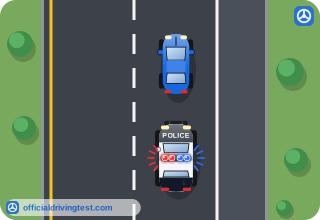
- Remain calm and safely pull over
- Stop at once in the travel lane, wherever you are
- Turn around and drive back toward the officer
- Slow down and wait for the officer to pass you
Show answer
Correct answer: Remain calm and safely pull over
The guide says that if an officer signals you to stop, you should remain calm and safely pull over.
Source: Class D & E Driver’s Guide (Revised August 2025 (DPSMV2052 R08/25)), page 86 · Open this page in the manual (Manual page 86)
-
Which documents should you be prepared to produce when stopped by a police officer?
- Your driver’s license, vehicle title, and proof of your last vehicle inspection
- Your driver’s license, birth certificate, and proof of Louisiana residence
- Your driver’s license, vehicle registration certificate, and current proof of insurance
- Your driver’s license, Social Security card, and proof of the vehicle’s purchase
Show answer
Correct answer: Your driver’s license, vehicle registration certificate, and current proof of insurance
The guide says to be prepared to produce your driver’s license, vehicle registration certificate, and current proof of insurance.
Source: Class D & E Driver’s Guide (Revised August 2025 (DPSMV2052 R08/25)), page 86 · Open this page in the manual (Manual page 86)
-
During a traffic stop, what should you do about staying in your vehicle?
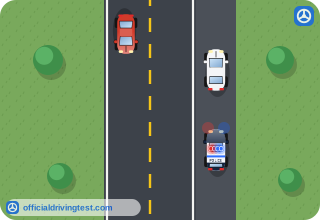
- Get out and walk back to the officer’s vehicle
- Stay in it unless the officer tells you otherwise
- Get out and stand beside your vehicle until told to leave
- Move to the passenger seat and wait there quietly
Show answer
Correct answer: Stay in it unless the officer tells you otherwise
The guide says to remain in the vehicle unless the officer tells you otherwise.
Source: Class D & E Driver’s Guide (Revised August 2025 (DPSMV2052 R08/25)), page 86 · Open this page in the manual (Manual page 86)
-
What should you do with your hands during a traffic stop?
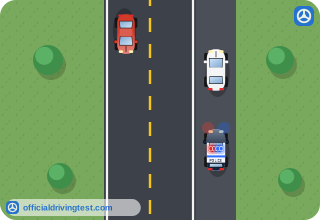
- Keep them in your pockets
- Keep them under the seat
- Keep them behind your head
- Keep them visible
Show answer
Correct answer: Keep them visible
The guide says to keep your hands visible during a traffic stop.
Source: Class D & E Driver’s Guide (Revised August 2025 (DPSMV2052 R08/25)), page 86 · Open this page in the manual (Manual page 86)
-
If you are stopped by a non-uniformed officer in an unmarked vehicle, what can you do?
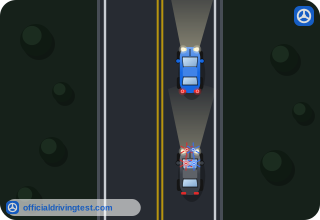
- Ask the officer for identification
- Continue driving until a marked police car joins the stop
- Refuse to show any documents until a uniformed officer arrives
- Call the officer’s supervisor before you stop
Show answer
Correct answer: Ask the officer for identification
The guide says you can ask a non-uniformed officer in an unmarked vehicle for identification.
Source: Class D & E Driver’s Guide (Revised August 2025 (DPSMV2052 R08/25)), page 86 · Open this page in the manual (Manual page 86)
-
If you believe the reason for a traffic stop is vague or unclear, what can you do?
- Drive away and report the stop to a supervisor later
- Refuse to answer any questions until a supervisor arrives
- Ask the officer for details
- Wait for the officer to leave before you move
Show answer
Correct answer: Ask the officer for details
The guide says you can ask the officer for details if the reason for the stop seems vague or unclear.
Source: Class D & E Driver’s Guide (Revised August 2025 (DPSMV2052 R08/25)), page 86 · Open this page in the manual (Manual page 86)
-
If you are uncomfortable stopping in an area that is deserted or not well-lit, what can you do?
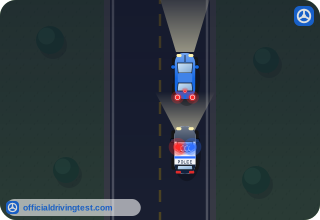
- Keep driving at a lower speed until the officer stops following you
- Explain it and ask to go to a more populated or better lit area
- Turn off your headlights and wait for the officer to approach
- Stop in the travel lane and ask the officer to move you
Show answer
Correct answer: Explain it and ask to go to a more populated or better lit area
The guide says you can explain this to the officer and ask if you can proceed to a more populated or better illuminated area.
Source: Class D & E Driver’s Guide (Revised August 2025 (DPSMV2052 R08/25)), page 86 · Open this page in the manual (Manual page 86)
-
To whom can procedural questions and complaints about an officer’s treatment of you be forwarded?
- The Office of Motor Vehicles
- The court clerk
- Your insurance company
- The officer’s supervisor
Show answer
Correct answer: The officer’s supervisor
The guide says procedural questions and complaints about an officer’s treatment of you can be forwarded to the officer’s supervisor.
Source: Class D & E Driver’s Guide (Revised August 2025 (DPSMV2052 R08/25)), page 86 · Open this page in the manual (Manual page 86)
-
Which orders and directions of a police officer must you obey?
- All lawful orders and directions
- Only those that match the posted signs and signals
- Only those given by an officer in a marked vehicle
- Only those given while you are on a highway
Show answer
Correct answer: All lawful orders and directions
The guide says you must obey all lawful orders and directions of a police officer.
Source: Class D & E Driver’s Guide (Revised August 2025 (DPSMV2052 R08/25)), page 86 · Open this page in the manual (Manual page 86)
-
Which traffic laws are you required to obey when driving a vehicle upon a street or highway?
- Only the laws marked by a posted sign
- Only the laws a police officer is enforcing at that time
- All traffic laws
- Only the laws of the parish where you live
Show answer
Correct answer: All traffic laws
The guide says you are required to obey all traffic laws when driving upon a street or highway.
Source: Class D & E Driver’s Guide (Revised August 2025 (DPSMV2052 R08/25)), page 86 · Open this page in the manual (Manual page 86)
-
What does the manual say about lending your driver's license to another person?
- It is illegal
- It is legal for family members only
- It is legal if the other person is also licensed
- It is legal for up to 24 hours
Show answer
Correct answer: It is illegal
The manual says it is illegal to lend your driver's license to another person.
Source: Class D & E Driver’s Guide (Revised August 2025 (DPSMV2052 R08/25)), page 97 · Open this page in the manual (Manual page 97)
-
How many driver's licenses is it legal to have in your possession?
- Two
- Two, if one is from another state
- As many as you have been issued
- One
Show answer
Correct answer: One
The manual says it is illegal to have more than one driver's license in your possession.
Source: Class D & E Driver’s Guide (Revised August 2025 (DPSMV2052 R08/25)), page 97 · Open this page in the manual (Manual page 97)
-
Which of these is illegal with regard to a driver's license?
- Renewing it before it expires
- Providing false information to obtain it
- Carrying it with you while driving
- Showing it to a police officer when asked
Show answer
Correct answer: Providing false information to obtain it
The manual lists providing false information in obtaining your driver's license among the illegal acts.
Source: Class D & E Driver’s Guide (Revised August 2025 (DPSMV2052 R08/25)), page 97 · Open this page in the manual (Manual page 97)
-
Which of these is against the law with regard to your driver's license?
- Replacing it if it is lost
- Updating your address with the department
- Altering it in any manner
- Having it signed by a notary
Show answer
Correct answer: Altering it in any manner
The manual says it is illegal to alter your driver's license in any manner.
Source: Class D & E Driver’s Guide (Revised August 2025 (DPSMV2052 R08/25)), page 97 · Open this page in the manual (Manual page 97)
-
What must you do if the department demands that you surrender your driver's license?
- Keep it until you receive a written notice
- Mail a photocopy of it instead
- Surrender it to the department
- Keep it until a court date is set
Show answer
Correct answer: Surrender it to the department
The manual says it is illegal to fail or refuse to surrender your driver's license to the department if demanded.
Source: Class D & E Driver’s Guide (Revised August 2025 (DPSMV2052 R08/25)), page 97 · Open this page in the manual (Manual page 97)
-
What does the manual say about permitting others to use the driver's license issued to you?
- Permitting any unlawful use of it is illegal
- Permitting use is legal if the user is a relative
- Permitting use is legal when you are in the vehicle
- Permitting use is legal for no more than one day
Show answer
Correct answer: Permitting any unlawful use of it is illegal
The manual says it is illegal to permit any unlawful use of a driver's license issued.
Source: Class D & E Driver’s Guide (Revised August 2025 (DPSMV2052 R08/25)), page 97 · Open this page in the manual (Manual page 97)
-
Theft of motor vehicle fuel is a crime punishable by what?
- A fine only, with no loss of license
- Loss of license only, with no fine
- A warning for a first offense
- Fine, loss of license, possible jail time
Show answer
Correct answer: Fine, loss of license, possible jail time
The manual says theft of motor vehicle fuel is a crime punishable by fine, loss of license, and possible jail time.
Source: Class D & E Driver’s Guide (Revised August 2025 (DPSMV2052 R08/25)), page 97 · Open this page in the manual (Manual page 97)
-
Which of these does the manual list as a contributing factor to the crash risk of teen drivers?
- Driving inexperience
- Driving only in the daytime
- Too much practice with a parent
- Driving with the headlights on
Show answer
Correct answer: Driving inexperience
The manual names driving inexperience, risk-taking behaviors, immaturity and greater risk exposure as contributing factors.
Source: Class D & E Driver’s Guide (Revised August 2025 (DPSMV2052 R08/25)), page 111 · Open this page in the manual (Manual page 111)
-
According to the manual, the late night lifestyle of teens adds to the risk of a crash because of what?
- Poor road lighting
- Heavier traffic
- Wet pavement
- Drowsiness
Show answer
Correct answer: Drowsiness
The late night lifestyle of teens adds to the risk of a crash occurring due to drowsiness.
Source: Class D & E Driver’s Guide (Revised August 2025 (DPSMV2052 R08/25)), page 111 · Open this page in the manual (Manual page 111)
-
According to the manual, teens are more likely than other drivers to make a poor decision because of what?
- Lack of sleep
- Peer pressure
- Heavy traffic
- Poor weather
Show answer
Correct answer: Peer pressure
The manual says teens are more likely to make a poor decision due to peer pressure.
Source: Class D & E Driver’s Guide (Revised August 2025 (DPSMV2052 R08/25)), page 111 · Open this page in the manual (Manual page 111)
-
According to the manual, which are the top factors for fatal crashes involving teens?
- Unsafe speeds and non-use of seat belts
- Night driving and heavy rush-hour traffic
- Faulty brakes and badly worn-out tires
- Road construction and potholes on the road
Show answer
Correct answer: Unsafe speeds and non-use of seat belts
The manual says the top factors for fatal crashes involving teens are unsafe speeds and non-use of seat belts.
Source: Class D & E Driver’s Guide (Revised August 2025 (DPSMV2052 R08/25)), page 112 · Open this page in the manual (Manual page 112)
-
According to the manual, what is the biggest challenge a teen driver will face?
- Learning the fundamentals of driving quickly
- Learning to parallel park between two cars
- Concentrating and remaining focused on driving
- Learning to read the road signs correctly
Show answer
Correct answer: Concentrating and remaining focused on driving
The manual says teens master the fundamentals quickly, but the biggest challenge is concentrating and remaining focused on the task of driving.
Source: Class D & E Driver’s Guide (Revised August 2025 (DPSMV2052 R08/25)), page 112 · Open this page in the manual (Manual page 112)
-
According to the manual, what makes the risk of a teen driver being killed or injured in a collision greater?
- An adult passenger in the car
- Driving on a weekday
- Driving a larger vehicle
- A teenage passenger in the car
Show answer
Correct answer: A teenage passenger in the car
The manual says the risk becomes greater if a teenage passenger is involved, and it increases with each additional passenger.
Source: Class D & E Driver’s Guide (Revised August 2025 (DPSMV2052 R08/25)), page 112 · Open this page in the manual (Manual page 112)
-
According to the manual, compared with other drivers, teenage drivers are more willing to do what?
- Follow slowly behind other cars
- Use safety belts
- Take risks
- Overestimate hazardous situations
Show answer
Correct answer: Take risks
The manual says teenagers are more willing to take risks and less likely to use safety belts.
Source: Class D & E Driver’s Guide (Revised August 2025 (DPSMV2052 R08/25)), page 112 · Open this page in the manual (Manual page 112)
-
What does the manual say teens are more likely to do about the dangers of hazardous situations?
- Underestimate them and be less able to cope with them
- Overestimate them and avoid them whenever they can
- Recognize them earlier than adult drivers and avoid them
- Ignore them but still cope with them better than adults
Show answer
Correct answer: Underestimate them and be less able to cope with them
The manual says teens are more likely to underestimate the dangers associated with hazardous situations and less able to cope with them.
Source: Class D & E Driver’s Guide (Revised August 2025 (DPSMV2052 R08/25)), page 112 · Open this page in the manual (Manual page 112)