Louisiana: Licensing basics — Part 5 Practice Test
Louisiana license classes, the graduated licensing program, the documents to bring, the vision, knowledge and road skills tests, renewal, restrictions, the Class D chauffeur’s license and vehicle registration. — Part 5
Independent educational site · not affiliated with any government agency or DMV
Ready? Test yourself
- Instant feedback with an explanation
- Every answer cites its source in the manual
- Your best score is saved on this device
Questions are original and based on the official manual "Class D & E Driver’s Guide" (Revised August 2025 (DPSMV2052 R08/25)), Louisiana Office of Motor Vehicles.
All 35 questions in this practice test
Take the test above first, then use this list to study. Tap “Show answer” to see the correct answer and explanation.
Show the questions and answersHide the questions
-
Failure to pay which of these can cost you your Louisiana driving privilege?
- Property taxes
- Credit card debt
- A hospital bill
- Child support
Show answer
Correct answer: Child support
Failure to pay child support is on the list of reasons to lose your driving privilege.
Source: Class D & E Driver’s Guide (Revised August 2025 (DPSMV2052 R08/25)), page 12 · Open this page in the manual (Manual page 12)
-
Failure to pay which of these can cost you your Louisiana driving privilege?
- State income taxes
- Sales taxes
- Utility bills
- Property taxes
Show answer
Correct answer: State income taxes
Failure to pay state income taxes is on the list of reasons to lose your driving privilege.
Source: Class D & E Driver’s Guide (Revised August 2025 (DPSMV2052 R08/25)), page 12 · Open this page in the manual (Manual page 12)
-
How does the “Put the Brakes on Litter” insert in the Louisiana driver’s guide define littering?
- Throwing waste only from a moving vehicle
- Dumping large amounts of waste at an illegal site only
- Improperly discarding waste or leaving it behind
- Leaving waste behind only on purpose
Show answer
Correct answer: Improperly discarding waste or leaving it behind
Littering is defined as improperly discarding waste intentionally or unintentionally leaving waste behind.
Source: Class D & E Driver’s Guide (Revised August 2025 (DPSMV2052 R08/25)), page 13 · Open this page in the manual (Manual page 13)
-
Is accidental littering against the law in Louisiana?
- No, only intentional littering is against the law
- Only when it happens on an interstate
- Only when it involves a pickup truck
- Yes, it is against the law
Show answer
Correct answer: Yes, it is against the law
Whether accidental or intentional, littering is against the law.
Source: Class D & E Driver’s Guide (Revised August 2025 (DPSMV2052 R08/25)), page 14 · Open this page in the manual (Manual page 14)
-
According to Louisiana R.S. 30:2531, what is the penalty for a first offense of simple littering?
- A $900 fine or 20 hours of community service
- A $150 fine or eight hours of community service
- A $50 fine or two hours of community service
- A $500 fine or 40 hours of community service
Show answer
Correct answer: A $150 fine or eight hours of community service
Penalties for simple littering start at a $150 fine or eight hours of community service for a first offense.
Source: Class D & E Driver’s Guide (Revised August 2025 (DPSMV2052 R08/25)), page 14 · Open this page in the manual (Manual page 14)
-
According to Louisiana R.S. 30:2531, what is the penalty for a second offense of simple littering?
- A $150 fine or eight hours of community service
- A $300 fine or 10 hours of community service
- A $900 fine or 20 hours of community service
- A $1,500 fine or 50 hours of community service
Show answer
Correct answer: A $900 fine or 20 hours of community service
A second offense of simple littering carries a $900 fine or 20 hours of community service.
Source: Class D & E Driver’s Guide (Revised August 2025 (DPSMV2052 R08/25)), page 14 · Open this page in the manual (Manual page 14)
-
A passenger in your vehicle throws litter out of the window. Who can be cited?
- You, as the driver, can be cited
- Only the passenger who littered
- Nobody, if you did not see it
- Only the vehicle’s owner
Show answer
Correct answer: You, as the driver, can be cited
As a driver, you are liable for all litter that leaves your vehicle and are responsible for everyone in it.
Source: Class D & E Driver’s Guide (Revised August 2025 (DPSMV2052 R08/25)), page 14 · Open this page in the manual (Manual page 14)
-
By Louisiana law, what must be done with a loaded truck bed?
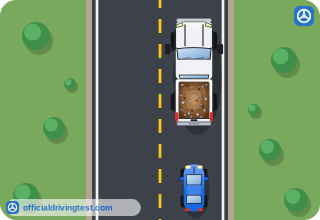
- It must be covered or secured
- It must be driven under 45 miles per hour
- It must carry a red flag at night only
- It must be inspected at every weigh station
Show answer
Correct answer: It must be covered or secured
By law, loaded truck beds must be covered or secured to prevent debris and cargo from falling out.
Source: Class D & E Driver’s Guide (Revised August 2025 (DPSMV2052 R08/25)), page 14 · Open this page in the manual (Manual page 14)
-
Loose items fly from the bed of a truck or an unsecured load. How does the manual say this is treated?
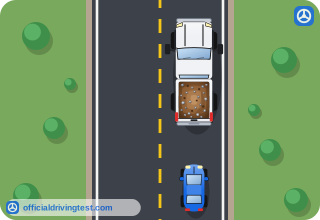
- It is an equipment violation with no citation
- It is not littering because it was unintentional
- It is considered littering and you can be cited
- It is a violation only if a collision occurs
Show answer
Correct answer: It is considered littering and you can be cited
When loose items fly from a truck bed or an unsecured load, it is considered littering and you can be cited.
Source: Class D & E Driver’s Guide (Revised August 2025 (DPSMV2052 R08/25)), page 14 · Open this page in the manual (Manual page 14)
-
If you witness someone littering and report them, which information should you capture?
- The person’s name, home address and telephone number
- A photograph of the person’s face and a written statement
- Only the date and the time of day with a short summary
- License plate, vehicle description, date, time and location
Show answer
Correct answer: License plate, vehicle description, date, time and location
The manual says to capture the license plate information, a description of the vehicle, and the date, time, and location of the littering.
Source: Class D & E Driver’s Guide (Revised August 2025 (DPSMV2052 R08/25)), page 14 · Open this page in the manual (Manual page 14)
-
What should you keep in your vehicle to contain trash until you reach a trash receptacle?
- A cardboard box in the trunk
- A cup holder lid
- A trash bag
- A plastic tarp
Show answer
Correct answer: A trash bag
The manual recommends keeping a trash bag in your vehicle to contain trash until you get to a trash receptacle.
Source: Class D & E Driver’s Guide (Revised August 2025 (DPSMV2052 R08/25)), page 14 · Open this page in the manual (Manual page 14)
-
If you smoke, what does the manual recommend keeping in your vehicle instead of throwing butts out of the window?
- A small portable ashtray
- A larger trash can
- A sealed bottle of water
- A spare lighter
Show answer
Correct answer: A small portable ashtray
The manual recommends keeping a small portable ashtray in your vehicle instead of throwing the butts out of your window.
Source: Class D & E Driver’s Guide (Revised August 2025 (DPSMV2052 R08/25)), page 14 · Open this page in the manual (Manual page 14)
-
How is a person’s decision to register as an organ, eye and tissue donor marked on a Louisiana license or ID card?
- With a green star on the back
- With a blue cross on the front
- With a yellow circle on the back
- With a red heart on the front
Show answer
Correct answer: With a red heart on the front
The donor designation is marked on the front of the license or ID card with a red heart.
Source: Class D & E Driver’s Guide (Revised August 2025 (DPSMV2052 R08/25)), page 15 · Open this page in the manual (Manual page 15)
-
For which persons is family consent required under Louisiana’s organ donor registry?
- Persons over age 60
- Minors only
- Persons who registered online
- Everyone who registers
Show answer
Correct answer: Minors only
Louisiana’s registry makes legally binding decisions, and family consent is required only for minors.
Source: Class D & E Driver’s Guide (Revised August 2025 (DPSMV2052 R08/25)), page 15 · Open this page in the manual (Manual page 15)
-
What does the manual say about drivers under the age of 17 and the organ donor program?
- They cannot register until age 18
- They can participate and register their intent
- They can register only after age 21
- They can register only after passing the road skills test
Show answer
Correct answer: They can participate and register their intent
Drivers under the age of 17 can participate in the program and register their intent.
Source: Class D & E Driver’s Guide (Revised August 2025 (DPSMV2052 R08/25)), page 15 · Open this page in the manual (Manual page 15)
-
Who can be a potential organ donor?
- Only people under age 50
- Only people with no medical history
- Only people who have never been ill or injured
- Anyone, regardless of age or medical history
Show answer
Correct answer: Anyone, regardless of age or medical history
Anyone can be a potential donor regardless of age, race, or medical history.
Source: Class D & E Driver’s Guide (Revised August 2025 (DPSMV2052 R08/25)), page 15 · Open this page in the manual (Manual page 15)
-
When is the organ recovery team called in?
- Only after all attempts to save your life
- As soon as you arrive at the hospital emergency room
- When your family asks for it
- When you are placed on a ventilator
Show answer
Correct answer: Only after all attempts to save your life
The recovery team is only called in after all attempts have been made to save your life.
Source: Class D & E Driver’s Guide (Revised August 2025 (DPSMV2052 R08/25)), page 15 · Open this page in the manual (Manual page 15)
-
What does the manual say about buying and selling organs in the United States?
- It is legal with a permit
- It is legal if the donor agrees
- It is illegal
- It is legal for tissue only
Show answer
Correct answer: It is illegal
The manual states it is illegal to buy or sell organs in the United States.
Source: Class D & E Driver’s Guide (Revised August 2025 (DPSMV2052 R08/25)), page 15 · Open this page in the manual (Manual page 15)
-
Which factor is used to place organs for transplant?
- Fame
- Wealth
- Political power
- Blood type
Show answer
Correct answer: Blood type
Organs are placed based on blood type, size, weight, severity of illness, time on the waiting list, and geography.
Source: Class D & E Driver’s Guide (Revised August 2025 (DPSMV2052 R08/25)), page 15 · Open this page in the manual (Manual page 15)
-
Under Louisiana’s organ donor registry, what kind of decisions can citizens make?
- Temporary decisions that family may reverse
- Legally binding decisions to become donors
- Decisions that must be renewed every year
- Decisions that apply to organs only, not tissue
Show answer
Correct answer: Legally binding decisions to become donors
Louisiana’s registry allows citizens to make legally binding decisions to be donors.
Source: Class D & E Driver’s Guide (Revised August 2025 (DPSMV2052 R08/25)), page 15 · Open this page in the manual (Manual page 15)
-
When will you be asked whether you wish to register as an organ, eye and tissue donor?
- Only when you renew a vehicle registration
- Only when you reach age 21
- When you apply for a permit, license, or ID card
- Only after you have been licensed for one year
Show answer
Correct answer: When you apply for a permit, license, or ID card
You are asked when you apply for a driver’s permit, driver’s license, or state ID card.
Source: Class D & E Driver’s Guide (Revised August 2025 (DPSMV2052 R08/25)), page 15 · Open this page in the manual (Manual page 15)
-
Is there a cost or payment to your family or estate when you become an organ donor?
- No, there is no cost or payment
- Yes, the family pays the recovery costs
- Yes, the family receives a payment
- Only for tissue donation
Show answer
Correct answer: No, there is no cost or payment
There is no cost or payment to your family or your estate when you become a donor.
Source: Class D & E Driver’s Guide (Revised August 2025 (DPSMV2052 R08/25)), page 15 · Open this page in the manual (Manual page 15)
-
What does the manual say about the appearance of the body after donation?
- No change, and an open casket is still possible
- A slight change that rules out an open casket
- No change, but funeral plans must be delayed
- A change only if tissue is donated
Show answer
Correct answer: No change, and an open casket is still possible
There is no change in the appearance of the body after donation and no interference in funeral plans, including an open casket.
Source: Class D & E Driver’s Guide (Revised August 2025 (DPSMV2052 R08/25)), page 15 · Open this page in the manual (Manual page 15)
-
With which computer network are all patients on the national organ waiting list registered?
- The National Voter Registration network
- The Office of Motor Vehicles registry only
- The United Network for Organ Sharing (UNOS)
- The Keep Louisiana Beautiful network
Show answer
Correct answer: The United Network for Organ Sharing (UNOS)
All patients on the waiting list throughout the country are registered with the United Network for Organ Sharing (UNOS) computer network.
Source: Class D & E Driver’s Guide (Revised August 2025 (DPSMV2052 R08/25)), page 15 · Open this page in the manual (Manual page 15)
-
Does your choice to register as an organ, eye and tissue donor affect the level of medical care you receive in a hospital?
- Yes, you receive a lower priority for care
- No, the level of care is not affected
- Yes, but only in an emergency
- Only if you registered online
Show answer
Correct answer: No, the level of care is not affected
The level of medical care you receive in any hospital is not affected by your choice to register.
Source: Class D & E Driver’s Guide (Revised August 2025 (DPSMV2052 R08/25)), page 15 · Open this page in the manual (Manual page 15)
-
What does the National Voter Registration Act of 1993, also known as the Motor Voter Act, require state governments to do?
- Require every licensed driver to register to vote before renewing
- Allow voter registration only at a county clerk’s office
- Require voters to renew their license every election year
- Allow qualifying voters to register at license applications and renewals
Show answer
Correct answer: Allow qualifying voters to register at license applications and renewals
The act requires state governments to allow registration by qualifying voters whenever they apply for or renew their driver’s license.
Source: Class D & E Driver’s Guide (Revised August 2025 (DPSMV2052 R08/25)), page 16 · Open this page in the manual (Manual page 16)
-
If you register to vote while at the OMV, where is your application submitted electronically?
- To the local police department
- To the Department of Education
- To the Louisiana Secretary of State
- To the Governor’s office
Show answer
Correct answer: To the Louisiana Secretary of State
If you register to vote at the OMV, your application is submitted electronically to the Louisiana Secretary of State.
Source: Class D & E Driver’s Guide (Revised August 2025 (DPSMV2052 R08/25)), page 16 · Open this page in the manual (Manual page 16)
-
You register to vote at the OMV but do not receive confirmation. After how long should you contact your local Voter Registrar’s Office?
- Two (2) weeks
- One (1) week
- Six (6) weeks
- One (1) year
Show answer
Correct answer: Two (2) weeks
If you do not receive confirmation within two (2) weeks, you should contact your local Voter Registrar’s Office.
Source: Class D & E Driver’s Guide (Revised August 2025 (DPSMV2052 R08/25)), page 16 · Open this page in the manual (Manual page 16)
-
What should you do with a mail-in voter registration form before turning it in or mailing it?
- Have it notarized
- Attach a copy of your license
- Have it stamped by the OMV
- Verify it for accuracy and sign it
Show answer
Correct answer: Verify it for accuracy and sign it
You should verify the form for accuracy and sign it in the space provided before it is turned in or mailed.
Source: Class D & E Driver’s Guide (Revised August 2025 (DPSMV2052 R08/25)), page 16 · Open this page in the manual (Manual page 16)
-
In the Highway Transportation System (HTS), which major component includes the drivers and passengers in vehicles, pedestrians, construction workers, police officers, emergency personnel and children at play?
- People
- Vehicles
- Roads
- Traffic laws
Show answer
Correct answer: People
The manual says the people component of the HTS includes drivers and passengers, pedestrians, construction workers, police officers, emergency personnel and children at play.
Source: Class D & E Driver’s Guide (Revised August 2025 (DPSMV2052 R08/25)), page 17 · Open this page in the manual (Manual page 17)
-
Interstates, U.S. highways, state highways, county roads, toll roads and parkways are examples of which of the three major components of the Highway Transportation System?
- People
- Vehicles
- Roads
- Management
Show answer
Correct answer: Roads
The manual lists interstates, U.S. highways, state highways, county roads, toll roads and parkways as the many types of roads that make up the roads component of the HTS.
Source: Class D & E Driver’s Guide (Revised August 2025 (DPSMV2052 R08/25)), page 18 · Open this page in the manual (Manual page 18)
-
What is the goal of the Highway Transportation System (HTS)?
- To collect tolls and fees from drivers to build new roads
- To provide safe, rapid and efficient transportation of persons and goods
- To keep private vehicles off the roads by moving people on transit
- To let every driver travel at the speed he or she chooses
Show answer
Correct answer: To provide safe, rapid and efficient transportation of persons and goods
The manual states that the goal of the HTS is to provide safe, rapid and efficient transportation of persons and goods to a desired destination.
Source: Class D & E Driver’s Guide (Revised August 2025 (DPSMV2052 R08/25)), page 17 · Open this page in the manual (Manual page 17)
-
How many means of management of the Highway Transportation System does the manual list?
- Six
- Four
- Five
- Eight
Show answer
Correct answer: Six
The manual states that there are six means of management of the Highway Transportation System.
Source: Class D & E Driver’s Guide (Revised August 2025 (DPSMV2052 R08/25)), page 18 · Open this page in the manual (Manual page 18)
-
Which means of managing the Highway Transportation System regulates drivers’ licenses, truck weights and operators, license plates and titles, among other items?
- Law enforcement agencies
- The traffic courts
- The Office of Motor Vehicles
- The emergency response system
Show answer
Correct answer: The Office of Motor Vehicles
The manual says the Office of Motor Vehicles regulates drivers’ licenses, truck weights and operators, license plates, taxes and titles.
Source: Class D & E Driver’s Guide (Revised August 2025 (DPSMV2052 R08/25)), page 18 · Open this page in the manual (Manual page 18)
-
Which means of managing the Highway Transportation System includes local city police, the highway patrol and sheriff’s departments working together to help maintain safe travel?
- The traffic courts
- Law enforcement agencies
- The Office of Motor Vehicles
- The emergency response system
Show answer
Correct answer: Law enforcement agencies
The manual lists law enforcement agencies, such as local city police, the highway patrol and sheriff’s departments, as working together to help maintain safe travel.
Source: Class D & E Driver’s Guide (Revised August 2025 (DPSMV2052 R08/25)), page 18 · Open this page in the manual (Manual page 18)