Kentucky: Signals and vehicle controls — Part 2 Practice Test
Checking your vehicle, seat and mirror adjustment, starting, stopping, steering and backing, turn signals, lights, the horn, driver-assistance features and towing a trailer. — Part 2
Independent educational site · not affiliated with any government agency or DMV
Ready? Test yourself
- Instant feedback with an explanation
- Every answer cites its source in the manual
- Your best score is saved on this device
Questions are original and based on the official manual "Kentucky Driver Manual" (Updated July 23, 2026), Kentucky State Police.
All 35 questions in this practice test
Take the test above first, then use this list to study. Tap “Show answer” to see the correct answer and explanation.
Show the questions and answersHide the questions
-
According to the manual, what can improper seating positions such as slouching cause?
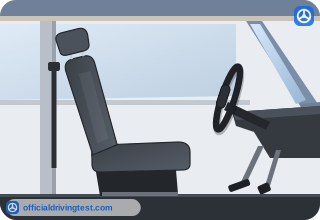
- Faster wear on the vehicle's brake pedal
- Poorer fuel mileage because of the added weight in the vehicle
- Less visibility in the outside mirrors only
- Reduced effectiveness of the vehicle's restraint system
Show answer
Correct answer: Reduced effectiveness of the vehicle's restraint system
The manual says improper seating, such as slouching, can reduce the effectiveness of the restraint system.
Source: Kentucky Driver Manual (Updated July 23, 2026), page 28 · Open this page in the manual (Manual page 28)
-
How should you be seated when you drive?
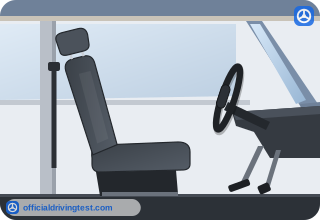
- Slightly reclined, with your knees pressed against the dashboard and wheel
- Upright, with your back against the seat and feet on the floor
- Leaning forward, with your back away from the seat
- Reclined, with one foot resting on the pedals
Show answer
Correct answer: Upright, with your back against the seat and feet on the floor
The manual says to sit upright with your back against the seat and feet on the floor.
Source: Kentucky Driver Manual (Updated July 23, 2026), page 28 · Open this page in the manual (Manual page 28)
-
When your seat is adjusted correctly, what should your foot be able to do?
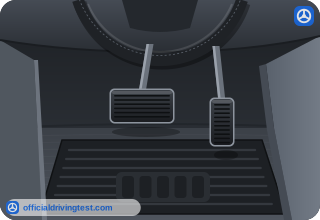
- Pivot smoothly from brake to accelerator with your heel on the floor
- Reach both pedals while your heel is lifted well off the floor of the car
- Press the brake pedal without moving your ankle at all
- Press the accelerator with your heel on top of the pedal
Show answer
Correct answer: Pivot smoothly from brake to accelerator with your heel on the floor
The manual says the foot should pivot smoothly from brake to accelerator while the heel stays on the floor.
Source: Kentucky Driver Manual (Updated July 23, 2026), page 28 · Open this page in the manual (Manual page 28)
-
How high should the top of the steering wheel be?
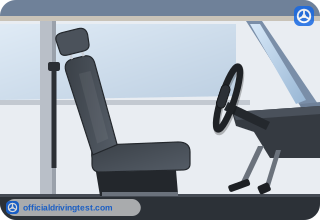
- Level with the top of your head, well above your shoulders and chin level
- Even with your eyes and above chin level
- No higher than the top of your shoulders and below chin level
- At the same height as your hips
Show answer
Correct answer: No higher than the top of your shoulders and below chin level
The manual says the top of the wheel should be no higher than the top of your shoulders and below chin level.
Source: Kentucky Driver Manual (Updated July 23, 2026), page 28 · Open this page in the manual (Manual page 28)
-
How much space should there be between your chest and the steering wheel?
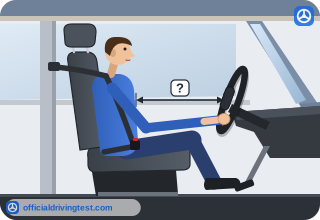
- 4 inches
- 10 inches
- 2 inches
- 20 inches
Show answer
Correct answer: 10 inches
The manual says there should be 10 inches between your chest and the steering wheel.
Source: Kentucky Driver Manual (Updated July 23, 2026), page 28 · Open this page in the manual (Manual page 28)
-
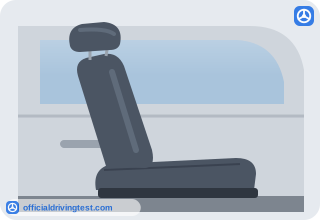
What are head restraints designed to prevent?
- Glare from headlights
- Drowsiness
- Back strain
- Whiplash
Show answer
Correct answer: Whiplash
The manual says head restraints are designed to prevent whiplash.
Source: Kentucky Driver Manual (Updated July 23, 2026), page 28 · Open this page in the manual (Manual page 28)
-
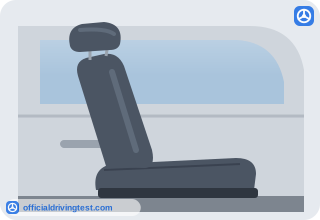
How should a head restraint be adjusted?
- So it sits well behind your head, level with your shoulders
- So it touches the back of your neck, below the level of your ears and shoulders
- So it touches the back of your head, not below the level of your ears
- So it sits at the very top of the seat, above your head
Show answer
Correct answer: So it touches the back of your head, not below the level of your ears
The manual says the head restraint should contact the back of the head and not be below ear level.
Source: Kentucky Driver Manual (Updated July 23, 2026), page 28 · Open this page in the manual (Manual page 28)
-
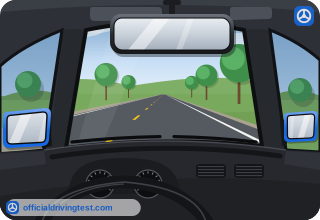
Which mirror does the manual call the primary mirror for the view to the rear?
- The inside mirror
- The left outside mirror
- The right outside mirror
- The backup camera screen
Show answer
Correct answer: The inside mirror
The manual states that the inside mirror is the primary mirror for the view to the rear.
Source: Kentucky Driver Manual (Updated July 23, 2026), page 29 · Open this page in the manual (Manual page 29)
-
How should you adjust your rearview mirror?
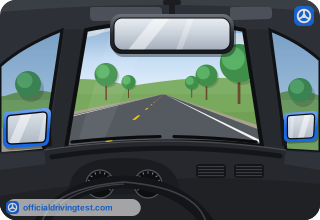
- So that it shows mostly the rear bumper
- So that it shows the roof of the vehicle
- So that it shows the rear edge of your vehicle
- So that it frames the rear window
Show answer
Correct answer: So that it frames the rear window
The manual says to adjust the rearview mirror so that it frames the rear window.
Source: Kentucky Driver Manual (Updated July 23, 2026), page 29 · Open this page in the manual (Manual page 29)
-
How should a day/night mirror be set?
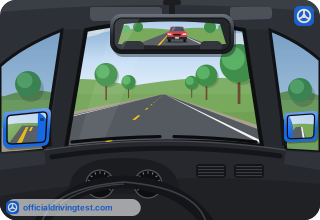
- To the night setting at all times of the day
- For the time of day you are driving
- To the day setting at all times
- Halfway between day and night
Show answer
Correct answer: For the time of day you are driving
The manual says a day/night mirror should be set for the time of day you are driving.
Source: Kentucky Driver Manual (Updated July 23, 2026), page 29 · Open this page in the manual (Manual page 29)
-
What is the purpose of adjusting your outside mirrors as the manual describes?
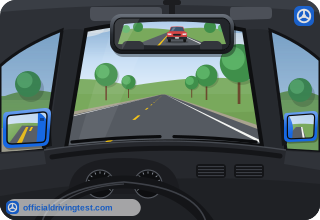
- To reduce blind spots and give maximum visibility to the side and rear
- To show the sides of your own vehicle as fully as possible in each mirror
- To make the rearview mirror unnecessary for rear traffic
- To reduce glare from the headlights of following vehicles
Show answer
Correct answer: To reduce blind spots and give maximum visibility to the side and rear
Outside mirrors are adjusted to reduce blind spots and provide maximum visibility to the side and rear on both sides.
Source: Kentucky Driver Manual (Updated July 23, 2026), page 29 · Open this page in the manual (Manual page 29)
-
To set the left side mirror by the method the manual encourages, what should the driver do?
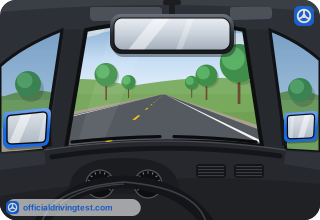
- Sit upright in the normal driving position and set the mirror to show the whole side of the vehicle body
- Lean toward the center console and set the mirror to show the rear bumper of the vehicle
- Rest the head against the closed window and set the mirror to barely show the rear edge of the vehicle
- Open the window and set the mirror to show the driver's door handle and the side of the car
Show answer
Correct answer: Rest the head against the closed window and set the mirror to barely show the rear edge of the vehicle
The manual says the driver rests his or her head against the closed window and sets the mirror to barely show the rear edge of the vehicle.
Source: Kentucky Driver Manual (Updated July 23, 2026), page 29 · Open this page in the manual (Manual page 29)
-
To set the right side mirror by the method the manual encourages, where should the driver's head be?
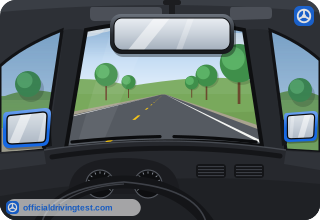
- Resting your head against the closed right-hand window, looking straight ahead
- Leaning right, directly below the rearview mirror or above the center console
- Leaning left, against the driver's window
- Tilted back against the head restraint
Show answer
Correct answer: Leaning right, directly below the rearview mirror or above the center console
The manual says to lean right so the head is directly below the rearview mirror or above the center console.
Source: Kentucky Driver Manual (Updated July 23, 2026), page 29 · Open this page in the manual (Manual page 29)
-
How much additional viewing area does the manual's outside mirror adjustment add to each side of the vehicle?
- 2 to 4 degrees
- 30 to 40 degrees
- 60 to 90 degrees
- 12 to 16 degrees
Show answer
Correct answer: 12 to 16 degrees
The manual says this adjustment adds 12 to 16 degrees of additional viewing area to each side.
Source: Kentucky Driver Manual (Updated July 23, 2026), page 29 · Open this page in the manual (Manual page 29)
-
Why should you keep your windshield clean?
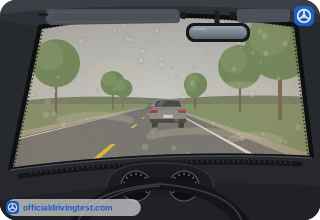
- A dirty windshield makes the vehicle noticeably harder to steer at speed
- A dirty windshield will make the wipers stop working
- Bright sun or headlights on a dirty windshield decrease vision
- Dirt on the glass makes the air bags deploy late
Show answer
Correct answer: Bright sun or headlights on a dirty windshield decrease vision
The manual says bright sun or headlights on a dirty windshield decreases vision.
Source: Kentucky Driver Manual (Updated July 23, 2026), page 29 · Open this page in the manual (Manual page 29)
-
In winter, what does keeping the windshield washer fluid container full also help to do?
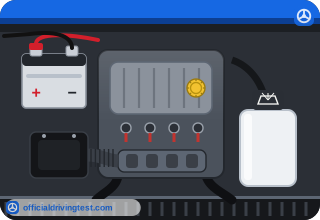
- Prevent freezing
- Melt ice from the windshield
- Warm the inside of the car
- Make the wipers last longer
Show answer
Correct answer: Prevent freezing
The manual says a full washer fluid container will also help to prevent freezing during winter.
Source: Kentucky Driver Manual (Updated July 23, 2026), page 29 · Open this page in the manual (Manual page 29)
-
According to the manual, what does smoking while driving cause?
- Fog to form on the outside of the windshield and mirrors
- The outside mirrors to slip out of adjustment
- Scratches to form on the mirrors
- A film to build up on the glass inside your vehicle
Show answer
Correct answer: A film to build up on the glass inside your vehicle
The manual says smoking while driving causes a film to build up on the inside glass, so the windows should be cleaned often.
Source: Kentucky Driver Manual (Updated July 23, 2026), page 29 · Open this page in the manual (Manual page 29)
-
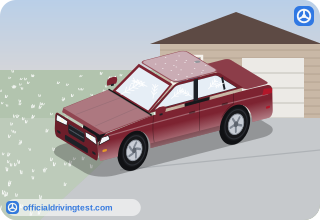
What should you remove from all windows before you start to drive?
- Only the frost on the windshield
- Snow, ice, and frost
- Only the snow on the windshield
- Only the ice on the outside mirrors
Show answer
Correct answer: Snow, ice, and frost
The manual says to remove snow, ice, and frost from all windows before you start to drive.
Source: Kentucky Driver Manual (Updated July 23, 2026), page 29 · Open this page in the manual (Manual page 29)
-
What does the manual say about decals on the windshield or rear window?
- They are unlawful and block your vision
- They are allowed if they are small
- They are allowed if they are in the corners
- They are legal but not recommended
Show answer
Correct answer: They are unlawful and block your vision
The manual says cluttering the windshield or rear window with decals is unlawful and blocks your vision.
Source: Kentucky Driver Manual (Updated July 23, 2026), page 29 · Open this page in the manual (Manual page 29)
-
What does the manual say about excessive window tinting?
- It is allowed on the rear windows
- It is allowed with a doctor's note
- It is not allowed
- It is allowed at night only
Show answer
Correct answer: It is not allowed
The manual lists excessive window tinting as not allowed.
Source: Kentucky Driver Manual (Updated July 23, 2026), page 29 · Open this page in the manual (Manual page 29)
-
According to the manual, when is a load considered secure?
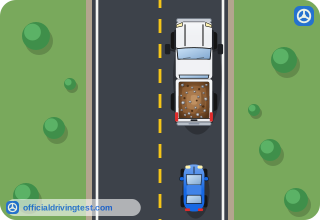
- When it is placed in the cargo area of the vehicle
- Only when nothing can slide, shift, fall, or sift onto the roadway or become airborne
- When it is tied down at the back of the vehicle only
- When it is heavy enough that it should stay in place on its own without ties or straps
Show answer
Correct answer: Only when nothing can slide, shift, fall, or sift onto the roadway or become airborne
The manual says a load is only considered secure when nothing can slide, shift, fall, or sift onto the roadway or become airborne.
Source: Kentucky Driver Manual (Updated July 23, 2026), page 31 · Open this page in the manual (Manual page 31)
-
What may drivers face if they fail to properly secure their load and cause a crash?
- Only a warning from the officer
- Only a loss of driving privileges
- Only a written test at a licensing office
- A costly fine and jail time
Show answer
Correct answer: A costly fine and jail time
The manual says drivers who fail to secure their load may face a costly fine and jail time if they cause a crash.
Source: Kentucky Driver Manual (Updated July 23, 2026), page 31 · Open this page in the manual (Manual page 31)
-
Which is one way the manual says to secure a load in your vehicle or trailer?
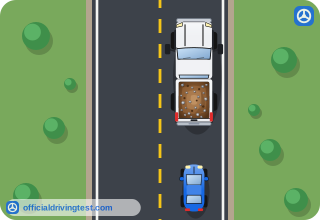
- Pile it up higher than the sides of the trailer
- Rely on the weight of the load to hold it down
- Tie it down with rope, netting, or straps
- Place it loosely and drive slowly
Show answer
Correct answer: Tie it down with rope, netting, or straps
The manual lists tying a load down with rope, netting, or straps.
Source: Kentucky Driver Manual (Updated July 23, 2026), page 32 · Open this page in the manual (Manual page 32)
-
How does the manual say to handle large objects when securing a load?
- Tie them directly to your vehicle or trailer
- Stack smaller items on top to hold them down
- Wedge them between other loose items so they cannot shift
- Rest them on the top of the load
Show answer
Correct answer: Tie them directly to your vehicle or trailer
The manual says to tie large objects directly to your vehicle or trailer.
Source: Kentucky Driver Manual (Updated July 23, 2026), page 32 · Open this page in the manual (Manual page 32)
-
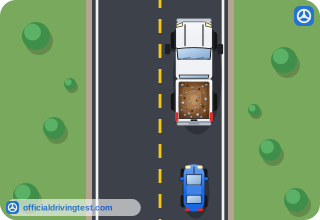
What does the manual say you should consider covering the entire load with?
- A thin plastic or paper cover
- A light cloth cover
- A cardboard cover
- A sturdy tarp or netting
Show answer
Correct answer: A sturdy tarp or netting
The manual says to consider covering the entire load with a sturdy tarp or netting.
Source: Kentucky Driver Manual (Updated July 23, 2026), page 32 · Open this page in the manual (Manual page 32)
-
Which is correct when securing a load?
- Overloading is fine if the load is tied down
- Do not overload your vehicle or trailer
- Overloading is fine if you drive slowly
- Overloading is fine for short trips
Show answer
Correct answer: Do not overload your vehicle or trailer
The manual says not to overload your vehicle or trailer.
Source: Kentucky Driver Manual (Updated July 23, 2026), page 32 · Open this page in the manual (Manual page 32)
-
What does the manual say about animals you are transporting?
- They should also be properly secured
- They do not need to be secured in a closed vehicle
- They only need to be secured on trips over an hour
- They only need to be secured in a trailer
Show answer
Correct answer: They should also be properly secured
The manual says animals should also be properly secured.
Source: Kentucky Driver Manual (Updated July 23, 2026), page 32 · Open this page in the manual (Manual page 32)
-
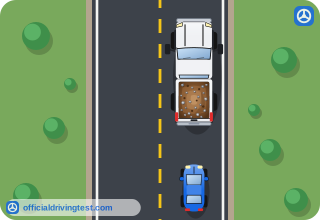
Which question does the manual tell you to ask yourself before you drive with a load?
- Is my load heavier than my passengers?
- Is my load tied only at the front?
- Is my load secured at the back, sides, and top?
- Is my load visible in the rearview mirror at all times?
Show answer
Correct answer: Is my load secured at the back, sides, and top?
The manual's pre-drive questions include whether the load is secured at the back, sides, and top.
Source: Kentucky Driver Manual (Updated July 23, 2026), page 32 · Open this page in the manual (Manual page 32)
-
Which of these is listed as an advanced driver assistance safety feature?
- Heated seats
- Lane keeping assistance
- Power windows
- Rear window defroster system
Show answer
Correct answer: Lane keeping assistance
The manual lists lane keeping assistance among safety features such as blind spot warning, back up camera, forward collision warning, automatic emergency braking, and active parking assist.
Source: Kentucky Driver Manual (Updated July 23, 2026), page 32 · Open this page in the manual (Manual page 32)
-
How may driver assistance safety features act in a dangerous situation?
- They only turn on the hazard lights and unlock the doors after any serious crash occurs
- They only dim the dashboard lights
- They only call for help automatically
- They may give alerts like sounds or vibration, or take control of braking or steering
Show answer
Correct answer: They may give alerts like sounds or vibration, or take control of braking or steering
The manual says safety features may provide alerts or may take control of the vehicle, such as adjusting the braking or steering.
Source: Kentucky Driver Manual (Updated July 23, 2026), page 32 · Open this page in the manual (Manual page 32)
-
Which safety features are you not allowed to use when taking your driving test?
- Certain features such as seat belts and mirrors
- Certain features such as turn signals and headlights
- Certain features such as parking assist and cruise control
- Certain features such as the horn and the windshield wipers
Show answer
Correct answer: Certain features such as parking assist and cruise control
The manual says certain safety features, such as parking assist and cruise control, may not be used during the driving test.
Source: Kentucky Driver Manual (Updated July 23, 2026), page 32 · Open this page in the manual (Manual page 32)
-
What does the manual say driver safety features are meant to do?
- Assist you with driving tasks, not drive the vehicle
- Drive the vehicle for you so that you can relax on long trips
- Replace head checks and mirror use
- Allow you to look away from the road
Show answer
Correct answer: Assist you with driving tasks, not drive the vehicle
The manual says safety features are meant to assist you with driving tasks, not to drive the vehicle.
Source: Kentucky Driver Manual (Updated July 23, 2026), page 32 · Open this page in the manual (Manual page 32)
-
When you drive a vehicle with safety features, who is responsible for the safe operation of the vehicle?
- The vehicle manufacturer
- The safety features, once turned on
- You, only when the features are off
- You, at all times
Show answer
Correct answer: You, at all times
The manual says you are responsible for the safe operation of your vehicle at all times and must not rely on safety features alone.
Source: Kentucky Driver Manual (Updated July 23, 2026), page 32 · Open this page in the manual (Manual page 32)
-
What does the manual say you should do by performing head checks and using mirrors and cameras?
- Let the vehicle's safety features watch the road and traffic for you at all times
- Be aware of everything around you, including traffic and other roadway users
- Check only the vehicles directly behind you
- Replace the need for signaling
Show answer
Correct answer: Be aware of everything around you, including traffic and other roadway users
The manual says it is your responsibility to be aware of everything around you by performing head checks and using mirrors and cameras.
Source: Kentucky Driver Manual (Updated July 23, 2026), page 32 · Open this page in the manual (Manual page 32)
-
Where does the manual tell you to learn how your vehicle's safety features operate?
- In your Vehicle Owner’s Manual
- On the dealership's website
- At the Driver Licensing Regional Office
- On the vehicle's window sticker
Show answer
Correct answer: In your Vehicle Owner’s Manual
The manual tells drivers to read the Vehicle Owner's Manual to learn how safety features operate.
Source: Kentucky Driver Manual (Updated July 23, 2026), page 32 · Open this page in the manual (Manual page 32)