Kentucky: Seat belts and child safety — Part 1 Practice Test
Questions in this part include: “Kentucky's safety belt law applies to a motor vehicle manufactured after which year?” · “About how long does the entire air bag deployment process take?”
Independent educational site · not affiliated with any government agency or DMV
Ready? Test yourself
- Instant feedback with an explanation
- Every answer cites its source in the manual
- Your best score is saved on this device
Questions are original and based on the official manual "Kentucky Driver Manual" (Updated July 23, 2026), Kentucky State Police.
All 18 questions in this practice test
Take the test above first, then use this list to study. Tap “Show answer” to see the correct answer and explanation.
Show the questions and answersHide the questions
-
If the test vehicle was factory equipped with seat belts, who must wear them during the road test?
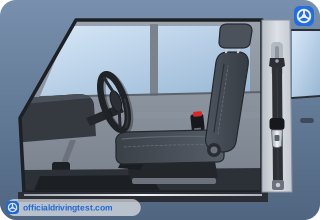
- Only the driver
- Only the examiner
- Only the driver, unless the examiner chooses to
- Both the driver and the examiner
Show answer
Correct answer: Both the driver and the examiner
Both the driver and the examiner must wear seat belts if the vehicle was factory equipped with them.
Source: Kentucky Driver Manual (Updated July 23, 2026), page 11 · Open this page in the manual (Manual page 11)
-
A person shall not operate a motor vehicle manufactured after what year unless the driver and all passengers wear a properly adjusted and fastened seat belt?
- 1975
- 1986
- 1991
- 1981
Show answer
Correct answer: 1981
A person shall not operate a motor vehicle manufactured after 1981 unless the driver and all passengers are wearing a properly adjusted and fastened seat belt.
Source: Kentucky Driver Manual (Updated July 23, 2026), page 12 · Open this page in the manual (Manual page 12)
-
What does the manual say about children when you are driving?
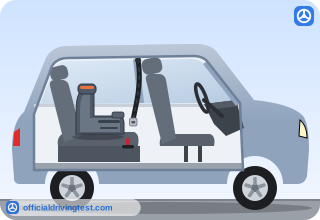
- Let them sit in the front seat unbuckled
- Buckle them only on long trips
- Be sure they are properly and safely buckled up
- Seat them next to the driver only
Show answer
Correct answer: Be sure they are properly and safely buckled up
When driving, be sure children are properly and safely buckled up.
Source: Kentucky Driver Manual (Updated July 23, 2026), page 23 · Open this page in the manual (Manual page 23)
-
Kentucky's safety belt law applies to a motor vehicle manufactured after which year?
- 1971
- 1981
- 1991
- 2001
Show answer
Correct answer: 1981
Kentucky law states that a person shall not operate a motor vehicle manufactured after 1981 unless the driver and all passengers wear a properly adjusted and fastened seat belt.
Source: Kentucky Driver Manual (Updated July 23, 2026), page 29 · Open this page in the manual (Manual page 29)
-
Under Kentucky's safety belt law, which passenger does not have to wear a seat belt?
- A passenger who is riding in the back seat of the vehicle at night or in bad weather
- A passenger who is riding only a short distance
- A passenger who is sitting in the front seat
- A child secured in a child restraint system meeting federal standards
Show answer
Correct answer: A child secured in a child restraint system meeting federal standards
The law exempts a child who is secured in a child restraint system of a type meeting federal motor vehicle safety standards.
Source: Kentucky Driver Manual (Updated July 23, 2026), page 29 · Open this page in the manual (Manual page 29)
-
According to the manual, how do safety belts help during a crash or roll over?
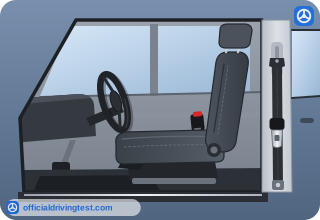
- They stop the vehicle faster so the force of the crash is much lower for everyone
- They keep the vehicle from rolling over in the crash
- They keep you from being thrown from the vehicle and help you keep control
- They prevent the air bags from inflating too hard
Show answer
Correct answer: They keep you from being thrown from the vehicle and help you keep control
The manual says safety belts keep you from being thrown from the vehicle during a crash or roll over and help you keep control.
Source: Kentucky Driver Manual (Updated July 23, 2026), page 29 · Open this page in the manual (Manual page 29)
-
If you are not belted in properly and a collision happens at 55 miles per hour, how fast will your body hit the steering wheel?
- At half that speed
- At about 20 miles per hour
- At a speed the dashboard absorbs
- At the same speed
Show answer
Correct answer: At the same speed
The manual says an unbelted body will impact the steering wheel at the same speed the vehicle was traveling.
Source: Kentucky Driver Manual (Updated July 23, 2026), page 30 · Open this page in the manual (Manual page 30)
-
What does it mean that the seat belt law is "primary" in Kentucky?
- Seat belts are only required for the driver
- Officers can stop drivers they see driving without seat belts
- Officers can only cite a driver after another traffic violation occurs
- The law applies only to drivers under 18
Show answer
Correct answer: Officers can stop drivers they see driving without seat belts
The manual says the primary law means drivers can be stopped by officers if observed driving while not wearing seat belts.
Source: Kentucky Driver Manual (Updated July 23, 2026), page 30 · Open this page in the manual (Manual page 30)
-
How should a shoulder harness be worn?
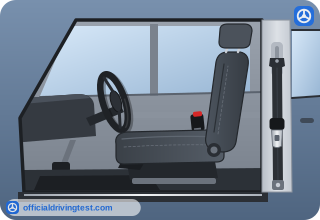
- Across the shoulder and chest with minimal, if any, slack
- Under the arm with a small amount of slack
- Behind the back with a small amount of slack
- Across the shoulder and stomach with the slack held in your lap
Show answer
Correct answer: Across the shoulder and chest with minimal, if any, slack
The manual says a shoulder harness is worn across the shoulder and chest with minimal, if any, slack.
Source: Kentucky Driver Manual (Updated July 23, 2026), page 30 · Open this page in the manual (Manual page 30)
-
What could happen if you wear the shoulder harness the wrong way?
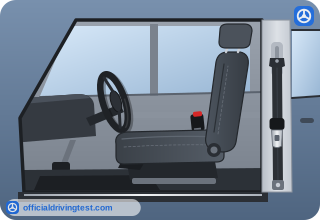
- The belt could lock during a sudden stop
- The air bag could fail to inflate during a frontal crash
- You could suffer serious internal injuries in a crash
- The seat belt could not be fastened again
Show answer
Correct answer: You could suffer serious internal injuries in a crash
The manual says wearing the shoulder harness the wrong way could cause serious internal injuries in a crash.
Source: Kentucky Driver Manual (Updated July 23, 2026), page 30 · Open this page in the manual (Manual page 30)
-
How should the lap belt be adjusted after fastening?
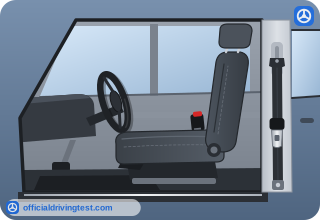
- Loose and high across your waist
- Snug and low across your hips
- Snug and high across your stomach
- Loose and low across your thighs
Show answer
Correct answer: Snug and low across your hips
The manual says the lap belt should be snug and lie low across the hips so you do not slide out of it in a crash.
Source: Kentucky Driver Manual (Updated July 23, 2026), page 30 · Open this page in the manual (Manual page 30)
-
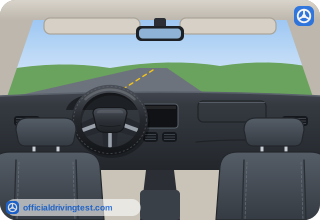
Should you wear a safety belt if your vehicle has air bags?
- No, air bags protect you without a safety belt
- Only the front passenger needs a belt in that case
- Only on highways and when traveling at speeds of more than 55 miles per hour
- Yes, safety belts should be worn even if the vehicle has air bags
Show answer
Correct answer: Yes, safety belts should be worn even if the vehicle has air bags
The manual says safety belts should be worn even if the vehicle is equipped with air bags.
Source: Kentucky Driver Manual (Updated July 23, 2026), page 30 · Open this page in the manual (Manual page 30)
-
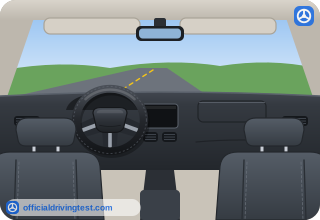
How does the manual describe air bags?
- Primary restraints that make safety belts unnecessary
- Restraints designed to deploy only in very minor low-speed crashes in town
- Supplemental restraints designed to deploy in moderate to severe crashes
- Optional devices that replace head restraints in a crash
Show answer
Correct answer: Supplemental restraints designed to deploy in moderate to severe crashes
The manual calls air bags supplemental restraints typically designed to deploy in moderate to severe crashes.
Source: Kentucky Driver Manual (Updated July 23, 2026), page 30 · Open this page in the manual (Manual page 30)
-
According to the manual, air bags are designed to work best in combination with what?
- Safety belts
- Head restraints
- Child booster seats
- Anti-lock brakes
Show answer
Correct answer: Safety belts
The manual says air bags are designed to work best in combination with safety belts.
Source: Kentucky Driver Manual (Updated July 23, 2026), page 30 · Open this page in the manual (Manual page 30)
-
About how long does the entire air bag deployment process take?
- About 1/2 of a second
- About 2 seconds
- About 1/200th of a second
- About 1/20th of a second
Show answer
Correct answer: About 1/20th of a second
The manual says the entire process takes about 1/20th of a second, faster than the blink of an eye.
Source: Kentucky Driver Manual (Updated July 23, 2026), page 30 · Open this page in the manual (Manual page 30)
-
How does the deployment speed of side-impact air bags compare with the roughly 1/20th-of-a-second deployment process?
- It is slower
- It is even faster
- It is the same speed
- It depends on the driver's weight
Show answer
Correct answer: It is even faster
The manual says the speed of deployment for side-impact air bags is even faster.
Source: Kentucky Driver Manual (Updated July 23, 2026), page 30 · Open this page in the manual (Manual page 30)
-
After an air bag deploys, a powder-like substance fills the vehicle. What does the manual say it is?
- A drying agent for the air bag that could be mistaken for smoke
- A fire-fighting chemical that signals real smoke in the passenger compartment
- A harmful gas, so you must open the windows
- A cleaning powder that must be wiped off the seats at once
Show answer
Correct answer: A drying agent for the air bag that could be mistaken for smoke
The manual says the powder is only a drying agent for the air bag but could be mistaken for smoke.
Source: Kentucky Driver Manual (Updated July 23, 2026), page 30 · Open this page in the manual (Manual page 30)
-
To avoid serious injury from air bag deployment, where should the driver's seat be?
- As close to the steering wheel as possible while still able to reach the pedals
- Reclined as far as it will go so you sit far from the steering wheel and pedals
- As far back from the steering wheel as possible while still able to operate the vehicle safely
- Wherever feels comfortable, as the seat position does not matter for air bags
Show answer
Correct answer: As far back from the steering wheel as possible while still able to operate the vehicle safely
The manual says the driver's seat should be as far back as possible while still being able to operate the vehicle safely.
Source: Kentucky Driver Manual (Updated July 23, 2026), page 30 · Open this page in the manual (Manual page 30)