Kansas: Seat belts and child safety — Part 2 Practice Test
Questions in this part include: “Which vehicles usually have a passenger air bag on-off switch as standard equipment?” · “How long should infants ride in a rear-facing infant seat in the back seat?”
Independent educational site · not affiliated with any government agency or DMV
Ready? Test yourself
- Instant feedback with an explanation
- Every answer cites its source in the manual
- Your best score is saved on this device
Questions are original and based on the official manual "Kansas Driving Handbook" (Revised February 2022), Kansas Department of Revenue, Division of Vehicles.
All 17 questions in this practice test
Take the test above first, then use this list to study. Tap “Show answer” to see the correct answer and explanation.
Show the questions and answersHide the questions
-
When can serious or even fatal injuries occur from a deploying air bag?
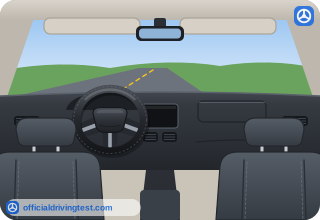
- When someone is very close to, or in direct contact with, the air bag
- When the occupant is wearing a snug lap belt and shoulder harness
- When the air bag deploys more than once in the same crash
- When the occupant sits in the rear seat behind the driver
Show answer
Correct answer: When someone is very close to, or in direct contact with, the air bag
Serious or fatal injuries can occur when someone is very close to, or in direct contact with, an air bag when it deploys.
Source: Kansas Driving Handbook (Revised February 2022), page 28
-
In most vehicles, how far should the center of your chest be from the center of the steering wheel?
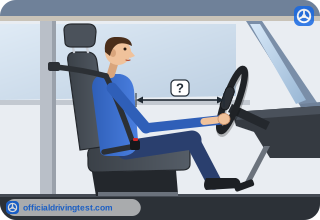
- At least 3 inches
- At least 6 inches
- At least 10 inches
- At least 14 inches
Show answer
Correct answer: At least 10 inches
In most vehicles you should adjust your seat so at least 10 inches is between the center of your chest and the center of the steering wheel.
Source: Kansas Driving Handbook (Revised February 2022), page 28
-
How can you direct the air bag at your chest instead of your face?
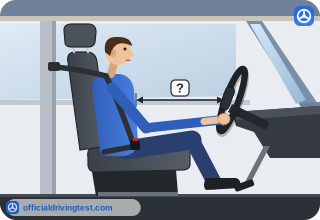
- Lower your seat as far as possible and tilt the steering wheel upward
- Raise your seat or use a cushion and/or adjust the steering wheel downward
- Recline your seat and move it back as far as possible
- Sit closer to the wheel and hold it at the top
Show answer
Correct answer: Raise your seat or use a cushion and/or adjust the steering wheel downward
To direct the air bag at your chest instead of your face, raise your seat or use a cushion and/or adjust the steering wheel downward.
Source: Kansas Driving Handbook (Revised February 2022), page 28
-
Where should your hands never be placed on the steering wheel because of the air bag?
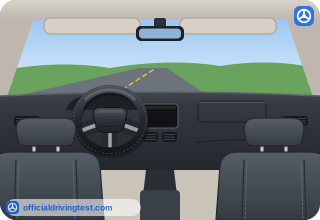
- On the outside of the steering wheel on opposite sides
- On opposite sides of the wheel rim
- Along the rim with your thumbs up
- Across the steering wheel where the air bag deploys
Show answer
Correct answer: Across the steering wheel where the air bag deploys
Your hands belong on the outside of the steering wheel, never across the wheel where the air bag deploys.
Source: Kansas Driving Handbook (Revised February 2022), page 28
-
What does a passenger air bag on-off switch do when it is in the off position?
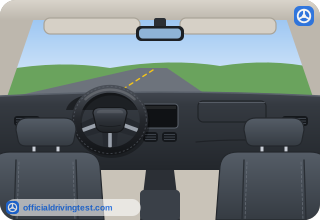
- It disables the front passenger air bag
- It disables the driver's air bag
- It disables the side impact air bags
- It disables the safety belt warning
Show answer
Correct answer: It disables the front passenger air bag
In the off position, the passenger air bag on-off switch disables the front passenger air bag.
Source: Kansas Driving Handbook (Revised February 2022), page 28
-
Which vehicles usually have a passenger air bag on-off switch as standard equipment?
- Vehicles with large rear seats and side air bags
- Only vehicles used to tow trailers
- Most vehicles without rear seats or with small rear seats
- Only vehicles that have no front air bags
Show answer
Correct answer: Most vehicles without rear seats or with small rear seats
Most vehicles without rear seats or with small rear seats, such as pickup trucks or sports cars, have the switch as standard equipment.
Source: Kansas Driving Handbook (Revised February 2022), page 28
-
Where should a rear-facing child safety seat never be placed?
- In the back seat behind the front passenger
- In front of an active passenger air bag
- In the back seat of a vehicle with side air bags
- In any seat that has a safety belt
Show answer
Correct answer: In front of an active passenger air bag
A rear-facing child safety seat is never placed in front of an active passenger air bag.
Source: Kansas Driving Handbook (Revised February 2022), page 28
-
What can happen if a child safety seat is not used correctly and installed properly?
- It may make the vehicle's air bags fail
- It may lock the doors by itself
- It may be illegal to drive until it is replaced
- It may not protect the child in a crash
Show answer
Correct answer: It may not protect the child in a crash
A child safety seat may not protect a child in a crash if it is not used correctly and installed properly.
Source: Kansas Driving Handbook (Revised February 2022), page 28
-
How long should infants ride in a rear-facing infant seat in the back seat?
- From birth to at least age one and until they weigh at least 20 pounds
- From birth to at least six months and until they weigh 10 pounds
- From birth to at least age two and until they weigh 30 pounds
- From birth to at least age three and until they weigh 40 pounds
Show answer
Correct answer: From birth to at least age one and until they weigh at least 20 pounds
Infants should ride in a properly installed rear-facing infant seat in the back seat from birth to at least age one and until they are at least 20 pounds.
Source: Kansas Driving Handbook (Revised February 2022), page 28
-
Where should a toddler over one year old who weighs at least 20 pounds ride?
- In the front seat on the lap of an adult passenger wearing a belt
- In the back seat secured by the lap belt alone
- In the back seat in a properly installed, forward-facing child safety seat
- In the back seat in a rear-facing infant seat only
Show answer
Correct answer: In the back seat in a properly installed, forward-facing child safety seat
Toddlers over one year old and at least 20 pounds should ride in the back seat in a properly installed, forward-facing child safety seat.
Source: Kansas Driving Handbook (Revised February 2022), page 28
-
Under the responsibilities of driving, who should always wear seatbelts?
- You and your passengers
- Only the driver
- Only passengers in the front seat
- Only drivers on highways
Show answer
Correct answer: You and your passengers
The manual says you and your passenger(s) should always wear seatbelts.
Source: Kansas Driving Handbook (Revised February 2022), page 70
-
How can wearing a safety belt help you when you steer quickly to avoid a collision?
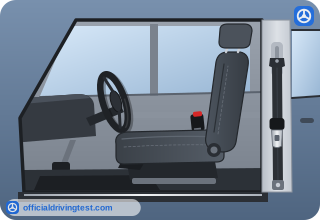
- It makes the vehicle turn faster when you steer quickly
- It keeps you in the seat behind the steering wheel to maintain control
- It takes the place of looking in the mirrors before you steer
- It lets you take your hands off the steering wheel safely
Show answer
Correct answer: It keeps you in the seat behind the steering wheel to maintain control
A safety belt keeps you in the seat behind the steering wheel, which helps you maintain control of your vehicle.
Source: Kansas Driving Handbook (Revised February 2022), page 73
-
If you cannot avoid a collision, what is the most important thing you can do to lessen injuries?
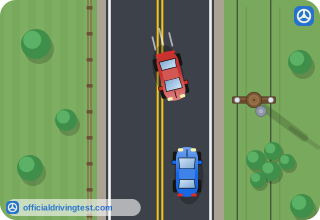
- Turn off the engine
- Use your safety belt
- Take your hands off the wheel
- Open the windows
Show answer
Correct answer: Use your safety belt
The most important thing you can do to lessen injuries in a crash is to use your safety belt.
Source: Kansas Driving Handbook (Revised February 2022), page 74
-
Your vehicle is hit from the side. What helps keep you behind the wheel?
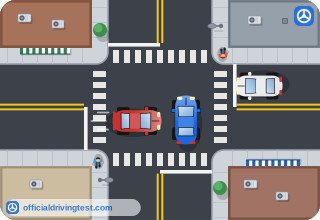
- The head restraint behind you
- The frontal air bag in the wheel
- The parking brake handle
- Your lap and shoulder belts
Show answer
Correct answer: Your lap and shoulder belts
Your body is thrown toward the side that is hit, and lap and shoulder belts help keep you behind the wheel.
Source: Kansas Driving Handbook (Revised February 2022), page 74
-
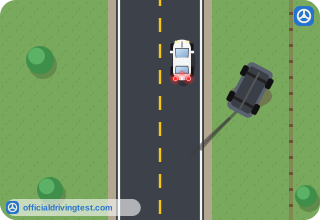
What is the most effective way to reduce the risk of injury or death in a rollover?
- Drive with the windows open
- Use your safety belt
- Sit as far back from the wheel as possible
- Brace yourself against the dashboard
Show answer
Correct answer: Use your safety belt
Without safety belts, occupants of vehicles that roll can be thrown from the vehicle, which greatly increases the risk of serious injury or death.
Source: Kansas Driving Handbook (Revised February 2022), page 76
-
What can side airbags triggered by rollover sensors help prevent?
- The vehicle from leaving the pavement in the first place
- The need to wear a safety belt while you are driving
- Upper body contact with the ground or complete occupant ejection
- Tires from losing contact with the road surface
Show answer
Correct answer: Upper body contact with the ground or complete occupant ejection
Side airbags triggered by rollover sensors can keep the upper body from being exposed to contact with the ground or even complete occupant ejection.
Source: Kansas Driving Handbook (Revised February 2022), page 77
-
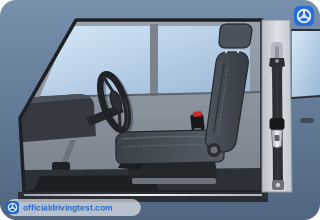
How should you place the safety belt during the pre-trip inspection?
- Across your stomach and neck
- Across your hips and shoulder
- Across your waist only, under the arm
- Across your chest only
Show answer
Correct answer: Across your hips and shoulder
The inspection says to place the safety belt across your hips and shoulder, and the belt must not be ripped or frayed.
Source: Kansas Driving Handbook (Revised February 2022), page 97