Kansas: Emergencies — Part 3 Practice Test
Questions in this part include: “What should you follow to greatly reduce the chance that your vehicle will have a problem while driving?” · “The engine shuts off while you are driving. How should you brake?”
Independent educational site · not affiliated with any government agency or DMV
Ready? Test yourself
- Instant feedback with an explanation
- Every answer cites its source in the manual
- Your best score is saved on this device
Questions are original and based on the official manual "Kansas Driving Handbook" (Revised February 2022), Kansas Department of Revenue, Division of Vehicles.
All 18 questions in this practice test
Take the test above first, then use this list to study. Tap “Show answer” to see the correct answer and explanation.
Show the questions and answersHide the questions
-
Your vehicle is about to be hit from the front. What is it important to try to have?
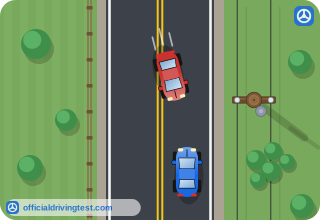
- A head-on impact, as long as your speed is low
- A glancing blow rather than being struck head on
- A second crash on the road shoulder
- A sudden stop with the wheels locked up
Show answer
Correct answer: A glancing blow rather than being struck head on
If a frontal collision is going to happen, you should try to turn the vehicle so that you take a glancing blow or miss it.
Source: Kansas Driving Handbook (Revised February 2022), page 74
-
If a frontal impact is severe, what will the air bag do?
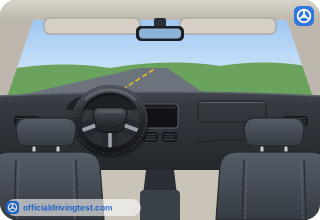
- Stay inflated until you remove your safety belt
- Deploy only if you are not wearing a safety belt
- Deploy and then deflate
- Deploy only if you are hit from the side
Show answer
Correct answer: Deploy and then deflate
In a severe frontal impact the air bag will deploy and then deflate, so you should be ready.
Source: Kansas Driving Handbook (Revised February 2022), page 74
-
What should you follow to greatly reduce the chance that your vehicle will have a problem while driving?
- The recommended maintenance schedule in the vehicle owner’s manual
- The posted speed limit for the type of road you drive on
- The fuel gauge reading each time you stop for gas
- The advice of other drivers you meet on the road
Show answer
Correct answer: The recommended maintenance schedule in the vehicle owner’s manual
Following the recommended maintenance schedule in the owner’s manual greatly reduces the chance of a vehicle problem.
Source: Kansas Driving Handbook (Revised February 2022), page 75
-
Your brakes stop working. What should you do first?
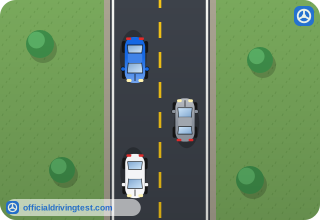
- Rapidly pump the brake pedal several times
- Pull on the parking brake as hard as you can
- Shift into park
- Turn off the engine
Show answer
Correct answer: Rapidly pump the brake pedal several times
Rapidly pumping the brake pedal several times will often build up enough brake pressure to allow you to stop.
Source: Kansas Driving Handbook (Revised February 2022), page 75
-
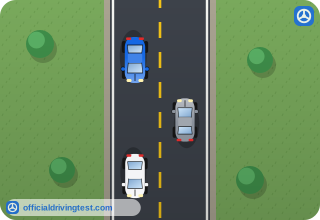
Pumping does not restore your brakes. How should you use the parking brake foot pedal?
- Push it down hard and quickly to stop at once
- Push it down and keep it down until the vehicle stops
- Push it slowly so you will not lock the rear wheels and cause a skid
- Do not use it, because using it can damage the rear brakes
Show answer
Correct answer: Push it slowly so you will not lock the rear wheels and cause a skid
The parking brake foot pedal is pushed slowly so you will not lock the rear wheels and cause a skid, and you should be ready to release it if the vehicle skids.
Source: Kansas Driving Handbook (Revised February 2022), page 75
-
The brakes have failed and the parking brake does not work. What should you do?
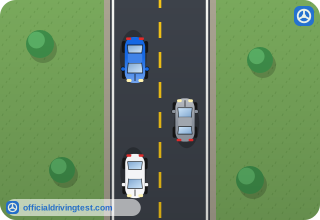
- Continue to drive carefully to the nearest repair shop
- Look for a safe place to slow to a stop off the roadway
- Shift into reverse to stop the vehicle
- Turn off the ignition and coast in the traffic lane
Show answer
Correct answer: Look for a safe place to slow to a stop off the roadway
You should look for a safe place to slow to a stop off the roadway, and not continue to drive the vehicle without working brakes.
Source: Kansas Driving Handbook (Revised February 2022), page 75
-
What will a vehicle do if a front tire blows out?
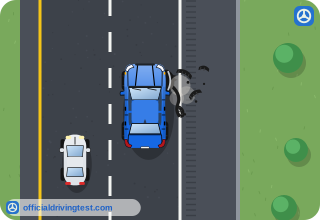
- Wobble and shake, but never pull at all
- Pull sharply away from the blowout
- Continue straight with no change
- Pull sharply in the direction of the blowout
Show answer
Correct answer: Pull sharply in the direction of the blowout
If a front tire blows out, the vehicle will pull sharply in the direction of the blowout.
Source: Kansas Driving Handbook (Revised February 2022), page 75
-
What will a vehicle do if a rear tire blows out?
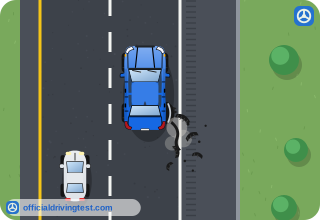
- Pull sharply away from the blowout
- Pull sharply in the direction of the blowout without shaking
- Wobble, shake and pull some in the direction of the blowout
- Continue straight with no change
Show answer
Correct answer: Wobble, shake and pull some in the direction of the blowout
If a rear tire blows out, the vehicle will wobble, shake and pull some in the direction of the blowout.
Source: Kansas Driving Handbook (Revised February 2022), page 75
-
A tire blows out or suddenly goes flat. How should you hold the steering wheel?
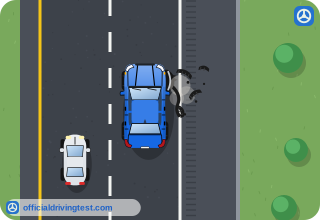
- Grip it firmly and keep the vehicle going straight
- Turn it sharply toward the road shoulder at once
- Hold it loosely to let the vehicle settle
- Turn it away from the blown tire at once
Show answer
Correct answer: Grip it firmly and keep the vehicle going straight
In a tire blowout you grip the steering wheel firmly and keep the vehicle going straight.
Source: Kansas Driving Handbook (Revised February 2022), page 75
-
A tire blows out. How should you slow the vehicle?
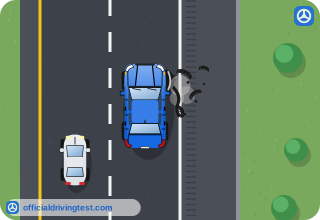
- Brake as hard as you can as soon as the tire blows out
- Press the accelerator to keep control
- Shift into reverse to stop faster
- Gradually, off the accelerator, braking gently only if needed
Show answer
Correct answer: Gradually, off the accelerator, braking gently only if needed
Slow down gradually with your foot off the accelerator. Do not brake; let the vehicle slow by itself, or brake gently only if necessary.
Source: Kansas Driving Handbook (Revised February 2022), page 75
-
After a tire blowout, where should you stop if possible?
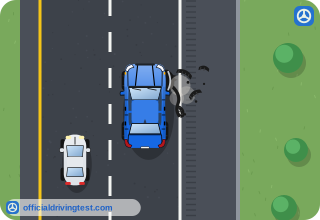
- In the lane where it happened with the emergency flashers on
- Off the road in a safe place, with the emergency flashers on
- On the road beside the center line
- Wherever the vehicle stops by itself
Show answer
Correct answer: Off the road in a safe place, with the emergency flashers on
The manual says not to stop on the road if possible; pull off in a safe place and turn on emergency flashers.
Source: Kansas Driving Handbook (Revised February 2022), page 75
-
The engine shuts off while you are driving. What should you know about the steering wheel?
- It will lock and you cannot turn it
- It may be difficult to turn, but you can turn it
- It will turn more easily than usual
- It will turn only after the engine restarts
Show answer
Correct answer: It may be difficult to turn, but you can turn it
The manual says to keep a strong grip, because the steering wheel may be difficult to turn but you can turn it.
Source: Kansas Driving Handbook (Revised February 2022), page 75
-
The engine shuts off while you are driving. How should you brake?
- Brake as hard as you can while the engine is still in gear
- Pump the pedal quickly and repeatedly
- Do not brake and wait for the vehicle to stop
- Brake with steady pressure on the pedal, not hard braking
Show answer
Correct answer: Brake with steady pressure on the pedal, not hard braking
The manual says to shift to neutral and look for an escape path, then brake with steady pressure on the pedal, slow down and pull off the roadway.
Source: Kansas Driving Handbook (Revised February 2022), page 75
-
The engine shut off, you stopped, and you could not restart it. What should you do?
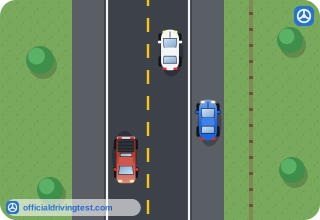
- Raise the hood, turn on the emergency flashers and call for help
- Leave the vehicle in the traffic lane and walk away to find help
- Keep trying to restart it until the battery dies
- Place the vehicle in gear and push it
Show answer
Correct answer: Raise the hood, turn on the emergency flashers and call for help
If the engine will not restart, you raise the hood, turn on the emergency flashers and call for help.
Source: Kansas Driving Handbook (Revised February 2022), page 75
-
Which can cause accelerator failure?
- A flat tire or a steering wheel that is loose
- A dirty windshield or a horn that does not work
- A broken spring or a pedal stuck in the down position
- A full fuel tank or an engine that is still cold
Show answer
Correct answer: A broken spring or a pedal stuck in the down position
Accelerator failure could be caused by either a broken spring or the pedal getting stuck in the down position.
Source: Kansas Driving Handbook (Revised February 2022), page 75
-
The accelerator is stuck. What should you do first?
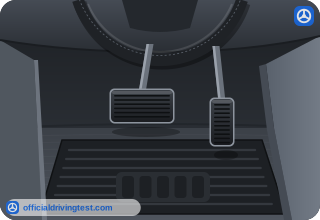
- Turn off the ignition and lock the steering
- Brake as hard as you can in gear
- Pump the accelerator several times
- Shift to neutral and search for an escape path
Show answer
Correct answer: Shift to neutral and search for an escape path
In either case of accelerator failure you shift to neutral and search for an escape path.
Source: Kansas Driving Handbook (Revised February 2022), page 75
-
After shifting to neutral because the accelerator is stuck, how should you steer and brake?
- Steer sharply and brake as hard as you can
- Steer smoothly, brake gently and pull off the roadway
- Keep steering straight and do not brake
- Turn the wheel as far as it goes and release the brake
Show answer
Correct answer: Steer smoothly, brake gently and pull off the roadway
You steer smoothly, brake gently and pull off the roadway.
Source: Kansas Driving Handbook (Revised February 2022), page 75
-
After the vehicle is stopped with a stuck accelerator, what should you do before driving again?
- Restart the engine and test the pedal again on the road
- Adjust the pedal yourself at the side of the road and go
- Turn off the vehicle and have the pedal repaired at a service center
- Drive slowly and carefully to the nearest service center for repairs
Show answer
Correct answer: Turn off the vehicle and have the pedal repaired at a service center
The vehicle should be turned off and the pedal repaired at a service center before driving again.
Source: Kansas Driving Handbook (Revised February 2022), page 75