Iowa: Signals and vehicle controls — Part 1 Practice Test
Maintaining your vehicle, seats and mirrors, driver-assistance systems, starting, shifting, braking, steering, backing, turn signals, headlights and the horn. — Part 1
Independent educational site · not affiliated with any government agency or DMV
Ready? Test yourself
- Instant feedback with an explanation
- Every answer cites its source in the manual
- Your best score is saved on this device
Questions are original and based on the official manual "Iowa Driver’s License Manual" (July 2026), Iowa Department of Transportation.
All 37 questions in this practice test
Take the test above first, then use this list to study. Tap “Show answer” to see the correct answer and explanation.
Show the questions and answersHide the questions
-
Which two separate braking systems do cars, trucks, and ATVs/UTVs need?
- A foot brake and an engine brake
- An engine brake and a trailer brake
- A foot brake and a parking brake
- A parking brake and a brake warning light
Show answer
Correct answer: A foot brake and a parking brake
Cars, trucks, and ATVs/UTVs need two separate braking systems, a foot brake and a parking brake.
Source: Iowa Driver’s License Manual (July 2026), page 23
-
How many braking systems do motorcycles and mopeds need?
- Two
- At least one
- Three
- None
Show answer
Correct answer: At least one
Motorcycles and mopeds need at least one braking system.
Source: Iowa Driver’s License Manual (July 2026), page 23
-
Which of these is a sign that you should have a mechanic check your brakes?
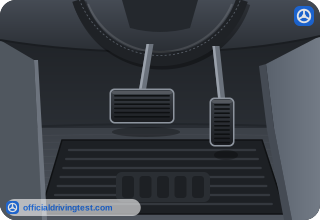
- The brake pedal feels firm when pressed
- The brakes stop the vehicle quietly
- The parking brake holds the vehicle in place
- The brake pedal goes to the floor
Show answer
Correct answer: The brake pedal goes to the floor
If the brake pedal goes to the floor, have a mechanic check the brakes.
Source: Iowa Driver’s License Manual (July 2026), page 23
-
Which maintenance schedule should you follow for your vehicle?
- The recommended schedule in the vehicle owner’s manual
- A schedule posted at an Iowa DOT service center
- The schedule set by the county treasurer
- A yearly schedule printed on the registration
Show answer
Correct answer: The recommended schedule in the vehicle owner’s manual
The manual tells drivers to follow the recommended maintenance schedule listed in the vehicle owner’s manual.
Source: Iowa Driver’s License Manual (July 2026), page 23
-
Besides saving money, what does properly maintaining your vehicle give you?
- An exemption from the license test
- A longer time between license renewals
- An advantage in an emergency situation
- A higher legal speed limit
Show answer
Correct answer: An advantage in an emergency situation
Proper maintenance saves money and gives you an advantage in an emergency situation.
Source: Iowa Driver’s License Manual (July 2026), page 23
-
How should you check that your signals, brake lights, taillights, and headlights are working?
- By watching the dashboard indicators from the seat
- By checking them from outside the vehicle
- By listening for the signal to click
- By having a mechanic check once a year
Show answer
Correct answer: By checking them from outside the vehicle
The manual says to check these lights from outside the vehicle.
Source: Iowa Driver’s License Manual (July 2026), page 24
-
How many headlights must cars, trucks, and ATVs/UTVs have on the front?
- One
- Three
- Four
- Two
Show answer
Correct answer: Two
These vehicles need two headlights on the front, one on the right and one on the left.
Source: Iowa Driver’s License Manual (July 2026), page 24
-
How far away should the required red light on the back of the vehicle be visible?
- At least 500 feet
- At least 100 feet
- At least 250 feet
- At least 1,000 feet
Show answer
Correct answer: At least 500 feet
The vehicle needs at least one red light on the back that should be visible for at least 500 feet.
Source: Iowa Driver’s License Manual (July 2026), page 24
-
What color light is required to illuminate the rear license plate?
- Red
- Amber
- White
- Blue
Show answer
Correct answer: White
A white light to illuminate the rear license plate is required.
Source: Iowa Driver’s License Manual (July 2026), page 24
-
Turn signals are required for all cars, trucks, and trailers wider than how many inches?
- 30 inches
- 40 inches
- 50 inches
- 60 inches
Show answer
Correct answer: 40 inches
Turn signals are required for all cars, trucks, and trailers wider than 40 inches.
Source: Iowa Driver’s License Manual (July 2026), page 24
-
What does the manual say about turn signals on a vehicle that is equipped with them?
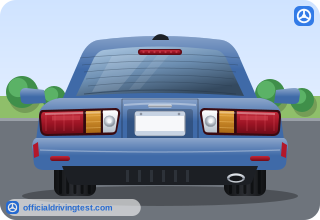
- They may be turned off in daylight
- They are optional once the vehicle is registered
- They only need to work on the left side
- They must work
Show answer
Correct answer: They must work
If a vehicle is equipped with turn signals, they must work.
Source: Iowa Driver’s License Manual (July 2026), page 24
-
Other drivers are constantly flashing their headlights at you. What should you do?
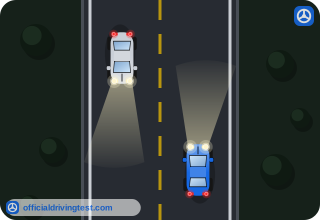
- Have your headlights checked
- Turn off your headlights
- Keep driving and ignore them
- Replace your wiper blades
Show answer
Correct answer: Have your headlights checked
Constant flashing from other drivers can mean a misaligned headlight, so have a mechanic check the headlights.
Source: Iowa Driver’s License Manual (July 2026), page 24
-
By how much can dirt on the lenses of your lights cut the light’s effectiveness?
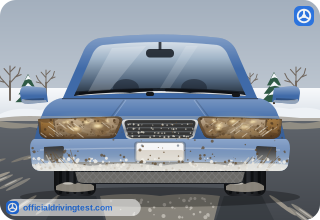
- By 10 percent
- By 25 percent
- By 50 percent
- By 75 percent
Show answer
Correct answer: By 50 percent
Dirt on the lenses can cut the light’s effectiveness by 50 percent.
Source: Iowa Driver’s License Manual (July 2026), page 24
-
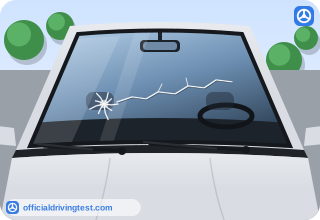
What is a risk of driving with damaged glass?
- It can make the windshield wipers stop working
- It can break more easily in a minor collision
- It can cause the engine to stall
- It can reduce tire pressure
Show answer
Correct answer: It can break more easily in a minor collision
Damaged glass can break more easily in a minor collision or when something hits the windshield, and it can obscure vision.
Source: Iowa Driver’s License Manual (July 2026), page 24
-
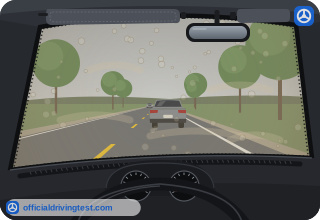
What makes it hard to see through a dirty windshield?
- Properly inflated tires
- A full washer fluid tank
- Properly working wipers
- Bright sun or headlights
Show answer
Correct answer: Bright sun or headlights
Bright sun or headlights on a dirty windshield make it hard to see.
Source: Iowa Driver’s License Manual (July 2026), page 24
-
When should you use antifreeze wash in your windshield washer?
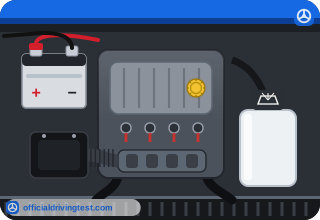
- When the temperature could fall below freezing
- When the temperature rises above 90 degrees
- Only after it rains
- Every time you fill the fluid
Show answer
Correct answer: When the temperature could fall below freezing
Use antifreeze wash when the temperature could fall below freezing.
Source: Iowa Driver’s License Manual (July 2026), page 24
-
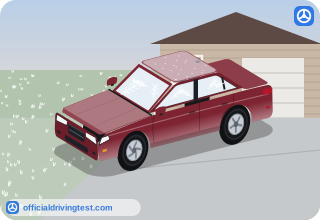
Which windows should you clear of snow, ice, or frost before you drive?
- Only the front windshield
- The windshield and driver’s window only
- All windows: front, side, and back
- The front and back windows only
Show answer
Correct answer: All windows: front, side, and back
You should clear snow, ice, or frost from all windows, cleaning the front, side, and back windows before you drive.
Source: Iowa Driver’s License Manual (July 2026), page 24
-
What should you do if your wiper blades are not keeping the windshield clean?
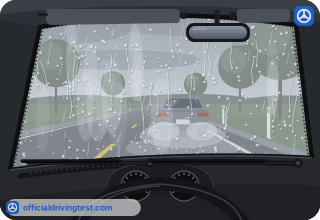
- Run them at a faster speed
- Replace them
- Rub them with a dry cloth
- Adjust the mirrors instead
Show answer
Correct answer: Replace them
If wiper blades are not keeping the windshield clean, replace them.
Source: Iowa Driver’s License Manual (July 2026), page 24
-
What does the manual say about windshield wipers?
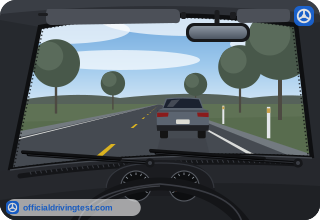
- They are optional in dry weather
- They are required only from November to March
- They are required only on vehicles with tinted windows
- They are required and must be in good working condition
Show answer
Correct answer: They are required and must be in good working condition
Windshield wipers are required and should be in good working condition.
Source: Iowa Driver’s License Manual (July 2026), page 24
-
Iowa law requires tinted windshields and windows to the immediate right or left of the driver to allow at least what percent of the light through?
- 70 percent
- 30 percent
- 50 percent
- 90 percent
Show answer
Correct answer: 70 percent
Iowa law requires such tinted windows to allow at least 70 percent of the light through.
Source: Iowa Driver’s License Manual (July 2026), page 24
-
What does the manual say about medical exemptions for tinted windows in Iowa?
- A doctor’s note allows any tint
- They are allowed only for rear windows
- Iowa does not have one
- They are allowed only with a county treasurer permit
Show answer
Correct answer: Iowa does not have one
The manual states that Iowa does not have a medical exemption for tinted windows.
Source: Iowa Driver’s License Manual (July 2026), page 24
-
What should you avoid doing to keep your view unobstructed?
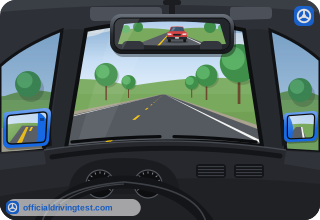
- Adjusting the rearview mirror before driving
- Hanging things from the rearview mirror
- Keeping the side mirrors adjusted
- Cleaning the front and back windows
Show answer
Correct answer: Hanging things from the rearview mirror
To keep your view unobstructed, do not hang things from your rearview mirrors or clutter the windshield with decals.
Source: Iowa Driver’s License Manual (July 2026), page 24
-
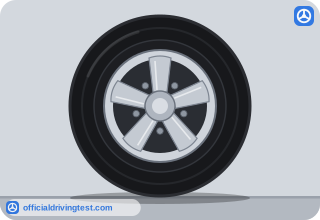
Which of these can worn, bald, or unbalanced tires cause?
- A shorter stopping distance
- Better fuel economy
- Easier steering
- A longer stopping distance
Show answer
Correct answer: A longer stopping distance
Worn, bald, or unbalanced tires can increase your stopping distance.
Source: Iowa Driver’s License Manual (July 2026), page 24
-
What should you do if the vehicle bounces, the steering wheel shakes, or the vehicle pulls to one side?
- Have a mechanic check it
- Add more air to all tires
- Drive faster to steady the vehicle
- Keep driving and wait for it to stop
Show answer
Correct answer: Have a mechanic check it
These signs point to a tire or vehicle problem, so have a mechanic check it.
Source: Iowa Driver’s License Manual (July 2026), page 24
-
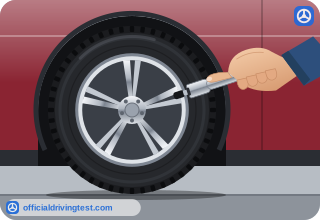
When should you check tire air pressure with an air pressure gauge?
- After a long highway drive
- When the tires are hot
- When the tires are cold
- Right after parking the car
Show answer
Correct answer: When the tires are cold
Tire air pressure should be checked when the tires are cold.
Source: Iowa Driver’s License Manual (July 2026), page 24
-
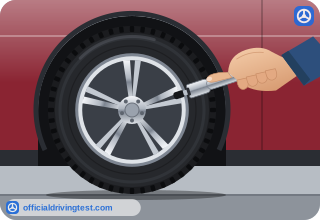
Where is the recommended tire pressure commonly listed?
- On a sticker inside the trunk lid or on the registration
- On a sticker inside the driver’s door or in the owner’s manual
- On a sticker on the windshield or in the vehicle title
- On the rear license plate or under the hood
Show answer
Correct answer: On a sticker inside the driver’s door or in the owner’s manual
The recommended tire pressure is commonly listed on a sticker inside the driver’s door or in the vehicle owner’s manual.
Source: Iowa Driver’s License Manual (July 2026), page 24
-
In the penny test for tire tread, how do you stick the penny into the tread?
- Edge first
- Tail side up
- Sideways
- Head first
Show answer
Correct answer: Head first
The manual says to stick the penny into the tread head first.
Source: Iowa Driver’s License Manual (July 2026), page 24
-
In the penny test, what does it mean if the tread does not come at least to the top of Lincoln’s head?
- The tire is unsafe and should be replaced
- The tire only needs more air
- The tire should be rotated to the rear
- The tire is still safe for highway driving
Show answer
Correct answer: The tire is unsafe and should be replaced
If the tread does not reach the top of Lincoln’s head, the tire is unsafe and should be replaced.
Source: Iowa Driver’s License Manual (July 2026), page 24
-
What should you do if the vehicle is hard to turn or does not turn when the steering wheel is first turned?
- Have the steering checked by a mechanic
- Keep driving and wait to see if it improves
- Add air to the tires and keep driving
- Turn the wheel harder until it responds
Show answer
Correct answer: Have the steering checked by a mechanic
A vehicle that is hard to turn, or that does not turn when the wheel is first turned, should have its steering checked by a mechanic.
Source: Iowa Driver’s License Manual (July 2026), page 25
-
What may it mean if a vehicle bounces a lot, or keeps bouncing after a bump or after you stop?
- The exhaust system needs to be replaced right away
- The engine needs a full tune-up at a shop
- It may need new shocks or other suspension parts
- The horn and other warning devices are not working
Show answer
Correct answer: It may need new shocks or other suspension parts
A vehicle that bounces a lot, or keeps bouncing after a bump or after you stop, may need new shocks or other suspension parts.
Source: Iowa Driver’s License Manual (July 2026), page 25
-
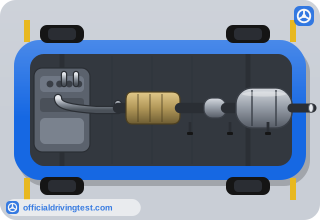
What can fumes from a leaky exhaust cause?
- A louder engine noise only
- Death in a very short time
- Loss of power steering
- Worn brake pads over several months
Show answer
Correct answer: Death in a very short time
Fumes from a leaky exhaust can cause death in a very short time.
Source: Iowa Driver’s License Manual (July 2026), page 25
-
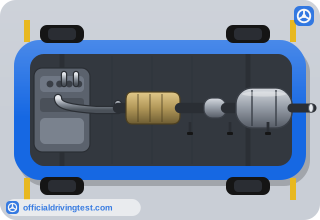
What does the manual say you must never do with a running engine?
- Leave it running outdoors for more than a few minutes while the vehicle is parked
- Turn it off while the vehicle is rolling to a stop at a red light
- Run it with the heater on while you are parked in an open lot
- Leave it running in the garage or sit in the running vehicle without opening a window
Show answer
Correct answer: Leave it running in the garage or sit in the running vehicle without opening a window
Exhaust fumes are toxic, so you should never leave the engine running in the garage or sit in a running vehicle without opening a window.
Source: Iowa Driver’s License Manual (July 2026), page 25
-
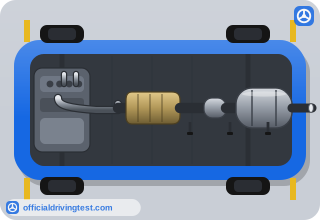
Which of these is a job of the exhaust system?
- It helps reduce noise from the engine
- It helps the vehicle absorb bumps in the road
- It helps you turn the steering wheel
- It warns other drivers of your presence
Show answer
Correct answer: It helps reduce noise from the engine
The exhaust system helps remove toxic gases from the engine, helps reduce engine noise, and helps cool the hot gases coming from the engine.
Source: Iowa Driver’s License Manual (July 2026), page 25
-
Which of these can a poorly tuned engine do?
- Improve fuel economy
- Make the horn louder
- Pollute the air
- Reduce braking distance
Show answer
Correct answer: Pollute the air
A poorly tuned engine may lose power, may not start, gets poor fuel economy, pollutes the air, and could stall on the road.
Source: Iowa Driver’s License Manual (July 2026), page 25
-
For engine maintenance, which procedures does the manual say to follow?
- The procedures posted at the nearest service station
- The procedures recommended in the vehicle owner’s manual
- The procedures a friend with mechanical skills suggests
- The procedures printed on the vehicle registration
Show answer
Correct answer: The procedures recommended in the vehicle owner’s manual
Maintenance should follow the procedures recommended in the vehicle owner’s manual.
Source: Iowa Driver’s License Manual (July 2026), page 25
-
According to the manual, how should a horn be used?
- To greet people you know on the road
- To tell slower drivers to speed up
- To signal that you plan to turn
- Only as a warning to others
Show answer
Correct answer: Only as a warning to others
A horn could save your life as a warning, and it should only be used as a warning to others.
Source: Iowa Driver’s License Manual (July 2026), page 25
-
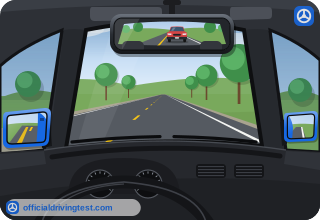
How far behind you must you be able to see in your rearview mirror?
- At least 200 feet
- At least 50 feet
- At least 100 feet
- At least 500 feet
Show answer
Correct answer: At least 200 feet
The manual says you must be able to see at least 200 feet behind you in your rearview mirror.
Source: Iowa Driver’s License Manual (July 2026), page 25