Iowa: Sharing the road — Part 1 Practice Test
Questions in this part include: “How are bicycle lanes marked?” · “What does a bicycle box look like?”
Independent educational site · not affiliated with any government agency or DMV
Ready? Test yourself
- Instant feedback with an explanation
- Every answer cites its source in the manual
- Your best score is saved on this device
Questions are original and based on the official manual "Iowa Driver’s License Manual" (July 2026), Iowa Department of Transportation.
All 19 questions in this practice test
Take the test above first, then use this list to study. Tap “Show answer” to see the correct answer and explanation.
Show the questions and answersHide the questions
-
On which of these might you see a slow-moving vehicle sign?
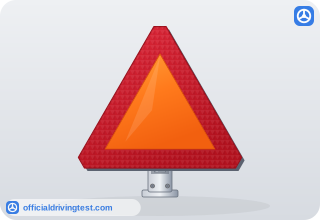
- Passenger cars on county roads
- Mail and package delivery trucks
- Road maintenance equipment
- Public transit buses
Show answer
Correct answer: Road maintenance equipment
You may see the reflective orange triangle on road maintenance equipment, farm vehicles, or horse-drawn wagons.
Source: Iowa Driver’s License Manual (July 2026), page 11
-
On a road with two or more lanes traveling in the same direction, which lane is generally used for passing?
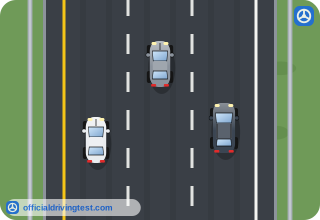
- The right lane
- The left lane
- The center lane
- The lane next to the shoulder
Show answer
Correct answer: The left lane
On a road with two or more lanes in the same direction, the left lane is generally used for passing.
Source: Iowa Driver’s License Manual (July 2026), page 16
-
On a road with three or more lanes in your direction, which lanes should you stay in except to pass?
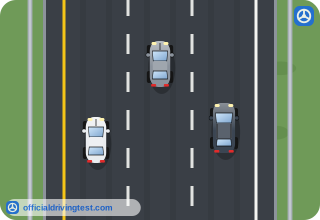
- The left lane
- The lane next to the center line
- Any lane that is open
- The right or center lane
Show answer
Correct answer: The right or center lane
On a road with three or more lanes, you should stay in the right or center lane except to pass.
Source: Iowa Driver’s License Manual (July 2026), page 16
-
On a road with three or more lanes, which lane is best to use if there is a lot of entering traffic?
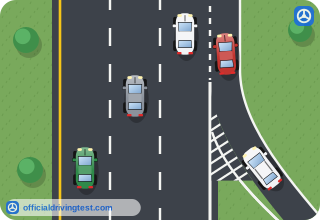
- The right lane
- The left lane
- The center lane
- The shoulder
Show answer
Correct answer: The center lane
If there is a lot of entering traffic, it is best to use the center lane.
Source: Iowa Driver’s License Manual (July 2026), page 16
-
In normal driving, when may you drive on the shoulder of the road?
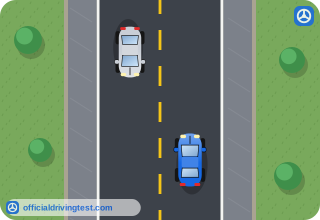
- Only when instructed to by a traffic control device or an official
- Whenever you need to let a faster vehicle pass you safely
- When the shoulder is paved and wide enough for your vehicle
- When traffic ahead is backed up and the other lane is blocked
Show answer
Correct answer: Only when instructed to by a traffic control device or an official
Unless instructed by a traffic control device or an official, you should never drive on the shoulder of the road.
Source: Iowa Driver’s License Manual (July 2026), page 16
-
Why should you never pass on the shoulder, whether it is paved or not?
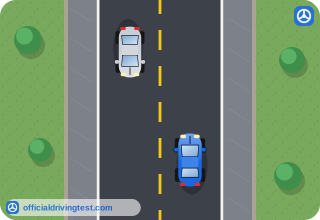
- The shoulder is always too narrow for any vehicle to fit on it safely
- The shoulder is reserved for vehicles that are broken down or stopped
- Passing on the shoulder is allowed only when the shoulder is paved
- Other drivers will not expect you there and may pull off the road without looking
Show answer
Correct answer: Other drivers will not expect you there and may pull off the road without looking
Other drivers will not expect you to be on the shoulder and may pull off the road without looking.
Source: Iowa Driver’s License Manual (July 2026), page 16
-
How are bicycle lanes marked?
- By dashed yellow lines, along with turn arrows and warning signs
- By a solid yellow line, along with a green diamond painted on the lane
- By solid white lines, along with bicycle pavement markings and signs
- By white triangles pointing toward approaching vehicles, along with signs
Show answer
Correct answer: By solid white lines, along with bicycle pavement markings and signs
Bicycle lanes are intended for use by bicyclists and are marked by solid white lines, along with bicycle pavement markings and signs.
Source: Iowa Driver’s License Manual (July 2026), page 17
-
What may be used to separate some bike lanes from traffic?
- Double white lines, curbs, posts, or planters
- Guardrails, rumble strips, or cable barriers
- Solid yellow lines, cones, or barrels
- Reflectors and dashed white lines
Show answer
Correct answer: Double white lines, curbs, posts, or planters
Some bike lanes are further separated from traffic with double white lines, curbs, posts, or planters.
Source: Iowa Driver’s License Manual (July 2026), page 17
-
What should motorists do before crossing green pavement in a bicycle lane?
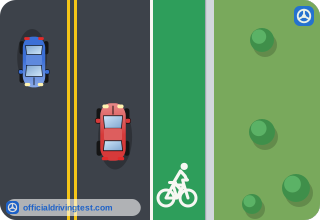
- Speed up to clear the lane quickly
- Stop on the green pavement and wait
- Honk to warn bicyclists that you are crossing
- Pay close attention and look for bicyclists
Show answer
Correct answer: Pay close attention and look for bicyclists
Bicycle lanes may be filled with green paint, and motorists should pay close attention and look for bicyclists before crossing green pavement.
Source: Iowa Driver’s License Manual (July 2026), page 17
-
What should motorists not do on green pavement in a bicycle lane?
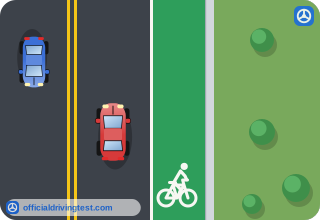
- Slow down
- Stop
- Cross it
- Look for bicyclists
Show answer
Correct answer: Stop
Motorists should not stop on green pavement.
Source: Iowa Driver’s License Manual (July 2026), page 17
-
When may motorists drive in a bicycle lane?
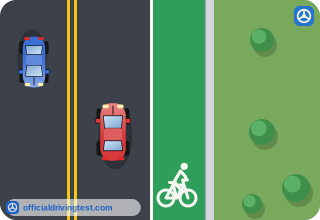
- Only when making turning movements
- Only when the traffic lane is blocked
- Only when passing a slow vehicle
- Only when no bicyclists are in sight
Show answer
Correct answer: Only when making turning movements
Motorists may only drive in bicycle lanes when making turning movements.
Source: Iowa Driver’s License Manual (July 2026), page 17
-
A motorist is driving in a bicycle lane to make a turn. What must the motorist do?
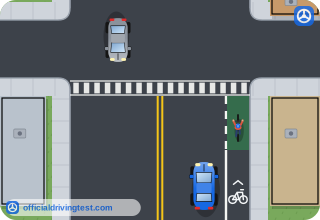
- Stay in the bicycle lane for a full block before making the turn
- Sound the horn and cross the lane quickly before bicyclists arrive
- Look carefully beside and behind the vehicle for bicyclists and cross with care
- Look only ahead at the road you are turning into and then turn as usual
Show answer
Correct answer: Look carefully beside and behind the vehicle for bicyclists and cross with care
Motorists in a bicycle lane when turning must look carefully beside and behind their vehicle for bicyclists and cross with care.
Source: Iowa Driver’s License Manual (July 2026), page 17
-
What are shared lane pavement markings also called?
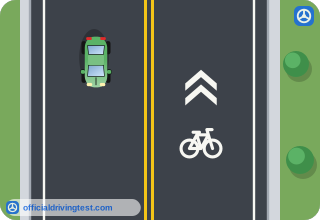
- Bike boxes
- Sharrows
- Bike detectors
- Green lanes
Show answer
Correct answer: Sharrows
Shared lane pavement markings are also called "sharrows."
Source: Iowa Driver’s License Manual (July 2026), page 17
-
What is one thing shared lane markings (sharrows) do?
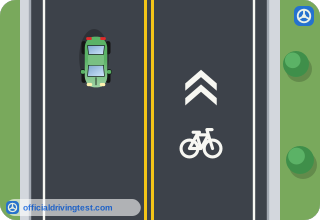
- Mark a lane for the exclusive use of bicycles
- Show bicyclists where to stop at a red light
- Show motorists where to park next to a bike lane
- Alert motorists to the presence of bicyclists
Show answer
Correct answer: Alert motorists to the presence of bicyclists
Shared lane markings alert motorists of the presence of bicyclists and encourage safe passing of bicyclists by motorists.
Source: Iowa Driver’s License Manual (July 2026), page 17
-
How do shared lane markings (sharrows) differ from bike lanes?
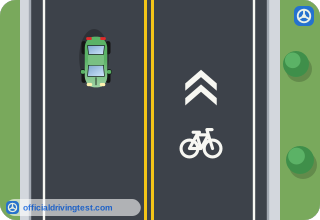
- They are used only on roads that already have a green bicycle lane
- They are painted in solid green across the whole travel lane
- They do not set aside part of the roadway for the exclusive use of bicycles
- They are used only at intersections that have traffic signals
Show answer
Correct answer: They do not set aside part of the roadway for the exclusive use of bicycles
Unlike bike lanes, sharrows do not designate a particular portion of the roadway for the exclusive use of bicycles.
Source: Iowa Driver’s License Manual (July 2026), page 17
-
What is the purpose of a bicycle box?
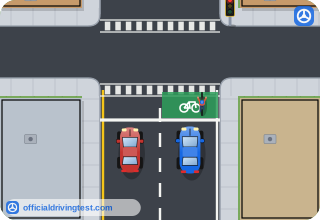
- To give bicyclists a safe way to turn at a signalized intersection
- To show motorists where to park near a crosswalk on a busy street
- To mark where a bicyclist should wait on a road without signals
- To separate a bike lane from the traffic lane next to it
Show answer
Correct answer: To give bicyclists a safe way to turn at a signalized intersection
Bicycle boxes are pavement markings installed to allow bicyclists a safe way to turn at a signalized intersection.
Source: Iowa Driver’s License Manual (July 2026), page 17
-
What does a bicycle box look like?
- It is solid white and has a row of triangles
- It is dashed yellow and has a turn arrow
- It is solid red and has the word "STOP"
- It is solid green and has an image of a bicyclist
Show answer
Correct answer: It is solid green and has an image of a bicyclist
Bicycle boxes are solid green and have an image of a bicyclist.
Source: Iowa Driver’s License Manual (July 2026), page 17
-
Where is a bicycle box located?
- Beyond the crosswalk, covering only half of the travel lane
- Next to the crosswalk, covering the entire width of the travel lane
- In the center of the intersection, between the lanes
- Along the edge of the lane, beside the curb or shoulder
Show answer
Correct answer: Next to the crosswalk, covering the entire width of the travel lane
Bicycle boxes are located adjacent to the crosswalk and cover the entire width of the travel lane.
Source: Iowa Driver’s License Manual (July 2026), page 17
-
What does the bicycle detector symbol on the pavement indicate?
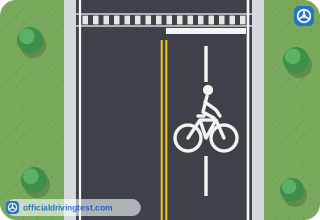
- The best position for a bicyclist to trigger the traffic signal
- The place where motorists should stop to wait for bicyclists
- The start of a lane that is reserved for bicycles only
- The spot where bicyclists must get off and walk their bicycles
Show answer
Correct answer: The best position for a bicyclist to trigger the traffic signal
A bicycle detector symbol on the pavement shows the optimum position for a bicyclist to activate the traffic signal.
Source: Iowa Driver’s License Manual (July 2026), page 17