Iowa: Seat belts and child safety Practice Test
Iowa’s seat belt law, child restraint and booster seats, children in pickup trucks, and securing loose objects.
Independent educational site · not affiliated with any government agency or DMV
Ready? Test yourself
- Instant feedback with an explanation
- Every answer cites its source in the manual
- Your best score is saved on this device
Questions are original and based on the official manual "Iowa Driver’s License Manual" (July 2026), Iowa Department of Transportation.
All 24 questions in this practice test
Take the test above first, then use this list to study. Tap “Show answer” to see the correct answer and explanation.
Show the questions and answersHide the questions
-
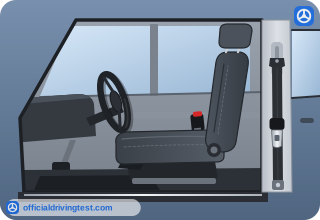
When should everyone in the vehicle be properly buckled?
- As soon as the vehicle reaches 25 mph
- Once the vehicle is on a highway
- After the vehicle has left the driveway
- Before the vehicle ever moves
Show answer
Correct answer: Before the vehicle ever moves
Everyone should be properly buckled before the vehicle ever moves.
Source: Iowa Driver’s License Manual (July 2026), page 34
-
Where should you wear a lap belt?
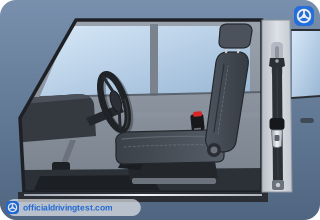
- Snugly across your hips
- Loosely across your stomach
- Snugly across your upper chest
- Across your waist, as high as possible
Show answer
Correct answer: Snugly across your hips
A lap belt should be worn snugly across your hips.
Source: Iowa Driver’s License Manual (July 2026), page 34
-
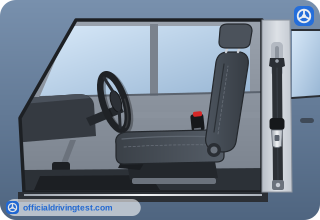
If you are pregnant, how can you safely wear the lap belt?
- Across the top of your abdomen, as snug as possible
- Across your ribs, as high above your abdomen as possible
- Across the pelvis, as low under your abdomen as possible
- You should not wear it, because a seat belt is unsafe while pregnant
Show answer
Correct answer: Across the pelvis, as low under your abdomen as possible
A pregnant driver can safely wear the belt across the pelvis, as low under the abdomen as possible.
Source: Iowa Driver’s License Manual (July 2026), page 34
-
What does it mean that not wearing a seat belt is a primary offense?
- You can be cited for it only after you have been stopped for some other violation
- Only the driver can be cited for it, and never the passengers in the vehicle
- You can be cited for it only if a crash has happened and a report is filed
- You can be stopped for the sole purpose of not complying with the seat belt law
Show answer
Correct answer: You can be stopped for the sole purpose of not complying with the seat belt law
A primary offense means you can be stopped for the sole purpose of non-compliance with the seat belt law.
Source: Iowa Driver’s License Manual (July 2026), page 34
-
What is the maximum fine for each passenger under 18 who is not wearing a seat belt?
- Up to $25 per passenger
- Up to $100 per passenger
- Up to $200 per passenger
- Up to $500 per passenger
Show answer
Correct answer: Up to $100 per passenger
The violation is punishable with up to a $100 fine per passenger under 18.
Source: Iowa Driver’s License Manual (July 2026), page 34
-
Iowa’s seat belt law also applies to passengers in the backseats until they reach what age?
- Age 12
- Age 16
- Age 18
- Age 21
Show answer
Correct answer: Age 18
Iowa’s seat belt law applies to passengers in the backseats who are under age 18.
Source: Iowa Driver’s License Manual (July 2026), page 34
-
According to the manual, what is the single most effective way to prevent death and injury in a crash?
- Wearing a seat belt
- Driving a larger vehicle
- Driving only in daylight
- Keeping the windows closed
Show answer
Correct answer: Wearing a seat belt
Seat belts are the single most effective way to prevent death and injury in a crash.
Source: Iowa Driver’s License Manual (July 2026), page 34
-
How must a child under one year old who weighs less than 20 pounds be secured?
- In a forward-facing child restraint system
- Held in an adult’s arms in the back seat
- In a rear-facing child restraint system
- With a lap belt adjusted as tight as possible
Show answer
Correct answer: In a rear-facing child restraint system
A child under one year old and weighing less than 20 pounds must be secured in a rear-facing child restraint system.
Source: Iowa Driver’s License Manual (July 2026), page 35
-
How must a child under six years old be secured?
- In a child restraint system, such as a safety seat or booster seat
- In a seat belt, as long as the child rides in the back seat
- In a seat belt, with the shoulder strap placed behind the child
- In an adult’s lap with the adult’s seat belt fastened over both
Show answer
Correct answer: In a child restraint system, such as a safety seat or booster seat
A child under six must be in a child restraint system (a safety seat or booster seat), not a seat belt.
Source: Iowa Driver’s License Manual (July 2026), page 35
-
How must a child from the age of six up to the age of 18 be secured?
- In a child restraint system or seat belt, but only in the front seats
- By a seat belt only, and only when riding in the back seat
- In a child restraint system only, in all seating positions
- In a child restraint system or by a seat belt, in all seating positions
Show answer
Correct answer: In a child restraint system or by a seat belt, in all seating positions
A child from six up to 18 must be secured in a child restraint system or by a seat belt, in the front and back seats.
Source: Iowa Driver’s License Manual (July 2026), page 35
-
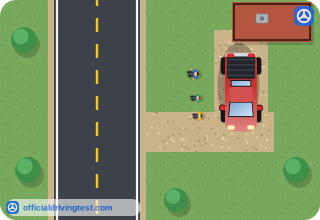
What does Iowa law say about a child under the age of 18 riding in the rear of a moving pickup truck?
- It is allowed if an adult rides with the child
- The child cannot ride there
- It is allowed if the truck stays under 35 mph
- It is allowed only for children age 12 and older
Show answer
Correct answer: The child cannot ride there
A child under the age of 18 cannot ride in the rear of a moving pickup truck.
Source: Iowa Driver’s License Manual (July 2026), page 35
-
Which statement about seat belts in the front seats matches Iowa law as the manual states it?
- Adults 18 and older must wear a seat belt there
- Only the driver must wear a seat belt there
- Only passengers under 18 must wear one there
- Seat belts there are optional for adults
Show answer
Correct answer: Adults 18 and older must wear a seat belt there
Adults 18 and older must wear a seat belt while riding in the front seats of a vehicle.
Source: Iowa Driver’s License Manual (July 2026), page 35
-
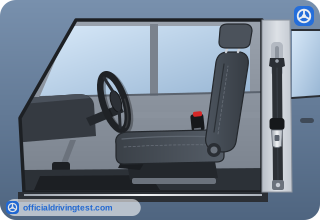
Which statement about seat belts is true according to the manual?
- Seat belts are not needed when you are driving around town
- Seat belts trap you inside the car for several seconds
- Seat belts can keep you from being thrown out of your vehicle
- People who are thrown clear in a crash have better chances
Show answer
Correct answer: Seat belts can keep you from being thrown out of your vehicle
Your chances are much better if you stay inside the car, and seat belts can keep you from being thrown out of your vehicle.
Source: Iowa Driver’s License Manual (July 2026), page 35
-
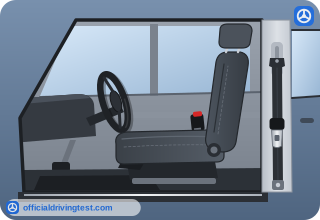
What risk does an improperly buckled person create for the others in the vehicle during a crash?
- Blocking the exits so that others cannot escape
- Becoming a projectile that injures or kills others
- Causing the airbags to deploy too late
- Making the driver lose control of the steering
Show answer
Correct answer: Becoming a projectile that injures or kills others
If you are improperly buckled during a crash, you risk becoming a projectile and injuring or killing others in the vehicle.
Source: Iowa Driver’s License Manual (July 2026), page 35
-
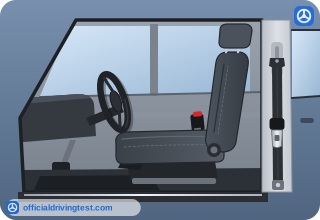
Why can being improperly buckled cause a crash even when you are alone in the vehicle?
- The belt can lock the steering wheel when you turn suddenly
- An unbuckled alert chime can distract you and lead to a crash
- The unfastened belt can catch on the pedals and block braking
- A sudden swerve or hard brake can force you out of the driver’s seat
Show answer
Correct answer: A sudden swerve or hard brake can force you out of the driver’s seat
An unpredictable situation can make you swerve or brake suddenly, forcing you from the driver’s seat, which is likely to cause a crash.
Source: Iowa Driver’s License Manual (July 2026), page 35
-
How long does it take to undo a seat belt?
- About three seconds
- About ten seconds
- Less than a second
- Up to half a minute
Show answer
Correct answer: Less than a second
It takes less than a second to undo a seat belt, so the belt does not trap you in the car.
Source: Iowa Driver’s License Manual (July 2026), page 35
-
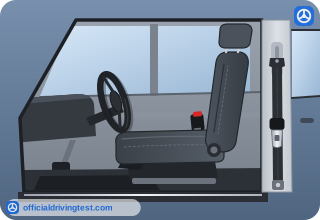
In the rare crash where a car catches fire or sinks in deep water, what may a seat belt keep you from?
- Being knocked out
- Being unable to open the door handle
- Smelling smoke from the engine
- Losing sight of the water level
Show answer
Correct answer: Being knocked out
A seat belt may keep you from being knocked out, and your chance to escape is better if you are conscious.
Source: Iowa Driver’s License Manual (July 2026), page 35
-
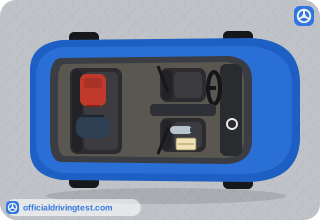
What could loose objects in your vehicle do in a sudden stop or crash?
- Damage the vehicle’s transmission
- Lock the seat belts in place
- Turn off the engine
- Injure someone in the vehicle
Show answer
Correct answer: Injure someone in the vehicle
Loose objects in the vehicle could injure someone in the event of a sudden stop or crash.
Source: Iowa Driver’s License Manual (July 2026), page 35
-
At 60 miles per hour, how much force could a 20-pound loose object exert in a sudden stop?
- About 200 pounds of force
- Well over 1,000 pounds of force
- Only about 500 pounds of force
- Exactly 60 pounds of force
Show answer
Correct answer: Well over 1,000 pounds of force
At 60 miles per hour, a 20-pound object has the potential to exert well over 1,000 pounds of force in a sudden stop.
Source: Iowa Driver’s License Manual (July 2026), page 35
-
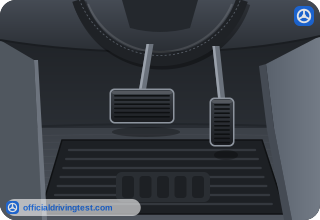
Why should you make sure there are no objects on the vehicle floor?
- They could roll against the accelerator and make the vehicle speed up on its own
- They could roll under the brake pedal and make braking difficult or impossible
- They could cover the seat belt buckles so the passengers cannot fasten them
- They could block the heater vents and fog the windshield from the inside
Show answer
Correct answer: They could roll under the brake pedal and make braking difficult or impossible
Objects on the floor could roll under the brake pedal, making it difficult or impossible to apply the brakes.
Source: Iowa Driver’s License Manual (July 2026), page 35
-
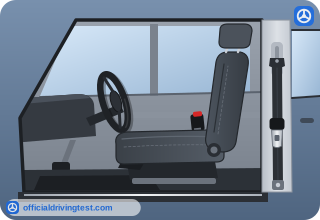
According to the defensive driving tips, why should you always wear your seatbelt?
- To keep other drivers from following you too closely
- To make your vehicle's airbags work faster
- To help you stay awake on long trips
- To protect you from being thrown from the car in a crash
Show answer
Correct answer: To protect you from being thrown from the car in a crash
The manual says to always wear your seatbelt to protect you from being thrown from the car in a crash.
Source: Iowa Driver’s License Manual (July 2026), page 47
-
What should you never do with children, elderly persons, dependent persons or pets?
- Let them ride in the back seat of a vehicle
- Leave them alone in an enclosed vehicle
- Take them on a trip in warm weather
- Let them open the windows of a vehicle
Show answer
Correct answer: Leave them alone in an enclosed vehicle
Children, elderly persons, dependent persons and pets must never be left alone in an enclosed vehicle.
Source: Iowa Driver’s License Manual (July 2026), page 59
-
Depending on the temperature and humidity, the inside of a vehicle can soar above what temperature in less than 10 minutes?
- 180 degrees
- 200 degrees
- 220 degrees
- 160 degrees
Show answer
Correct answer: 160 degrees
Depending on the temperature and humidity, the inside of a vehicle can soar above 160 degrees in less than 10 minutes.
Source: Iowa Driver’s License Manual (July 2026), page 59
-
On a mild, 78 degree day, how hot can the inside of a parked vehicle reach in minutes?
- 100 degrees
- 110 degrees
- 120 degrees
- 130 degrees
Show answer
Correct answer: 100 degrees
Even on a mild, 78 degree day, the inside of a parked vehicle can reach 100 degrees in minutes.
Source: Iowa Driver’s License Manual (July 2026), page 59