Illinois: Seat belts & child safety Practice Test
Illinois seat belt, child safety seat and air bag rules.
Independent educational site · not affiliated with any government agency or DMV
Ready? Test yourself
- Instant feedback with an explanation
- Every answer cites its source in the manual
- Your best score is saved on this device
Questions are original and based on the official manual "Illinois Rules of the Road" (2026), Illinois Secretary of State.
All 22 questions in this practice test
Take the test above first, then use this list to study. Tap “Show answer” to see the correct answer and explanation.
Show the questions and answersHide the questions
-
During the driving exam, who must wear a safety belt?
- Only you, the driver
- Only the examiner
- You and the examiner
- Neither, under 25 mph
Show answer
Correct answer: You and the examiner
During the driving exam, you and the examiner must wear safety belts, as required by law.
Source: Illinois Rules of the Road (2026), page 14
-
Under Illinois law, who must wear safety belts?
- Only the driver and the front seat passenger in the vehicle
- Only passengers under age 16, whether in front or in back
- All drivers and front and back seat passengers age 8 and older
- Only people riding in vehicles that do not have air bags
Show answer
Correct answer: All drivers and front and back seat passengers age 8 and older
Illinois law requires all drivers and passengers (front and back seats) age 8 and older to wear safety belts, even if the vehicle has air bags.
Source: Illinois Rules of the Road (2026), page 23
-
A passenger's disability keeps them from securing their own safety belt. Who is responsible for securing and adjusting it?
- The passenger
- The vehicle owner
- The driver
- No one; they are exempt
Show answer
Correct answer: The driver
If a passenger's disability or medical condition makes them unable to secure their own belt, the driver is responsible for securing and adjusting it.
Source: Illinois Rules of the Road (2026), page 23
-
Who is responsible for making sure ALL passengers obey the safety belt law and the Child Passenger Protection Act?
- Each passenger
- The driver
- The parents only
- The vehicle owner
Show answer
Correct answer: The driver
It is the responsibility of the driver to ensure all passengers obey the safety belt law and the Child Passenger Protection Act.
Source: Illinois Rules of the Road (2026), page 23
-
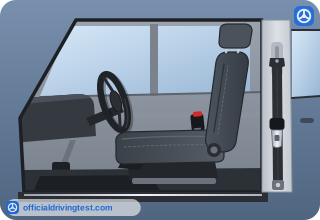
Where should the lap belt be worn?
- Across the stomach
- Across the lower ribs
- Loosely above the waist
- Across the hip bones
Show answer
Correct answer: Across the hip bones
The lap belt should be worn across the hip bones and never across the stomach or soft part of the abdomen.
Source: Illinois Rules of the Road (2026), page 23
-
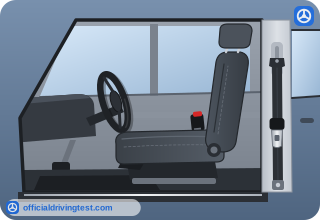
How snug should the shoulder strap of a safety belt be?
- Loose enough to fit a fist between the strap and your chest at all times
- As snug as possible while still letting the driver reach the controls
- Tight enough that you cannot lean forward to reach any controls at all
- It does not matter, as long as the lap belt portion is fastened snugly
Show answer
Correct answer: As snug as possible while still letting the driver reach the controls
The shoulder strap should be as snug as possible but still allow the driver to reach important controls.
Source: Illinois Rules of the Road (2026), page 23
-
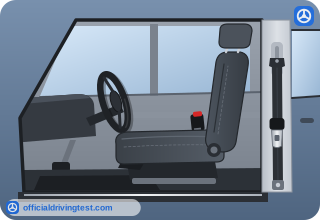
Where should the shoulder strap of a seat belt never be placed?
- Across the chest and shoulder
- Over the middle of the shoulder
- Across the chest near the neck
- Behind the back or under the arm
Show answer
Correct answer: Behind the back or under the arm
The shoulder strap of the seat belt should never be placed behind the back or under the arm.
Source: Illinois Rules of the Road (2026), page 23
-
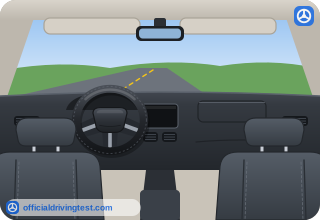
How are air bags designed to protect vehicle occupants?
- As supplemental protection in combination with safety belts
- As a full replacement for safety belts in a crash
- As protection only for children in the back seat
- As protection only in rear-end crashes at low speed
Show answer
Correct answer: As supplemental protection in combination with safety belts
Air bags are designed to provide supplemental protection in combination with safety belts.
Source: Illinois Rules of the Road (2026), page 23
-
What distance between the driver and the air bag is desirable?
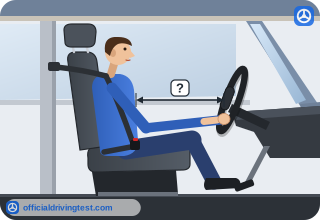
- 2-4 inches
- 5-6 inches
- 10-12 inches
- 24-30 inches
Show answer
Correct answer: 10-12 inches
A distance of 10-12 inches between the driver and the air bag is desirable, especially for short, elderly, or pregnant drivers.
Source: Illinois Rules of the Road (2026), page 23
-
In a vehicle with air bags, how should passengers position their seats?
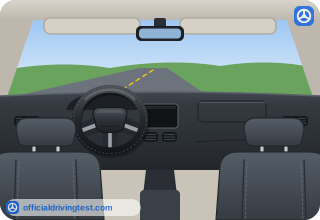
- As far back as possible, tilting the seat back slightly if needed
- As far forward as possible, so the air bag opens more gently
- Upright and close to the dashboard with the belt left loose
- Fully reclined, lying flat so the belt does not touch them
Show answer
Correct answer: As far back as possible, tilting the seat back slightly if needed
Passengers should position their seats as far back as possible, tilting the seat back slightly if necessary.
Source: Illinois Rules of the Road (2026), page 23
-
Children of what ages are recommended to be properly secured in the back seat?
- 5 and younger
- 2 and younger
- 12 and younger
- 16 and younger
Show answer
Correct answer: 12 and younger
Because an air bag can seriously injure or kill a child in the front seat, it is recommended that children ages 12 and younger be secured in the back seat.
Source: Illinois Rules of the Road (2026), page 23
-
A child under age 8 must ride in the front passenger seat with an active air bag. What does the manual say?
- Use only a lap belt and move the seat as far forward as it can go
- Use a properly installed child safety seat, with the seat as far back as possible
- The child may ride on an adult's lap, with the belt around both of them
- Use a rear-facing child safety seat directly in front of the air bag
Show answer
Correct answer: Use a properly installed child safety seat, with the seat as far back as possible
If children under age 8 must ride in front with an active air bag, they should be in a properly installed, appropriate child safety seat with the seat as far back as possible.
Source: Illinois Rules of the Road (2026), page 23
-
Where should a rear-facing child safety seat never be installed?
- In the middle of the back seat
- Behind the driver's seat
- Behind the front passenger seat
- In front of an active air bag
Show answer
Correct answer: In front of an active air bag
Rear-facing child safety seats should never be installed in front of an active air bag.
Source: Illinois Rules of the Road (2026), page 23
-
Which vehicles does the manual say may have the option to turn off the passenger side front air bag?
- Every passenger vehicle sold in Illinois
- Some vehicles, such as pick-up trucks
- Only motorcycles and mopeds
- Only school buses
Show answer
Correct answer: Some vehicles, such as pick-up trucks
Some vehicles, such as pick-up trucks, have the option to turn off the passenger side front air bag.
Source: Illinois Rules of the Road (2026), page 23
-
Under the Child Passenger Protection Act, which children must be secured in an appropriate child safety restraint system?
- All children under age 4
- All children under age 12
- Only children under age 2
- All children under age 8
Show answer
Correct answer: All children under age 8
The Child Passenger Protection Act requires all children under age 8 to be properly secured in an appropriate child safety restraint system.
Source: Illinois Rules of the Road (2026), page 23
-
A booster seat must only be used with which type of safety belt?
- A lap/shoulder safety belt
- A lap belt only
- A shoulder strap only
- Any belt, or none at all
Show answer
Correct answer: A lap/shoulder safety belt
Booster seats must only be used with a lap/shoulder safety belt.
Source: Illinois Rules of the Road (2026), page 23
-
The back seat has only lap belts, no lap/shoulder belts. Which child may ride there without a booster seat, secured with a lap belt only?
- A child weighing more than 20 pounds
- Any child who is at least 2 years old
- A child weighing more than 40 pounds
- No child; a booster seat is required
Show answer
Correct answer: A child weighing more than 40 pounds
If the back seat has no lap/shoulder belts, a child weighing more than 40 pounds may ride in the back seat without a booster seat, secured with a lap belt only.
Source: Illinois Rules of the Road (2026), page 23
-
Until what age does Illinois law require children to ride in a rear-facing child restraint system, unless they weigh more than 40 pounds or are taller than 40 inches?
- Age 2
- Age 1
- Age 4
- Age 8
Show answer
Correct answer: Age 2
Since Jan. 1, 2019, children must be secured in a rear-facing child restraint until age 2 unless they weigh more than 40 pounds or are more than 40 inches tall.
Source: Illinois Rules of the Road (2026), page 24
-
A child under age 2 may ride forward-facing instead of rear-facing if the child:
- Weighs more than 20 pounds or is more than 30 inches tall
- Is riding in the front seat with the air bag switched on
- Weighs more than 40 pounds or is more than 40 inches tall
- Is riding for less than 30 minutes on city/town streets
Show answer
Correct answer: Weighs more than 40 pounds or is more than 40 inches tall
The rear-facing requirement until age 2 does not apply if the child weighs more than 40 pounds or is more than 40 inches tall.
Source: Illinois Rules of the Road (2026), page 24
-
How many people may ride in the front and rear seats of a vehicle?
- No more than three people in the front seat
- No more than five people in any vehicle
- No more people than there are seat belts
- Any number, as long as the view is clear
Show answer
Correct answer: No more people than there are seat belts
There should be no more people in the front and rear seats than there are seat belts.
Source: Illinois Rules of the Road (2026), page 36
-
How many sets of safety belts must a passenger vehicle have in the front seat?
- One
- Three
- Two
- None required
Show answer
Correct answer: Two
Passenger vehicles must have two sets of safety belts in the front seat.
Source: Illinois Rules of the Road (2026), page 92
-
Vehicles manufactured in or after what year may not be sold or operated in Illinois without safety belts?
- 1965
- 1975
- 1985
- 1955
Show answer
Correct answer: 1965
Vehicles manufactured in 1965 or after may not be sold or operated in Illinois without safety belts.
Source: Illinois Rules of the Road (2026), page 92