Illinois: Emergencies and special situations — Part 4 Practice Test
Questions in this part include: “If you suddenly have no control of the steering wheel, what should you do?” · “Where are low-capacity roadways typically found?”
Independent educational site · not affiliated with any government agency or DMV
Ready? Test yourself
- Instant feedback with an explanation
- Every answer cites its source in the manual
- Your best score is saved on this device
Questions are original and based on the official manual "Illinois Rules of the Road" (2026), Illinois Secretary of State.
All 17 questions in this practice test
Take the test above first, then use this list to study. Tap “Show answer” to see the correct answer and explanation.
Show the questions and answersHide the questions
-
If you suddenly have no control of the steering wheel, what should you do?
- Ease off the gas and use your flashers
- Brake hard to stop as fast as possible
- Turn off the ignition right away
- Shift into reverse to slow down
Show answer
Correct answer: Ease off the gas and use your flashers
With steering failure, ease off the gas pedal, turn on the emergency flashers, and let the vehicle come to a slow stop, braking very gently.
Source: Illinois Rules of the Road (2026), page 89
-
During a steering failure in a vehicle with power steering or a locking steering wheel, why should you not turn off the ignition?
- The airbags might deploy suddenly
- The doors will lock automatically
- The brakes will stop working
- You may lose the ability to steer
Show answer
Correct answer: You may lose the ability to steer
Turning off the ignition would make the vehicle lose either its power steering or its ability to steer.
Source: Illinois Rules of the Road (2026), page 89
-
If the brake pedal suddenly sinks to the floor, what should you do first?
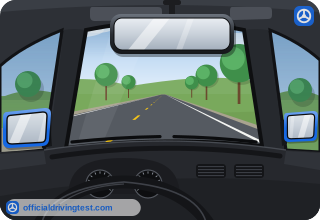
- Turn off the engine right away
- Pump the pedal to build pressure
- Shift the vehicle into park
- Steer off the road onto grass
Show answer
Correct answer: Pump the pedal to build pressure
If the brake pedal suddenly sinks to the floor, pump it to build pressure.
Source: Illinois Rules of the Road (2026), page 89
-
Your brake pedal sinks to the floor and your first attempt to restore braking fails. What should you use next?
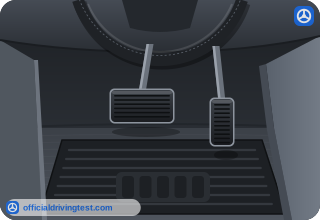
- Sounding the horn to warn others
- Reverse gear to slow down
- The emergency or parking brake
- The ignition switch, turned off
Show answer
Correct answer: The emergency or parking brake
If pumping the brake pedal does not work, use the emergency or parking brake.
Source: Illinois Rules of the Road (2026), page 89
-
When your brakes fail, how can you slow the vehicle down?
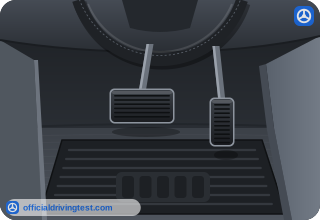
- Shift into a lower gear
- Shift into neutral
- Turn off the engine
- Speed up, then coast
Show answer
Correct answer: Shift into a lower gear
With brake failure, shift your vehicle into a lower gear to slow down.
Source: Illinois Rules of the Road (2026), page 89
-
If your headlights suddenly fail, what should you try using?
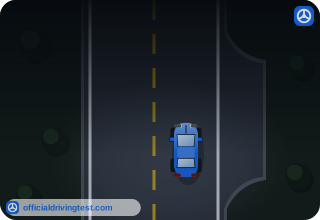
- The dome light and interior lights
- Nothing; drive on with no lights at all
- Another car's taillights as a guide
- Emergency flashers or parking lights
Show answer
Correct answer: Emergency flashers or parking lights
If your headlights fail suddenly, try using your emergency flashers, parking lights and/or turn signals, and pull off the road.
Source: Illinois Rules of the Road (2026), page 89
-
Your gas pedal is stuck and your first attempt to free it fails. What should you do?
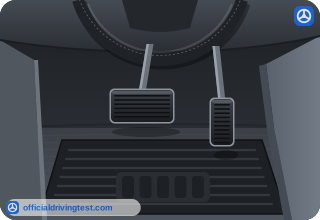
- Turn off the engine and remove the key
- Shift into neutral and brake gently
- Shift into park right away
- Pump the gas pedal hard
Show answer
Correct answer: Shift into neutral and brake gently
If the stuck gas pedal does not come free, shift into neutral and brake gently to slow down.
Source: Illinois Rules of the Road (2026), page 89
-
What is the first thing to try when your gas pedal becomes stuck?
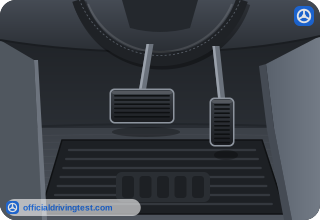
- Shift into reverse at once
- Turn off the ignition right away
- Hook your toe under it to free it
- Stomp hard on the pedal to free it
Show answer
Correct answer: Hook your toe under it to free it
If your gas pedal becomes stuck, hook your toe under it to free it.
Source: Illinois Rules of the Road (2026), page 89
-
If your vision suddenly becomes blocked while driving, what should you do?
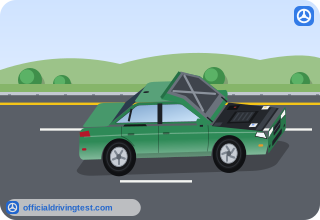
- Roll down your side window to see
- Stop right away in your lane
- Speed up to clear the windshield
- Close your eyes and brake hard
Show answer
Correct answer: Roll down your side window to see
If your vision becomes blocked, roll down your side window to see, turn on your emergency flashers, and pull off the road.
Source: Illinois Rules of the Road (2026), page 89
-
Which roads does the manual give as examples of high-capacity roadways?
- Quiet streets in residential areas
- Secondary routes in rural regions
- Highways and major urban arterials
- Alleys and private driveways
Show answer
Correct answer: Highways and major urban arterials
High-capacity roadways handle a large volume of traffic; examples include highways and major urban arterials.
Source: Illinois Rules of the Road (2026), page 90
-
Where are low-capacity roadways typically found?
- Residential and rural areas
- Along major urban arterials
- On interstate highways
- On toll roads and turnpikes
Show answer
Correct answer: Residential and rural areas
Low-capacity roadways are typically found in residential areas, rural regions, or secondary routes with less traffic.
Source: Illinois Rules of the Road (2026), page 90
-
Your vehicle breaks down on a high-capacity road. After pulling over and turning on your hazard lights, what should you do?
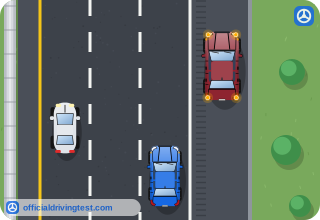
- Walk to the nearest exit for help
- Stand behind the vehicle to warn traffic
- Get out and wave down passing drivers
- Stay in the vehicle with your seatbelt on
Show answer
Correct answer: Stay in the vehicle with your seatbelt on
On higher-capacity roads, remain in your vehicle with your seatbelt on, activate your hazard lights, call 911, and wait for an emergency responder.
Source: Illinois Rules of the Road (2026), page 90
-
Your vehicle breaks down on a low-capacity road, and it is necessary and safe to get out. How should you exit?
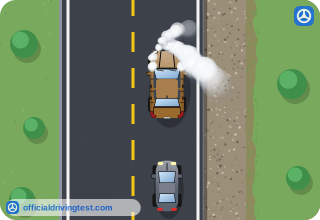
- From the side facing oncoming traffic
- From the side opposite oncoming traffic
- Through the rear hatch only
- From the driver's door only
Show answer
Correct answer: From the side opposite oncoming traffic
On lower-capacity roads, if it is necessary and safe, exit on the side opposite oncoming traffic and move away from the vehicle.
Source: Illinois Rules of the Road (2026), page 90
-
On a low-capacity road, after safely leaving your broken-down vehicle, where does the manual suggest standing?
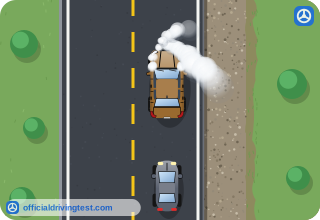
- Directly behind your vehicle
- In the travel lane to wave traffic
- Behind a guard rail or on a sidewalk
- Beside the driver's door
Show answer
Correct answer: Behind a guard rail or on a sidewalk
Move away from your vehicle: stand on a sidewalk, behind a guard rail, or by the edge of a field.
Source: Illinois Rules of the Road (2026), page 90
-
If your vehicle breaks down on the Illinois Tollway, what number(s) does the manual say to call for assistance?
- *999 or 911
- 311 only
- *55 or 411
- 411 only
Show answer
Correct answer: *999 or 911
On the Illinois Tollway, call *999 or 911 for assistance.
Source: Illinois Rules of the Road (2026), page 90
-
After a breakdown on the Illinois Tollway, who does the manual say to wait for?
- A private tow truck
- A passing driver
- A family member
- Tollway Maintenance
Show answer
Correct answer: Tollway Maintenance
On the Tollway, remain in your vehicle and wait for Tollway Maintenance or an emergency responder to arrive and assist you.
Source: Illinois Rules of the Road (2026), page 90
-
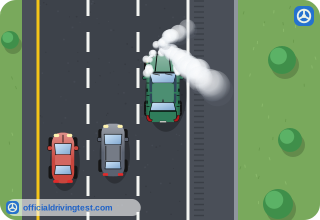
If your vehicle breaks down on a higher-capacity road, where should you pull over if possible?
- The left shoulder next to the median
- The right shoulder or a safe location
- The center of the nearest travel lane
- The left lane with your flashers on
Show answer
Correct answer: The right shoulder or a safe location
If possible, pull over to the right shoulder or a safe location as far as possible to avoid passing traffic.
Source: Illinois Rules of the Road (2026), page 90