Hawaii: Sharing the road — Part 3 Practice Test
Questions in this part include: “Where are car/motorcycle collisions most likely to occur?” · “According to the manual, how much can failing to stop for a school bus with flashing red signal lamps cost you?”
Independent educational site · not affiliated with any government agency or DMV
Ready? Test yourself
- Instant feedback with an explanation
- Every answer cites its source in the manual
- Your best score is saved on this device
Questions are original and based on the official manual "Hawaii Driver's Manual" (2023), Hawaii Department of Transportation.
All 17 questions in this practice test
Take the test above first, then use this list to study. Tap “Show answer” to see the correct answer and explanation.
Show the questions and answersHide the questions
-
Why does a motorcyclist often ride in the left portion of the traffic lane?
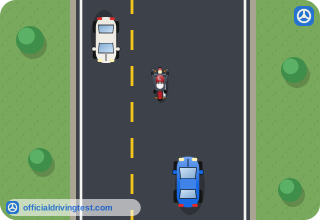
- To get a better view and be more visible to other traffic
- To leave room for cars to share the lane
- To keep away from vehicles entering from the right
- To make passing by cars easier on the left
Show answer
Correct answer: To get a better view and be more visible to other traffic
Riding in the left portion allows a better view of some traffic and road situations and makes the motorcycle more visible to other traffic.
Source: Hawaii Driver's Manual (2023), page 91 · Open this page in the manual (Manual page 91)
-
Why does a motorcyclist change position within the lane?
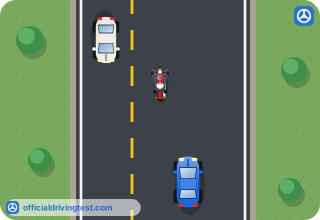
- To make room for another vehicle to share the lane
- To warn drivers behind to slow down
- To increase the distance from potential hazards
- To keep the same distance from the center line
Show answer
Correct answer: To increase the distance from potential hazards
The manual says the motorcyclist will change position within the lane to increase the distance from potential hazards.
Source: Hawaii Driver's Manual (2023), page 91 · Open this page in the manual (Manual page 91)
-
What should motorists be alert for when driving near motorcycles?
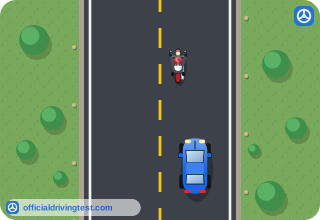
- Motorcycles that never leave one lane position
- Sudden changes in the motorcycle’s position and direction
- Riders who always ride in the center of the lane
- Riders who stay behind all other traffic
Show answer
Correct answer: Sudden changes in the motorcycle’s position and direction
Lateral movements sometimes occur suddenly, so motorists must be alert for sudden changes in position and direction.
Source: Hawaii Driver's Manual (2023), page 91 · Open this page in the manual (Manual page 91)
-
How much of a lane is a motorcycle allowed in which to maneuver?
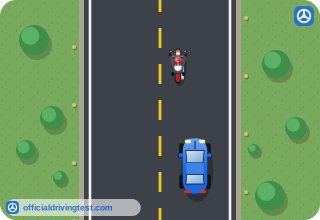
- Half the width of the lane
- Only the left portion of it
- Two-thirds of the width
- The full width of the lane
Show answer
Correct answer: The full width of the lane
Motorcycles are allowed the full width of a lane in which to maneuver.
Source: Hawaii Driver's Manual (2023), page 91 · Open this page in the manual (Manual page 91)
-
What is the effect of sharing a lane with a motorcyclist?
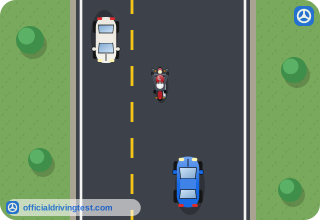
- It restricts the rider’s ability to avoid hazardous situations
- It helps the rider stay visible to other drivers on the road
- It gives the rider more room to avoid road hazards ahead
- It lets the rider save fuel by riding in the car’s draft
Show answer
Correct answer: It restricts the rider’s ability to avoid hazardous situations
The manual says to refrain from sharing a lane because it restricts the rider’s ability to avoid hazardous situations.
Source: Hawaii Driver's Manual (2023), page 91 · Open this page in the manual (Manual page 91)
-
Where are car/motorcycle collisions most likely to occur?
- On freeway on-ramps
- In parking lots
- At intersections
- On long straight roads
Show answer
Correct answer: At intersections
Intersections are the most likely places for car/motorcycle collisions to occur.
Source: Hawaii Driver's Manual (2023), page 92 · Open this page in the manual (Manual page 92)
-
What usually causes car/motorcycle collisions at intersections?
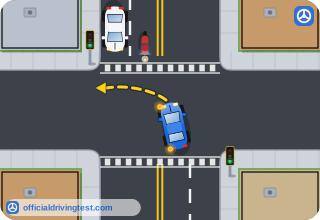
- A motorcyclist riding faster than the posted speed limit
- A car driver not seeing the motorcycle and turning into its path
- A motorcycle’s turn signal failing to flash
- A motorcyclist ignoring a stop sign
Show answer
Correct answer: A car driver not seeing the motorcycle and turning into its path
This usually is the result of a car driver not seeing the motorcycle and turning into the motorcycle’s path.
Source: Hawaii Driver's Manual (2023), page 92 · Open this page in the manual (Manual page 92)
-
How long should you wait before assuming a motorcycle rider’s intention?
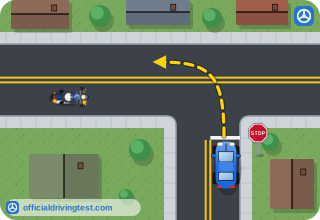
- Until the rider moves to one side of the lane
- Until the rider’s turn signal starts flashing
- Until the rider looks toward your vehicle
- Until the maneuver is unmistakably started
Show answer
Correct answer: Until the maneuver is unmistakably started
Do not assume the rider’s intention until the maneuver is unmistakably started, such as a turn into an intersection or driveway.
Source: Hawaii Driver's Manual (2023), page 92 · Open this page in the manual (Manual page 92)
-
What is true of turn signals on a motorcycle?
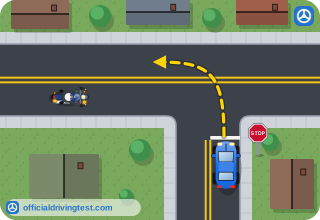
- They do not shut off automatically after a turn
- They shut off automatically after a turn
- They flash only when the brake is applied
- They cannot be used while changing lanes
Show answer
Correct answer: They do not shut off automatically after a turn
Turn signals do not automatically shut off on a motorcycle, and riders occasionally forget to cancel them after a turn.
Source: Hawaii Driver's Manual (2023), page 92 · Open this page in the manual (Manual page 92)
-
What may it mean when a motorcycle rider moves to one side of the lane?
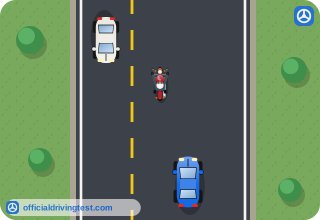
- The rider is inviting another vehicle to share the lane with him
- The rider is about to stop and park at the roadside
- The rider may be preparing for a turn or moving away from a hazard
- The rider is signaling that a faster vehicle may pass
Show answer
Correct answer: The rider may be preparing for a turn or moving away from a hazard
A rider moves to one side of the lane in preparation for a turn or possibly to move away from a hazard unseen by other motorists.
Source: Hawaii Driver's Manual (2023), page 92 · Open this page in the manual (Manual page 92)
-
What should a motorist being overtaken by a motorcycle do?
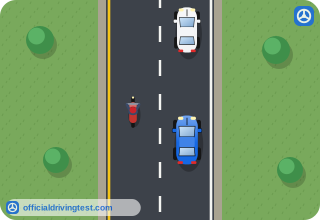
- Maintain lane position and speed
- Move to the right edge of the lane
- Slow down and move to one side
- Speed up so the cyclist cannot pass
Show answer
Correct answer: Maintain lane position and speed
The motorist being overtaken by a motorcycle should maintain lane position and speed.
Source: Hawaii Driver's Manual (2023), page 94 · Open this page in the manual (Manual page 94)
-
How much of a lane should you allow when passing a motorcycle?
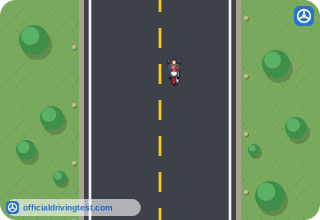
- Half a lane
- Half a car width
- A full lane
- Only the shoulder
Show answer
Correct answer: A full lane
When passing a motorcycle, allow a full lane to the motorcycle and never crowd into the same lane.
Source: Hawaii Driver's Manual (2023), page 94 · Open this page in the manual (Manual page 94)
-
What can happen if you return to your original lane too soon after passing a motorcycle?
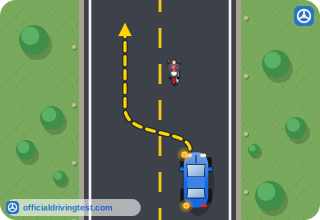
- The rider may be blinded by your brake lights and stop suddenly
- The rider may swerve to the right into traffic or off the road
- The rider may be forced to pass you on the right shoulder
- The rider may be forced to stop and wait in the middle of the road
Show answer
Correct answer: The rider may swerve to the right into traffic or off the road
Returning to the original lane too soon can force a rider to swerve to the right into traffic or off the road.
Source: Hawaii Driver's Manual (2023), page 94 · Open this page in the manual (Manual page 94)
-
A school bus is stopped on a highway with its alternating red signal lamps flashing. Which drivers on the same highway must stop?
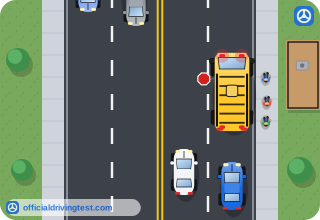
- Drivers in the lane occupied by the school bus and in all lanes adjacent to it
- Only drivers traveling behind the school bus, in any lane of the highway
- Only drivers in the lanes next to the school bus, not in its own lane
- Only drivers in the same lane as the school bus and no other lane
Show answer
Correct answer: Drivers in the lane occupied by the school bus and in all lanes adjacent to it
The law requires drivers in the bus's lane and all adjacent lanes to stop before reaching the school bus.
Source: Hawaii Driver's Manual (2023), page 96 · Open this page in the manual (Manual page 96)
-
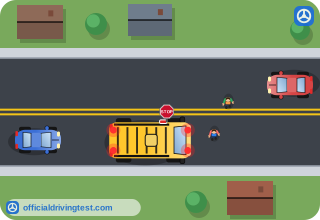
After stopping for a school bus with flashing red signal lamps, when may you proceed?
- As soon as the school children are out of sight
- When the bus driver signals for you to go ahead
- When no children are visible anywhere near the road
- When the bus moves again or the red lamps stop flashing
Show answer
Correct answer: When the bus moves again or the red lamps stop flashing
Drivers shall not proceed until the school bus resumes motion or the flashing red signal lamps are turned off.
Source: Hawaii Driver's Manual (2023), page 96 · Open this page in the manual (Manual page 96)
-
According to the manual, how much can failing to stop for a school bus with flashing red signal lamps cost you?
- $100
- $1,000
- $250
- $500
Show answer
Correct answer: $1,000
The manual states that failing to comply with the school bus law can cost you $1,000.
Source: Hawaii Driver's Manual (2023), page 96 · Open this page in the manual (Manual page 96)
-
A school bus has its red signal lamps flashing on a divided highway. What must drivers proceeding in the opposite direction do?
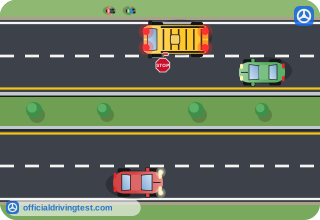
- They must stop before reaching the school bus
- They are not required to stop
- They must stop only if children are visible
- They must slow to 10 MPH and pass
Show answer
Correct answer: They are not required to stop
Vehicles proceeding in the opposite direction on a divided highway are not required to stop.
Source: Hawaii Driver's Manual (2023), page 96 · Open this page in the manual (Manual page 96)