Hawaii: Seat belts and child safety Practice Test
Seat belts for every occupant, child restraints and keeping passengers safe.
Independent educational site · not affiliated with any government agency or DMV
Ready? Test yourself
- Instant feedback with an explanation
- Every answer cites its source in the manual
- Your best score is saved on this device
Questions are original and based on the official manual "Hawaii Driver's Manual" (2023), Hawaii Department of Transportation.
All 19 questions in this practice test
Take the test above first, then use this list to study. Tap “Show answer” to see the correct answer and explanation.
Show the questions and answersHide the questions
-
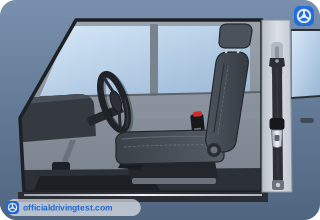
When you drive with an instruction permit, who must use safety belts or child restraints?
- Only the driver
- All occupants
- Only the front seat occupants
- Only occupants under 18
Show answer
Correct answer: All occupants
The permit rules state that all occupants must use safety belts or child restraints.
Source: Hawaii Driver's Manual (2023), page 13 · Open this page in the manual (Manual page 13)
-
Who is required by law to use seat belts?
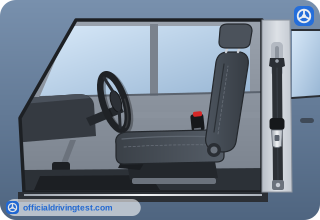
- All front and back seat occupants
- Only the driver and front passenger
- Only occupants under age 18
- Only the driver
Show answer
Correct answer: All front and back seat occupants
All front and back seat occupants are required by law to use seat belts.
Source: Hawaii Driver's Manual (2023), page 20 · Open this page in the manual (Manual page 20)
-
Children under what age must be in a child restraint?
- Age 2
- Age 6
- Age 4
- Age 10
Show answer
Correct answer: Age 4
The manual says children under age 4 must be in a child restraint.
Source: Hawaii Driver's Manual (2023), page 20 · Open this page in the manual (Manual page 20)
-
A child under age 8 must be belted on a booster seat if the child is what?
- Under five feet and less than sixty pounds
- Under three feet and less than twenty pounds
- Over four feet and over forty pounds
- Under four feet and less than forty pounds
Show answer
Correct answer: Under four feet and less than forty pounds
A child under age 8 must be belted on a booster seat if under four feet and less than forty pounds.
Source: Hawaii Driver's Manual (2023), page 20 · Open this page in the manual (Manual page 20)
-
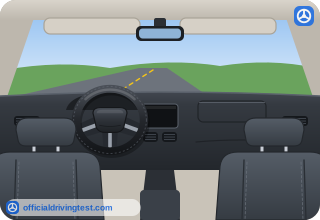
Since air bags deflate immediately, what must occupants rely on for protection if subsequent impacts occur?
- The head restraints
- The seat belts
- The steering wheel
- The windshield
Show answer
Correct answer: The seat belts
Air bags protect only in a first impact, so occupants must rely on the belts in subsequent impacts.
Source: Hawaii Driver's Manual (2023), page 20 · Open this page in the manual (Manual page 20)
-
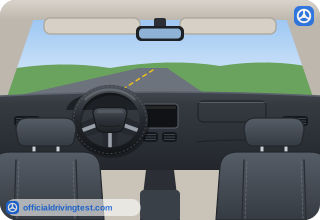
What is advisable if the air bags deploy?
- Leave them in place
- Remove the seat belts
- Replace them
- Have the horn rewired
Show answer
Correct answer: Replace them
If the air bags deploy, it is advisable to replace them to maintain maximum occupant protection.
Source: Hawaii Driver's Manual (2023), page 20 · Open this page in the manual (Manual page 20)
-
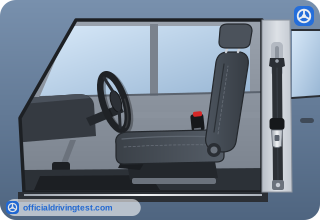
According to the manual, when must safety belts be worn?
- Only on highways and freeways
- Only when driving faster than 35 miles per hour
- Only by the driver and front-seat passenger
- At all times when driving or riding in a vehicle
Show answer
Correct answer: At all times when driving or riding in a vehicle
The manual says safety belts must be worn at all times when driving or riding in a vehicle.
Source: Hawaii Driver's Manual (2023), page 61 · Open this page in the manual (Manual page 61)
-
What does the manual say about the first impact in a crash and an unbelted driver?
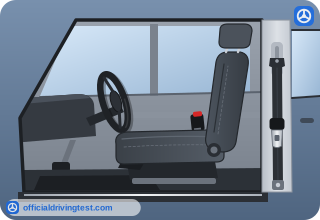
- It often throws the driver away from the controls
- It keeps the driver in the seat
- It always throws the driver through the windshield
- It only affects the passengers
Show answer
Correct answer: It often throws the driver away from the controls
The first impact frequently throws the driver away from the vehicle controls, preventing any possibility of controlling the vehicle.
Source: Hawaii Driver's Manual (2023), page 61 · Open this page in the manual (Manual page 61)
-
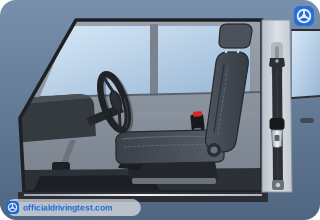
How should a lap belt fit?
- Loosely across your stomach
- Tightly across your ribs and upper chest
- Snug across the hip bones and lower abdomen
- Low across your thighs
Show answer
Correct answer: Snug across the hip bones and lower abdomen
Lap belts should fit snugly across your hip bones and the lower part of your abdomen.
Source: Hawaii Driver's Manual (2023), page 61 · Open this page in the manual (Manual page 61)
-
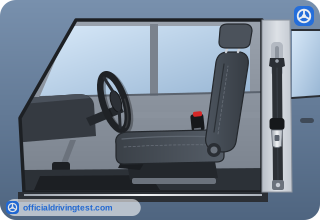
How tight should the shoulder belt be?
- Tight enough that no hand fits under it
- So loose that it hangs below the chest
- Tight enough to hold you against the seat at all times
- Loose enough that your fist fits between belt and chest
Show answer
Correct answer: Loose enough that your fist fits between belt and chest
The shoulder belt should not be quite so tight, so that you can insert your fist between the belt and your chest.
Source: Hawaii Driver's Manual (2023), page 61 · Open this page in the manual (Manual page 61)
-
According to the manual, how are the belts in late model vehicles designed to work?
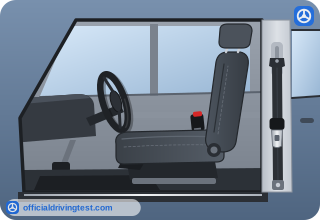
- To stay locked at all times
- To allow body movement and only lock up upon impact
- To lock whenever the car turns
- To tighten automatically as speed increases
Show answer
Correct answer: To allow body movement and only lock up upon impact
All belts in late model vehicles are designed to allow body movement and only lock up upon impact.
Source: Hawaii Driver's Manual (2023), page 61 · Open this page in the manual (Manual page 61)
-
What does the manual say is available for children who are too small to wear regular safety belts?
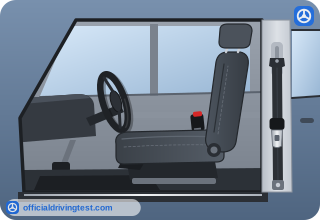
- Shorter lap belts only
- Seat cushions with no belt
- Special child seats
- Shoulder belts worn alone
Show answer
Correct answer: Special child seats
There are special child seats available for children who are too small to wear regular safety belts.
Source: Hawaii Driver's Manual (2023), page 61 · Open this page in the manual (Manual page 61)
-
Why does the manual say you should never hold a small infant in your arms during a ride?
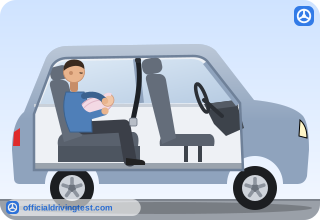
- No person is strong enough to hold an infant in a crash
- Infants are too heavy for most adults to carry in a car
- Infants cannot be held while the car is moving
- Holding an infant blocks the driver’s view
Show answer
Correct answer: No person is strong enough to hold an infant in a crash
The manual says no person is strong enough to hold onto even a small infant in crashes or sudden stops.
Source: Hawaii Driver's Manual (2023), page 61 · Open this page in the manual (Manual page 61)
-
According to the manual, where must a child never be allowed to ride?
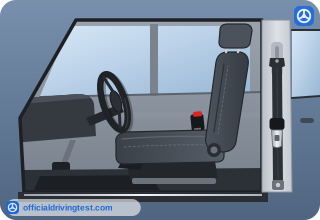
- In someone’s lap or standing on a seat
- In the rear seat next to a window
- In a child seat fastened in the back
- In the center of the rear seat
Show answer
Correct answer: In someone’s lap or standing on a seat
The manual says never allow a child to ride in someone’s lap or standing on a seat.
Source: Hawaii Driver's Manual (2023), page 61 · Open this page in the manual (Manual page 61)
-
Why does the manual say there is no “human collision” for belted people?
- Their belts make the car stop more quickly
- The car crushes less when passengers are belted
- They are fastened to the car and ride down the collision
- Their seats absorb all of the force of the crash itself
Show answer
Correct answer: They are fastened to the car and ride down the collision
Belted occupants are fastened to the car’s framework, so they take advantage of the car’s slower stop as it crushes and absorbs energy.
Source: Hawaii Driver's Manual (2023), page 62 · Open this page in the manual (Manual page 62)
-
In the manual’s guide to protecting your baby in the car, how should a baby ride after it is born?
- Held in an adult’s arms
- In a car safety seat
- Lying on the back seat
- In a cloth carrier on a passenger’s lap
Show answer
Correct answer: In a car safety seat
The guide shows the baby riding in a car safety seat and says never to carry a baby in your arms.
Source: Hawaii Driver's Manual (2023), page 63 · Open this page in the manual (Manual page 63)
-
Hawaii law prohibits an adult from leaving a child unattended in a motor vehicle for how long?
- Thirty seconds or longer
- Fifteen minutes or longer
- One hour or longer
- Five minutes or longer
Show answer
Correct answer: Five minutes or longer
Hawaii law prohibits leaving a child unattended in a motor vehicle for five minutes or longer.
Source: Hawaii Driver's Manual (2023), page 64 · Open this page in the manual (Manual page 64)
-
Hawaii law prohibits leaving a child unattended in a motor vehicle if the child is under what age?
- Six years
- Twelve years
- Nine years
- Sixteen years
Show answer
Correct answer: Nine years
The law prohibits leaving a child under nine years of age unattended in a motor vehicle for five minutes or longer.
Source: Hawaii Driver's Manual (2023), page 64 · Open this page in the manual (Manual page 64)
-
What does the manual say about riding in house trailers?
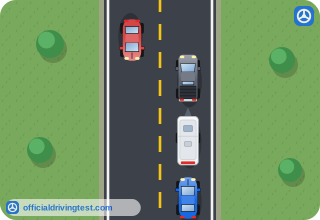
- It is prohibited
- It is allowed with seat belts
- It is allowed on highways only
- It is allowed for adults only
Show answer
Correct answer: It is prohibited
The manual states that riding in house trailers is prohibited.
Source: Hawaii Driver's Manual (2023), page 87 · Open this page in the manual (Manual page 87)