Hawaii: Parking rules
Hill, angle and parallel parking, disabled parking, and the places where you may not stop, stand or park. Split into 2 shorter tests so you're not stuck in one long quiz.
Independent educational site · not affiliated with any government agency or DMV
All 46 Parking rules questions with answers
Choose a part above to take a practice test, or study every question and answer here.
Show the questions and answersHide the questions
-
In the definitions, a vehicle left unattended on the highway for how long is an abandoned vehicle?
- More than 12 hours
- More than 48 hours
- More than 72 hours
- More than 24 hours
Show answer
Correct answer: More than 24 hours
An abandoned vehicle is defined as any vehicle left unattended on the highway for more than 24 hours.
Source: Hawaii Driver's Manual (2023), page 8 · Open this page in the manual (Manual page 8)
-
What happens to a vehicle parked at a place where it is hazardous to other traffic on the roadway?
- It will be towed away
- The driver will receive a warning only
- The driver's license will be suspended
- A notice will be left on the windshield
Show answer
Correct answer: It will be towed away
Parking is prohibited where your vehicle is hazardous to other traffic on the roadway, and your vehicle will be towed away.
Source: Hawaii Driver's Manual (2023), page 28 · Open this page in the manual (Manual page 28)
-
Where is parking prohibited?
- Completely inside a marked parking space
- Parallel to the curb, heading in the direction of traffic
- On a sidewalk or sidewalk area
- Within 12 inches of the curb
Show answer
Correct answer: On a sidewalk or sidewalk area
Parking on a sidewalk or sidewalk area is prohibited.
Source: Hawaii Driver's Manual (2023), page 28 · Open this page in the manual (Manual page 28)
-
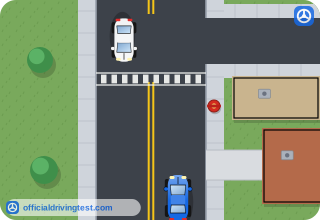
Parking is prohibited in front of, or so close to, a public or private driveway that your vehicle does what?
- Is visible from the road or from the sidewalk nearby
- Is parked parallel to the curb edge
- Is parked longer than one full hour
- Interferes with the use of the driveway
Show answer
Correct answer: Interferes with the use of the driveway
You may not park in front of or so close to a driveway that your vehicle interferes with the use of the driveway.
Source: Hawaii Driver's Manual (2023), page 28 · Open this page in the manual (Manual page 28)
-
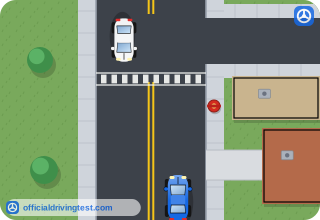
Parking is prohibited within or so close to an intersection that your vehicle does what?
- Is parked on the left side of the road
- Interferes with traffic
- Is facing the direction of traffic
- Is parked for more than an hour
Show answer
Correct answer: Interferes with traffic
You may not park within or so close to an intersection that your vehicle interferes with traffic.
Source: Hawaii Driver's Manual (2023), page 28 · Open this page in the manual (Manual page 28)
-
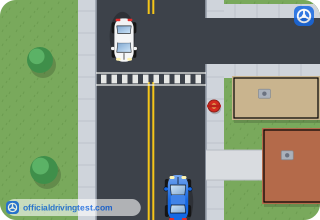
Parking is prohibited in front of, or so close to, a fire hydrant that your vehicle could do what?
- Hide the hydrant from the view of drivers
- Leak fluid onto the hydrant and street
- Interfere with the use of the hydrant
- Block a nearby sidewalk or driveway
Show answer
Correct answer: Interfere with the use of the hydrant
You may not park in front of or so close to a fire hydrant that your vehicle could interfere with its use.
Source: Hawaii Driver's Manual (2023), page 28 · Open this page in the manual (Manual page 28)
-
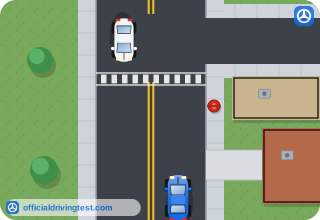
Parking is prohibited on or so close to a crosswalk that your vehicle does what?
- Blocks other drivers' view of pedestrians
- Blocks the crosswalk signal from view
- Interferes with the use of the sidewalk beside it
- Is partly on the pavement
Show answer
Correct answer: Blocks other drivers' view of pedestrians
You may not park on or so close to a crosswalk that your vehicle blocks other drivers' view of pedestrians.
Source: Hawaii Driver's Manual (2023), page 28 · Open this page in the manual (Manual page 28)
-
Parking is prohibited at any place during the times when what prohibit standing or parking?
- Official signs or markings
- Only a verbal order from a police officer
- Only the wishes of a nearby property owner
- Only the posted hours of nearby businesses
Show answer
Correct answer: Official signs or markings
Parking is prohibited at any place during the times when official signs or markings prohibit standing or parking.
Source: Hawaii Driver's Manual (2023), page 28 · Open this page in the manual (Manual page 28)
-
Which of these is a place where parking is prohibited?
- On a street with no signs, parallel to the curb in the traffic direction
- In a marked space that fits your vehicle
- On a bridge, elevated structure, or within a tunnel
- Within 12 inches of the curb
Show answer
Correct answer: On a bridge, elevated structure, or within a tunnel
Parking is prohibited on a bridge, elevated structure, or within a tunnel.
Source: Hawaii Driver's Manual (2023), page 28 · Open this page in the manual (Manual page 28)
-
What is double parking?
- Parking two vehicles together in one marked space
- Parking on the roadway side of a car stopped at the road edge
- Parking in a space reserved for a large trailer
- Parking two cars in a row, one directly behind the other at the curb
Show answer
Correct answer: Parking on the roadway side of a car stopped at the road edge
Double parking, on the roadway side of another car stopped at the edge of the road, is prohibited whether you remain in the vehicle or not.
Source: Hawaii Driver's Manual (2023), page 28 · Open this page in the manual (Manual page 28)
-
Parking is prohibited if your vehicle is more than how far from the curb?
- 6 inches (15cm)
- 24 inches (61cm)
- 36 inches (91cm)
- 12 inches (30cm)
Show answer
Correct answer: 12 inches (30cm)
Parking more than 12 inches (30cm) from the curb is prohibited.
Source: Hawaii Driver's Manual (2023), page 28 · Open this page in the manual (Manual page 28)
-
Which type of zone is a place where parking is prohibited?
- A zone beside a public park
- A zone beside an empty lot
- A passenger or freight loading zone
- A zone with a posted speed limit
Show answer
Correct answer: A passenger or freight loading zone
Parking in a passenger or freight loading zone is prohibited.
Source: Hawaii Driver's Manual (2023), page 28 · Open this page in the manual (Manual page 28)
-
You may not park at any place where less than what width of the street remains for the free movement of traffic?
- 10 feet (3m)
- 5 feet (1.5m)
- 15 feet (4.6m)
- 20 feet (6m)
Show answer
Correct answer: 10 feet (3m)
Parking is prohibited where less than 10 feet (3m) of the width of the street remains for the free movement of traffic.
Source: Hawaii Driver's Manual (2023), page 28 · Open this page in the manual (Manual page 28)
-
For which purpose is parking on any public road prohibited?
- Waiting in your vehicle for a passenger to arrive at the curb
- Parking parallel to the curb in a legal space
- Loading groceries into your vehicle at the curb
- To repair (except emergency), wash or display a vehicle for sale
Show answer
Correct answer: To repair (except emergency), wash or display a vehicle for sale
Parking on any public road to repair (except emergency), wash, or display a vehicle for sale is prohibited.
Source: Hawaii Driver's Manual (2023), page 28 · Open this page in the manual (Manual page 28)
-
When is it allowed to park with your vehicle extending outside of a marked parking space?
- When no other vehicles are parked anywhere nearby on the street
- When your vehicle is larger than the marked space
- When you stay in the vehicle the whole time
- When the lines of the space are faded or worn
Show answer
Correct answer: When your vehicle is larger than the marked space
Parking outside a marked parking space is prohibited except when your vehicle is larger than the marked space.
Source: Hawaii Driver's Manual (2023), page 29 · Open this page in the manual (Manual page 29)
-
Parking on a public street or highway is prohibited for a continuous period of more than how long?
- 12 hours
- 24 hours
- 48 hours
- 72 hours
Show answer
Correct answer: 24 hours
It is prohibited to park on a public street or highway for a continuous period of more than 24 hours.
Source: Hawaii Driver's Manual (2023), page 29 · Open this page in the manual (Manual page 29)
-
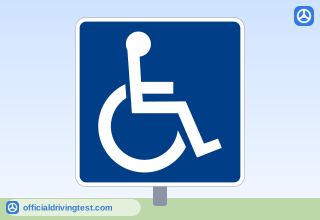
A blue sign shows a white wheelchair symbol marking a parking space. When may you park there?
- If you stay in the vehicle the whole time that you are parked there
- If you park there for only a few minutes at a time
- If no one else is waiting for the space to open up
- Only with the placard or plate issued to the disabled person
Show answer
Correct answer: Only with the placard or plate issued to the disabled person
Parking in a space identified by the international symbol for accessibility is prohibited unless you display the placard or license plate issued to the disabled person being transported in the vehicle.
Source: Hawaii Driver's Manual (2023), page 29 · Open this page in the manual (Manual page 29)
-
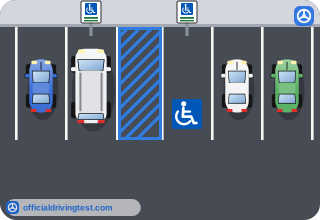
Why must the access aisle next to an accessible parking space be kept clear?
- To allow a wheelchair lift/ramp or other device to be deployed
- To let emergency vehicles turn around in the lot when they need to
- To leave room for loading and unloading freight there
- To give other drivers room to back out of their spaces
Show answer
Correct answer: To allow a wheelchair lift/ramp or other device to be deployed
The access aisle must be kept clear to allow for the deployment of a wheelchair lift/ramp and other mobility assistance devices.
Source: Hawaii Driver's Manual (2023), page 29 · Open this page in the manual (Manual page 29)
-
May you park or stop in a tow-away zone during the hours stated on the official signs?
- Yes, if you stay in the vehicle the whole time you are there
- Yes, for up to five minutes while you wait
- No, not even for a moment unless blocked by traffic
- Yes, if your hazard lights are turned on
Show answer
Correct answer: No, not even for a moment unless blocked by traffic
You must not park or stop your vehicle, even momentarily except when blocked by other traffic, during the hours stated on official signs for a tow-away zone.
Source: Hawaii Driver's Manual (2023), page 29 · Open this page in the manual (Manual page 29)
-
If your vehicle is towed away, whom should you contact for recovery information?
- The county driver licensing office
- The vehicle safety inspection station
- The Department of Transportation
- The police
Show answer
Correct answer: The police
The manual says to contact the police for recovery information if your vehicle is towed away.
Source: Hawaii Driver's Manual (2023), page 29 · Open this page in the manual (Manual page 29)
-
Which of these must you do when you leave your motor vehicle unattended?
- Leave the engine idling so the vehicle stays warm
- Leave the transmission in neutral
- Lock the ignition and remove the ignition key
- Leave the headlamps on
Show answer
Correct answer: Lock the ignition and remove the ignition key
When you leave your vehicle unattended you must stop the engine, lock the ignition and remove the key, and set the parking brake.
Source: Hawaii Driver's Manual (2023), page 29 · Open this page in the manual (Manual page 29)
-
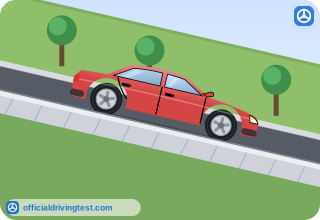
When you leave your vehicle unattended on a grade, which way must you turn the wheels?
- Toward the curb
- Away from the curb
- Straight ahead
- Toward the center of the road
Show answer
Correct answer: Toward the curb
When the vehicle is on a grade you must turn the wheels toward the curb.
Source: Hawaii Driver's Manual (2023), page 29 · Open this page in the manual (Manual page 29)
-
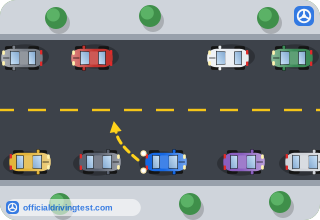
Why does the manual say backing should be done with great caution?
- Because of restricted visibility
- Because of the cost of rear repairs
- Because backing is illegal in traffic
- Because vehicles brake poorly in reverse
Show answer
Correct answer: Because of restricted visibility
Backing is a dangerous maneuver because of restricted visibility and should be done with great caution.
Source: Hawaii Driver's Manual (2023), page 64 · Open this page in the manual (Manual page 64)
-
When backing a vehicle, how does the manual say you should check the area to the rear?
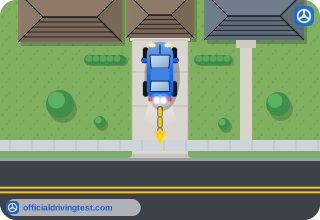
- Rely on your rear-view mirrors
- Look only in the outside mirror
- Back up slowly without looking back
- Turn around and look to the rear
Show answer
Correct answer: Turn around and look to the rear
The view through rear-view mirrors is too small to use for backing, so you should turn around and look to the rear.
Source: Hawaii Driver's Manual (2023), page 64 · Open this page in the manual (Manual page 64)
-
What does the manual say to do if you cannot see to the rear when backing?
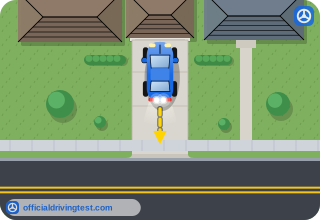
- Sound the horn and back up quickly
- Have someone outside guide you
- Back up using only the mirrors
- Back up quickly to clear the area
Show answer
Correct answer: Have someone outside guide you
The manual says that if you cannot see to the rear, you should have someone outside of the vehicle guide you.
Source: Hawaii Driver's Manual (2023), page 64 · Open this page in the manual (Manual page 64)
-
What should you do when the backing movement is first started?
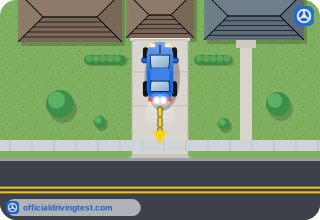
- Accelerate quickly to clear the space
- Apply the brakes gently
- Turn the wheel fully before moving
- Sound the horn twice
Show answer
Correct answer: Apply the brakes gently
When backing first starts, the brakes should be applied gently to insure proper operation.
Source: Hawaii Driver's Manual (2023), page 64 · Open this page in the manual (Manual page 64)
-
At what rate of speed should you always back a vehicle?
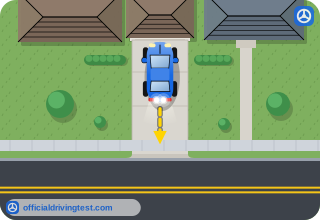
- The speed of surrounding traffic
- A moderate rate of speed
- Whatever speed clears the space quickly
- A slow rate of speed
Show answer
Correct answer: A slow rate of speed
The manual says to always back at a slow rate of speed.
Source: Hawaii Driver's Manual (2023), page 64 · Open this page in the manual (Manual page 64)
-
If you are backing and turning at the same time, what should you watch?
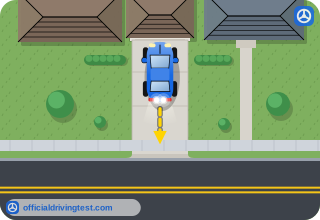
- The front of the vehicle for clearance
- Only the rear of the vehicle
- Only the curb on your right
- The vehicles behind you in the mirror
Show answer
Correct answer: The front of the vehicle for clearance
The manual says to watch the front of the vehicle for clearance if you are backing and turning at the same time.
Source: Hawaii Driver's Manual (2023), page 64 · Open this page in the manual (Manual page 64)
-
How does the manual say you should try to park so you can avoid backing into traffic?
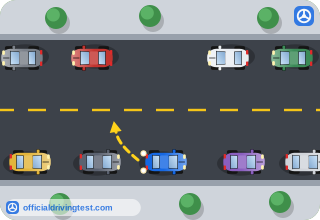
- So that you leave in reverse
- So that you face the curb
- So that you will enter traffic in a forward direction
- So that you block as little of the lane as possible
Show answer
Correct answer: So that you will enter traffic in a forward direction
The manual says to try to park so that you will enter traffic in a forward direction.
Source: Hawaii Driver's Manual (2023), page 64 · Open this page in the manual (Manual page 64)
-
When you must back into traffic and it is clear, into which lane does the manual say to back?
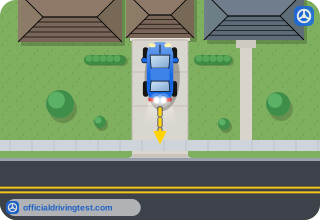
- The center lane
- The lane farthest from the curb
- Any lane that is open
- The lane nearest the road edge
Show answer
Correct answer: The lane nearest the road edge
The manual says to always back into the lane nearest the edge of the roadway when traffic is clear.
Source: Hawaii Driver's Manual (2023), page 64 · Open this page in the manual (Manual page 64)
-
Which driver has the chief responsibility for avoiding a collision, according to the manual?
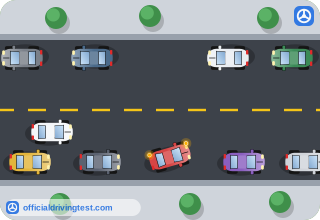
- The driver already in the traffic lane
- The driver who is leaving a parking space
- The driver traveling at the higher speed
- The driver who arrives at the space first
Show answer
Correct answer: The driver who is leaving a parking space
The chief responsibility for avoiding a collision lies with the driver who is leaving a parking space.
Source: Hawaii Driver's Manual (2023), page 64 · Open this page in the manual (Manual page 64)
-
You are parallel parked at the roadside and want to enter traffic. What should you do?
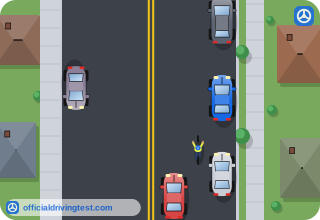
- Move forward into the nearest traffic lane once oncoming traffic leaves space
- Back into the nearest traffic lane once there is space behind you
- Wait until every vehicle in the lane has passed and the road is empty
- Pull out at an angle across both traffic lanes at the same time
Show answer
Correct answer: Move forward into the nearest traffic lane once oncoming traffic leaves space
From a parallel parked position you move forward into the nearest traffic lane once there is sufficient space in oncoming traffic.
Source: Hawaii Driver's Manual (2023), page 65 · Open this page in the manual (Manual page 65)
-
What must you do first when leaving a diagonal parked position at the roadside?
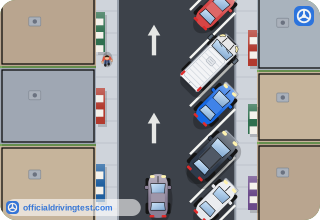
- Drive straight ahead into the traffic lane
- Turn your wheels toward the curb and roll out
- Back into the traffic lane
- Wait for another driver to wave you out
Show answer
Correct answer: Back into the traffic lane
A diagonal parked car has to first back into the traffic lane, which is a much more dangerous and difficult maneuver that takes more time.
Source: Hawaii Driver's Manual (2023), page 65 · Open this page in the manual (Manual page 65)
-
Where must stops to load or unload passengers or cargo be made?
- In the right traffic lane, with your hazard lights turned on
- In a parking space, loading zone or other place out of a traffic lane
- Beside the curb in the nearest lane of traffic if it is brief
- In any traffic lane, as long as it takes less than a minute
Show answer
Correct answer: In a parking space, loading zone or other place out of a traffic lane
Stopping unnecessarily in a traffic lane is illegal, so stops to load or unload must be made in a designated parking space, loading zone or other place out of a traffic lane.
Source: Hawaii Driver's Manual (2023), page 69 · Open this page in the manual (Manual page 69)
-
Where should you always park your vehicle?
- Just beyond a curve, where it stays out of the way
- Near the crest of a hill, where it is out of the way
- Clear of traffic and readily visible to approaching drivers
- Wherever it is hidden from the view of other drivers
Show answer
Correct answer: Clear of traffic and readily visible to approaching drivers
You park at a location clear of traffic and readily visible to approaching drivers, avoiding hidden locations such as just beyond a curve or the crest of a hill.
Source: Hawaii Driver's Manual (2023), page 71 · Open this page in the manual (Manual page 71)
-
When parking on a hill, what should you do if your vehicle has no PARK position?
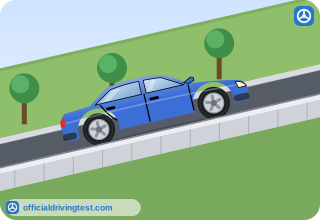
- Shift to neutral
- Shift to reverse or low gear
- Leave the engine running
- Leave it in the highest gear
Show answer
Correct answer: Shift to reverse or low gear
You set the hand brake and shift to the PARK position if you have one; if not, you shift to reverse or low gear.
Source: Hawaii Driver's Manual (2023), page 71 · Open this page in the manual (Manual page 71)
-
When parking on a hill, why should you always turn the front wheels toward the curb?
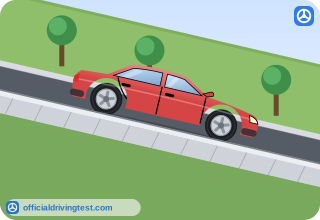
- It lets you pull away from the curb sooner when you leave
- It saves wear on the brakes and the tires
- It keeps the brake lamps lit while you are parked
- It maximizes the force needed for the vehicle to roll free
Show answer
Correct answer: It maximizes the force needed for the vehicle to roll free
Turning the front wheels toward the curb means all four wheels would have to go over the curb before the vehicle is free to roll.
Source: Hawaii Driver's Manual (2023), page 71 · Open this page in the manual (Manual page 71)
-
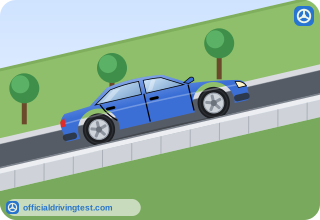
You park on a hill, either uphill or downhill. Which way should you turn the wheels?
- To the left
- Straight ahead
- To the right
- Away from the curb
Show answer
Correct answer: To the right
Whether you park uphill or downhill you turn the wheels to the right, so the vehicle rolls away from traffic if something causes it to roll free.
Source: Hawaii Driver's Manual (2023), page 71 · Open this page in the manual (Manual page 71)
-
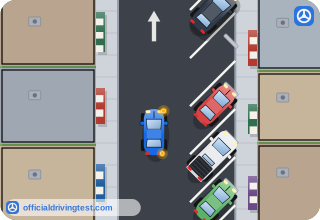
When angle parking, how should you enter the space?
- Drive forward, with equal space on each side between the lines
- Back into the space, keeping close to one side of it
- Drive in at a sharp angle and straighten the car later
- Stop with your front bumper over the line of the space
Show answer
Correct answer: Drive forward, with equal space on each side between the lines
The angle parking picture says to keep safe clearance and drive forward into the space, with equal space on each side between the lines.
Source: Hawaii Driver's Manual (2023), page 72 · Open this page in the manual (Manual page 72)
-
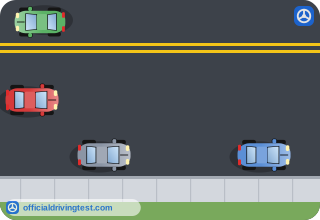
In step 1 of parallel parking, how far from the front car should you stop beside it?
- About 6 inches, with front bumpers even
- About 3 feet, with rear bumpers even
- About 5 feet, behind its rear bumper
- About 18 inches, with rear bumpers even
Show answer
Correct answer: About 18 inches, with rear bumpers even
Step 1 is to signal and stop even with the front car about 18 inches from it, with rear bumpers even.
Source: Hawaii Driver's Manual (2023), page 72 · Open this page in the manual (Manual page 72)
-
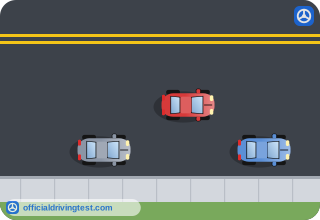
In step 2 of parallel parking, how do you back in?
- Back quickly with the wheel straight until you are at a 90-degree angle
- Back slowly, turning the wheel sharp right until the car is at about a 45-degree angle
- Back slowly, turning the wheel sharp left until the car is at about a 20-degree angle
- Back slowly with the wheel straight until your front bumper clears the car ahead
Show answer
Correct answer: Back slowly, turning the wheel sharp right until the car is at about a 45-degree angle
Step 2 is to back slowly, turning the steering wheel sharp right until the car is at about a 45-degree angle with the street, then quickly straighten the front wheels and back slowly.
Source: Hawaii Driver's Manual (2023), page 72 · Open this page in the manual (Manual page 72)
-
In step 3 of parallel parking, when do you turn the wheels sharply to the left?
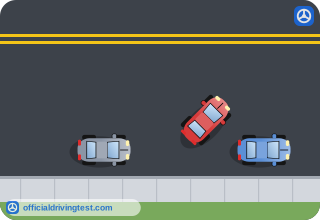
- When your front bumper is even with the other car's back bumper
- As soon as you have stopped beside the front car
- When your car touches the car behind it
- After you pull forward to center your car in the space
Show answer
Correct answer: When your front bumper is even with the other car's back bumper
Step 3 is to turn the wheels sharply and rapidly to the left as far as possible when your front bumper is even with the other car's back bumper, then back slowly without touching the car behind.
Source: Hawaii Driver's Manual (2023), page 72 · Open this page in the manual (Manual page 72)
-
In the last step of parallel parking, what do you do after backing up to the car behind?
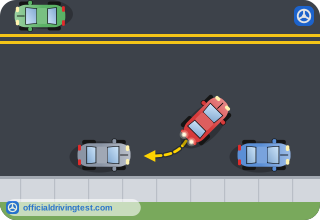
- Turn the wheel sharply left and back up again to the car behind
- Straighten the wheels and stay exactly where you are parked
- Turn the wheel sharply right, pull forward slowly and center the car
- Pull out of the space completely and start the whole thing again
Show answer
Correct answer: Turn the wheel sharply right, pull forward slowly and center the car
Step 4 is to turn the steering wheel sharply to the right and slowly pull forward, centering the car in the space.
Source: Hawaii Driver's Manual (2023), page 72 · Open this page in the manual (Manual page 72)
-
When parked, how close may your front and rear bumpers be to the other vehicles?
- No closer than six inches from either of the other vehicles
- No closer than two feet, unless the street is otherwise marked
- No closer than five feet from either of the other vehicles
- As close as possible without touching the other vehicles
Show answer
Correct answer: No closer than two feet, unless the street is otherwise marked
Front and rear bumpers should not be closer than two feet from the other vehicles unless the street is otherwise marked.
Source: Hawaii Driver's Manual (2023), page 72 · Open this page in the manual (Manual page 72)
-
Where angle parking is not clearly designated, how must a vehicle be parked?
- Parallel to the curb, heading in the direction of traffic
- At an angle to the curb, heading in the direction of traffic
- Parallel to the curb, facing oncoming traffic
- Nose-in at a right angle to the curb
Show answer
Correct answer: Parallel to the curb, heading in the direction of traffic
The manual says where angle parking is not clearly designated, a vehicle must be parked parallel to the curb, heading in the direction of traffic.
Source: Hawaii Driver's Manual (2023), page 73 · Open this page in the manual (Manual page 73)
-
When parallel parked, how close must the vehicle’s curbside wheels be to the curb, unless the vehicle is completely within a marked parking stall?
- Within 6 inches (15 cm)
- Within 18 inches (45 cm)
- Within 12 inches (30 cm)
- Within 24 inches (60 cm)
Show answer
Correct answer: Within 12 inches (30 cm)
The curbside wheels shall be within 12 inches of the curb (30 cm), or completely within the marked parking stall.
Source: Hawaii Driver's Manual (2023), page 73 · Open this page in the manual (Manual page 73)