Georgia: Sharing the road — Part 3 Practice Test
Questions in this part include: “What is the penalty for not following the required procedures when approaching a bicycle?” · “Compared with car drivers, how do motorcyclists involved in a crash fare?”
Independent educational site · not affiliated with any government agency or DMV
Ready? Test yourself
- Instant feedback with an explanation
- Every answer cites its source in the manual
- Your best score is saved on this device
Questions are original and based on the official manual "Georgia Driver's Manual" (2023-2024), Georgia Department of Driver Services (DDS).
All 16 questions in this practice test
Take the test above first, then use this list to study. Tap “Show answer” to see the correct answer and explanation.
Show the questions and answersHide the questions
-
What is the penalty for not following the required procedures when approaching a bicycle?
- A misdemeanor punishable by a fine up to $100.00
- A misdemeanor punishable by a fine up to $250.00
- A misdemeanor punishable by a fine up to $500.00
- A misdemeanor punishable by a fine up to $750.00
Show answer
Correct answer: A misdemeanor punishable by a fine up to $250.00
The manual says the violation is a misdemeanor punishable by a fine up to $250.00.
Source: Georgia Driver's Manual (2023-2024), page 43
-
When approaching a bicycle, what should a motorist do if possible in the existing road and traffic conditions?
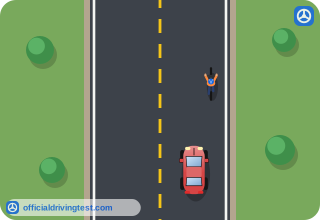
- Slow to a stop until the bicycle has passed
- Sound the horn to warn the rider
- Move onto the shoulder and wait
- Change into a lane not adjacent to the bicycle
Show answer
Correct answer: Change into a lane not adjacent to the bicycle
The first step is a lane change into a lane not adjacent to the bicycle if possible.
Source: Georgia Driver's Manual (2023-2024), page 43
-
If a lane change is impossible, prohibited by law, or unsafe, what speed must you use to go around a bicycle?
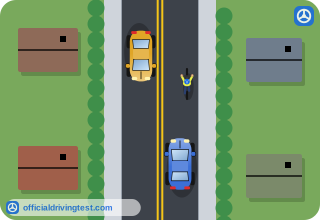
- At least ten mph less than the posted speed limit or 25 mph, whichever is more
- At least five mph less than the posted speed limit or 15 mph, whichever is more
- At least ten mph less than the posted speed limit or 35 mph, whichever is less
- At least twenty mph less than the posted speed limit or 20 mph, whichever is more
Show answer
Correct answer: At least ten mph less than the posted speed limit or 25 mph, whichever is more
The speed must be at least ten miles per hour less than the posted speed limit or 25 miles per hour, whichever is more.
Source: Georgia Driver's Manual (2023-2024), page 43
-
Why might a bicyclist appear to suddenly swerve or turn in front of you?
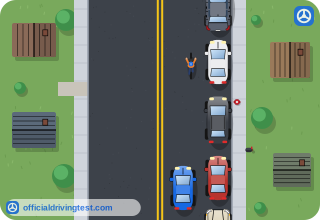
- The rider is required to cross traffic at every intersection they reach
- The rider is trying to avoid the bike lane markings painted on the road
- The rider may not have had the opportunity to merge left because of traffic speed
- The rider has a legal right to turn without signaling to other drivers
Show answer
Correct answer: The rider may not have had the opportunity to merge left because of traffic speed
Bicyclists sometimes forget or do not have the opportunity to merge left due to traffic speed, in order to be in the left turn position.
Source: Georgia Driver's Manual (2023-2024), page 43
-
What should you do if you meet an oncoming bicyclist at night?
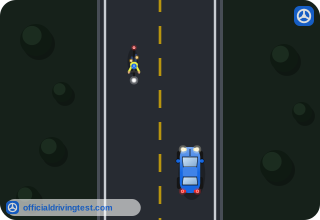
- Keep your high beams on so the rider can see you
- Dim your lights to avoid blinding the bicyclist
- Flash your lights twice to signal the rider
- Turn off your headlights until you pass
Show answer
Correct answer: Dim your lights to avoid blinding the bicyclist
Night time bicyclists may not have lights, and you should dim your lights to avoid blinding an oncoming bicyclist.
Source: Georgia Driver's Manual (2023-2024), page 43
-
Which statement about bike lanes is correct?
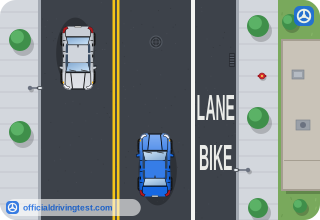
- Motorists may drive in them to turn right, but may not park there
- Motorists may park in them when no bicyclist is present to use them
- Motorists may drive in them briefly, but may not park in them
- They are for bicycles only, and motorists are not to drive or park in them
Show answer
Correct answer: They are for bicycles only, and motorists are not to drive or park in them
Bike lanes and any other bicycle infrastructure are for bicycles only, and motorists are not to drive or park in a bike lane.
Source: Georgia Driver's Manual (2023-2024), page 43
-
Under what condition can bicyclists pass on the right side of motorists?
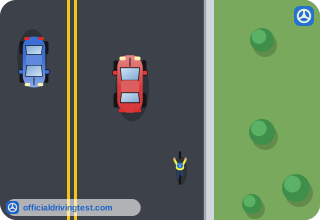
- If there is a dedicated lane or sufficient room in a shared lane, and it is safe
- Never, because bicyclists must always pass other vehicles on the left side
- Only when the motorist signals the rider to pass on the right side of the car
- Only on roads with a posted speed limit below 25 miles per hour
Show answer
Correct answer: If there is a dedicated lane or sufficient room in a shared lane, and it is safe
Bicyclists can pass on the right if there is a dedicated lane or sufficient room in a shared lane and it is safe to do so.
Source: Georgia Driver's Manual (2023-2024), page 43
-
What should bicyclists use their arms to signal to other motorists?
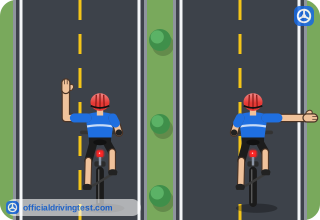
- Only that they intend to turn left at the next intersection
- That a driver traveling behind them should pass on the left
- When they will turn and in which direction, or when slowing or stopping
- Only that they are riding at night and want drivers to dim lights
Show answer
Correct answer: When they will turn and in which direction, or when slowing or stopping
Bicyclists should signal with their arms when turning, the direction of the turn, and when slowing or stopping.
Source: Georgia Driver's Manual (2023-2024), page 43
-
Compared with car drivers, how do motorcyclists involved in a crash fare?
- They are less vulnerable to injury and death
- They are more vulnerable to injury and death
- They are equally vulnerable to injury and death
- They are more vulnerable only with a passenger
Show answer
Correct answer: They are more vulnerable to injury and death
Motorcyclists are more vulnerable to injury and death than car drivers if involved in a crash.
Source: Georgia Driver's Manual (2023-2024), page 43
-
What rights and responsibilities do motorcyclists have compared with automobile drivers?
- Fewer rights but more responsibilities
- More rights because they are more vulnerable
- The same rights but fewer responsibilities
- The same rights and responsibilities
Show answer
Correct answer: The same rights and responsibilities
Motorcyclists have the same rights and responsibilities as automobile drivers.
Source: Georgia Driver's Manual (2023-2024), page 43
-
How can the small profile of a motorcycle affect how it appears to other drivers?
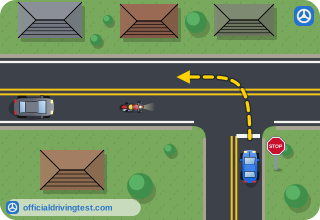
- It may appear farther away and traveling slower than it actually is
- It may appear closer and traveling faster than it actually is
- It may appear larger than a passenger vehicle at a distance
- It may appear to be stopped when it is moving
Show answer
Correct answer: It may appear farther away and traveling slower than it actually is
The small profile may make a motorcycle appear farther away and traveling slower than it actually is.
Source: Georgia Driver's Manual (2023-2024), page 43
-
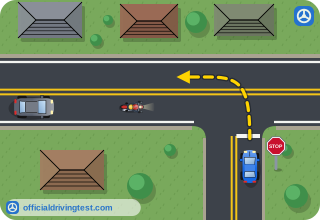
Because a motorcycle's outline is small, what do drivers need to do?
- Assume the rider can see your vehicle
- Rely on mirrors alone and not turn the head
- Take a second look, and then a third
- Stay in the far left lane at intersections
Show answer
Correct answer: Take a second look, and then a third
Drivers need to take a second look, and then a third, because most drivers are not looking for motorcycles.
Source: Georgia Driver's Manual (2023-2024), page 43
-
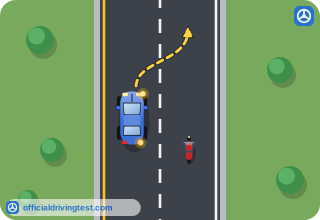
When should you make a visual check, mirrors too, of blind spots for motorcycles?
- Only when a motorcycle is directly behind you in the same lane
- Before entering or leaving a lane of traffic and at intersections
- Only when changing to a lane on your left near an intersection
- Only when you hear a motorcycle engine approaching from behind
Show answer
Correct answer: Before entering or leaving a lane of traffic and at intersections
You should always check blind spots before entering or leaving a lane of traffic and at intersections.
Source: Georgia Driver's Manual (2023-2024), page 43
-
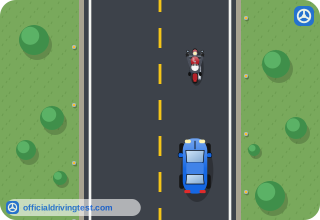
How much of a lane are motorcycles allowed in which to maneuver?
- Half the width of the lane
- The left half of the lane only
- Two-thirds of the width of the lane
- The full width of the lane
Show answer
Correct answer: The full width of the lane
Motorcycles are allowed the full width of a lane in which to maneuver.
Source: Georgia Driver's Manual (2023-2024), page 43
-
It may seem there is enough room in a lane for a car and a motorcycle. What should you do?
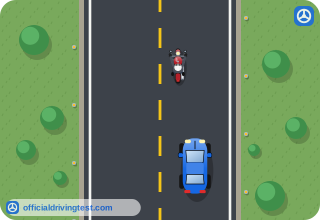
- Not share the lane, because the motorcycle needs the room to maneuver safely
- Share the lane as long as the motorcycle stays to one side of it
- Share the lane as long as you drive slowly and keep a steady speed
- Share the lane only on roads that have wide paved shoulders on both sides
Show answer
Correct answer: Not share the lane, because the motorcycle needs the room to maneuver safely
The motorcycle needs the room to maneuver safely, so you should not share the lane.
Source: Georgia Driver's Manual (2023-2024), page 43
-
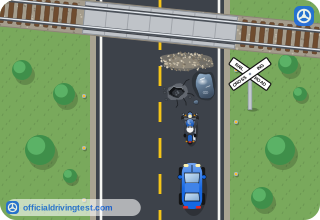
Why may motorcyclists adjust their lane position?
- To show off, as many riders like to do
- To signal drivers that they want to share the lane
- For their own safety, not to be reckless or show off
- To avoid using their turn signals
Show answer
Correct answer: For their own safety, not to be reckless or show off
Motorcyclists may adjust lane position for their own safety, not to be reckless or show off.
Source: Georgia Driver's Manual (2023-2024), page 43