Florida: Emergencies and special situations — Part 4 Practice Test
Questions in this part include: “How should you position and care for a person being treated for shock?”
Independent educational site · not affiliated with any government agency or DMV
Ready? Test yourself
- Instant feedback with an explanation
- Every answer cites its source in the manual
- Your best score is saved on this device
Questions are original and based on the official manual "Florida Driver License Handbook" (Revised August 2023), Florida Department of Highway Safety and Motor Vehicles (FLHSMV).
All 18 questions in this practice test
Take the test above first, then use this list to study. Tap “Show answer” to see the correct answer and explanation.
Show the questions and answersHide the questions
-
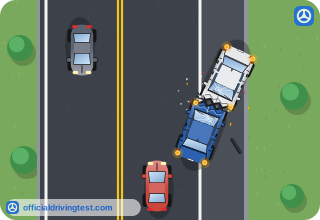
What should you do to document a crash scene?
- Rely only on your memory when you report to your insurer
- Take photos or sketch the scene, showing vehicle crash locations
- Wait for the officer to take all photos
- Move the vehicles first so photos look cleaner
Show answer
Correct answer: Take photos or sketch the scene, showing vehicle crash locations
You should take photos or sketch the scene, showing where the vehicles were located during the crash.
Source: Florida Driver License Handbook (Revised August 2023), page 77
-
If you come upon a crash, what should you do?
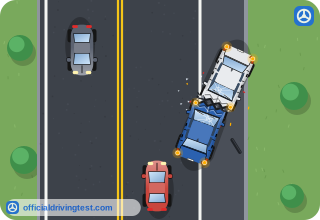
- Call 911 or *FHP (*347), even if others may have already called
- Only call for help if there are visible injuries
- Assume someone else has already called and continue driving
- Wait for a police officer to arrive before doing anything
Show answer
Correct answer: Call 911 or *FHP (*347), even if others may have already called
If you come upon a crash, call 911 or *FHP (*347) and/or send someone for help; don't assume someone else has called, since it's better for emergency services to get multiple calls than none at all.
Source: Florida Driver License Handbook (Revised August 2023), page 77
-
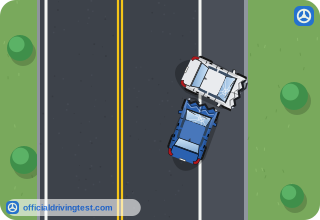
When stopping to help at a crash scene, what should you do to stay safe?
- Stand in the traffic lane to direct other drivers
- Park in the middle of the road to block other vehicles
- Leave your hazard lights off to avoid draining your battery
- Pull far off the road, turn on hazard lights, and stay out of traffic
Show answer
Correct answer: Pull far off the road, turn on hazard lights, and stay out of traffic
Do not put yourself in danger; pull as far off the road as possible, turn on your hazard lights, and stay out of traffic.
Source: Florida Driver License Handbook (Revised August 2023), page 77
-
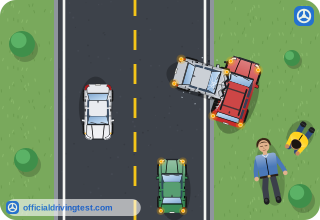
If an injured person may have a neck or spinal injury, what should you do?
- Have them stand up to check for injuries
- Move them to a more comfortable position
- Do not move them
- Sit them up immediately
Show answer
Correct answer: Do not move them
Don't move an injured person who may have a neck or spinal injury.
Source: Florida Driver License Handbook (Revised August 2023), page 78
-
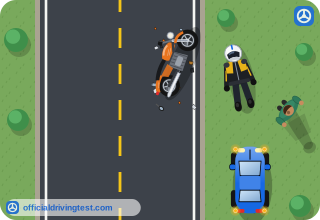
If a motorcycle or bicycle rider is injured and wearing a helmet, what should you do?
- Remove the helmet only if they ask you to
- Do not attempt to remove the helmet
- Remove the helmet immediately so they can breathe
- Loosen the strap but leave the helmet on the ground beside them
Show answer
Correct answer: Do not attempt to remove the helmet
Don't attempt to remove the helmet of an injured motorcycle or bicycle rider.
Source: Florida Driver License Handbook (Revised August 2023), page 78
-
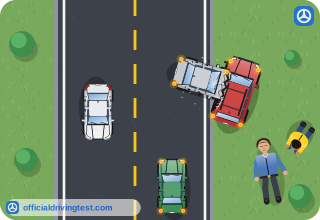
When should you treat an injured person for shock?
- Only if they specifically ask for help
- Only if they are unconscious
- Only after a doctor confirms they are in shock
- Whether or not they appear to be in shock
Show answer
Correct answer: Whether or not they appear to be in shock
Treat the injured for shock regardless of whether or not they appear to be in shock, and don't give them anything to drink.
Source: Florida Driver License Handbook (Revised August 2023), page 78
-
How should you position and care for a person being treated for shock?
- Have them stand and walk around to keep circulation going
- Have them sit upright with their head between their knees
- Leave them exactly as you found them and do not touch them
- Have them lie flat, elevate their legs, and cover them with blankets
Show answer
Correct answer: Have them lie flat, elevate their legs, and cover them with blankets
To treat for shock, keep the person calm, have them lie flat and elevate their legs, cover them with blankets to hold body heat, and maintain an open airway.
Source: Florida Driver License Handbook (Revised August 2023), page 78
-
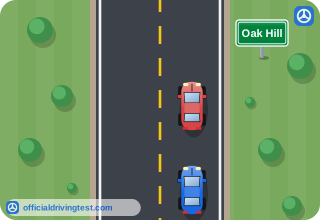
To avoid striking the vehicle in front of you, how much following distance should you keep, and when should you increase it?
- As close as possible so other drivers cannot merge in front of you
- At least four seconds, increasing it during unfavorable weather or heavy traffic
- At least one second, and there is no need to increase it in bad weather
- Exactly two car lengths at all times, regardless of speed
Show answer
Correct answer: At least four seconds, increasing it during unfavorable weather or heavy traffic
Keep at least four seconds following distance and increase it during unfavorable weather or heavy traffic to lower the risk of a rear-end collision.
Source: Florida Driver License Handbook (Revised August 2023), page 78
-
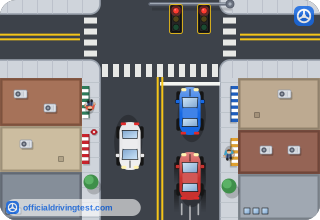
To lower the risk of someone running into the rear of your vehicle, what should you avoid?
- Using your turn signals before changing lanes
- Checking your mirrors regularly
- Making sudden stops instead of slowing down gradually
- Keeping your brake lights clean and working
Show answer
Correct answer: Making sudden stops instead of slowing down gradually
Avoid sudden stops; slow down gradually and smoothly, and drive with the flow of traffic since driving too slowly can also be dangerous.
Source: Florida Driver License Handbook (Revised August 2023), page 78
-
If your vehicle breaks down, what must you do as soon as possible?
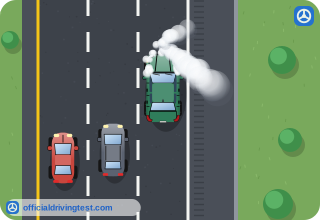
- Leave it exactly where it stopped, even if it blocks a traffic lane
- Wait inside the vehicle in the traffic lane until help arrives
- Push it to the nearest exit ramp, no matter how far
- Move it so all four wheels are out of traffic lanes, or have it moved
Show answer
Correct answer: Move it so all four wheels are out of traffic lanes, or have it moved
You must move the vehicle so all four wheels are out of the traffic lanes as soon as possible; if you can't move it, you must have it moved.
Source: Florida Driver License Handbook (Revised August 2023), page 78
-
If possible, where should you park a disabled vehicle, and what should you turn on?
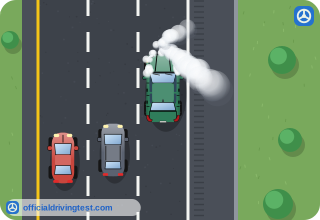
- In the nearest travel lane, and turn on your high beams
- Behind a curve where it cannot be seen, and turn off all lights
- Where it can be seen 200 feet in each direction, and turn on hazard lights
- As close to other vehicles as possible, and turn on your radio
Show answer
Correct answer: Where it can be seen 200 feet in each direction, and turn on hazard lights
If possible, park where the disabled vehicle can be seen for 200 feet in each direction, and turn on your hazard lights.
Source: Florida Driver License Handbook (Revised August 2023), page 78
-
If your vehicle breaks down, where should passengers get out, and who should you call for assistance?
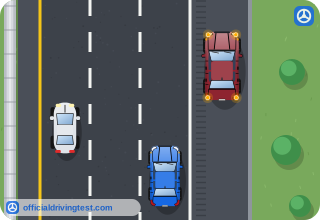
- Keep all passengers inside the vehicle with seatbelts on
- Have passengers stand behind the vehicle to warn other drivers
- Get all passengers out on the side away from traffic, and call *FHP (*347) or law enforcement
- Get all passengers out on the side facing traffic, and call your mechanic first
Show answer
Correct answer: Get all passengers out on the side away from traffic, and call *FHP (*347) or law enforcement
Get all passengers out of the car on the side away from traffic, and call *FHP (*347) or law enforcement for assistance.
Source: Florida Driver License Handbook (Revised August 2023), page 78
-
In an emergency braking situation where traction is lost, what should drivers with conventional brakes do, versus drivers with anti-lock brakes (ABS)?
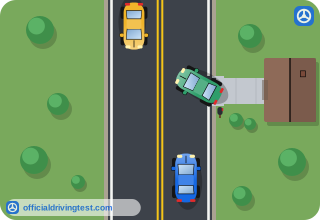
- Conventional brakes: press hard and hold. ABS: pump the brakes rapidly
- Neither type of brake should be used; only steering should be used to stop
- Both types should be pumped rapidly in the same way
- Conventional brakes: pump them. ABS: press hard, hold it, and steer out of danger
Show answer
Correct answer: Conventional brakes: pump them. ABS: press hard, hold it, and steer out of danger
Drivers with conventional brakes should pump the brakes, while drivers with ABS must press down hard on the brake pedal, hold it, and steer out of danger. Releasing pressure or pumping ABS brakes causes the ABS to disengage.
Source: Florida Driver License Handbook (Revised August 2023), page 78
-
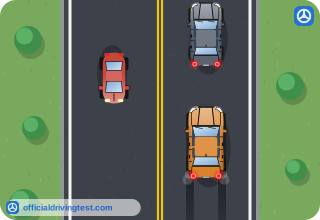
On a vehicle with rear-wheel ABS, if the front wheels lock up and the driver starts to lose steering control, what should the driver do?
- Take your foot off the brake completely and accelerate
- Press the brake pedal even harder until the vehicle stops completely
- Let up on the brake just enough for the front wheels to start rolling again
- Turn the steering wheel sharply in the opposite direction
Show answer
Correct answer: Let up on the brake just enough for the front wheels to start rolling again
Rear-wheel ABS prevents the rear wheels from locking, but the front wheels can still lock up. If this happens, let up on the brake pedal just enough to allow the front wheels to start rolling again to regain control.
Source: Florida Driver License Handbook (Revised August 2023), page 78
-
If your vehicle catches fire, what is the first thing you should do, and who should you call?
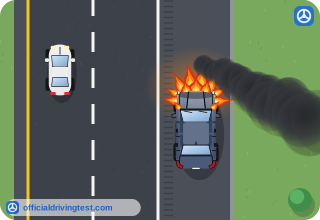
- Exit the vehicle and call 911 for assistance
- Try to drive the vehicle to the nearest fire station
- Stay inside the vehicle with the windows up and wait
- Open the hood first to assess the damage before doing anything else
Show answer
Correct answer: Exit the vehicle and call 911 for assistance
If your vehicle is on fire, exit the vehicle and call 911 for assistance.
Source: Florida Driver License Handbook (Revised August 2023), page 79
-
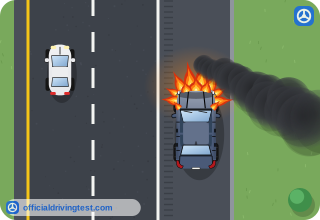
When should you attempt to extinguish a vehicle fire yourself, and what should you never do?
- Never; you should always wait for firefighters no matter what
- Always, no matter the size of the fire, using any liquid available including water
- Only with a portable extinguisher on a small fire; never put water on a gasoline or diesel fire
- Only if the fire is large, since small fires will go out on their own
Show answer
Correct answer: Only with a portable extinguisher on a small fire; never put water on a gasoline or diesel fire
Attempt to extinguish the fire only if you have a portable extinguisher and the fire is small; never apply water to a gasoline or diesel fire.
Source: Florida Driver License Handbook (Revised August 2023), page 79
-
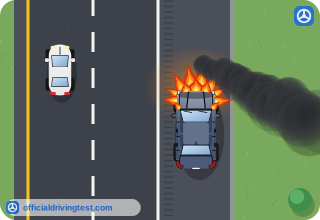
If you can't extinguish a vehicle fire, what should you do, and why?
- Sit in the driver's seat with the doors locked
- Stay near the vehicle to keep watching the fire
- Try harder to put it out using your bare hands
- Get away, since the fumes are toxic and it may explode
Show answer
Correct answer: Get away, since the fumes are toxic and it may explode
If you can't extinguish the fire, get away from the vehicle; the fumes are toxic and an explosion is possible.
Source: Florida Driver License Handbook (Revised August 2023), page 79
-
If your gas pedal becomes jammed, what should you do first and second?
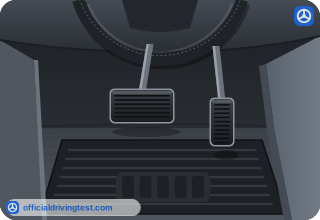
- Accelerate to pass other vehicles quickly, then brake hard
- Turn off the engine immediately, then apply the parking brake
- Take your foot off the gas, then press the clutch or shift into neutral
- Open the door and jump out of the vehicle
Show answer
Correct answer: Take your foot off the gas, then press the clutch or shift into neutral
If your gas pedal jams, first take your foot off the gas pedal, then press the clutch (manual transmission) or shift into neutral (automatic transmission).
Source: Florida Driver License Handbook (Revised August 2023), page 79