Delaware: Signals and vehicle controls — Part 4 Practice Test
Required and prohibited vehicle equipment, headlights, checking your vehicle, steering, braking, scanning, turn signals and hand signals. — Part 4
Independent educational site · not affiliated with any government agency or DMV
Ready? Test yourself
- Instant feedback with an explanation
- Every answer cites its source in the manual
- Your best score is saved on this device
Questions are original and based on the official manual "Delaware Driver Manual" (July 2026), Delaware Division of Motor Vehicles (DMV).
All 38 questions in this practice test
Take the test above first, then use this list to study. Tap “Show answer” to see the correct answer and explanation.
Show the questions and answersHide the questions
-
How should you adjust the height of your seat?
- As low as possible to keep your center of gravity down
- So that your eyes are level with the top of the steering wheel
- High enough to clearly see the road, using a seat cushion if necessary
- So that your knees touch the steering wheel at all times
Show answer
Correct answer: High enough to clearly see the road, using a seat cushion if necessary
The manual says to adjust the seat so you are high enough to clearly see the road, using a seat cushion if necessary.
Source: Delaware Driver Manual (July 2026), page 108 · Open this page in the manual (Manual page 108)
-
Approximately how far from the steering wheel should the seating be positioned?
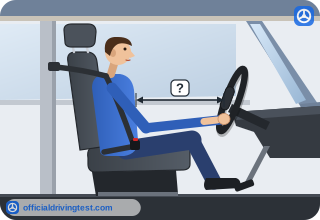
- 6 inches
- 12 inches
- 18 inches
- 24 inches
Show answer
Correct answer: 12 inches
The manual says seating should be positioned approximately 12 inches from the steering wheel.
Source: Delaware Driver Manual (July 2026), page 108 · Open this page in the manual (Manual page 108)
-
What is a good adjustment for the side mirrors?
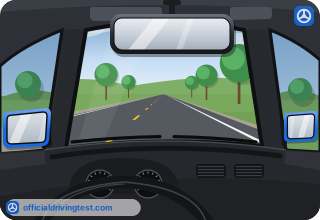
- So that you can see a large part of your own vehicle in each mirror
- So that each mirror points down at the road just behind your door
- So that both mirrors show exactly what the rearview mirror shows
- So you see just the side of your vehicle when you lean forward slightly
Show answer
Correct answer: So you see just the side of your vehicle when you lean forward slightly
The manual says a good side mirror setting lets you see just the side of your vehicle when you lean forward slightly.
Source: Delaware Driver Manual (July 2026), page 108 · Open this page in the manual (Manual page 108)
-
What should you be able to see with the rearview mirror?
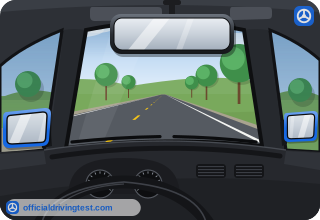
- Out the back window
- Out the side windows
- The side of your vehicle
- The road beside you
Show answer
Correct answer: Out the back window
The manual says you should see out the back window with the rearview mirror and out the side windows with the side mirrors.
Source: Delaware Driver Manual (July 2026), page 108 · Open this page in the manual (Manual page 108)
-
If your vehicle has a day/night mirror, how should it be set?
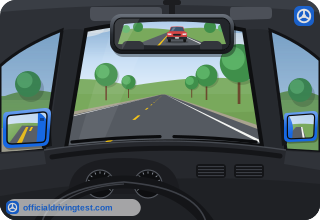
- Always to the night setting, even by day
- Always to the day setting, even at night
- For the time of day you are driving
- Tilted down toward the floor of the car
Show answer
Correct answer: For the time of day you are driving
The manual says to set a day/night mirror for the time of day you are driving.
Source: Delaware Driver Manual (July 2026), page 108 · Open this page in the manual (Manual page 108)
-
What are head restraints designed to prevent?
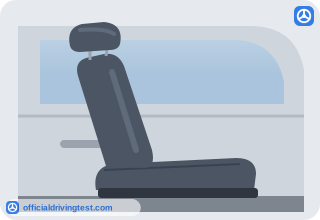
- Injury if you are hit from the side
- Whiplash if you are hit from behind
- Being thrown from the vehicle
- Glare from headlights behind you
Show answer
Correct answer: Whiplash if you are hit from behind
The manual says head restraints are designed to prevent whiplash if you are hit from behind.
Source: Delaware Driver Manual (July 2026), page 108 · Open this page in the manual (Manual page 108)
-
How should a head restraint be adjusted?
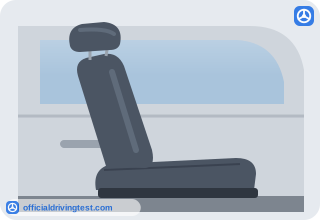
- So it rests against your upper back
- So it is several inches behind your head
- So it is level with your shoulders
- So it contacts the back of your head
Show answer
Correct answer: So it contacts the back of your head
The manual says to adjust the head restraint so it contacts the back of your head.
Source: Delaware Driver Manual (July 2026), page 108 · Open this page in the manual (Manual page 108)
-
What should you make sure of before you start the vehicle?
- The parking brake is on
- The headlights are on
- The hazard lights are on
- The turn signal is on
Show answer
Correct answer: The parking brake is on
The manual says to make sure the parking brake is on before you start the vehicle.
Source: Delaware Driver Manual (July 2026), page 113 · Open this page in the manual (Manual page 113)
-
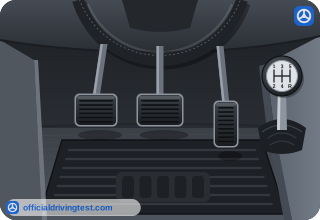
What must be true of a manual transmission before you start the vehicle?
- It must be in first gear with the parking brake released
- It must be in reverse gear, and the clutch must be released
- It must not be in gear; some vehicles also need the clutch depressed
- It must be in second gear with the accelerator pressed down
Show answer
Correct answer: It must not be in gear; some vehicles also need the clutch depressed
A manual transmission must not be in gear, and in some vehicles the clutch must be depressed.
Source: Delaware Driver Manual (July 2026), page 113 · Open this page in the manual (Manual page 113)
-
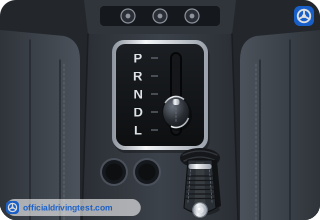
Before you start a vehicle with an automatic transmission, where must the shift selector be?
- In neutral
- In park
- In drive
- In reverse
Show answer
Correct answer: In park
For an automatic transmission, you must put the shift selector in park.
Source: Delaware Driver Manual (July 2026), page 113 · Open this page in the manual (Manual page 113)
-
Where does the manual tell you to check for how best to start a vehicle?
- The Delaware Driver Manual
- The vehicle's registration card
- The car seat manual
- The vehicle's owner manual
Show answer
Correct answer: The vehicle's owner manual
The manual tells you to check the vehicle's owner manual for how to best start the vehicle.
Source: Delaware Driver Manual (July 2026), page 113 · Open this page in the manual (Manual page 113)
-
How should you accelerate?
- As fast as possible to merge
- Quickly at first, then slowly
- In short, hard bursts
- Gradually and smoothly
Show answer
Correct answer: Gradually and smoothly
The manual says to accelerate gradually and smoothly.
Source: Delaware Driver Manual (July 2026), page 113 · Open this page in the manual (Manual page 113)
-
What can happen if you try to start too fast, especially on a slippery surface?
- The engine will always stall right after starting
- The drive wheels can spin and the vehicle can slide
- The parking brake will lock the rear wheels
- The steering wheel will lock until you stop
Show answer
Correct answer: The drive wheels can spin and the vehicle can slide
Starting too fast can make the drive wheels spin, particularly on slippery surfaces, and cause the vehicle to slide.
Source: Delaware Driver Manual (July 2026), page 113 · Open this page in the manual (Manual page 113)
-
What should you practice with a manual-shift vehicle?
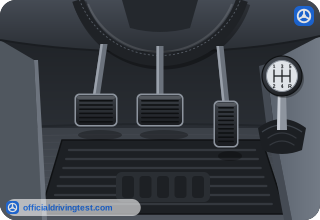
- Staying in first gear until the vehicle reaches highway speed
- Shifting gears without using the clutch pedal at low speeds
- Clutch and accelerator use, so the engine does not over-rev or stall
- Keeping the engine revving high to avoid stalling at stops
Show answer
Correct answer: Clutch and accelerator use, so the engine does not over-rev or stall
Practice using the clutch and accelerator so that the engine does not over-rev or stall when shifting between gears.
Source: Delaware Driver Manual (July 2026), page 113 · Open this page in the manual (Manual page 113)
-
Where should your hands be placed on the steering wheel?
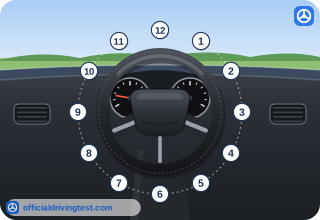
- Left hand between 8 and 10 o'clock, right hand between 2 and 4
- Left hand between 10 and 12 o'clock, right hand between 12 and 2
- Both hands together at the 12 o'clock position at the top
- Left hand between 4 and 6 o'clock, right hand between 6 and 8
Show answer
Correct answer: Left hand between 8 and 10 o'clock, right hand between 2 and 4
The manual gives the left hand between 8 and 10 o'clock and the right hand between 2 and 4 o'clock, on opposite sides of the wheel.
Source: Delaware Driver Manual (July 2026), page 113 · Open this page in the manual (Manual page 113)
-
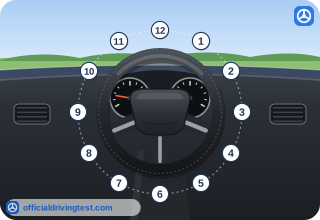
What does the recommended steering hand position allow you to do on high speed roads?
- Steer with one hand while adjusting the radio
- Rest an elbow on the window while turning
- Make turns without taking your hands off the wheel
- Let the wheel slip back through your fingers
Show answer
Correct answer: Make turns without taking your hands off the wheel
The position is comfortable and on high speed roads allows turns without taking your hands off the wheel.
Source: Delaware Driver Manual (July 2026), page 113 · Open this page in the manual (Manual page 113)
-
While steering, where should you look?
- Well down the road and on both sides, not just in front
- Only at the road directly in front of your vehicle
- Mainly at the vehicle immediately ahead of you
- At the road surface just beyond the hood
Show answer
Correct answer: Well down the road and on both sides, not just in front
Look well down the road and to both sides to spot traffic situations early, so you have time to steer smoothly and safely.
Source: Delaware Driver Manual (July 2026), page 113 · Open this page in the manual (Manual page 113)
-
Which technique should you use to turn the steering wheel at sharp corners?
- Push-pull steering
- One-handed palm turning
- Fixed-grip steering
- Hand-over-hand
Show answer
Correct answer: Hand-over-hand
The manual says to use the hand-over-hand technique when turning sharp corners.
Source: Delaware Driver Manual (July 2026), page 113 · Open this page in the manual (Manual page 113)
-
How should you straighten the steering wheel when you complete a turn?
- Let it slip back through your fingers
- Straighten it by hand
- Release it and let it return on its own
- Press the accelerator until it straightens
Show answer
Correct answer: Straighten it by hand
Straighten the steering wheel by hand; letting it slip through your fingers could be dangerous.
Source: Delaware Driver Manual (July 2026), page 113 · Open this page in the manual (Manual page 113)
-
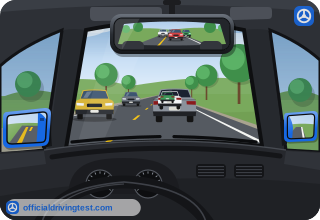
How often should you check traffic behind you when traffic is heavy?
- Less often
- More often
- Only when changing lanes
- Only when backing up
Show answer
Correct answer: More often
The manual says you need to check behind you more often when traffic is heavy.
Source: Delaware Driver Manual (July 2026), page 118 · Open this page in the manual (Manual page 118)
-
Which of these is a time when it is very important to look for vehicles behind you?
- When you are parked with the engine off
- When you are driving at a steady speed on a level road
- When you are driving down a long or steep hill
- When you are going through a green light
Show answer
Correct answer: When you are driving down a long or steep hill
The manual lists changing lanes, slowing down, backing up, and driving down a long or steep hill.
Source: Delaware Driver Manual (July 2026), page 118 · Open this page in the manual (Manual page 118)
-
Which of these counts as changing lanes, according to the manual?
- Merging onto a roadway from an entrance ramp
- Driving straight ahead in the same lane
- Slowing down for a traffic signal in your lane
- Passing a parked car without leaving your lane
Show answer
Correct answer: Merging onto a roadway from an entrance ramp
Changing lanes includes changing from one lane to another, merging from an entrance ramp, and entering the roadway from the curb or shoulder.
Source: Delaware Driver Manual (July 2026), page 118 · Open this page in the manual (Manual page 118)
-
Before you change lanes, what must you check for?
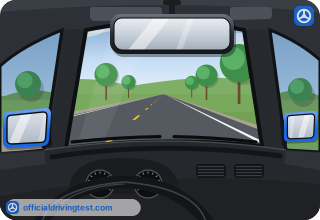
- Only the vehicles behind you in your own lane
- Only the vehicles stopped in the lane beside you
- Traffic to the side and behind your vehicle
- Only the traffic in the lane you are leaving
Show answer
Correct answer: Traffic to the side and behind your vehicle
You must check for traffic to the side and behind your vehicle before you change lanes.
Source: Delaware Driver Manual (July 2026), page 118 · Open this page in the manual (Manual page 118)
-
Which action does the manual list among the steps for changing lanes?
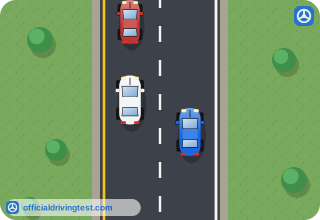
- Signal your intention to change lanes
- Flash your high beams at the vehicle beside you
- Sound your horn before moving over
- Speed up to close the gap behind other vehicles
Show answer
Correct answer: Signal your intention to change lanes
Signaling your intention to change lanes is the first step listed.
Source: Delaware Driver Manual (July 2026), page 118 · Open this page in the manual (Manual page 118)
-
What are “blind spots”?
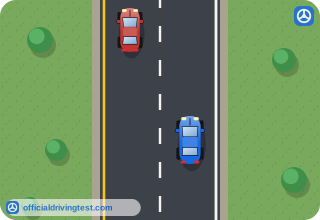
- Areas directly in front of the hood that you cannot see
- Areas far down the road beyond your headlights
- Areas where the glare of oncoming headlights hides the road
- Areas near the rear corners that mirrors do not show
Show answer
Correct answer: Areas near the rear corners that mirrors do not show
Blind spots are the areas near the rear corners of your vehicle that you cannot see through your mirrors.
Source: Delaware Driver Manual (July 2026), page 118 · Open this page in the manual (Manual page 118)
-
How must you check for vehicles in your blind spot?
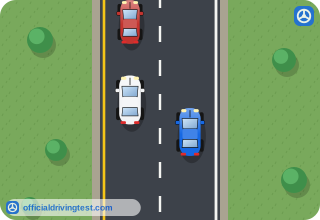
- Use only your side mirrors
- Turn your head and look
- Use only your rearview mirror
- Honk your horn and wait
Show answer
Correct answer: Turn your head and look
You must turn your head and look to see vehicles in your blind spot.
Source: Delaware Driver Manual (July 2026), page 118 · Open this page in the manual (Manual page 118)
-
While checking traffic to the sides and rear before a lane change, how long may you take your eyes off the road ahead?
- Not more than an instant
- Up to ten seconds
- As long as needed
- Up to five full seconds
Show answer
Correct answer: Not more than an instant
Traffic ahead could stop suddenly, so you must not take your eyes off the road ahead for more than an instant.
Source: Delaware Driver Manual (July 2026), page 118 · Open this page in the manual (Manual page 118)
-
Why should you check the far lane before changing lanes, if there is one?
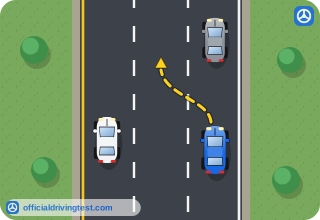
- Vehicles in that lane may be slowing down for the exit
- That lane may end in a short distance ahead
- Someone in that lane may plan to move into the same lane
- Slower traffic is always driving in that lane
Show answer
Correct answer: Someone in that lane may plan to move into the same lane
Someone in the far lane may be planning to move into the same lane you want to enter.
Source: Delaware Driver Manual (July 2026), page 118 · Open this page in the manual (Manual page 118)
-
At which points would a following driver not expect you to slow down, making it very important to check behind you?
- Green traffic lights
- Long straight freeway sections
- Stop signs at intersections
- Private driveways or parking spaces
Show answer
Correct answer: Private driveways or parking spaces
It is very important to check behind you when you slow down quickly or where a following driver would not expect it, such as private driveways or parking spaces.
Source: Delaware Driver Manual (July 2026), page 119 · Open this page in the manual (Manual page 119)
-
Why should you check behind your vehicle before you get in to back up?
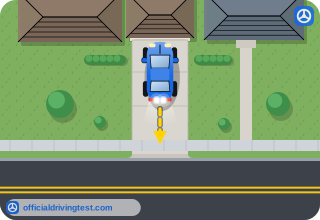
- Your mirrors cannot be adjusted once you are seated
- Other drivers may have parked too close to your bumper
- Children or small objects cannot be seen from the driver's seat
- The rear window must be cleaned before you back up
Show answer
Correct answer: Children or small objects cannot be seen from the driver's seat
Children or small objects cannot be seen from the driver's seat.
Source: Delaware Driver Manual (July 2026), page 119 · Open this page in the manual (Manual page 119)
-
How should you look when backing up?
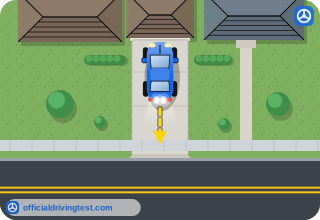
- Turn around and look directly through the rear window
- Rely on your rearview and side mirrors only
- Watch the backup camera screen only
- Open your door and look at the ground behind you
Show answer
Correct answer: Turn around and look directly through the rear window
You place your right arm on the back of the seat and turn around to look directly through the rear window, not depending on mirrors.
Source: Delaware Driver Manual (July 2026), page 119 · Open this page in the manual (Manual page 119)
-
Why should you back slowly?
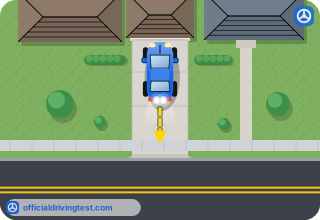
- The engine is more likely to stall in reverse
- Brake lights do not work when you back up
- Your vehicle is much harder to steer while backing
- Brakes work less well in reverse
Show answer
Correct answer: Your vehicle is much harder to steer while backing
The manual says to back slowly because your vehicle is much harder to steer while you are backing.
Source: Delaware Driver Manual (July 2026), page 119 · Open this page in the manual (Manual page 119)
-
Whenever possible, what should you use to help you reverse or back up?
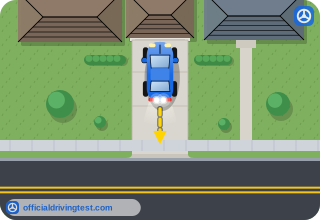
- A person outside the vehicle
- Your hazard lights and horn
- Your horn
- Your high beams
Show answer
Correct answer: A person outside the vehicle
Whenever possible use a person outside the vehicle to help you reverse or back up.
Source: Delaware Driver Manual (July 2026), page 119 · Open this page in the manual (Manual page 119)
-
What should you be alert for when going down a long or steep hill?

- Slow trucks that are unable to climb the hill
- Drivers who stop suddenly at the top of the hill
- Bicycles with no lights or reflectors
- Large trucks and buses that may be going too fast
Show answer
Correct answer: Large trucks and buses that may be going too fast
Vehicles often build up speed going down a steep grade, so be alert for large trucks and buses that may be going too fast.
Source: Delaware Driver Manual (July 2026), page 119 · Open this page in the manual (Manual page 119)
-
When should you use your high beams?
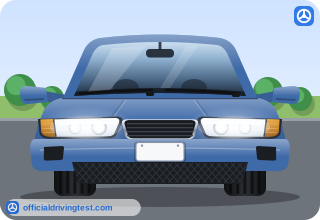
- Only in fog or when it is snowing
- Whenever there are no oncoming vehicles
- Whenever you are following another vehicle
- Whenever you are in heavy traffic
Show answer
Correct answer: Whenever there are no oncoming vehicles
The manual says to use high beams whenever there are no oncoming vehicles.
Source: Delaware Driver Manual (July 2026), page 119 · Open this page in the manual (Manual page 119)
-
Compared with low beams, how far can you see with high beams?
- Twice as far
- Half again as far
- Three times as far
- The same distance, but wider
Show answer
Correct answer: Twice as far
High beams let you see twice as far as low beams.
Source: Delaware Driver Manual (July 2026), page 119 · Open this page in the manual (Manual page 119)
-
On which kind of road is it important to use high beams when there are no oncoming vehicles?
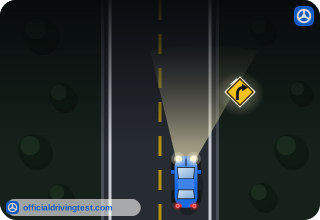
- Roads you drive every day
- Roads in fog or heavy rain
- Unfamiliar roads
- Roads with heavy traffic
Show answer
Correct answer: Unfamiliar roads
The manual says it is important to use high beams on unfamiliar roads, in construction areas, or where there may be people along the side of the road.
Source: Delaware Driver Manual (July 2026), page 119 · Open this page in the manual (Manual page 119)
-
By Delaware law, within what distance of an oncoming vehicle must you dim your high beams?
- 250 feet
- 500 feet
- 1,000 feet
- 100 feet
Show answer
Correct answer: 500 feet
The manual says to dim your high beams within about a one-block distance, which is 500 feet by Delaware law.
Source: Delaware Driver Manual (July 2026), page 119 · Open this page in the manual (Manual page 119)