Delaware: Signals and vehicle controls — Part 3 Practice Test
Required and prohibited vehicle equipment, headlights, checking your vehicle, steering, braking, scanning, turn signals and hand signals. — Part 3
Independent educational site · not affiliated with any government agency or DMV
Ready? Test yourself
- Instant feedback with an explanation
- Every answer cites its source in the manual
- Your best score is saved on this device
Questions are original and based on the official manual "Delaware Driver Manual" (July 2026), Delaware Division of Motor Vehicles (DMV).
All 39 questions in this practice test
Take the test above first, then use this list to study. Tap “Show answer” to see the correct answer and explanation.
Show the questions and answersHide the questions
-
Which trip-planning tip does the manual give to cut down on your driving?
- Make a separate trip for each errand you have
- Plan and combine several errands into one trip
- Drive during heavy traffic so trips are shorter
- Always drive alone rather than share rides
Show answer
Correct answer: Plan and combine several errands into one trip
The manual advises planning and combining trips so you go to as many places as possible on one trip.
Source: Delaware Driver Manual (July 2026), page 105 · Open this page in the manual (Manual page 105)
-
Why does the manual advise avoiding driving during heavy traffic?
- It is against Delaware law to drive at those times
- It makes your brake lights wear out much sooner
- It lowers the pressure in your tires too quickly
- It causes extra wear and tear on you and the vehicle
Show answer
Correct answer: It causes extra wear and tear on you and the vehicle
The manual says heavy traffic causes extra wear and tear on you and the vehicle.
Source: Delaware Driver Manual (July 2026), page 105 · Open this page in the manual (Manual page 105)
-
Which of these is a warning sign that a mechanic should check your brakes?
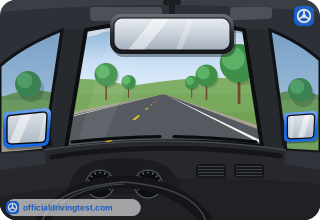
- The brake pedal goes to the floor
- The windshield wipers leave streaks
- The turn signal blinks too fast
- The radio signal fades in and out
Show answer
Correct answer: The brake pedal goes to the floor
The manual lists a brake pedal that goes to the floor, along with noise or a funny smell, as reasons to have a mechanic check the brakes.
Source: Delaware Driver Manual (July 2026), page 106 · Open this page in the manual (Manual page 106)
-
Turn signals, brake lights, taillights and headlights should be checked from where?
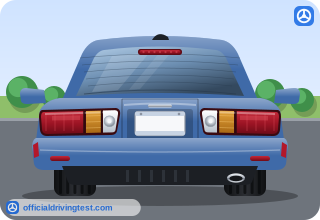
- From the driver's seat only
- Only while driving at night
- From the outside of the vehicle
- Only by a licensed inspector
Show answer
Correct answer: From the outside of the vehicle
The manual says these lights should be checked from the outside of the vehicle.
Source: Delaware Driver Manual (July 2026), page 106 · Open this page in the manual (Manual page 106)
-
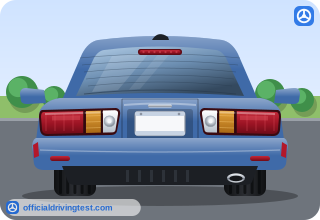
What do brake lights tell other road users?
- That you are turning
- That you are stopping
- That you are speeding up
- That you are parking
Show answer
Correct answer: That you are stopping
The manual says brake lights tell other road users that you are stopping.
Source: Delaware Driver Manual (July 2026), page 106 · Open this page in the manual (Manual page 106)
-
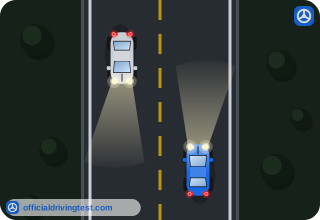
What is the danger of an out-of-alignment headlight?
- It may overheat the engine and make the car stall suddenly
- It may make your brake lights shine too brightly
- It may cause the tires to wear unevenly
- It may shine where it does not help you and blind other drivers
Show answer
Correct answer: It may shine where it does not help you and blind other drivers
An out-of-alignment headlight can shine where it does not help you and may blind other drivers.
Source: Delaware Driver Manual (July 2026), page 106 · Open this page in the manual (Manual page 106)
-
Other drivers are constantly flashing their headlights at you. What does the manual say to do?
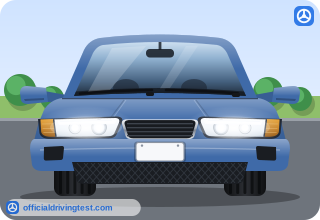
- Have a mechanic check your headlights
- Switch to your parking lights instead
- Pull over and rest for about an hour
- Replace your windshield wiper blades
Show answer
Correct answer: Have a mechanic check your headlights
Constant flashing from other drivers, like trouble seeing at night, is a reason to have a mechanic check the headlights.
Source: Delaware Driver Manual (July 2026), page 106 · Open this page in the manual (Manual page 106)
-
What should you do about a damaged windshield?
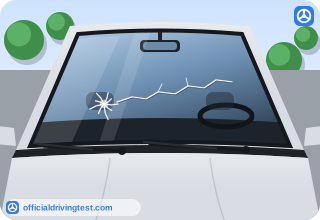
- Keep driving until it breaks
- Cover the damage with a decal
- Have it replaced
- Only repair it before winter
Show answer
Correct answer: Have it replaced
The manual says damaged glass breaks more easily, so a damaged windshield should be replaced.
Source: Delaware Driver Manual (July 2026), page 106 · Open this page in the manual (Manual page 106)
-
If your wiper blades are not clearing water well, what does the manual say to do?
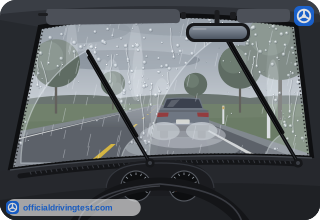
- Adjust the mirrors
- Replace them
- Wait for the rain to stop
- Turn on the defroster
Show answer
Correct answer: Replace them
The manual says to replace wiper blades that are not clearing water well.
Source: Delaware Driver Manual (July 2026), page 106 · Open this page in the manual (Manual page 106)
-
Besides the windshield, some vehicles also have wipers for which parts?
- Side mirrors and door handles
- Taillights and license plates
- Sunroofs and side mirrors
- Rear windows and headlights
Show answer
Correct answer: Rear windows and headlights
The manual notes that some vehicles also have wipers for rear windows and headlights.
Source: Delaware Driver Manual (July 2026), page 106 · Open this page in the manual (Manual page 106)
-
How can worn or bald tires affect driving when the road is wet?
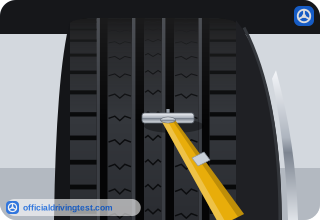
- They can increase stopping distance and make turning more difficult
- They make the steering wheel lighter and easier to turn on curves
- They shorten stopping distance but wear out faster
- They reduce the risk of hydroplaning on wet roads
Show answer
Correct answer: They can increase stopping distance and make turning more difficult
Worn or bald tires can increase stopping distance and make turning more difficult on a wet road.
Source: Delaware Driver Manual (July 2026), page 106 · Open this page in the manual (Manual page 106)
-
What can unbalanced tires and low tire pressure cause?
- Slower tire wear and better fuel economy
- Brighter headlights and a quieter engine
- Faster tire wear and lower fuel economy
- Shorter stopping distance and easier steering
Show answer
Correct answer: Faster tire wear and lower fuel economy
Unbalanced tires and low pressure cause faster tire wear, reduce fuel economy and make the vehicle harder to steer and stop.
Source: Delaware Driver Manual (July 2026), page 106 · Open this page in the manual (Manual page 106)
-
The vehicle pulls to one side. What does the manual say to do?
- Keep driving and watch for changes
- Have a mechanic check it
- Drive faster to correct it
- Turn the wheel to fix the alignment
Show answer
Correct answer: Have a mechanic check it
The manual says that if the vehicle bounces, the steering wheel shakes or it pulls to one side, a mechanic should check it.
Source: Delaware Driver Manual (July 2026), page 106 · Open this page in the manual (Manual page 106)
-
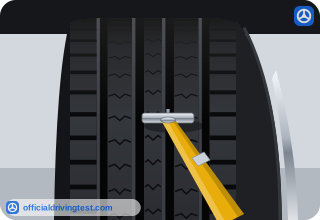
Worn tires can cause which problem, in addition to increasing the chance of a flat tire?
- Brake fade
- Vapor lock
- Engine knock
- Hydroplaning
Show answer
Correct answer: Hydroplaning
The manual says worn tires can cause hydroplaning and increase the chance of having a flat tire.
Source: Delaware Driver Manual (July 2026), page 106 · Open this page in the manual (Manual page 106)
-
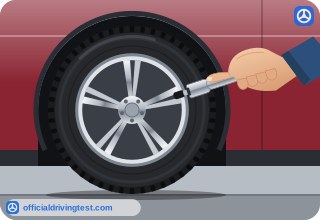
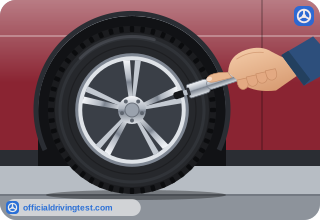
When should you check tire air pressure with an air pressure gauge?
- When the tires are cold
- Right after a long highway drive
- After the engine has warmed up
- When the tires are hot
Show answer
Correct answer: When the tires are cold
The manual says to check tire air pressure with a gauge when the tires are cold.
Source: Delaware Driver Manual (July 2026), page 106 · Open this page in the manual (Manual page 106)
-
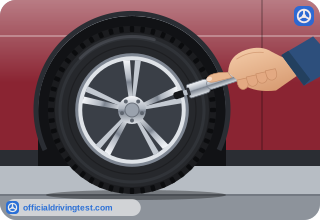
Where can you find the proper air pressure for your tires?
- On the vehicle's registration card or inspection sticker
- On the dashboard warning lights or the license plate
- In the vehicle's owner manual or on the side of the tires
- In the tire shop's price list or the vehicle title
Show answer
Correct answer: In the vehicle's owner manual or on the side of the tires
The manual says to check the vehicle's owner manual or the side of the tires for the proper pressure.
Source: Delaware Driver Manual (July 2026), page 106 · Open this page in the manual (Manual page 106)
-
You stick a penny head first into the tire tread. What does it mean if the tread does not come at least to Abe's head?
- The tire is safe but should be rotated
- The tire is unsafe and needs to be replaced
- The tire is safe for wet roads only
- The tire only needs more air pressure
Show answer
Correct answer: The tire is unsafe and needs to be replaced
The manual says that if the tread does not reach at least Abe's head, the tire is unsafe and must be replaced.
Source: Delaware Driver Manual (July 2026), page 106 · Open this page in the manual (Manual page 106)
-
What should you do if the vehicle is hard to turn or does not turn when the steering wheel is first turned?
- Add more air to both of the front tires
- Wait a few days to see if it gets better
- Check the tire tread with a penny coin
- Have the steering checked by a mechanic
Show answer
Correct answer: Have the steering checked by a mechanic
The manual says to have the steering checked by a mechanic in that case.
Source: Delaware Driver Manual (July 2026), page 106 · Open this page in the manual (Manual page 106)
-
A vehicle bounces a lot after a bump or a stop. What may it need?
- New shocks or other suspension parts
- A new muffler or exhaust pipe
- A new horn or headlight
- New wiper blades or washer fluid
Show answer
Correct answer: New shocks or other suspension parts
The manual says a vehicle that bounces a lot after a bump or stop may need new shocks or other suspension parts.
Source: Delaware Driver Manual (July 2026), page 106 · Open this page in the manual (Manual page 106)
-
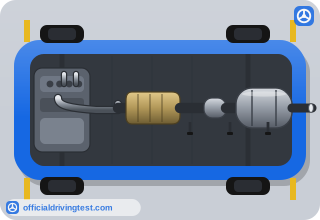
What can gases from a leaky exhaust cause?
- Loss of brake fluid within a few hours
- Fogged windows that clear up quickly
- Death inside a vehicle in a very short time
- Damage to the tires within a few weeks
Show answer
Correct answer: Death inside a vehicle in a very short time
The manual warns that gases from a leaky exhaust can cause death inside a vehicle in a very short time.
Source: Delaware Driver Manual (July 2026), page 106 · Open this page in the manual (Manual page 106)
-
What should you do if you sit in a vehicle with the motor running for a long time?
- Turn on the wipers
- Open a window
- Lock all the doors
- Turn off the headlights
Show answer
Correct answer: Open a window
The manual says to open a window if you sit in a vehicle with the motor running for a long time.
Source: Delaware Driver Manual (July 2026), page 106 · Open this page in the manual (Manual page 106)
-
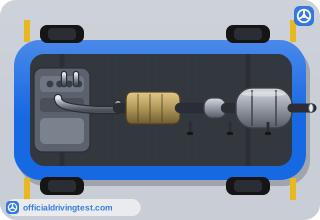
Where should you never run the motor of your vehicle?
- In a parking lot
- In an open driveway
- Beside a building
- In a closed garage
Show answer
Correct answer: In a closed garage
The manual says never to run the motor in a closed garage.
Source: Delaware Driver Manual (July 2026), page 106 · Open this page in the manual (Manual page 106)
-
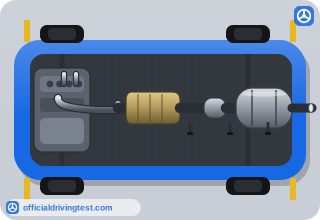
What does the exhaust system do with the hot gases from running the engine?
- It cools them and moves them to the rear of the vehicle
- It stores them under the engine until it is turned off
- It sends them to the front of the vehicle through the grille
- It sends them into the passenger area to heat the car
Show answer
Correct answer: It cools them and moves them to the rear of the vehicle
The manual says the exhaust system helps cool the hot gases and moves them to the rear of the vehicle.
Source: Delaware Driver Manual (July 2026), page 106 · Open this page in the manual (Manual page 106)
-
Why is it important to have the exhaust system checked periodically?
- Exhaust leaks are always loud enough to hear
- Exhaust leaks only happen in the winter months
- Many exhaust leaks cannot be heard
- Exhaust systems wear out at a set mileage
Show answer
Correct answer: Many exhaust leaks cannot be heard
The manual says some leaks are easily heard but many are not, so periodic checks are important.
Source: Delaware Driver Manual (July 2026), page 106 · Open this page in the manual (Manual page 106)
-
What must a commercial vehicle with an engine compression brake device also have to be operated on a highway?
- A special permit displayed in the front windshield
- A muffler in good working order in constant operation
- A speed limiter set to the manufacturer's maximum
- A warning light that can be seen from the rear
Show answer
Correct answer: A muffler in good working order in constant operation
The manual requires a muffler in good working order and in constant operation on such a vehicle to prevent excessive noise.
Source: Delaware Driver Manual (July 2026), page 107 · Open this page in the manual (Manual page 107)
-
What is one possible result of a poorly running engine?
- It will start more easily in cold weather
- It will make the brakes stop the vehicle faster
- It will use less fuel on long trips
- It could stop running while you are on the road
Show answer
Correct answer: It could stop running while you are on the road
The manual says a poorly running engine could stop running on the road, causing you and traffic a problem.
Source: Delaware Driver Manual (July 2026), page 107 · Open this page in the manual (Manual page 107)
-
Why should there be no loose objects in the vehicle?
- They could hit someone in a sudden stop or crash
- They could set off the air bags when driving
- They could block the exhaust outlet at the rear
- They could drain the battery while parked
Show answer
Correct answer: They could hit someone in a sudden stop or crash
The manual says loose objects could hit someone in the event of a sudden stop or crash.
Source: Delaware Driver Manual (July 2026), page 107 · Open this page in the manual (Manual page 107)
-
What could happen if an object on the floor rolls under the brake pedal?
- It could make the horn sound without warning
- It could cause the headlights to turn off
- It could prevent you from stopping the vehicle
- It could lock the steering wheel in place
Show answer
Correct answer: It could prevent you from stopping the vehicle
The manual warns that an object under the brake pedal could prevent you from stopping the vehicle.
Source: Delaware Driver Manual (July 2026), page 107 · Open this page in the manual (Manual page 107)
-
How should you use your horn?
- To greet other drivers you know
- Only as a warning to others
- To tell drivers ahead to speed up
- To get slow drivers to move over
Show answer
Correct answer: Only as a warning to others
The manual says to use the horn only as a warning to others.
Source: Delaware Driver Manual (July 2026), page 107 · Open this page in the manual (Manual page 107)
-
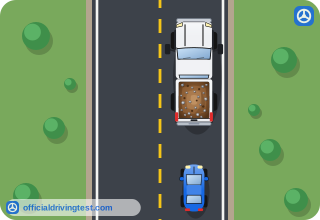
When is a load considered secure?
- When it is covered by a tarp, even if parts of it can still shift
- When the heaviest items are placed at the very back of the vehicle
- When you have driven a short distance without anything falling off
- Only when nothing can slide, fall or shift onto the roadway or become airborne
Show answer
Correct answer: Only when nothing can slide, fall or shift onto the roadway or become airborne
A load is secure only when nothing can slide, fall or shift onto the roadway or become airborne.
Source: Delaware Driver Manual (July 2026), page 107 · Open this page in the manual (Manual page 107)
-
A 20 lb. object traveling at 55 mph has what force at impact?
- 1,000 lbs.
- 100 lbs.
- 550 lbs.
- 2,000 lbs.
Show answer
Correct answer: 1,000 lbs.
The manual states that a 20 lb. object at 55 mph has a force of 1,000 lbs. at impact.
Source: Delaware Driver Manual (July 2026), page 107 · Open this page in the manual (Manual page 107)
-
How does the manual recommend tying down large objects in your load?
- To other loose items in the load
- To the smaller items placed on top of them
- Directly to the vehicle or trailer
- To nothing, if they are heavy enough
Show answer
Correct answer: Directly to the vehicle or trailer
One of the six steps for securing a load is to tie large objects directly to the vehicle or trailer.
Source: Delaware Driver Manual (July 2026), page 107 · Open this page in the manual (Manual page 107)
-
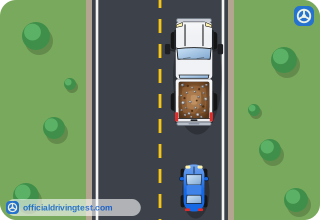
What does the manual recommend using to cover the entire load?
- Cardboard held down with tape
- A sturdy tarp or netting
- A thin plastic sheet or paper wrap
- Nothing, if the load is heavy enough
Show answer
Correct answer: A sturdy tarp or netting
The manual recommends covering the entire load with a sturdy tarp or netting.
Source: Delaware Driver Manual (July 2026), page 107 · Open this page in the manual (Manual page 107)
-
What makes it hard to see through a dirty windshield?
- Rain falling on the glass at night
- Cold air coming through the vents
- Dust blowing across the road
- Bright sun or headlights shining on it
Show answer
Correct answer: Bright sun or headlights shining on it
The manual says bright sun or headlights on a dirty windshield make it hard to see.
Source: Delaware Driver Manual (July 2026), page 107 · Open this page in the manual (Manual page 107)
-
What should you put in your window washer bottle where the temperature could fall below freezing?
- Antifreeze wash
- Plain water
- Heated water
- Liquid soap
Show answer
Correct answer: Antifreeze wash
The manual says to use antifreeze wash in areas where the temperature could fall below freezing.
Source: Delaware Driver Manual (July 2026), page 107 · Open this page in the manual (Manual page 107)
-
What builds up on the inside glass if anyone has been smoking in the vehicle?
- Frost
- Condensation
- A film
- Dust
Show answer
Correct answer: A film
The manual says smoking causes a film to build up on the inside glass.
Source: Delaware Driver Manual (July 2026), page 107 · Open this page in the manual (Manual page 107)
-
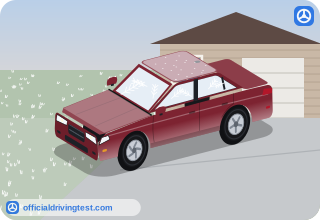
Which windows should be cleared of snow, ice, or frost before driving?
- Only the windshield
- All windows
- The windshield and rear window
- The windshield and driver's window
Show answer
Correct answer: All windows
The manual says to clear snow, ice or frost from all windows before driving.
Source: Delaware Driver Manual (July 2026), page 107 · Open this page in the manual (Manual page 107)
-
Why should you not hang things from your mirror or clutter the windshield with decals?
- They could set off the air bags
- They could keep the wipers from working
- They could damage the glass in cold weather
- They could block your view
Show answer
Correct answer: They could block your view
The manual says things hanging from the mirror or decals on the windshield could block your view.
Source: Delaware Driver Manual (July 2026), page 108 · Open this page in the manual (Manual page 108)
-
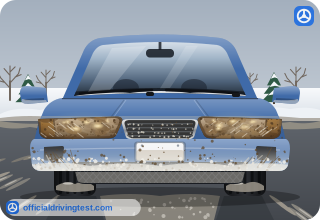
By how much can dirt on the lenses of your lights reduce the light?
- 50%
- 10%
- 25%
- 75%
Show answer
Correct answer: 50%
The manual states that dirt on the lenses can reduce the light by 50%.
Source: Delaware Driver Manual (July 2026), page 108 · Open this page in the manual (Manual page 108)