Delaware: Emergencies — Part 4 Practice Test
Questions in this part include: “After speeding up to avoid a collision, what should you be sure to do?” · “According to the manual, when must the police be notified of a crash?”
Independent educational site · not affiliated with any government agency or DMV
Ready? Test yourself
- Instant feedback with an explanation
- Every answer cites its source in the manual
- Your best score is saved on this device
Questions are original and based on the official manual "Delaware Driver Manual" (July 2026), Delaware Division of Motor Vehicles (DMV).
All 16 questions in this practice test
Take the test above first, then use this list to study. Tap “Show answer” to see the correct answer and explanation.
Show the questions and answersHide the questions
-
After speeding up to avoid a collision, what should you be sure to do?
- Keep your speed up until you reach a rest area
- Stop on the shoulder
- Slow down once the danger has passed
- Switch lanes right away
Show answer
Correct answer: Slow down once the danger has passed
The manual says to slow down once the danger has passed.
Source: Delaware Driver Manual (July 2026), page 139 · Open this page in the manual (Manual page 139)
-
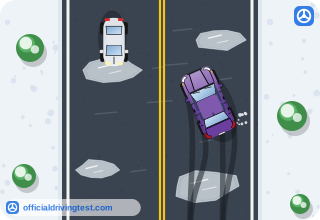
If your vehicle begins to skid, what should you do about the brake?
- Pump the brake hard
- Press the brake as hard as possible
- Pull the parking brake
- Stay off the brake
Show answer
Correct answer: Stay off the brake
The manual says to stay off the brake because the brakes will not work until the vehicle slows.
Source: Delaware Driver Manual (July 2026), page 139 · Open this page in the manual (Manual page 139)
-
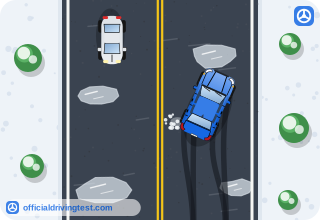
If your vehicle begins to skid, how should you steer?
- Turn the wheel away from the direction you want to go and hold it there
- Steer in the direction you want to go, then back the other way as it straightens
- Keep the wheel straight until the skid stops and the tires grip
- Turn the wheel sharply the opposite way until the skid ends
Show answer
Correct answer: Steer in the direction you want to go, then back the other way as it straightens
The manual says to steer where you want to go and turn the wheel back the other way as the vehicle straightens out.
Source: Delaware Driver Manual (July 2026), page 139 · Open this page in the manual (Manual page 139)
-
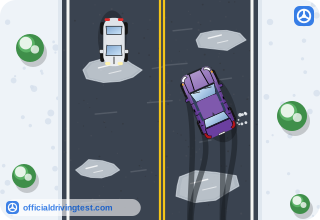
Why should you turn the steering wheel back the other way as the vehicle straightens out of a skid?
- Otherwise your vehicle may swing around the other way into a new skid
- Otherwise the tires will wear unevenly and lose their grip
- Otherwise the brakes will lock up on their own again
- Otherwise the airbag will inflate in the middle of the skid
Show answer
Correct answer: Otherwise your vehicle may swing around the other way into a new skid
The manual says not correcting the steering may swing the vehicle the other way into a new skid.
Source: Delaware Driver Manual (July 2026), page 139 · Open this page in the manual (Manual page 139)
-
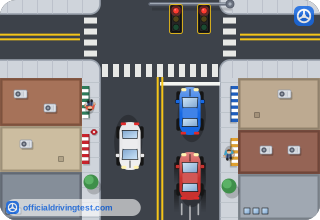
If your vehicle is hit from the rear, what should you do with your body and head?
- Lean forward over the steering wheel to brace
- Press against your seat, head on the head restraint
- Turn your head toward the direction of impact
- Duck down below the dashboard and cover up
Show answer
Correct answer: Press against your seat, head on the head restraint
The manual says to press against the seat back and place your head against the head restraint.
Source: Delaware Driver Manual (July 2026), page 140 · Open this page in the manual (Manual page 140)
-
If your vehicle is hit from the rear, what should you be ready to do?
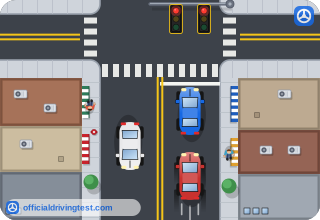
- Open the door and get out of the vehicle quickly
- Accelerate away from the vehicle that hit you
- Turn off the ignition and set the parking brake
- Apply the brakes to avoid hitting another vehicle
Show answer
Correct answer: Apply the brakes to avoid hitting another vehicle
The manual says to be ready to apply your brakes so you are not pushed into another vehicle.
Source: Delaware Driver Manual (July 2026), page 140 · Open this page in the manual (Manual page 140)
-
If your vehicle is about to be hit from the front, what should you try to have rather than being struck head on?
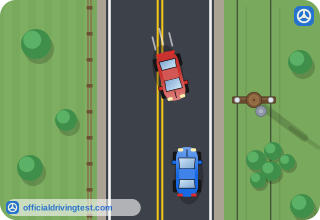
- A glancing blow
- A direct stop
- A rear impact
- A rolling stop
Show answer
Correct answer: A glancing blow
The manual says to try to have a glancing blow by turning the vehicle rather than being struck head on.
Source: Delaware Driver Manual (July 2026), page 140 · Open this page in the manual (Manual page 140)
-
What does the manual say to be ready to do after an air bag inflates and then deflates in a frontal crash?
- Remove the air bag before driving again
- Wait for the air bag to inflate a second time
- Turn off the ignition and exit at once
- Prevent your vehicle from hitting something else
Show answer
Correct answer: Prevent your vehicle from hitting something else
The manual says the air bag deflates after the crash, so you must be ready to keep from hitting something else.
Source: Delaware Driver Manual (July 2026), page 140 · Open this page in the manual (Manual page 140)
-
According to the manual, when should you stop at a crash you are not involved in?
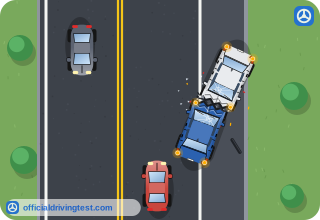
- Always, so you can look at the damage
- Only if emergency help has not yet arrived
- Only if you can see a fire in the vehicles
- Only if the road around it is empty
Show answer
Correct answer: Only if emergency help has not yet arrived
The manual says not to stop unless you are involved or emergency help has not yet arrived.
Source: Delaware Driver Manual (July 2026), page 140 · Open this page in the manual (Manual page 140)
-
Why should you never drive to the scene of a crash, fire, or other disaster just to look?
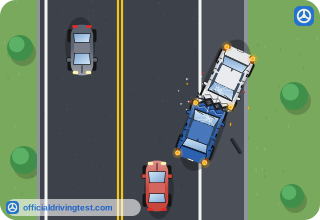
- You may block the way for police and rescue vehicles
- You could be ticketed for speeding near the scene
- You could damage your own vehicle on road debris
- You could be asked to give a written statement
Show answer
Correct answer: You may block the way for police and rescue vehicles
The manual says sightseers may block the way for rescue vehicles.
Source: Delaware Driver Manual (July 2026), page 140 · Open this page in the manual (Manual page 140)
-
If you are involved in a crash with a parked vehicle, what must you try to do?
- Drive away if the damage looks minor
- Wait ten minutes and leave
- Locate the owner
- Tow the vehicle to the side
Show answer
Correct answer: Locate the owner
The manual says you must try to locate the owner of a parked vehicle you hit.
Source: Delaware Driver Manual (July 2026), page 140 · Open this page in the manual (Manual page 140)
-
According to the manual, when must the police be notified of a crash?
- If the vehicle needs a tow
- If any person is injured or killed
- If it is dark outside
- If another driver asks you to
Show answer
Correct answer: If any person is injured or killed
The manual says the police must be notified if any person is injured or killed.
Source: Delaware Driver Manual (July 2026), page 140 · Open this page in the manual (Manual page 140)
-
When is it a crime to leave a crash site where your vehicle was involved?
- When the crash happened at night on a dark road without lights
- When the vehicles involved are blocking part of the traffic lanes
- When more than two vehicles were involved in the same crash
- When there is an injury or death and police have not finished with you
Show answer
Correct answer: When there is an injury or death and police have not finished with you
The manual says leaving a crash site with an injury or death before police have the information they need is a crime.
Source: Delaware Driver Manual (July 2026), page 140 · Open this page in the manual (Manual page 140)
-
What does the manual say a basic vehicle emergency kit has?
- A spare engine and a jack stand
- A map, a compass, and a camping stove
- Flares, first aid supplies, and basic tools
- Fire extinguisher, tow rope, and spare fuel
Show answer
Correct answer: Flares, first aid supplies, and basic tools
The manual says a basic emergency kit has emergency flares, first aid supplies, and basic tools.
Source: Delaware Driver Manual (July 2026), page 140 · Open this page in the manual (Manual page 140)
-
If a damaged vehicle is obstructing traffic and there are no injuries or deaths, what must the driver do?
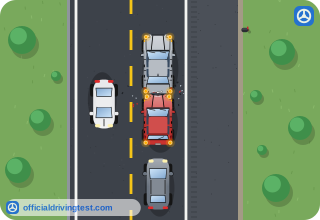
- Make every reasonable effort to move it or have it moved
- Leave it exactly where it stopped until police arrive
- Turn off the lights and wait for a tow truck
- Push it into the nearest lane
Show answer
Correct answer: Make every reasonable effort to move it or have it moved
Where no one is hurt and the vehicle obstructs traffic, the driver must make every reasonable effort to move it.
Source: Delaware Driver Manual (July 2026), page 140 · Open this page in the manual (Manual page 140)
-
At a crash scene, what does the manual say about standing or walking in traffic lanes?
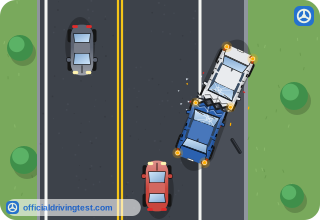
- Do so only to warn other drivers
- Do so only at night
- Do so only if the lanes are empty
- Do not; you could be struck
Show answer
Correct answer: Do not; you could be struck
The manual says not to stand or walk in traffic lanes because you could be struck.
Source: Delaware Driver Manual (July 2026), page 140 · Open this page in the manual (Manual page 140)