Delaware: Emergencies — Part 2 Practice Test
Questions in this part include: “While drying wet brakes, how often does the manual say to test them?” · “If the engine dies while you are driving, what does the manual say about the steering wheel?”
Independent educational site · not affiliated with any government agency or DMV
Ready? Test yourself
- Instant feedback with an explanation
- Every answer cites its source in the manual
- Your best score is saved on this device
Questions are original and based on the official manual "Delaware Driver Manual" (July 2026), Delaware Division of Motor Vehicles (DMV).
All 16 questions in this practice test
Take the test above first, then use this list to study. Tap “Show answer” to see the correct answer and explanation.
Show the questions and answersHide the questions
-
How does the manual say to dry wet brakes?
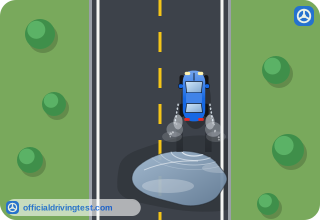
- Drive fast in high gear with the brakes held off
- Use low gear, drive slowly, and tap the brakes lightly
- Hold the brake pedal down firmly while stopped
- Apply the parking brake while you are rolling
Show answer
Correct answer: Use low gear, drive slowly, and tap the brakes lightly
The manual says to use low gear, drive slowly, and apply the brakes lightly.
Source: Delaware Driver Manual (July 2026), page 136 · Open this page in the manual (Manual page 136)
-
While drying wet brakes, how often does the manual say to test them?
- Every 50 feet, until you reach a stop sign
- Every mile, until you arrive at your destination
- Every 500 feet, for at least a full minute
- Every 200 feet, until braking action returns to normal
Show answer
Correct answer: Every 200 feet, until braking action returns to normal
The manual says to test every 200 feet until braking action returns to normal.
Source: Delaware Driver Manual (July 2026), page 136 · Open this page in the manual (Manual page 136)
-
If you run off the pavement, what does the manual say about braking?
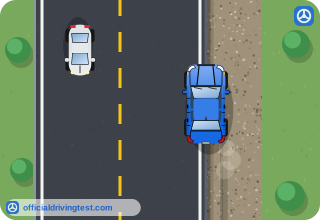
- Brake as hard as you can right away
- Pump the brakes quickly several times
- Brake carefully or not at all
- Use only the parking brake
Show answer
Correct answer: Brake carefully or not at all
The manual says not to jam on the brakes and to brake carefully or not at all.
Source: Delaware Driver Manual (July 2026), page 136 · Open this page in the manual (Manual page 136)
-
If you run off the pavement, what should you do with your foot and the accelerator?
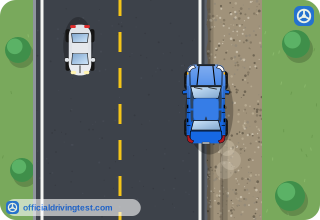
- Take your foot off the accelerator
- Press the accelerator to speed back up
- Tap the accelerator to keep control
- Hold the speed steady until you stop
Show answer
Correct answer: Take your foot off the accelerator
The manual lists taking your foot off the accelerator when you run off the pavement.
Source: Delaware Driver Manual (July 2026), page 136 · Open this page in the manual (Manual page 136)
-
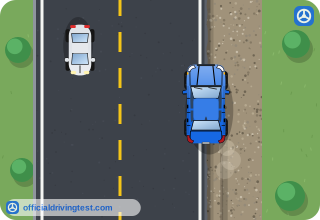
Why does the manual say to grip the steering wheel tightly if you run off the pavement?
- The airbag may push your hands off it
- The tires may lock up and stop the steering
- The vehicle may roll backward
- The unusual stress may twist it from your hands
Show answer
Correct answer: The unusual stress may twist it from your hands
The manual says to grip tightly because the unusual stress may twist the wheel from your hands.
Source: Delaware Driver Manual (July 2026), page 136 · Open this page in the manual (Manual page 136)
-
After running off the pavement, at what speed or lower should you be before trying to get back onto it?
- 25 mph
- 15 mph
- 30 mph
- 5 mph
Show answer
Correct answer: 15 mph
The manual says to get back onto the pavement only at 15 mph or less, with control, after checking traffic behind you.
Source: Delaware Driver Manual (July 2026), page 136 · Open this page in the manual (Manual page 136)
-
When you return to the pavement after running off, what should you be careful not to do?
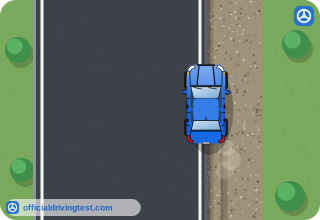
- Cross the center line
- Touch the brake pedal
- Use the turn signal
- Turn the wheels toward the pavement
Show answer
Correct answer: Cross the center line
The manual says to turn the front wheels sharply toward the pavement and not to cross the center line.
Source: Delaware Driver Manual (July 2026), page 136 · Open this page in the manual (Manual page 136)
-
If a tire suddenly goes flat, what should you do with the steering wheel?
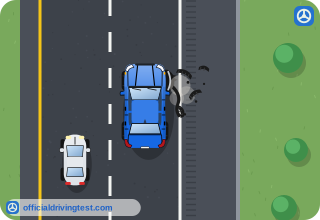
- Turn it sharply toward the shoulder
- Let it move freely to find its own direction
- Hold it tightly and keep the vehicle going straight
- Hold it loosely and steer gently left and right
Show answer
Correct answer: Hold it tightly and keep the vehicle going straight
The manual says to hold the wheel tightly and keep the vehicle going straight in a tire blowout.
Source: Delaware Driver Manual (July 2026), page 137 · Open this page in the manual (Manual page 137)
-
After a tire blowout, how should you slow down?
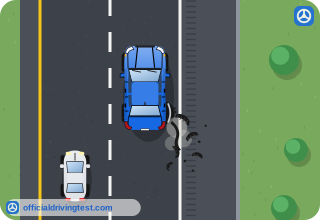
- Quickly, by braking as hard as you possibly can
- Gradually, easing off the gas and braking lightly
- By shifting the transmission into park at once
- By turning off the ignition and coasting
Show answer
Correct answer: Gradually, easing off the gas and braking lightly
The manual says to slow down gradually and use the brakes lightly after a tire goes flat.
Source: Delaware Driver Manual (July 2026), page 137 · Open this page in the manual (Manual page 137)
-
After a tire blowout, what does the manual say about stopping on the road?
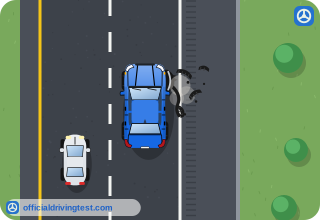
- Stop in the travel lane and turn on the flashers
- Stop immediately where you are
- Stop only after reaching the next exit
- Avoid stopping on the road; pull off in a safe place
Show answer
Correct answer: Avoid stopping on the road; pull off in a safe place
The manual says to avoid stopping on the road and to pull off in a safe place.
Source: Delaware Driver Manual (July 2026), page 137 · Open this page in the manual (Manual page 137)
-
If the engine dies while you are driving, what does the manual say about the steering wheel?
- It will lock up and can no longer be turned
- It will turn more easily than it normally does
- It may be difficult to turn, but you can turn it
- It will turn only toward the right side
Show answer
Correct answer: It may be difficult to turn, but you can turn it
The manual says that after a power failure the steering wheel may be hard to turn, but you can turn it.
Source: Delaware Driver Manual (July 2026), page 137 · Open this page in the manual (Manual page 137)
-
If the engine dies while you are driving, what does the manual say about the brakes?
- They still work, but you may need to push very hard
- They will not work at all until the engine restarts
- They will work only if you use the parking brake
- They will work better than they normally do
Show answer
Correct answer: They still work, but you may need to push very hard
The manual says the brakes should still work but may need a very hard push on the pedal.
Source: Delaware Driver Manual (July 2026), page 137 · Open this page in the manual (Manual page 137)
-
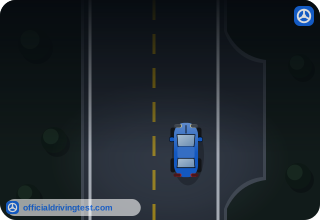
If your headlights suddenly go out, what should you try first?
- Turn off the engine
- Pull over and wait for daylight
- Switch to the high beams only
- Try the headlight switch a few times
Show answer
Correct answer: Try the headlight switch a few times
The manual says to try the headlight switch a few times first.
Source: Delaware Driver Manual (July 2026), page 137 · Open this page in the manual (Manual page 137)
-
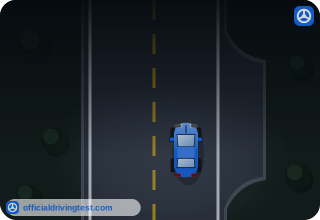
If your headlights suddenly go out and the switch does not work, what does the manual say to put on?
- The windshield wipers and the interior radio
- Emergency flashers, turn signals, or fog lights
- The dome light and the parking brake together
- The high beams of a vehicle behind you
Show answer
Correct answer: Emergency flashers, turn signals, or fog lights
The manual says to use emergency flashers, turn signals, or fog lights, then pull off the road as soon as possible.
Source: Delaware Driver Manual (July 2026), page 137 · Open this page in the manual (Manual page 137)
-
If the gas pedal sticks and the motor keeps going faster, what should you do quickly?
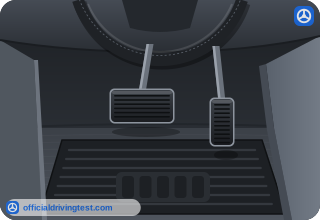
- Shift to neutral
- Turn the steering wheel sharply
- Pull the parking brake all the way
- Shift to reverse
Show answer
Correct answer: Shift to neutral
The manual says to quickly shift to neutral when the gas pedal sticks.
Source: Delaware Driver Manual (July 2026), page 137 · Open this page in the manual (Manual page 137)
-
After a sticking gas pedal, what should you do once the vehicle is off the road?
- Shift into drive
- Wait with the engine running
- Turn off the engine
- Release the parking brake
Show answer
Correct answer: Turn off the engine
The manual lists pulling off the road when safe and then turning off the engine.
Source: Delaware Driver Manual (July 2026), page 137 · Open this page in the manual (Manual page 137)