Connecticut: Exam Simulator
25 random questions from every topic, like a mini exam.
Independent educational site · not affiliated with any government agency or DMV
Ready? Test yourself
Like the real test: 25 questions; pass with 20 correct.
- Instant feedback with an explanation
- Every answer cites its source in the manual
- Your best score is saved on this device
Questions are original and based on the official manual "Connecticut Driver's Manual" (Revised March 2023), Connecticut Department of Motor Vehicles (DMV).
Sample questions
The exam simulator picks 25 random questions from every topic each time you start. Here are a few examples.
Show the questions and answersHide the questions
-
What is a non-commercial driver’s license known and designated as in Connecticut?
- Class D
- Class A
- Class B
- Class C
Show answer
Correct answer: Class D
The manual says a non-commercial driver’s license is known and designated as Class D.
Source: Connecticut Driver's Manual (Revised March 2023), page 4 · Open this page in the manual (Manual page 4)
-
During the road test, what should you do before you shift the car into gear from the "park" position?
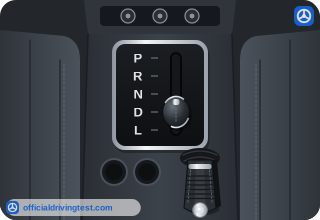
- Turn on the signal
- Check the oil
- Tap the horn
- Apply the brake
Show answer
Correct answer: Apply the brake
The manual says to apply the brake before shifting the car into gear from the "park" position.
Source: Connecticut Driver's Manual (Revised March 2023), page 7 · Open this page in the manual (Manual page 7)
-
May you pass a bicyclist in a no-passing zone?
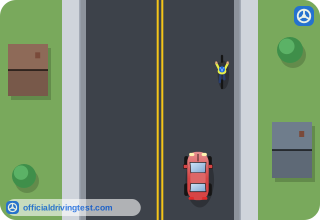
- Yes, if you can make the maneuver safely
- No, never in any no-passing zone
- Yes, but only after you sound your horn
- Yes, but only when the bicyclist signals you to pass
Show answer
Correct answer: Yes, if you can make the maneuver safely
The manual says you may pass slow moving vehicles, including bicyclists, in a no passing zone if you can make the maneuver safely.
Source: Connecticut Driver's Manual (Revised March 2023), page 17 · Open this page in the manual (Manual page 17)
-
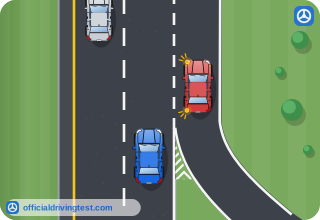
As you approach a highway entrance ramp, what should you do for the traffic entering the highway?
- Speed up so it cannot merge ahead of you
- Honk to warn it to wait on the ramp
- Allow it to merge safely
- Move onto the shoulder to let it pass
Show answer
Correct answer: Allow it to merge safely
If you are approaching the entrance ramp to a highway, you should allow entering traffic to merge safely.
Source: Connecticut Driver's Manual (Revised March 2023), page 20 · Open this page in the manual (Manual page 20)
-
You want to parallel park and traffic is coming behind you. What should you do?
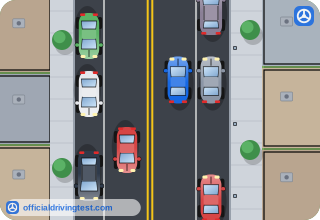
- Signal, pull next to the space and let following vehicles pass before you park
- Park as quickly as possible before the traffic behind you arrives
- Stop in the lane, sound your horn and wait for traffic to clear
- Back into the space immediately without using any signal at all
Show answer
Correct answer: Signal, pull next to the space and let following vehicles pass before you park
The manual says to signal, pull next to the space and allow following vehicles to pass before you park.
Source: Connecticut Driver's Manual (Revised March 2023), page 22 · Open this page in the manual (Manual page 22)
-
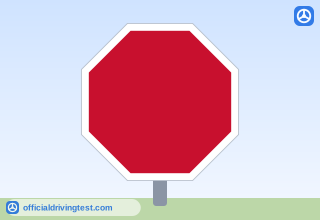
An eight-sided sign always means what?
- Yield
- Railroad crossing
- Stop
- School zone
Show answer
Correct answer: Stop
The octagon (eight-sided) shape always means stop.
Source: Connecticut Driver's Manual (Revised March 2023), page 46 · Open this page in the manual (Manual page 46)
-
What kind of information do regulatory signs give you?
- Where food, fuel and other services can be found along the roadway
- Road conditions and dangers that lie ahead
- Rules for traffic direction, lane use, turning, speed and parking
- Which parks and recreation areas are nearby
Show answer
Correct answer: Rules for traffic direction, lane use, turning, speed and parking
Regulatory signs give information about rules for traffic direction, lane use, turning, speed, parking and other special situations.
Source: Connecticut Driver's Manual (Revised March 2023), page 47 · Open this page in the manual (Manual page 47)
-
When may you turn right at a red light?
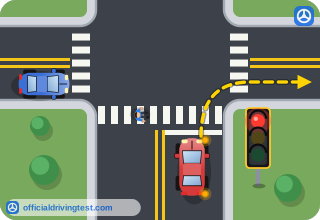
- Never, because a red light always means wait for green
- Only after waiting 30 seconds with a clear intersection
- Only when a green arrow is also showing
- After stopping, unless a traffic sign prohibits it
Show answer
Correct answer: After stopping, unless a traffic sign prohibits it
A right turn at a red light is allowed after stopping unless a traffic sign prohibits it.
Source: Connecticut Driver's Manual (Revised March 2023), page 15 · Open this page in the manual (Manual page 15)
-
Every time you make a turn during the road test, what should you be aware of and what should you adjust?
- Only other vehicles; your following distance
- Only road signs; your lane position
- Weather conditions; your headlights
- Other traffic and pedestrians; your speed
Show answer
Correct answer: Other traffic and pedestrians; your speed
You should be aware of other traffic and pedestrians at every turn, and your speed should also be adjusted for the turn.
Source: Connecticut Driver's Manual (Revised March 2023), page 7 · Open this page in the manual (Manual page 7)
-
As you approach any railroad crossing, what should you do?
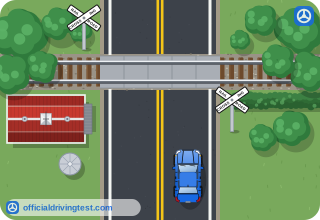
- Slow down and look up and down the tracks for any train
- Keep your speed and listen for a train horn to decide whether to stop
- Stop only when you actually see a train or warning lights at the crossing
- Shift to a lower gear and cross as quickly as you safely can
Show answer
Correct answer: Slow down and look up and down the tracks for any train
The manual says to slow down and look up and down the tracks to make sure that no trains are coming.
Source: Connecticut Driver's Manual (Revised March 2023), page 15 · Open this page in the manual (Manual page 15)