Connecticut: Emergencies — Part 2 Practice Test
Questions in this part include: “If your engine dies while you are driving, what should you do with the steering wheel?” · “What does an Antilock Braking System (ABS) allow you to do?”
Independent educational site · not affiliated with any government agency or DMV
Ready? Test yourself
- Instant feedback with an explanation
- Every answer cites its source in the manual
- Your best score is saved on this device
Questions are original and based on the official manual "Connecticut Driver's Manual" (Revised March 2023), Connecticut Department of Motor Vehicles (DMV).
All 20 questions in this practice test
Take the test above first, then use this list to study. Tap “Show answer” to see the correct answer and explanation.
Show the questions and answersHide the questions
-
If your engine dies while you are driving, what should you do with the steering wheel?
- Keep a strong grip, because it may be hard to turn but is possible
- Let go of it, because it will not turn without the engine
- Hold it loosely so the car can steer itself straight
- Lock it in place by turning the ignition to lock
Show answer
Correct answer: Keep a strong grip, because it may be hard to turn but is possible
The manual says to keep a strong grip on the wheel after a power failure: it may be difficult to turn, but it is possible.
Source: Connecticut Driver's Manual (Revised March 2023), page 40 · Open this page in the manual (Manual page 40)
-
After the engine dies while you are driving, what is true about the brakes?
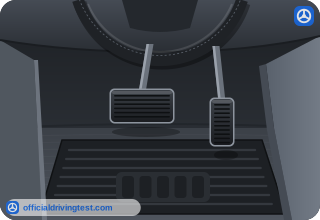
- They stop working completely, so only the parking brake can stop you
- They work normally with no extra effort needed
- They still work, but you may have to push very hard on the pedal
- They work only after you restart the engine
Show answer
Correct answer: They still work, but you may have to push very hard on the pedal
The manual says the brakes will still work after a power failure, but you may have to push very hard on the brake pedal.
Source: Connecticut Driver's Manual (Revised March 2023), page 40 · Open this page in the manual (Manual page 40)
-
If your engine dies while you are driving, where should you go?
- Stop in the middle of the lane
- Pull off the roadway
- Keep rolling until the car stops by itself in traffic
- Make a U-turn right away
Show answer
Correct answer: Pull off the roadway
The manual tells you to pull off the roadway after a power failure.
Source: Connecticut Driver's Manual (Revised March 2023), page 40 · Open this page in the manual (Manual page 40)
-
If your headlights suddenly go out, what should you do?
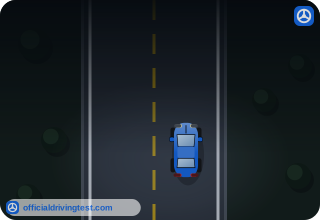
- Speed up to reach a lighted area quickly
- Keep driving at the same speed until you reach home
- Stop suddenly in the traffic lane
- Slow down gradually and pull off the road as soon as possible
Show answer
Correct answer: Slow down gradually and pull off the road as soon as possible
The manual says to slow down gradually and pull off the road as soon as possible when headlights fail.
Source: Connecticut Driver's Manual (Revised March 2023), page 40 · Open this page in the manual (Manual page 40)
-
If your headlights suddenly go out, what should you try after slowing down and pulling off the road?
- Try the headlight switch a few times
- Turn the ignition to the lock position
- Shift into neutral
- Turn on the windshield wipers
Show answer
Correct answer: Try the headlight switch a few times
After slowing down, the manual says to try the headlight switch a few times.
Source: Connecticut Driver's Manual (Revised March 2023), page 40 · Open this page in the manual (Manual page 40)
-
Your headlights have gone out and trying the switch did not help. What does the manual say to do?
- Flash the high beams repeatedly until the headlights come back on
- Turn on only the interior dome light
- Put on the emergency flashers, and use signals or fog lights if you have them
- Turn on the windshield wipers so others see you
Show answer
Correct answer: Put on the emergency flashers, and use signals or fog lights if you have them
If the switch does not work, the manual says to use the emergency flashers and signals or fog lights if you have them.
Source: Connecticut Driver's Manual (Revised March 2023), page 40 · Open this page in the manual (Manual page 40)
-
If the gas pedal sticks and the motor keeps going faster and faster, what should you do quickly?
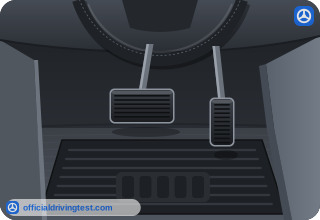
- Turn the ignition to the lock position
- Shift to neutral
- Shift into a lower gear
- Take both hands off the steering wheel
Show answer
Correct answer: Shift to neutral
The manual lists quickly shifting to neutral as a step when the gas pedal sticks.
Source: Connecticut Driver's Manual (Revised March 2023), page 40 · Open this page in the manual (Manual page 40)
-
If the gas pedal sticks, where should you keep your eyes?
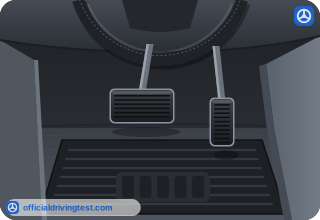
- On the gas pedal
- On the speedometer
- On the gear shift
- On the road
Show answer
Correct answer: On the road
The manual's first step for a stuck gas pedal is to keep your eyes on the road.
Source: Connecticut Driver's Manual (Revised March 2023), page 40 · Open this page in the manual (Manual page 40)
-
What can happen if you turn the ignition to the lock position while the vehicle is still moving?
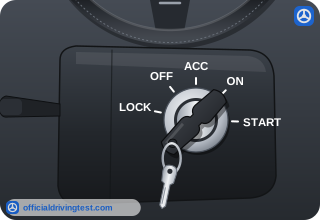
- The steering will lock and you will lose control
- The engine will restart on its own
- The brakes will lock up and stop the vehicle
- The headlights will turn off
Show answer
Correct answer: The steering will lock and you will lose control
The manual warns the steering will lock and you will lose control of the vehicle.
Source: Connecticut Driver's Manual (Revised March 2023), page 40 · Open this page in the manual (Manual page 40)
-
According to the manual, what three options do drivers have when trying to avoid a collision?
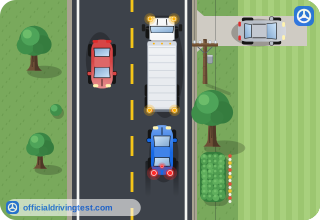
- Stop, honk or flash the lights
- Turn, reverse or brake
- Stop, turn or speed up
- Honk, swerve or speed up
Show answer
Correct answer: Stop, turn or speed up
The manual says that in avoiding a collision, drivers have three options: stop, turn or speed up.
Source: Connecticut Driver's Manual (Revised March 2023), page 40 · Open this page in the manual (Manual page 40)
-
What does an Antilock Braking System (ABS) allow you to do?
- Stop with half the pedal pressure
- Stop without skidding
- Skid for a shorter distance
- Drive faster on wet roads
Show answer
Correct answer: Stop without skidding
The manual says the ABS system will allow you to stop without skidding.
Source: Connecticut Driver's Manual (Revised March 2023), page 40 · Open this page in the manual (Manual page 40)
-
If you need to stop quickly in a vehicle with ABS, what should you do?
- Pump the brake pedal gently several times
- Press the brake pedal once, then let up
- Apply the brakes only hard enough to avoid locking them
- Press the brake pedal as hard as you can and keep pressing it
Show answer
Correct answer: Press the brake pedal as hard as you can and keep pressing it
With ABS, the manual says to press the brake pedal as hard as you can and keep pressing on it.
Source: Connecticut Driver's Manual (Revised March 2023), page 40 · Open this page in the manual (Manual page 40)
-
You feel the brake pedal pushing back while the ABS is working. What should you do?
- Do not let up on the brake pedal
- Let up on the brake pedal quickly
- Tap the brake pedal repeatedly
- Shift to neutral
Show answer
Correct answer: Do not let up on the brake pedal
The manual says the ABS system will only work with the brake pedal pushed down, so you must not let up.
Source: Connecticut Driver's Manual (Revised March 2023), page 40 · Open this page in the manual (Manual page 40)
-
If you must stop quickly in a vehicle without ABS, how should you apply the brakes?
- With a single gentle press
- As hard as you can, locking the wheels on purpose
- As hard as you can without locking them
- Only with the parking brake
Show answer
Correct answer: As hard as you can without locking them
Without ABS, the manual says to apply the brakes as hard as you can without locking them.
Source: Connecticut Driver's Manual (Revised March 2023), page 40 · Open this page in the manual (Manual page 40)
-
In a vehicle without ABS, the brakes lock up and you feel the vehicle start to skid. What should you do?
- Push harder on the brake pedal
- Quickly let up on the brake pedal
- Turn the ignition to the lock position
- Shift into a lower gear
Show answer
Correct answer: Quickly let up on the brake pedal
The manual says to quickly let up on the brake pedal when the brakes lock up and the vehicle starts to skid.
Source: Connecticut Driver's Manual (Revised March 2023), page 40 · Open this page in the manual (Manual page 40)
-
In a vehicle without ABS, what should you do as soon as the vehicle stops skidding while you are stopping quickly?
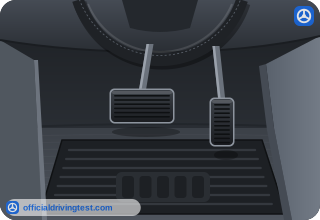
- Release the brake pedal and coast gently to a stop
- Shift to neutral and wait
- Turn off the engine
- Push down on the brake pedal again and repeat until stopped
Show answer
Correct answer: Push down on the brake pedal again and repeat until stopped
The manual says to push down on the brake pedal again as soon as the skid ends, repeating until the vehicle has stopped.
Source: Connecticut Driver's Manual (Revised March 2023), page 40 · Open this page in the manual (Manual page 40)
-
What does the manual say about turning and stopping when you need to avoid a collision?
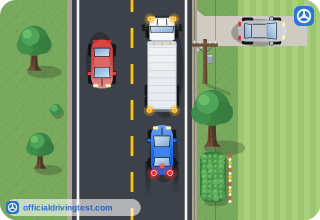
- In most cases, you can turn more quickly than you can stop
- In most cases, you can stop more quickly than you can turn
- You can turn and stop in the same amount of time
- Turning is never a good option
Show answer
Correct answer: In most cases, you can turn more quickly than you can stop
The manual says you can usually turn the vehicle more quickly than you can stop it, so you should consider turning.
Source: Connecticut Driver's Manual (Revised March 2023), page 40 · Open this page in the manual (Manual page 40)
-
Once you have turned away or changed lanes to avoid a collision, what must you be ready to do?
- Stop immediately in the new lane
- Honk the horn
- Keep the vehicle under control
- Take one hand off the steering wheel
Show answer
Correct answer: Keep the vehicle under control
The manual warns that some drivers steer away from one collision only to end up in another, so you must keep the vehicle under control.
Source: Connecticut Driver's Manual (Revised March 2023), page 40 · Open this page in the manual (Manual page 40)
-
In which direction should you always steer when avoiding a collision?
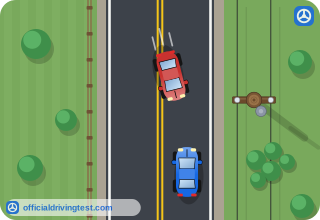
- Toward the object you are trying to avoid
- In the direction you want the vehicle to go
- Toward the center of the road
- Toward the shoulder
Show answer
Correct answer: In the direction you want the vehicle to go
The manual says to always steer in the direction you want the vehicle to go.
Source: Connecticut Driver's Manual (Revised March 2023), page 40 · Open this page in the manual (Manual page 40)
-
What is one aspect of having ABS when you must turn and stop or slow down?
- You cannot turn while braking
- You must release the brake before you turn
- You must brake only after the turn is finished
- You can turn while braking without skidding
Show answer
Correct answer: You can turn while braking without skidding
The manual says that with ABS you can turn your vehicle while braking without skidding, which is very helpful.
Source: Connecticut Driver's Manual (Revised March 2023), page 40 · Open this page in the manual (Manual page 40)