Colorado: Signals and vehicle controls — Part 1 Practice Test
Questions in this part include: “On the drive test, within how many seconds of turning or changing lanes should your turn signal be cancelled?” · “Which of these lights does the handbook say to make sure is operating properly?”
Independent educational site · not affiliated with any government agency or DMV
Ready? Test yourself
- Instant feedback with an explanation
- Every answer cites its source in the manual
- Your best score is saved on this device
Questions are original and based on the official manual "Colorado Driver Handbook" (DR 2337, January 2025), Colorado Division of Motor Vehicles (DMV).
All 20 questions in this practice test
Take the test above first, then use this list to study. Tap “Show answer” to see the correct answer and explanation.
Show the questions and answersHide the questions
-
On the drive test, within how many seconds of turning or changing lanes should your turn signal be cancelled?
- 1 second
- 5 seconds
- 10 seconds
- 3 seconds
Show answer
Correct answer: 3 seconds
The turn signal should be cancelled within 3 seconds of turning or changing lanes.
Source: Colorado Driver Handbook (DR 2337, January 2025), page 2 · Open this page in the manual (Manual page 2)
-
According to the handbook, who is responsible for ensuring the vehicles they drive are safe to operate?
- Only vehicle manufacturers
- Only mechanics
- Motorists
- The state
Show answer
Correct answer: Motorists
Motorists are responsible for making sure the vehicles they drive are safe to operate.
Source: Colorado Driver Handbook (DR 2337, January 2025), page 6 · Open this page in the manual (Manual page 6)
-
Besides being unsafe and costing more to drive, what else can a vehicle in poor operating condition result in?
- An automatic license suspension
- A citation from law enforcement
- A required retest of the driver
- Cancellation of the vehicle registration
Show answer
Correct answer: A citation from law enforcement
A vehicle in poor operating condition can result in a citation from law enforcement.
Source: Colorado Driver Handbook (DR 2337, January 2025), page 6 · Open this page in the manual (Manual page 6)
-
If the brakes do not seem to be working properly, what should you do?
- Wait until the next routine service
- Pump them hard while driving
- Drive only on flat roads
- Have a mechanic check them immediately
Show answer
Correct answer: Have a mechanic check them immediately
The handbook says to have a mechanic check the brakes immediately.
Source: Colorado Driver Handbook (DR 2337, January 2025), page 6 · Open this page in the manual (Manual page 6)
-
Which of these lights does the handbook say to make sure is operating properly?
- Interior dome lights
- Cargo-area work lights
- Brake lights
- Decorative underbody lights
Show answer
Correct answer: Brake lights
The handbook lists turn signals, brake lights, tail lights and headlights.
Source: Colorado Driver Handbook (DR 2337, January 2025), page 6 · Open this page in the manual (Manual page 6)
-
What does the handbook say to do if the windshield glass is damaged?
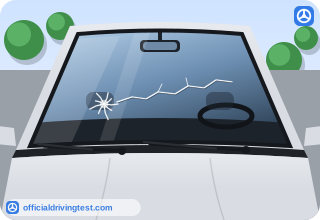
- Get the windshield replaced
- Cover the damage with tape
- Drive only in daylight
- Wait until the damage spreads
Show answer
Correct answer: Get the windshield replaced
Damaged glass can break easily or obstruct vision, so the windshield should be replaced.
Source: Colorado Driver Handbook (DR 2337, January 2025), page 6 · Open this page in the manual (Manual page 6)
-
Where should you clear snow, ice or frost from before driving?
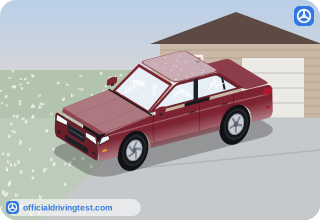
- Only the windshield
- Only the front and rear windows
- Only the driver’s side window
- All windows
Show answer
Correct answer: All windows
The handbook says to clear snow, ice or frost from all windows.
Source: Colorado Driver Handbook (DR 2337, January 2025), page 6 · Open this page in the manual (Manual page 6)
-
Which of these can worn or bald tires cause?
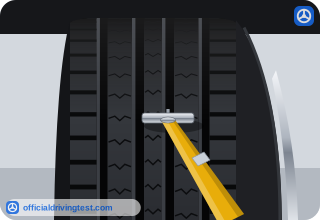
- Shorter stopping distance
- Increased stopping distance
- Better fuel economy
- Easier turning
Show answer
Correct answer: Increased stopping distance
Worn or bald tires increase stopping distance, make turning harder and can cause hydroplaning.
Source: Colorado Driver Handbook (DR 2337, January 2025), page 6 · Open this page in the manual (Manual page 6)
-
What do unbalanced wheels and low tire pressure do?
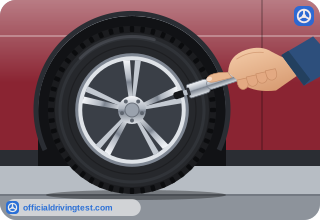
- Increase tire wear and make steering and stopping harder
- Improve fuel economy and make the vehicle steer easier
- Reduce tire wear but lengthen the stopping distance
- Only affect the ride, never tire wear or steering
Show answer
Correct answer: Increase tire wear and make steering and stopping harder
They increase tire wear, reduce fuel economy and make the vehicle harder to steer and stop.
Source: Colorado Driver Handbook (DR 2337, January 2025), page 6 · Open this page in the manual (Manual page 6)
-
If the vehicle bounces, the steering wheel shakes or the vehicle pulls to one side, what should you have a mechanic check?
- Your horn
- Your windshield wipers
- Your tires
- Your headlights
Show answer
Correct answer: Your tires
The handbook says to have a mechanic check your tires.
Source: Colorado Driver Handbook (DR 2337, January 2025), page 6 · Open this page in the manual (Manual page 6)
-
If the vehicle is hard to turn, what should you do?
- Turn the wheel with the palm of your hand
- Have the steering checked by a mechanic
- Replace the windshield wipers and blades
- Change the engine oil and wait a week
Show answer
Correct answer: Have the steering checked by a mechanic
The handbook says to have the steering checked by a mechanic.
Source: Colorado Driver Handbook (DR 2337, January 2025), page 6 · Open this page in the manual (Manual page 6)
-
What may you need if the vehicle bounces excessively or keeps bouncing after a bump or after you stop?
- New brake lights and tail lights
- A new steering wheel and column
- New windshield wipers and blades
- New shocks or other suspension parts
Show answer
Correct answer: New shocks or other suspension parts
Excessive bouncing may mean you need new shocks or other suspension parts.
Source: Colorado Driver Handbook (DR 2337, January 2025), page 6 · Open this page in the manual (Manual page 6)
-
What can fumes from a leaky exhaust system cause?
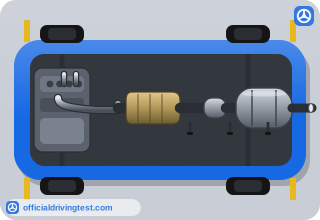
- Slower acceleration only
- Cloudy windshields only
- Death in a very short time
- Damage to the tires
Show answer
Correct answer: Death in a very short time
Fumes from a leaky exhaust system can cause death in a very short time.
Source: Colorado Driver Handbook (DR 2337, January 2025), page 6 · Open this page in the manual (Manual page 6)
-
What does the handbook say about running the motor in your garage?
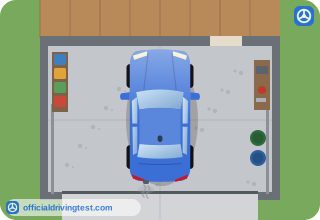
- Never do it
- Do it only with the garage door closed
- Do it only for a few minutes
- Do it only in cold weather
Show answer
Correct answer: Never do it
The handbook says never to run the motor in your garage because of exhaust fumes.
Source: Colorado Driver Handbook (DR 2337, January 2025), page 6 · Open this page in the manual (Manual page 6)
-
Which of these can a poorly tuned engine cause?
- It makes the tires wear less
- It improves fuel economy
- It lowers the noise of the exhaust
- It could stall while you are driving
Show answer
Correct answer: It could stall while you are driving
A poorly tuned engine can lose power, get poor fuel economy, pollute and stall on the road.
Source: Colorado Driver Handbook (DR 2337, January 2025), page 6 · Open this page in the manual (Manual page 6)
-
How often does the handbook say the horn should be checked?
- Only once a year
- Regularly
- Only before long trips
- Never, because it is not needed
Show answer
Correct answer: Regularly
The handbook says the horn should be checked regularly.
Source: Colorado Driver Handbook (DR 2337, January 2025), page 6 · Open this page in the manual (Manual page 6)
-
How does the handbook say to set the driver’s side mirror?
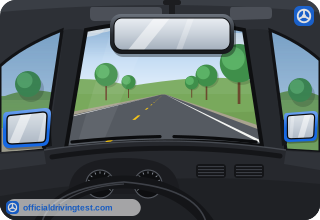
- Head against the left window, barely seeing the side of the car
- Head centered, so you see none of your car
- Head upright, so you see the whole side of your car
- Head against the right window, so you see the rear bumper
Show answer
Correct answer: Head against the left window, barely seeing the side of the car
Place your head against the left side window and set the mirror so you can barely see the side of the car.
Source: Colorado Driver Handbook (DR 2337, January 2025), page 6 · Open this page in the manual (Manual page 6)
-
How does the handbook say to position your head to adjust the passenger’s side mirror?
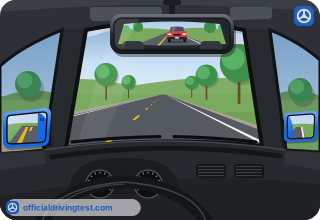
- Against the right side window, as far over as possible
- Leaning toward the steering wheel and the dashboard area
- Centered under the inside rearview mirror or above the console
- Turned fully toward the back seat and the rear window
Show answer
Correct answer: Centered under the inside rearview mirror or above the console
Position your head centered under the inside rearview mirror or just above the center console.
Source: Colorado Driver Handbook (DR 2337, January 2025), page 6 · Open this page in the manual (Manual page 6)
-
What should you make sure of regarding objects on the floor of the vehicle?
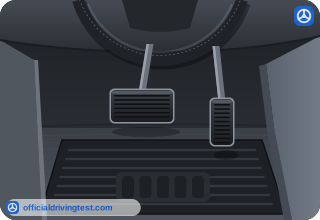
- They are stored near the pedals within easy reach
- None could roll under the brake pedal or accelerator
- They are placed under the front seat for safekeeping
- They are pinned in place by your feet on the floor
Show answer
Correct answer: None could roll under the brake pedal or accelerator
Objects on the floor could roll under the brake pedal or accelerator and interfere with safe driving.
Source: Colorado Driver Handbook (DR 2337, January 2025), page 6 · Open this page in the manual (Manual page 6)
-
How should head rests be adjusted?
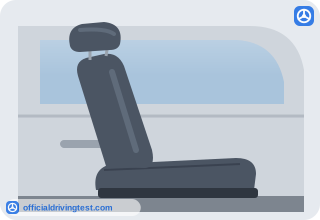
- As low as they will go to stay out of the way
- So they sit level with your shoulders and neck
- So they tilt away from the back of your head
- So the head restraint touches the back of your head
Show answer
Correct answer: So the head restraint touches the back of your head
The head restraint should touch the back of your head.
Source: Colorado Driver Handbook (DR 2337, January 2025), page 6 · Open this page in the manual (Manual page 6)